Start with the room, not the material
A rug can soften a room, define a seating area and bring color to a floor. Its fiber also shapes everyday life with it: whether it feels springy or light, how readily it shows marks and what cleaning it can tolerate. Before comparing materials, think about where the rug will sit. A bedroom may call for softness under bare feet, while an entryway needs to cope with shoes and tracked-in dirt.
Consider who uses the space and how often. Dining chairs need to slide across a rug; pets may bring in moisture or loose fur; a sunny spot may expose colors to fading over time. Fiber matters, but it is not the whole story. Pile height, weave, backing, color and the maker’s care instructions can make two rugs of the same material behave quite differently.
Wool: warmth and resilience with a little more care
Wool is a natural choice when you want a rug with warmth, texture and a cushioned feel. Its fibers tend to recover well from ordinary foot traffic, making it worth considering for living rooms and bedrooms. Wool can also hide small amounts of dust within its pile, which helps it look tidy between cleanings but makes regular vacuuming important. Some new wool rugs shed loose fibers at first; the amount depends on their construction.
Wool is not the easiest option for every household. Spills need prompt attention, and strong cleaners or vigorous rubbing can affect the fibers or dyes. Check the rug’s care label before treating a stain, blot rather than scrub, and test any approved cleaner in an inconspicuous place. If you want a rug you can routinely put in a washing machine, wool is unlikely to be the simplest choice unless the specific rug is labeled for that care.
Cotton: casual texture and easy layering
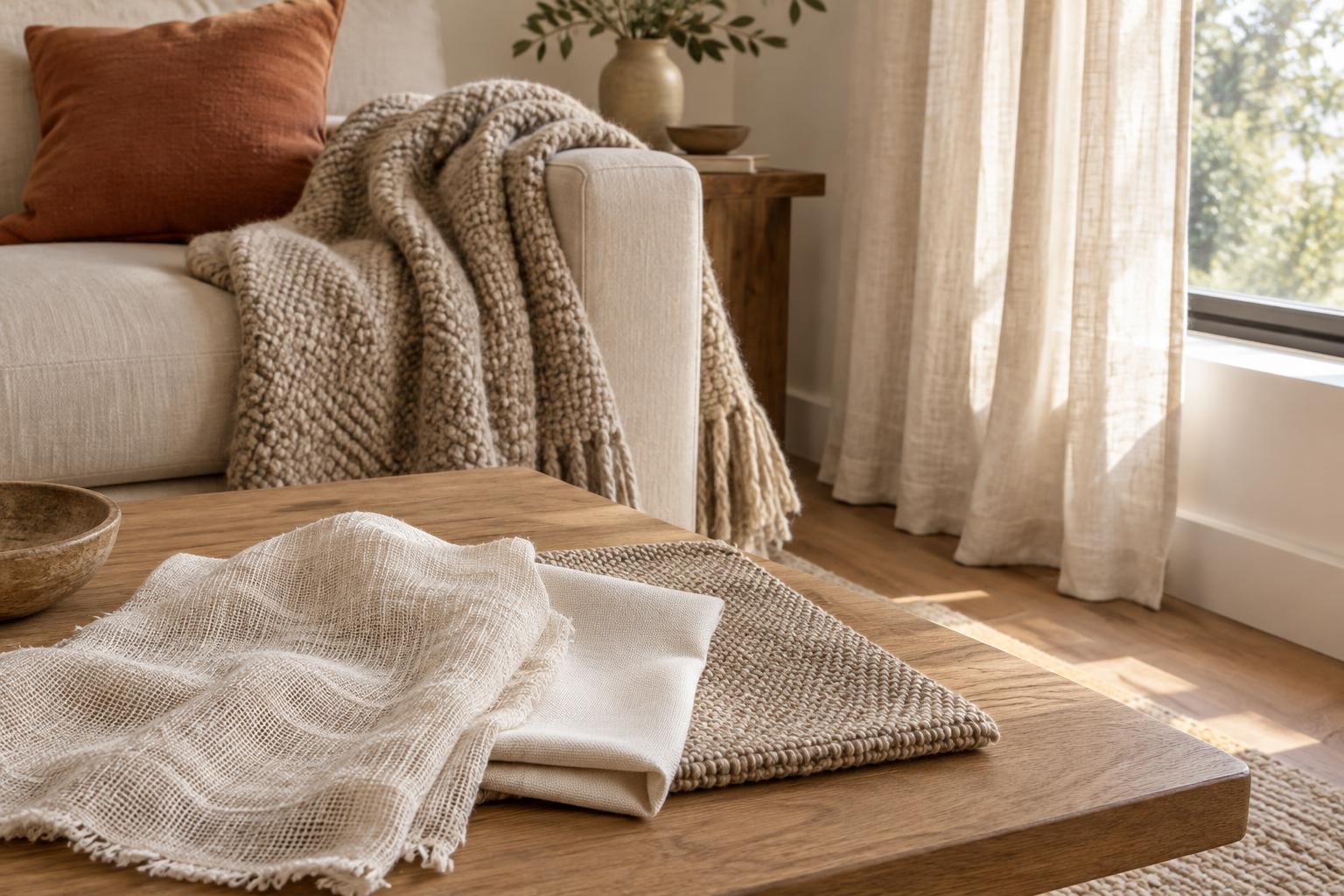
Cotton rugs often have a relaxed, low-profile look that works well in kitchens, bedrooms and informal sitting areas. Many are flatwoven, so they can fit where a thick pile might catch a door or make dining chairs awkward to move. Cotton is also useful for adding pattern without making a room feel heavy. A smaller cotton rug can be an approachable way to change a space with the seasons.
Do not assume that every cotton rug is machine washable. Size, dye, backing and construction all affect its care, and some cotton pieces may shrink or change shape when wet. Cotton also tends to flatten more readily than resilient pile fibers, especially in busy walkways. If washability is a priority, check the entire rug’s label and make sure its dimensions suit your machine and drying space.
Synthetics: practical options with different strengths
Synthetic rugs are not one category in practice. Polypropylene is commonly chosen for areas where easy spot cleaning is a priority. Polyester can offer a soft feel and vivid color, while nylon is often valued for its ability to stand up to foot traffic. The feel and performance of each still depend on the rug’s construction. A dense, well-made rug may wear differently from a loosely made one, even when both list the same fiber.
A synthetic rug may suit an active family room, a play area or a spot where spills are likely. It is still worth checking the care label: fiber alone does not guarantee that a rug is washable, stain-proof or suitable for outdoor use. Some synthetics may hold on to oily marks, and sunlight can affect rugs and dyes in different ways. Choose based on the specific product’s instructions rather than a broad promise about its material.
Make the final choice easier
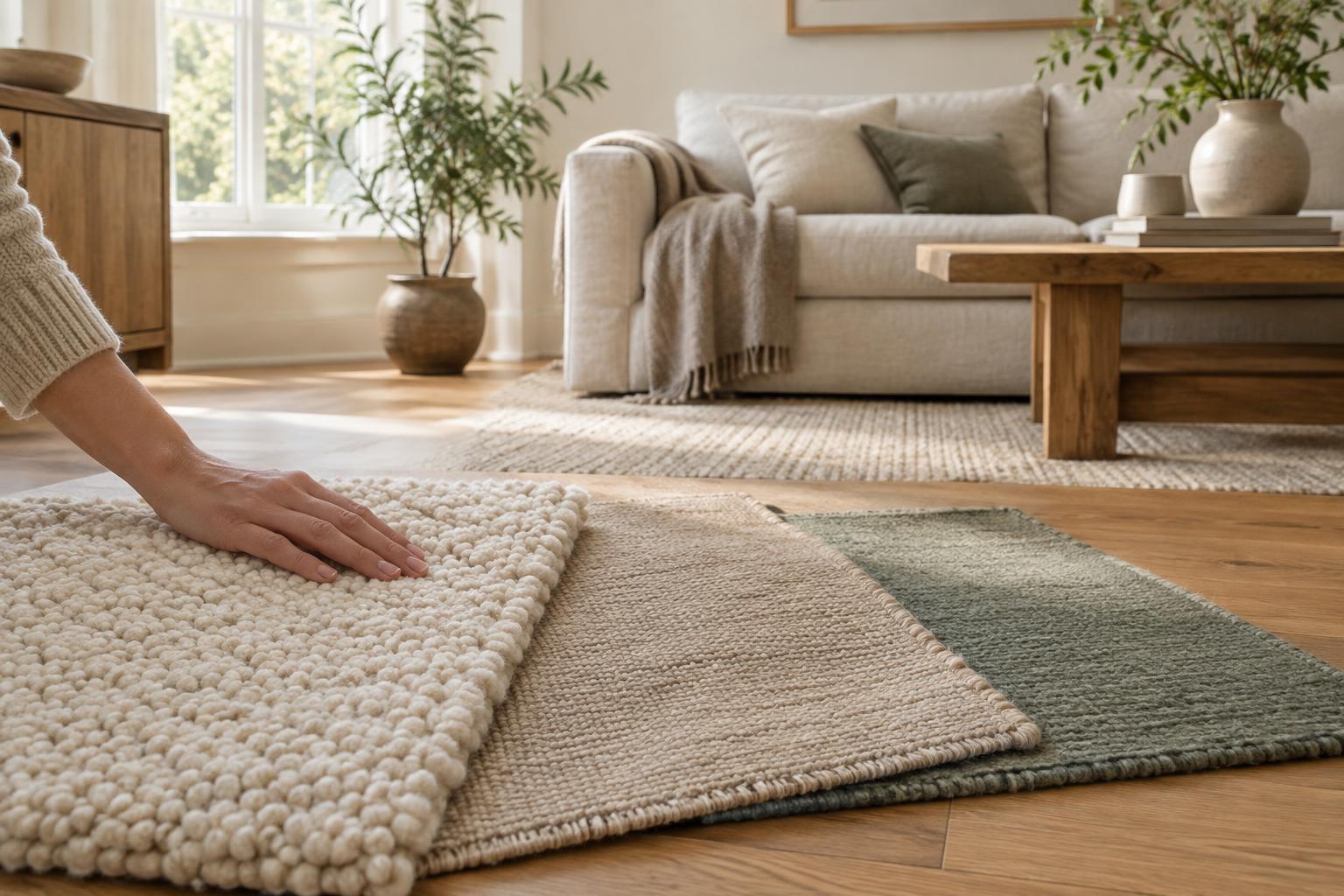
Narrow your options by naming your main priority. For a cozy seating area, you might begin with wool and compare pile heights. For a light, casual layer near a doorway, look at flatwoven cotton and consider how often you would need to clean it. For a busy room where quick spot cleaning matters, compare synthetic rugs with low or medium piles. A patterned or softly varied color may be more forgiving of everyday crumbs and footprints than a pale, solid surface.
Before buying, check the rug’s dimensions, care label and underside. A suitable rug pad can help keep it in place and add comfort, provided the pad is compatible with your floor. In high-use spaces, choose a rug whose cleaning routine you are willing to follow. The best fiber is not necessarily the most luxurious or the most convenient on paper; it is the one that makes your room feel inviting without asking more of your routine than you want to give.