Start with the seating area, not the whole floor
A rug’s main job in a living room is to bring the seating together. Before looking at standard sizes, identify the furniture you want it to connect: usually a sofa, one or two chairs, and a coffee table. The rug should make those pieces feel like one comfortable area rather than a collection of objects placed around it.
Measure the width and depth of that furniture arrangement, then note where people walk through the room. A rug that looks generous beneath the coffee table may still be too small if it stops well short of the sofa and chairs. Conversely, the largest rug that fits the floor may leave too little visible flooring around the edges. Let the seating arrangement and circulation space set the limits.
Choose how the furniture will sit on the rug
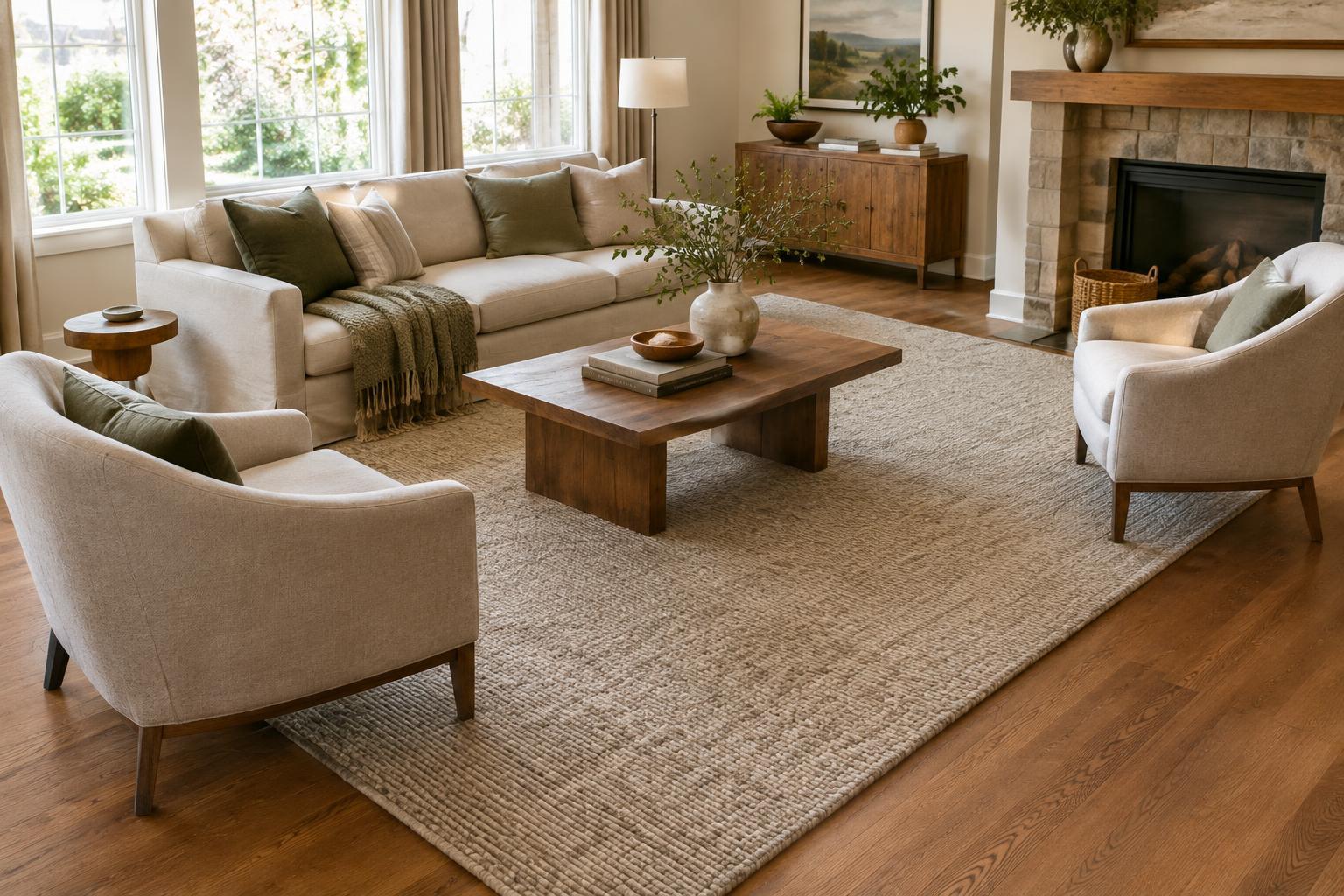
For a spacious, unified look, place all the main seating legs on the rug. This works particularly well when a sofa and chairs face one another or when the living room is part of an open-plan space. The rug becomes a clear boundary for the conversation area. Leave enough rug visible beyond the furniture so its edge does not look as though it ends by accident.
A front-legs-on layout is a flexible choice for many rooms. Put the front legs of the sofa and chairs on the rug while their back legs remain on the floor. This visually joins the seating without requiring the rug to reach every wall-facing leg. Try to treat the main seats consistently; a chair that misses the rug entirely can appear disconnected.
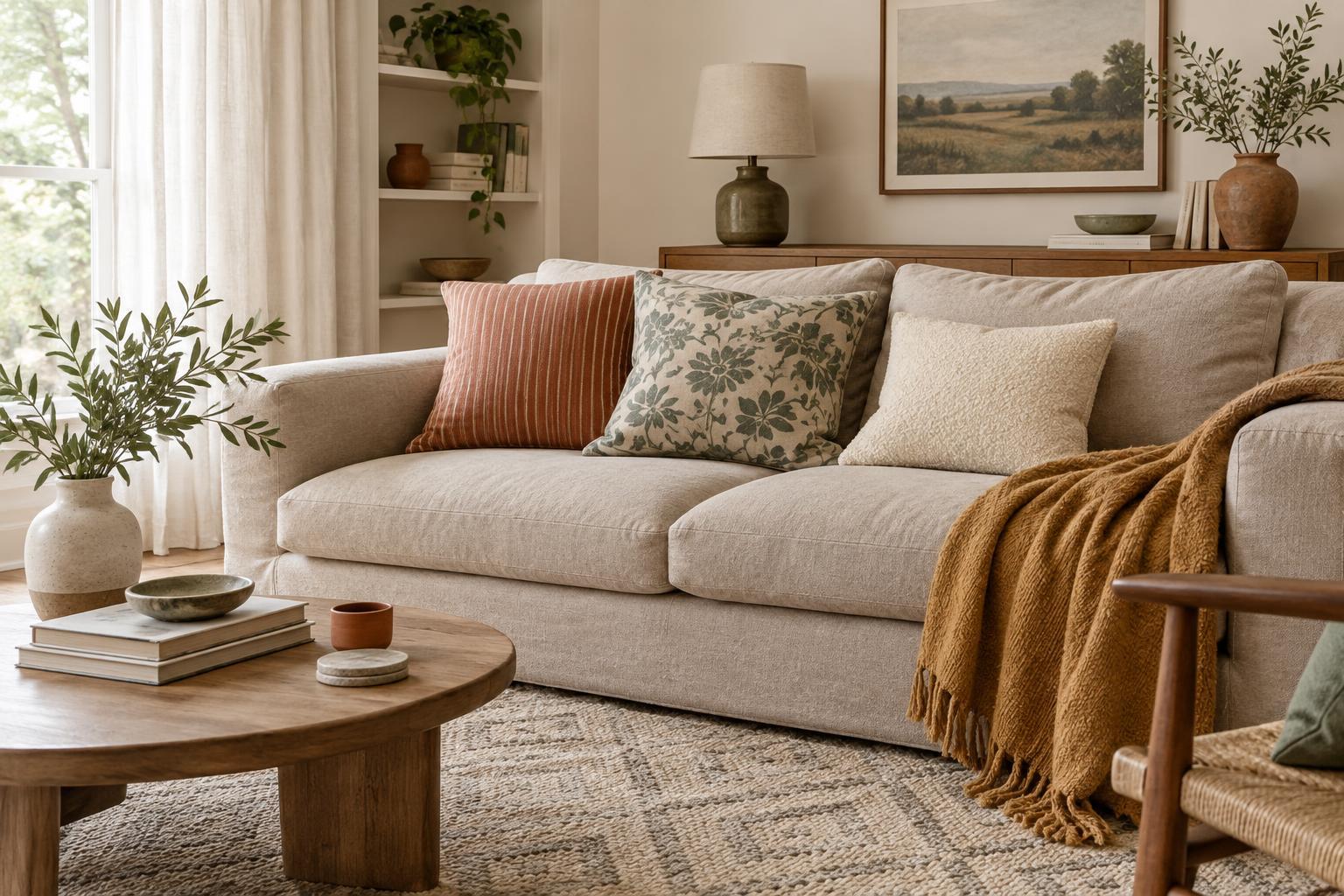
In a compact room, a smaller rug can sit in front of the sofa, but give it a deliberate relationship to the furniture. It should extend meaningfully beyond the coffee table and preferably reach at least the sofa’s front feet. A rug that holds only the coffee table often reads as a small island rather than an anchor for the room.
Check the edges and walkways
Once you have a likely size, consider what happens at its edges. Aim for some visible floor around the rug rather than pushing it against every wall, unless you are intentionally covering most of the room. The amount need not be identical on every side, especially in an irregular space, but the placement should look considered from the doorway and the main seating positions.
Keep an eye on paths to doors, shelves and adjacent rooms. A rug edge in the middle of a busy walkway can be awkward to step over and may wear more quickly. Check door clearance, too, particularly if you are considering a thick rug and pad. If the room opens into a dining or entry area, the living room rug should define its own zone without crowding the neighboring one.
Test the size before you commit
Use painter’s tape or sheets of paper to mark the proposed rug outline on the floor. Walk around it, sit on the sofa and pull out any chairs that move regularly. Seeing the full footprint at home is more reliable than judging a rug by its measurements alone. If you are choosing between two sizes, mark both and compare how much of each seat they include.
Measure the actual rug you plan to buy, not just its labeled size, since dimensions can vary. Also note whether fringe is included in the listed length. Sketching the furniture and rug to scale can help with an online purchase, but the taped outline will reveal practical details such as a doorway, floor vent or side table that is easy to overlook.
Let material support the layout
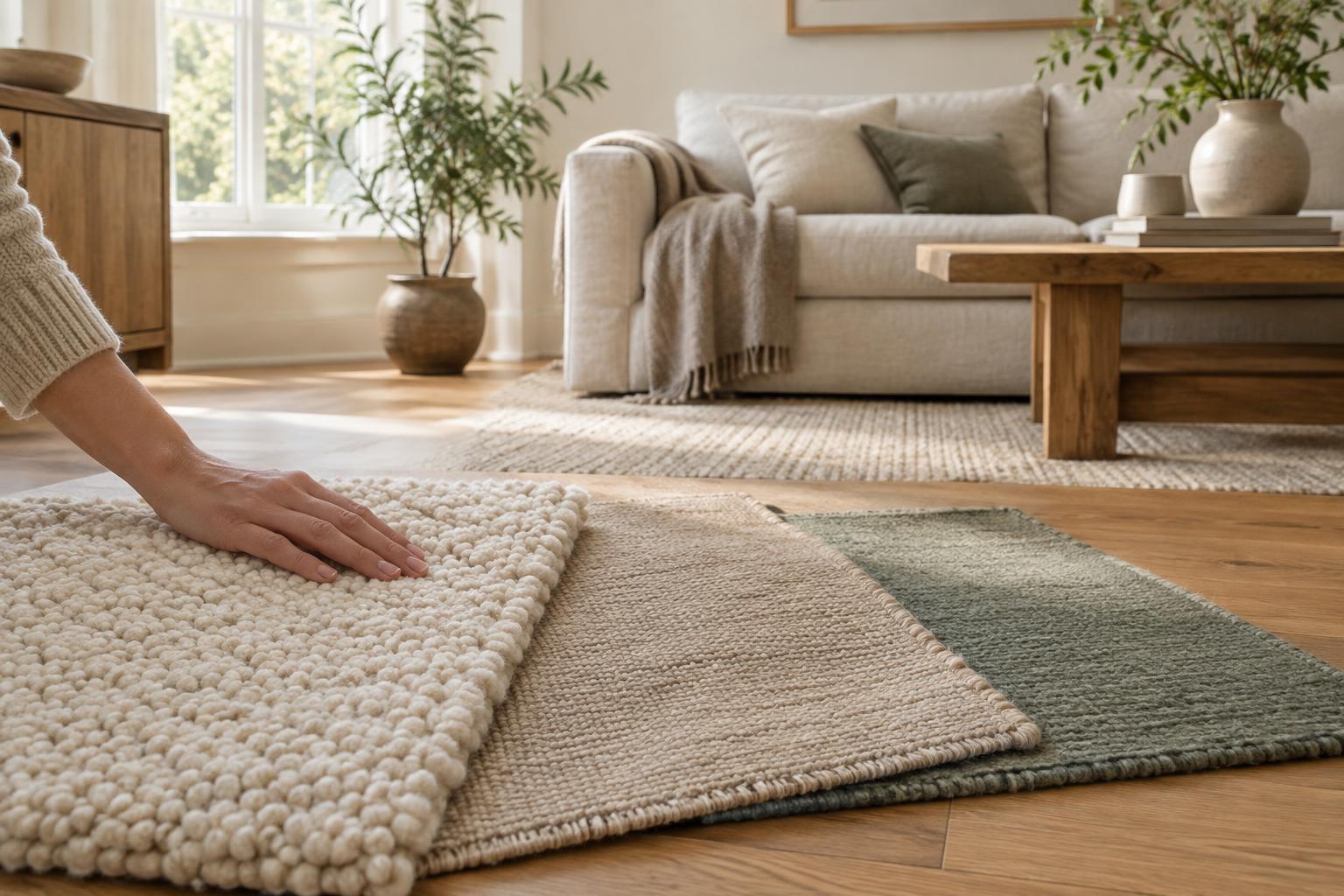
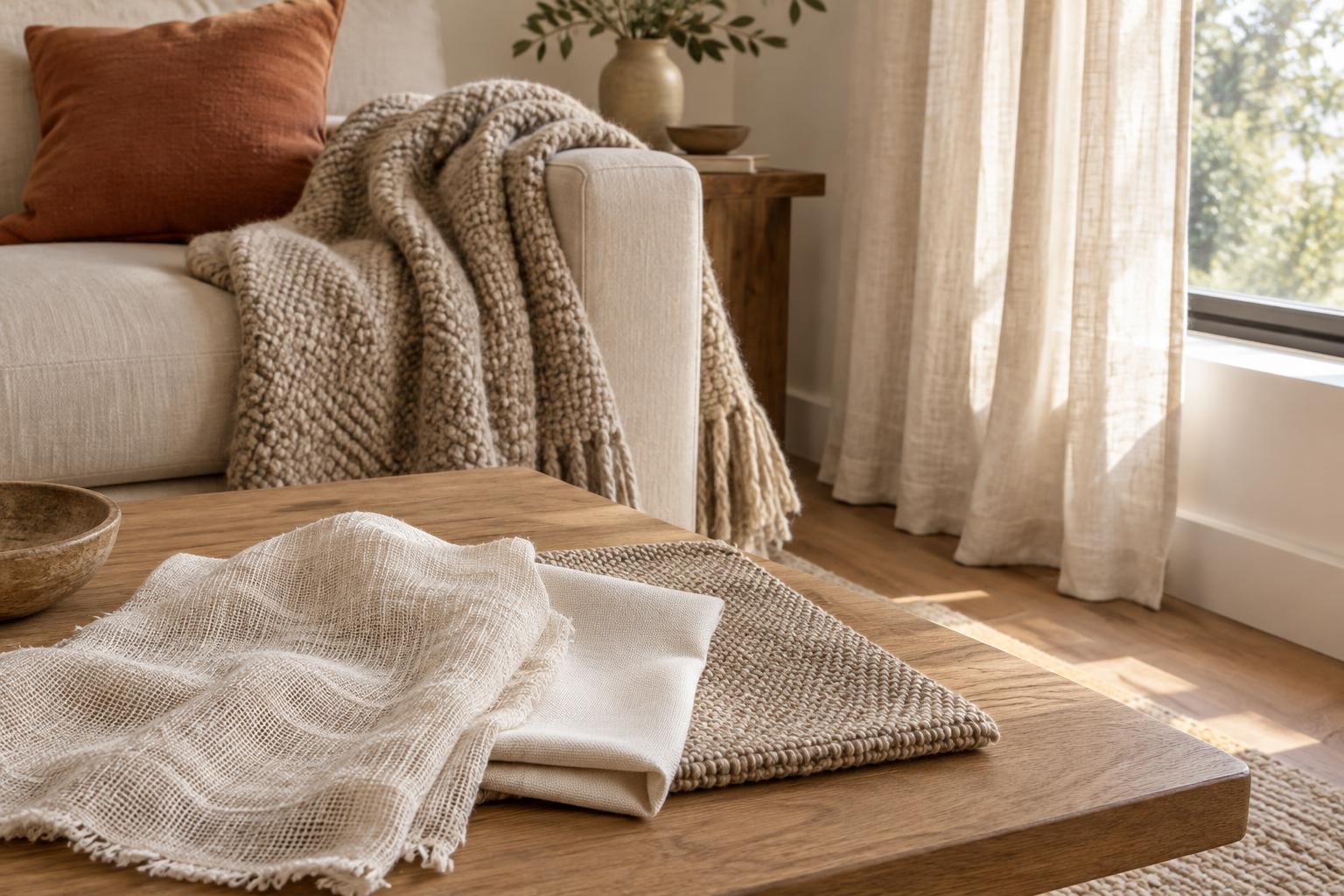
Size comes first, but texture affects how a rug works in daily life. A low-pile or flatweave rug can be easier to place beneath furniture and less likely to interfere with a nearby door. A deeper pile can feel softer in a relaxed seating area, though chair legs and frequently moved tables may be less steady on it. A suitable rug pad can add cushioning and help keep the rug in place; choose one that fits the floor and rug materials.
If the ideal footprint is beyond your budget, consider a simpler material or pattern before sizing down so far that the seating loses its connection. A well-proportioned rug does not have to fill the room. It only needs to give the furniture a shared foundation, leave sensible space to move and make the living area feel settled.