What a rug pad actually does
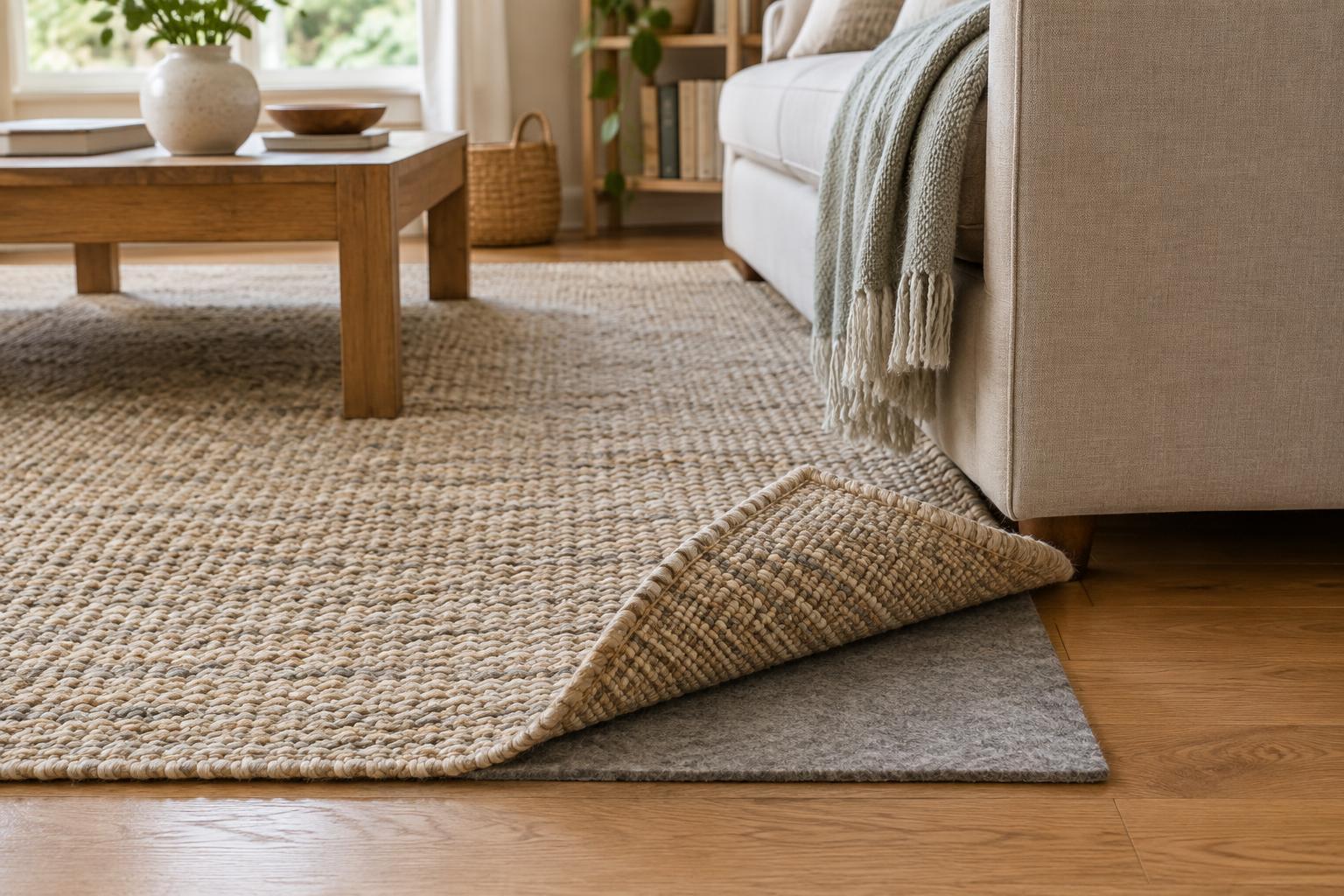
A rug pad sits between a rug and the surface beneath it. Depending on its construction, it can reduce shifting, add cushioning and help keep the rug from bunching underfoot. It can also create a little separation between the rug backing and the floor, making the rug easier to lift for cleaning. A pad is useful even under a large rug that appears to stay put: furniture may hold the corners while the center still wrinkles or creeps.
The best pad is not necessarily the thickest one. A dining rug needs enough stability for chairs to move across it; an entry rug needs a low profile that clears the door. A soft living-room rug may benefit from cushioning, while a thin runner often needs grip above all else. Start with the rug’s size, weight and location, then consider what the floor can safely accommodate.
Match the pad to the floor
On sealed hardwood, tile and many other hard floors, look for a pad labeled as suitable for that specific surface. Felt-and-rubber pads are a common option when you want both cushioning and grip: the felt faces the rug, while the grippy side faces the floor. For a small rug or runner, a thinner nonslip pad may be more practical. Check the flooring manufacturer’s care guidance before buying, especially if the floor has a specialty finish.
Be more cautious with vinyl, luxury vinyl plank and other resilient flooring. Some rubber or PVC-backed products may react with certain finishes or leave discoloration over time. Choose a pad explicitly approved for the flooring you have, rather than assuming that a label saying “safe for hard floors” covers every material. The same care applies to heated floors: confirm that both the rug and pad are compatible with radiant heat.
A rug placed over carpet has a different problem. Grip products designed for hard floors may not work well on pile. Look for a pad made for rug-over-carpet use, and consider a low-profile option so the top rug does not feel unstable. Whatever the surface, avoid using a pad to conceal a damp area. Trapped moisture can affect a floor or rug, so address the source of dampness and let both surfaces dry before laying anything down.
Choose grip, cushion and thickness with the room in mind
Grip matters most where a rug is likely to move: hallways, beside the bed and in busy walkways. A pad should help hold the whole rug evenly, not just its corners. If a rug still slides, check that the floor and pad are clean and dry and that the pad suits the rug’s backing. Curling edges or ripples may call for a different pad or a rug that lies flatter, rather than more thickness.
Cushioning can make a room feel quieter and more comfortable, particularly beneath a flatweave or low-pile rug. Too much loft, though, can make chairs wobble, create a noticeable step at the rug’s edge or stop a door from opening freely. For a dining area or doorway, favor a firm, low-profile pad. In a seating area with adequate clearance, a denser cushioned pad may give a pleasant feel without making the rug look puffy.
Get the size right, then keep it clean
A pad should support most of the rug without extending beyond it. As a starting point, trim the pad so it sits roughly one to two inches inside the rug’s edge on each side; adjust if the rug’s shape, thickness or maker’s guidance calls for it. Measure the rug itself rather than relying only on its stated size. A pad that is too large can show at the edges, while one that is much too small leaves unsupported areas that may wrinkle.
Before placing the pad, sweep or vacuum the floor and make sure it is fully dry. Lay the pad flat, position the rug over it and smooth out any folds. Periodically lift the rug to remove dust from both sides and inspect the floor for residue or changes in appearance. Follow the pad maker’s cleaning instructions, and let every layer dry completely before putting it back.
A well-chosen pad should quietly support the rug rather than change the way you use the room. When material compatibility, grip and clearance all suit the space, the rug is more likely to stay comfortable and look neatly settled in everyday life.