Start with the sleep experience you want
A duvet insert does more than make a bed look inviting. It determines how much warmth you feel, how the covers drape around you and how easy your bedding is to maintain. Down, down alternative and wool can all work well, but they create noticeably different beds. Before comparing materials, think about your bedroom temperature, whether you tend to wake up hot or cold, and whether you enjoy a light, lofty cover or a flatter one with a little more weight.
Warmth labels such as lightweight, all-season and winter are useful starting points, not universal measurements. The cover fabric, amount of fill and construction also affect how an insert feels. If you share a bed with someone who runs at a different temperature, a lighter insert paired with an extra blanket on one side may be easier to adjust than one very warm duvet.
Down: light loft and adaptable warmth
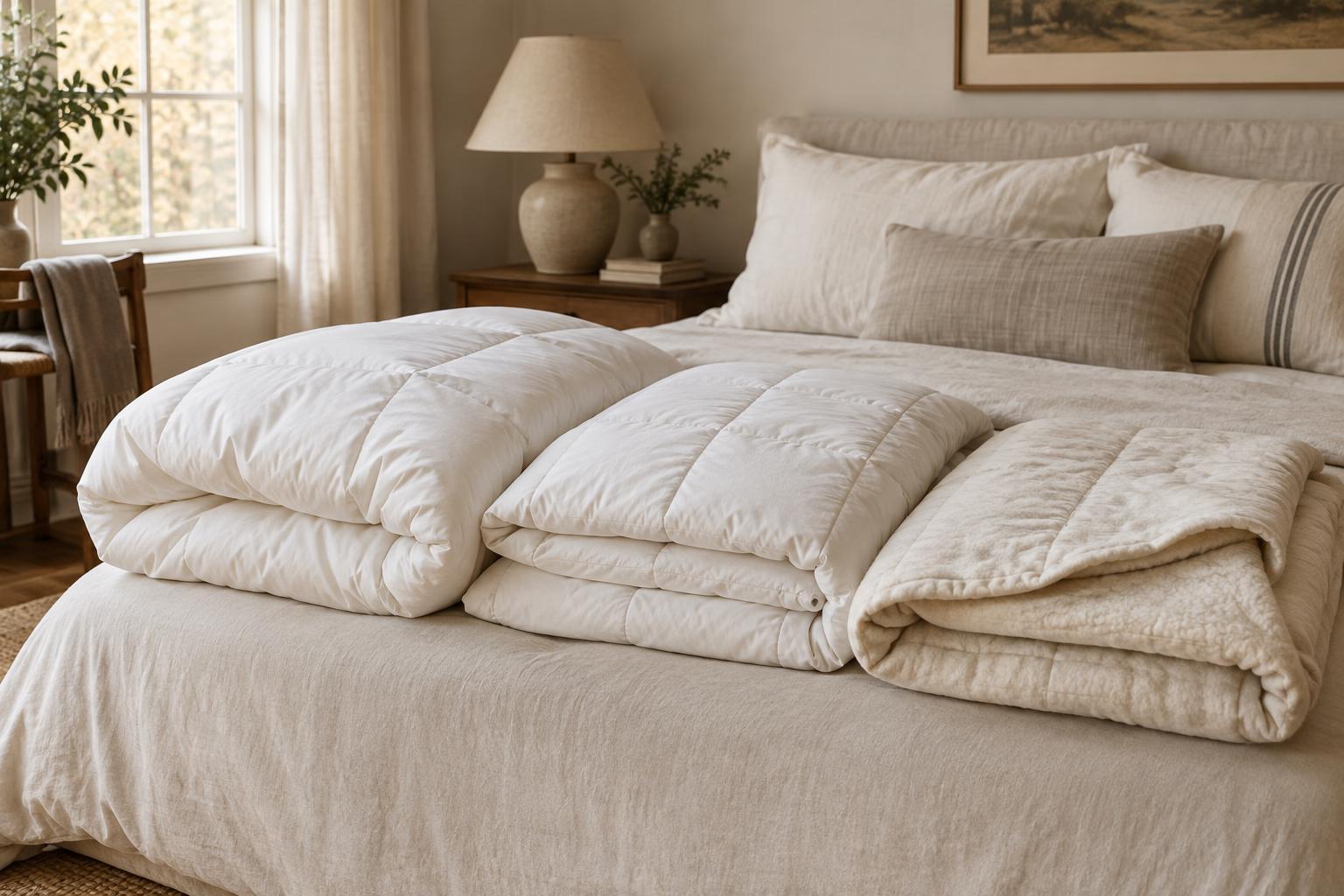
Down is the soft insulating material found beneath the outer feathers of ducks or geese. Its appeal is loft: it can trap warmth without feeling especially heavy. A down duvet often has a puffy, cloudlike look and compresses easily when you settle under it. That makes it worth considering if you want warmth but dislike the feeling of substantial weight on your body.
When shopping, compare more than the word “down” on the label. Fill power describes how much space a given amount of down occupies, while fill weight tells you how much filling is inside the insert. A higher fill power does not automatically mean a warmer duvet; the amount of fill and the duvet’s construction matter too. Check whether the insert uses baffle-box construction, which gives the down room to loft, or sewn-through stitching, which may feel lighter but can create cooler lines at the seams.
Care requirements vary. Some down inserts can be machine-washed, but a large duvet needs enough space to wash and dry thoroughly. Check the label and consider whether you have access to a suitably sized machine. If you prefer to avoid animal-derived fill, down is not the right choice.
Down alternative: easy-care flexibility
Down-alternative inserts usually use synthetic fibers arranged to mimic some of down’s softness and loft. They are available in a wide range of weights and often cost less than comparable down options. Many are machine-washable, which can be especially convenient for guest beds, children’s rooms or households that like to launder bedding frequently.
The trade-off is feel. Some down-alternative duvets are airy and soft; others feel denser or less springy, particularly after repeated washing. The outer fabric and stitching make a difference, so look closely at product details rather than assuming every synthetic insert will feel the same. Down alternative may suit someone who wants to avoid down, but no material is guaranteed to prevent irritation. If sensitivities are a concern, pay attention to the entire bedding setup, including the cover, cleaning routine and any stated materials.
Wool: a flatter drape and balanced feel
Wool offers a different kind of comfort. Rather than creating a high, puffy silhouette, many wool-filled duvets lie flatter and have a gently substantial drape. Wool can manage moisture well, which may appeal if you want insulation without a very lofty insert. Its actual warmth will still depend on how much wool is used and on the fabric surrounding it.
Wool is not automatically a low-maintenance choice. Some wool inserts are washable under specific conditions; others call for airing or professional cleaning. Read the care label before purchasing, particularly if regular machine washing is important to you. Also check the full material listing if you have preferences about animal-derived fibers or outer fabrics.
Make the final choice practical
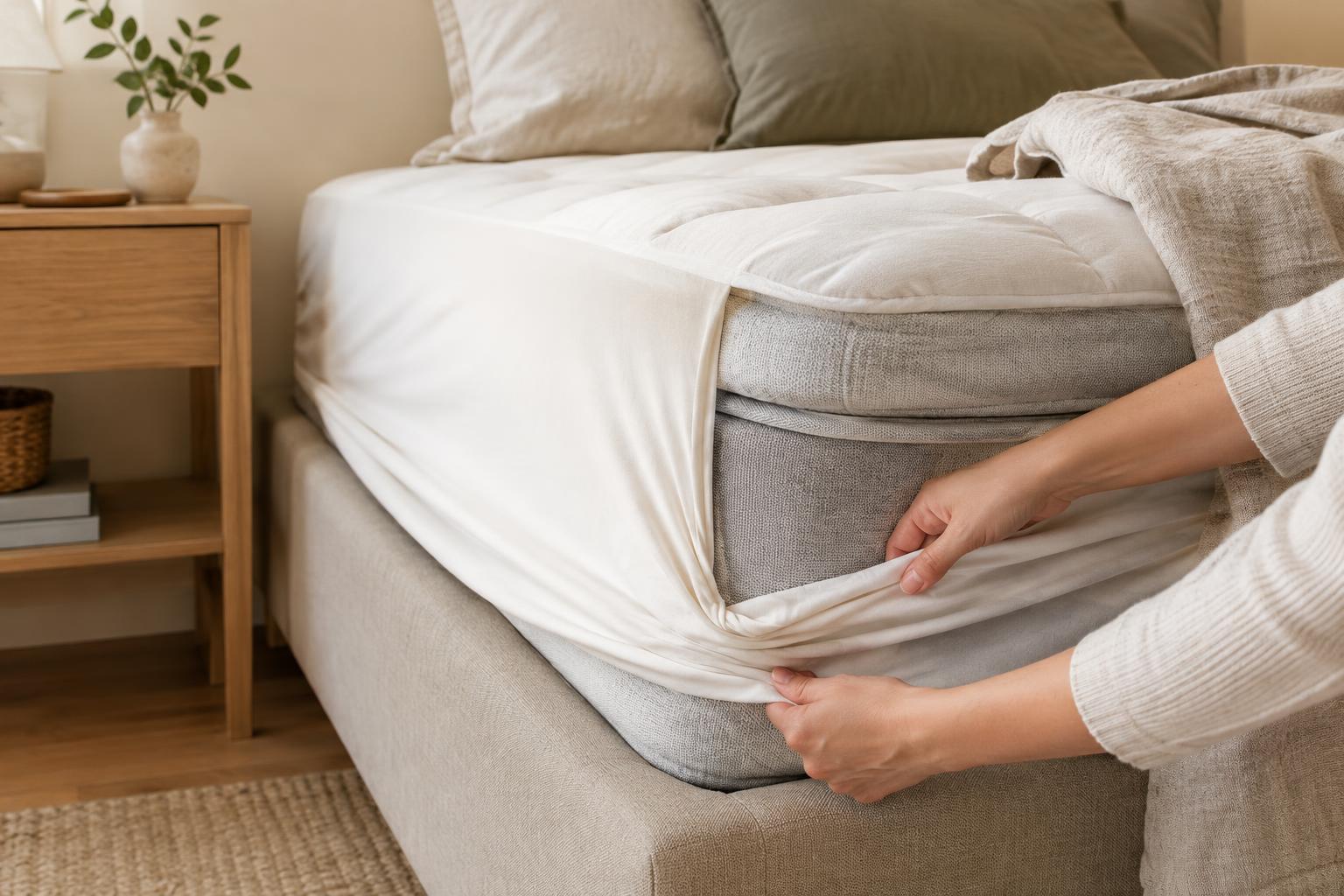
Once you have a preferred fill, look at the details that affect everyday use. Choose an insert that fits your duvet cover closely enough to fill the corners without bunching. Corner loops or tabs can help keep it in place if your cover has ties. A breathable cover fabric, such as cotton or linen, can change the feel of any insert, while a tightly woven shell helps keep filling contained.
For a first purchase, prioritize the temperature and maintenance needs you know you have. Choose down for lofty warmth with a light feel, down alternative for broad choice and potentially simpler washing, or wool for a less puffy, softly weighted drape. If you are unsure about warmth, a lighter insert is often easier to layer with a throw or blanket. The best duvet is the one you can comfortably sleep under, care for and use through your ordinary routines.