Decide where the curtains will begin
Before measuring for curtain length, decide where the rod will sit. A rod mounted above the window frame can give fabric more room to frame the glass when the curtains are open. Check the space above and beside the window first: molding, a low ceiling, nearby walls or furniture may limit the position. If rods are already installed, measure from the hardware you have rather than from the top of the window.
Use a sturdy tape measure and make a note of the planned rod position for each window. Even windows that look identical may have slightly different measurements, so measure them individually. If you are replacing curtains but keeping the hardware, leave the rod in place while you measure. If you are installing new hardware, mark its intended height lightly and check that the marks are level before using them as your starting point.
Choose the finish you want at the bottom
For a floor-length look, decide whether the hem should stop just above the floor, meet it, or rest on it. A small clearance helps curtains move easily and keeps the fabric away from routine floor dust. A hem that meets the floor creates a softer look but leaves less room for measurement error. Fabric that pools on the floor can feel relaxed, though it may need more frequent arranging and cleaning.
Floor length is not the only option. In a kitchen, beside a radiator or above a piece of furniture, a hem near the windowsill may be more practical. Another choice is to let the curtain extend below the sill so it covers the lower part of the window without reaching the floor. Pick the endpoint based on how the room is used, then measure to that point. Giving every panel in the same room a consistent intended endpoint often makes the result feel more deliberate.
Measure from the hanging point, not just the rod
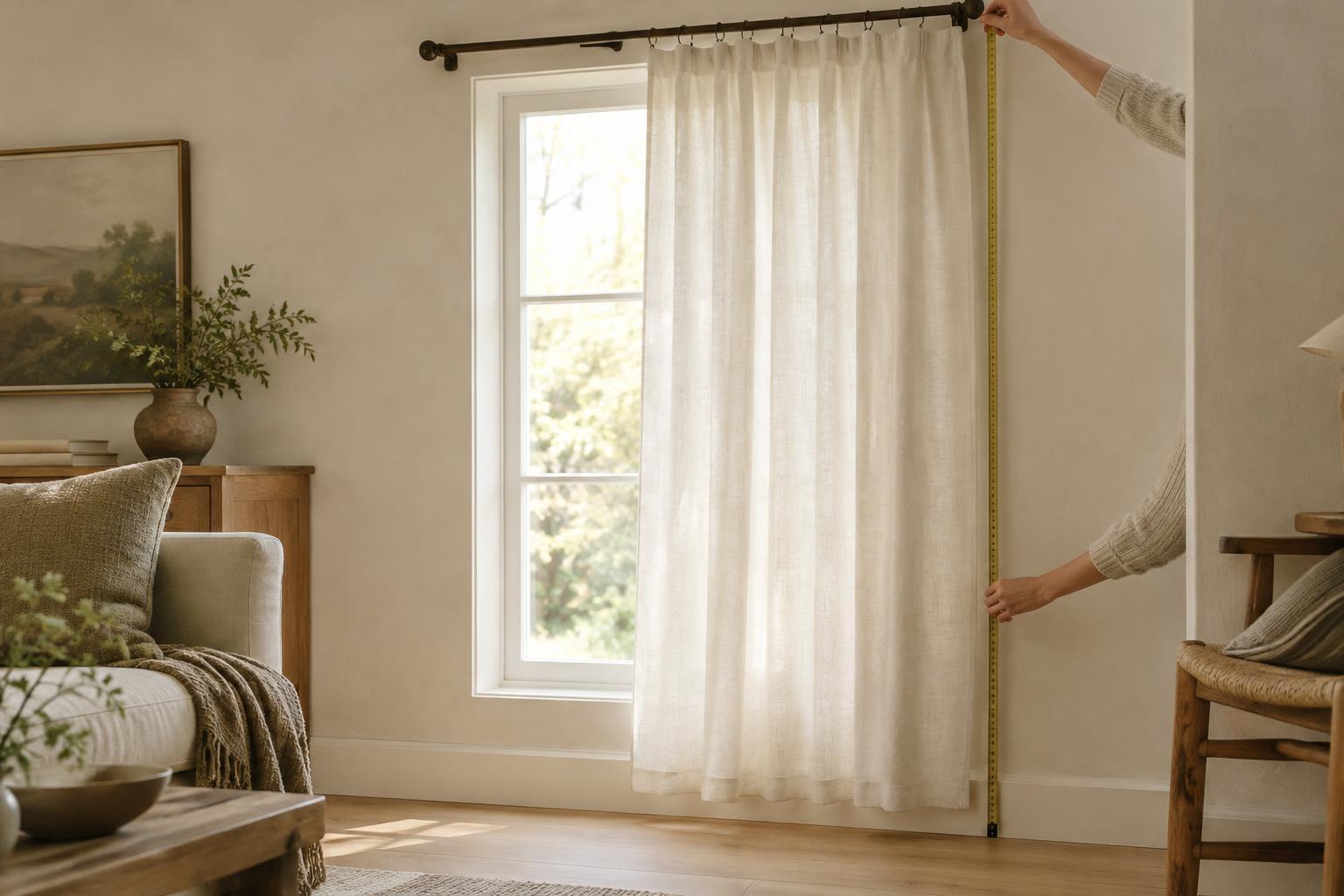
The correct starting point depends on how the curtain attaches. A rod-pocket or tab-top panel usually hangs from a different point than a panel suspended by rings. With rings, measure from the spot where the fabric will be held by the clip or hook down to your chosen hem position. For curtains with heading tape or pleats, check where the hooks will sit when fitted; their position can change the finished drop.
Measure vertically to the intended endpoint at the left, center and right of the window. Record each number rather than averaging them immediately. Floors and ceilings can be uneven, and a rod can appear level beside a sloping floor. If the measurements differ, check the rod with a level and think about which hem position will look best across the whole span. For made-to-measure curtains, share the relevant measurements and hanging method with the maker. For ready-made panels, compare your required drop with the stated panel length and any adjustment available through hooks or hemming.
Allow for the fabric and the way it will be used
Length is easiest to judge when you know what the finished curtain will do. Panels that open and close every day need to move past the floor without catching. Lighter fabric may shift with a breeze, while heavier fabric may settle into a straighter line. If the textile is washable, read its care information before altering it; some fabrics may change with laundering. Washing or preparing fabric as directed before a final hem can help avoid a later surprise.
If you plan to use a lining, confirm that the curtain length refers to the finished panel, not just the face fabric. Remember that fullness affects the look of a curtain but does not replace an accurate drop measurement. A generous width creates folds across the window; the length still needs to be measured from the chosen hanging point to the chosen hem.
Do a final check before you buy or hem
Write down four things for each window: the rod position, the attachment style, the measurement to the desired hem and the finish you want at the floor or sill. If possible, hold a tape measure or a length of fabric against the window and step back to view it from across the room. Check that the proposed hem clears anything beneath the window and that the curtains can open without brushing a nearby surface.
When in doubt, avoid cutting fabric based on a single measurement. Hang new panels first, let them settle, then pin a temporary hem and view it in daylight and lamplight. This small pause lets you adjust the length to the actual room rather than an imagined one—and helps the finished curtains look comfortably at home.