Start with what the window needs to do
Curtains can soften a room, frame a view and make an everyday space feel finished. But a fabric that looks beautiful in a sample may not solve the problem at the window. Before choosing, ask what you want when the curtains are open, when they are closed during the day and when the lights are on at night. A sunny kitchen, a street-facing living room and a bedroom used for daytime sleep may need very different treatments.
It helps to separate three questions: How much daylight should come through? How much of the room should people be able to see from outside? And how dark should the room become? Sheer, light-filtering and blackout describe useful starting points, but fabric color, weave, lining and installation all affect the result.
Choose sheers for softness, not dependable privacy
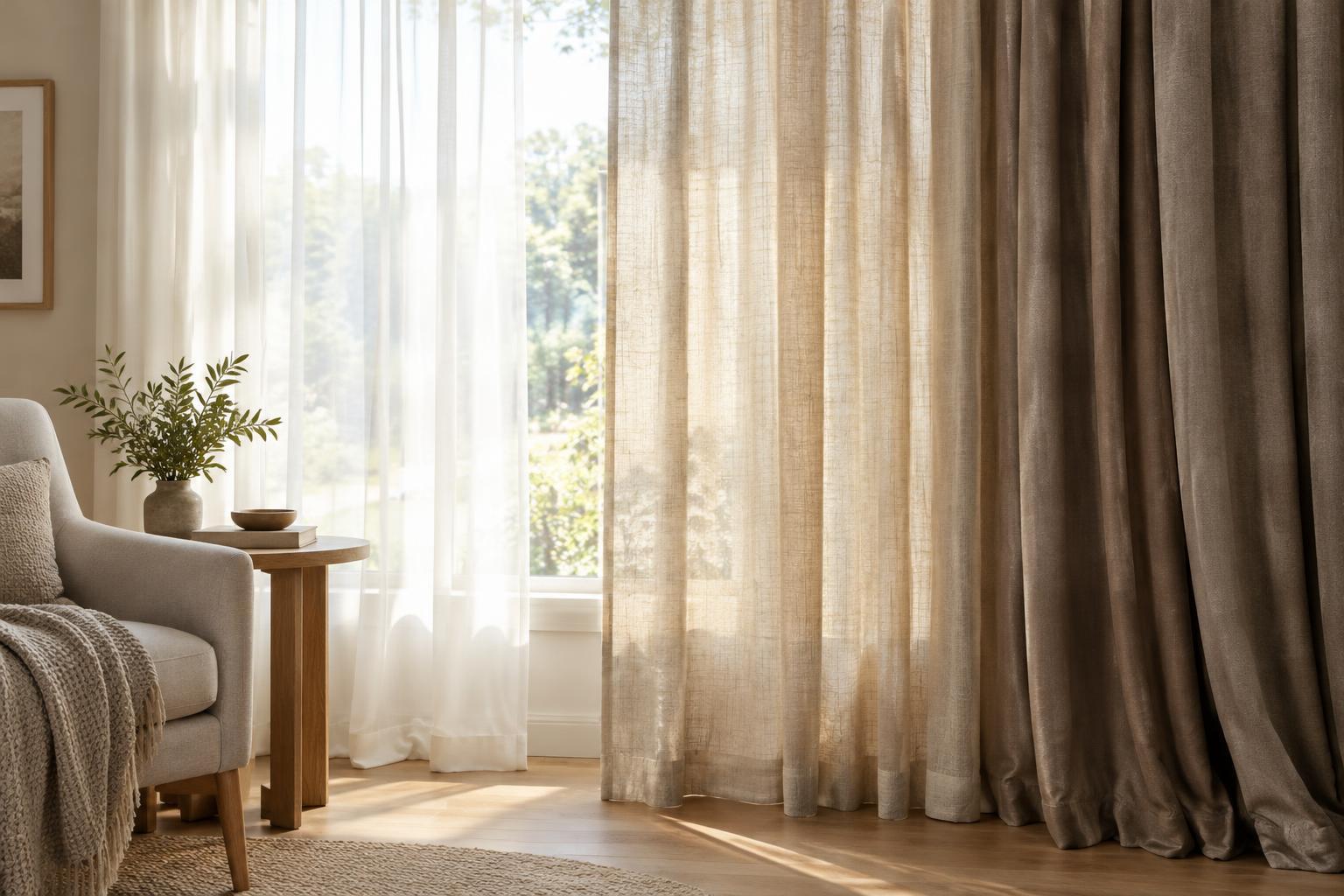
Sheer curtains let generous daylight into a room while taking the hard edge off a bare window. They can diffuse a view of a nearby building, soften strong lines around a window and add movement without making the room feel heavily dressed. They suit spaces where you want an airy look and do not need to darken the room.
Their privacy has limits. In daylight, sheers may make it harder to see into a room from a brighter outdoor area, but they are not a reliable screen. After dark, interior lighting can make people and furnishings much more visible from outside. If privacy matters in the evening, plan another layer, such as opaque curtains or a shade. For a relaxed look, choose a sheer that falls neatly rather than one so thin that it seems insubstantial or so full that it crowds the window.
Use light-filtering curtains for a balance of daylight and coverage
Light-filtering curtains sit between airy sheers and room-darkening blackout panels. They admit a softer level of daylight while offering more visual coverage than a typical sheer. Depending on the fabric, they might create a gentle glow or simply reduce glare. This makes them a useful choice for living rooms, dining areas and home workspaces where you want to use the room comfortably during the day.
The label does not guarantee a particular degree of privacy or darkness. A loosely woven pale fabric may reveal shapes when a lamp is on behind it, while a denser weave may provide better coverage. Hold a fabric sample toward a light, then, if possible, view it with light behind it from the side that would face outdoors. Consider how much detail you are comfortable revealing. If you want nighttime privacy without making the room feel dark by day, a light-filtering panel with a suitable lining may be worth considering.
Pick blackout when darkness is the priority
Blackout curtains are designed to block most light through the fabric. They are often the strongest option for a bedroom where early daylight interrupts sleep, a nursery where naps need a darker setting or a room used for watching films. They can also provide substantial privacy when closed. Some blackout fabrics have a coated backing; others achieve their effect with a separate lining, which can let you keep the decorative face fabric you prefer.
Even effective blackout fabric cannot seal every gap around a window. Light may enter above the rod, along the sides or between two panels. If darkness is especially important, choose panels wide enough to overlap at the center and extend beyond the window edges, and consider how the heading meets the rod or track. Blackout curtains can feel visually weighty, so choose a color and texture that work with the room even when the panels are open.
Layer for flexibility, then check the practical details
You do not always have to choose one type. Sheers on an inner track with heavier curtains on an outer rod let you soften daylight, add privacy or darken the room as needed. A light-filtering curtain paired with a separate blackout shade can offer similar flexibility with less fabric at the sides of the window. Layering is especially helpful in a multipurpose room, though it requires enough space for both treatments to hang and move freely.
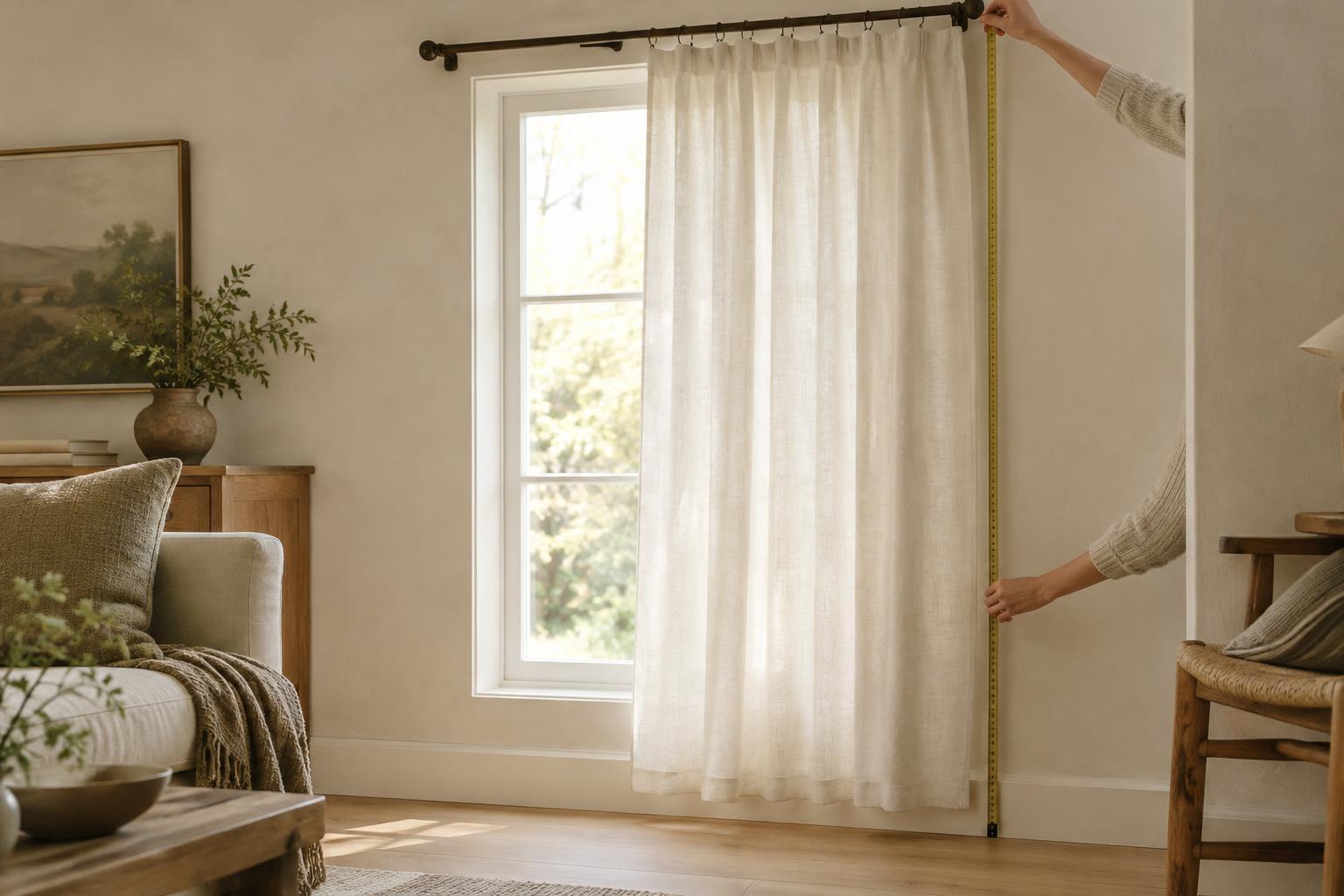
Before buying, measure the window and the area around it, not just the glass. Panels that are too narrow may look skimpy when closed, while a rod placed close to the window can prevent the curtains from stacking clear of the view. Think about whether you want a sill-length or floor-length finish, how the fabric will be cleaned and whether pets or children are likely to pull at the hem. If you can, test a sample in the room at different times of day. The best choice is the one that gives you the light and privacy you need while still making the room feel welcoming.