Start with the mattress you actually sleep on
A fitted sheet can be the right bed size and still be a poor fit. Twin, queen and king labels describe the mattress’s length and width, but the sheet also has to wrap around its depth. If the corners pull upward overnight, the pocket may be too shallow. If fabric gathers across the sleeping surface, the pocket may be deeper than you need.
Measure from the top sleeping surface to the bottom edge of the mattress at a corner, using a tape measure held straight rather than following the curve of the fabric. Check more than one corner if the mattress has rounded edges or a cushioned top. For a pillow-top mattress, include the pillow top in the measurement. You are looking for the full distance the sheet must cover, not just the height of the firm mattress core.
Count the layers that stay on the bed
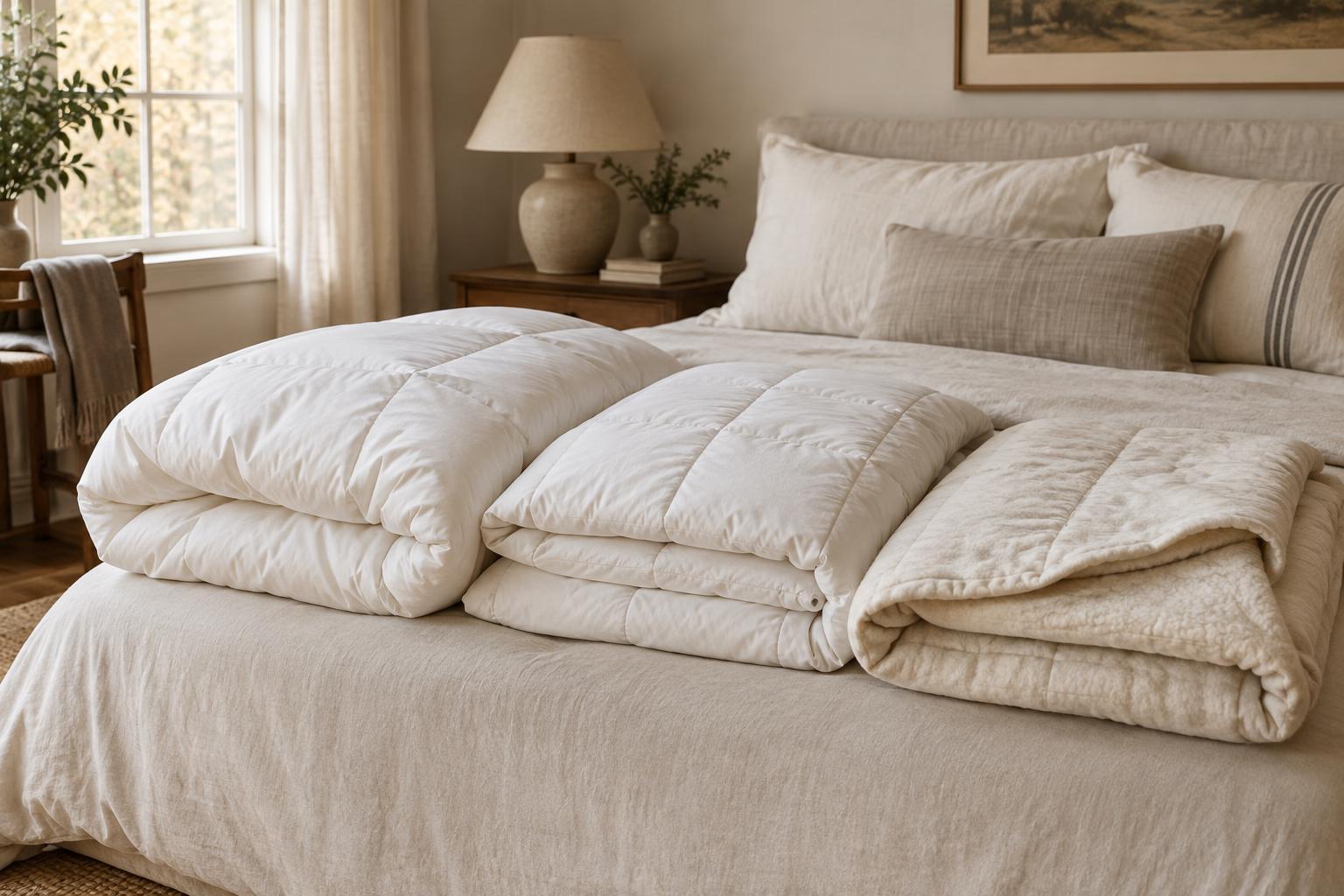
Before choosing a pocket depth, decide which layers the fitted sheet will cover. A mattress protector, pad or foam topper can add height. Measure with these layers in place if they normally sit beneath your sheet. A thick topper may also extend slightly beyond the mattress edge, making a sheet feel tighter than its label suggests.
Keep the order of your bedding in mind. Most fitted sheets go over the mattress and any protector or topper intended to sit beneath the sheet. A decorative layer placed above the sheet does not need to be included. If you sometimes remove a topper, a sheet chosen for the taller setup may fit loosely when you use it on the bare mattress. In that case, separate fitted sheets for the two setups may be simpler than trying to make one pocket depth do both jobs.
Read pocket-depth labels as a guide, not a guarantee
The pocket depth listed on a fitted sheet tells you how deep its corners are designed to be, but labels do not describe fit in exactly the same way across every product. When a seller provides a recommended mattress-depth range, use that range alongside your own measurement. Check the sheet’s stated length and width as well; a deeper pocket cannot make up for the wrong bed size.
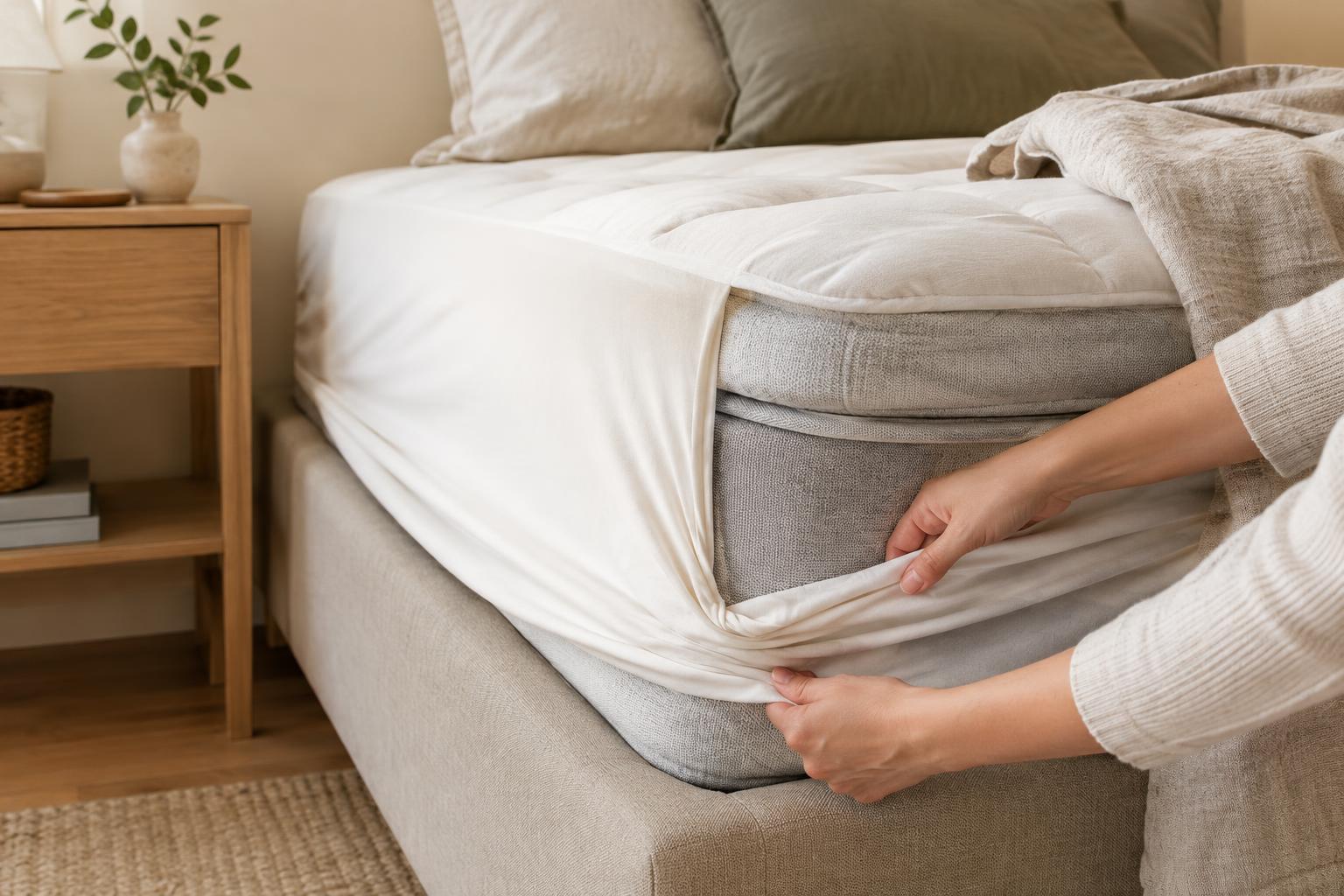
Choose a pocket with enough room to reach around the mattress and tuck beneath its lower edge. Aim for some allowance rather than a sheet whose listed depth exactly matches a bulky mattress setup. At the same time, avoid assuming the deepest available pocket is always best. Extra fabric may bunch or require frequent retucking on a relatively slim mattress. Stretch, corner shape and elastic construction all affect how securely a sheet sits, so depth is an important starting point rather than the only detail.
Consider fabric and construction
Fabric changes how a fitted sheet feels and handles, though no fiber choice can replace a suitable size. A stretchy knit may be easier to pull over a tall corner, while a woven sheet generally relies more on accurate dimensions and its elastic to hold a smooth shape. If you prefer a crisp, taut finish, pay particular attention to the measurements in a woven-sheet listing. If you prefer a softer, more relaxed look, a small amount of ease may bother you less.
Look at how the elastic is arranged. Elastic running all the way around the sheet can help distribute tension, while elastic only at the corners may give a different hold. Neither detail guarantees a perfect fit on every mattress, especially when a topper shifts independently. Follow the sheet’s care instructions, too: laundering and drying can affect dimensions, particularly if the fabric is exposed to more heat than recommended. If a product lists finished or post-wash measurements, those can be more useful than an unspecified size.
Test the fit before deciding it is right
When the sheet arrives, put it on the fully made mattress setup. Fit the corners first, then run your hand around the sides to check that the fabric reaches beneath the mattress without forcing the seams. Lie down and notice whether the top stays reasonably smooth. A sheet that is difficult to pull over the last corner may be too small or shallow; one that slides and wrinkles readily may have too much room or insufficient grip for your setup.
If the fit is close but not quite right, check for a simple mismatch before replacing it. Confirm the sheet’s orientation, make sure the topper is centered and check that the protector is not folded at a corner. If those details are in order, compare the sheet’s measurements with your recorded mattress depth. Keeping that measurement handy makes future purchases easier—and helps you choose sheets that are pleasant to put on as well as comfortable to sleep in.