Start with the meals you actually serve
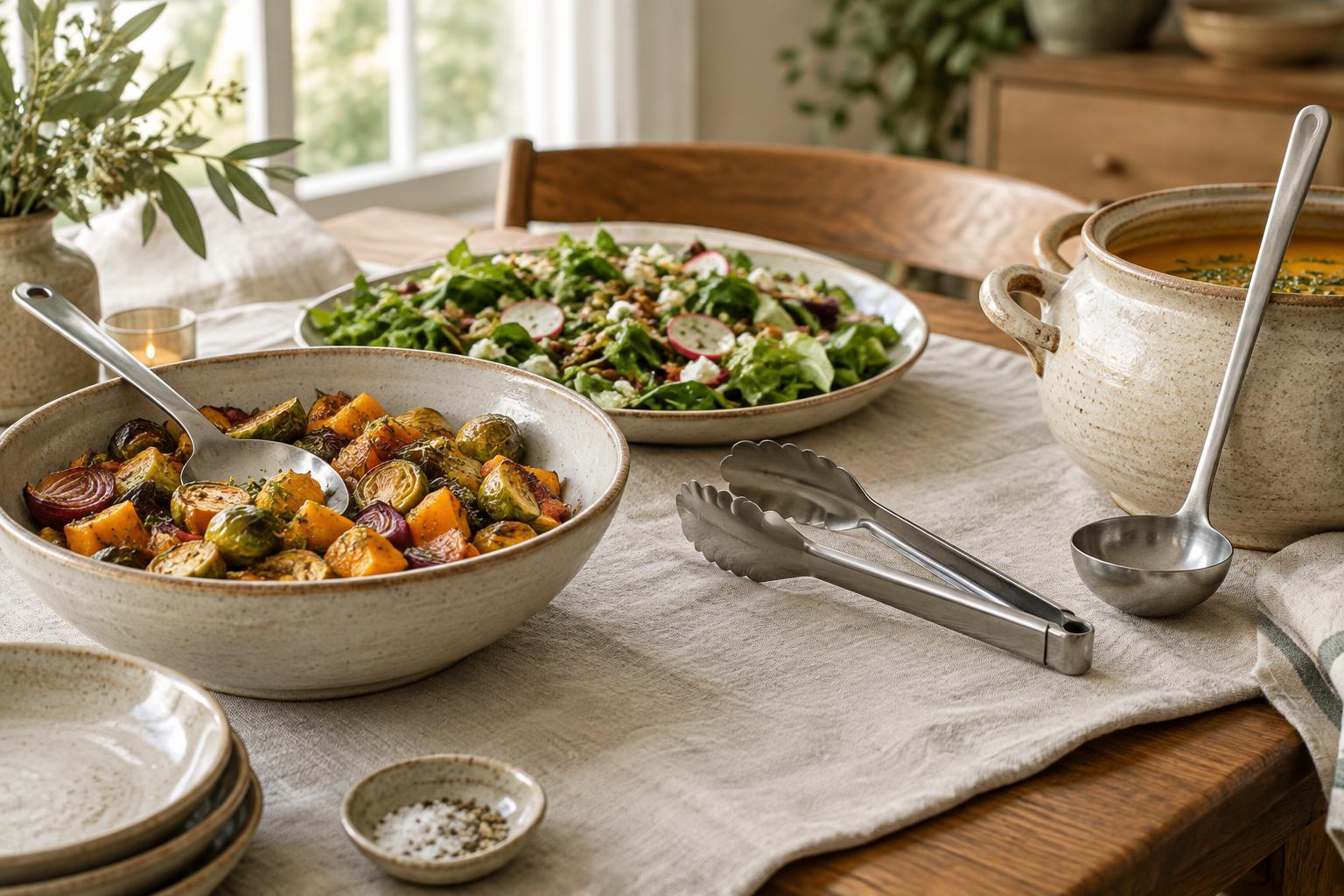
A useful serving-utensil set is not necessarily a large one. Think about the dishes that appear on your table most often: a bowl of rice, a tray of vegetables, a pot of soup or a shared salad. Each calls for a slightly different motion. A spoon scoops, tongs grip, and a ladle carries liquid. Those three pieces cover many everyday meals without filling a drawer.
Before buying anything, check what you already reach for. A sturdy kitchen spoon may work well at the table, while a small pair of cooking tongs might be awkward for a large salad bowl. The goal is to make passing and portioning food comfortable, not to assemble a perfectly matched display.
The three pieces that do the most work
A medium serving spoon is the most flexible place to begin. It handles grains, roasted vegetables, beans and many side dishes. Look for a bowl deep enough to lift a portion but not so large that it overwhelms smaller dishes. A comfortable handle matters, especially when the spoon rests beside a hot casserole or deep serving bowl.
Tongs are useful whenever a spoon would squash or scatter the food. They can lift bread rolls, salad greens, sliced vegetables or pieces from a platter. Choose a pair that opens easily in your hand and closes with enough control to pick up a single portion. Medium-length tongs are often easier to manage at a dining table than very long grilling tongs.
A ladle earns its space if you regularly serve soup, stew, chili or sauce. Its cup helps move liquid neatly from pot to bowl. Consider the depth of your usual serving vessel: a ladle with a very short handle may be difficult to use in a tall pot, while an oversized one can make small portions clumsy.
Add specialty pieces only when they solve a problem
A slotted spoon lets liquid drain back into a dish, making it handy for vegetables, fruit in syrup or foods served from a flavorful broth. A serving fork can steady slices while you lift them or help portion foods such as pasta. If you frequently serve a mixed green salad, a spoon-and-fork pair may feel more natural than tongs. You do not need both options unless you use both.
For foods you serve in neat portions, think about shape rather than matching sets. A broad, flat server helps lift pieces of lasagna, pie or cake without breaking them. A small sauce spoon can be pleasant for dressings and condiments, but a teaspoon may already do the job. Let repeated moments of frustration guide additions: if the same dish is difficult to serve every time, there may be a utensil worth making room for.
Choose materials that fit your dishes
Stainless steel is durable and straightforward to wash, and it works well with many ceramic or glass serving dishes. Wood brings a warm look to the table and feels gentle against bowls, though it benefits from prompt washing and thorough drying. Silicone can be useful when you serve directly from cookware with a surface you want to protect. Check a utensil’s care guidance before putting it in a dishwasher or leaving it against a hot pan.
Pay attention to the handle as well as the head. A utensil should reach into your favorite bowls without slipping inside them, but it should not be so long that it knocks into nearby glasses. If you have limited storage, pieces with simple shapes and no bulky rests or decorative ends are easier to fit together. A small collection in compatible colors or materials can look intentional even when the pieces come from different sets.
Set the table for easy sharing
Give each shared dish its own utensil when you can. It makes serving easier and keeps flavors from moving between dishes. Place a spoon or tongs on a small plate beside a platter if there is no comfortable place for the handle to rest. For a casual meal, you can put utensils in the dishes just before everyone sits down; for a buffet, leave enough space around each bowl for someone to serve themselves without reaching across another dish.
An everyday set can stay modest: one serving spoon, one pair of tongs and one ladle, with a slotted spoon or flat server added if your meals call for it. Wash, dry and store the pieces where they are easy to find. The best set is the one that helps food move from dish to plate smoothly and makes sharing a meal feel relaxed.