Start with the seating area, not the room
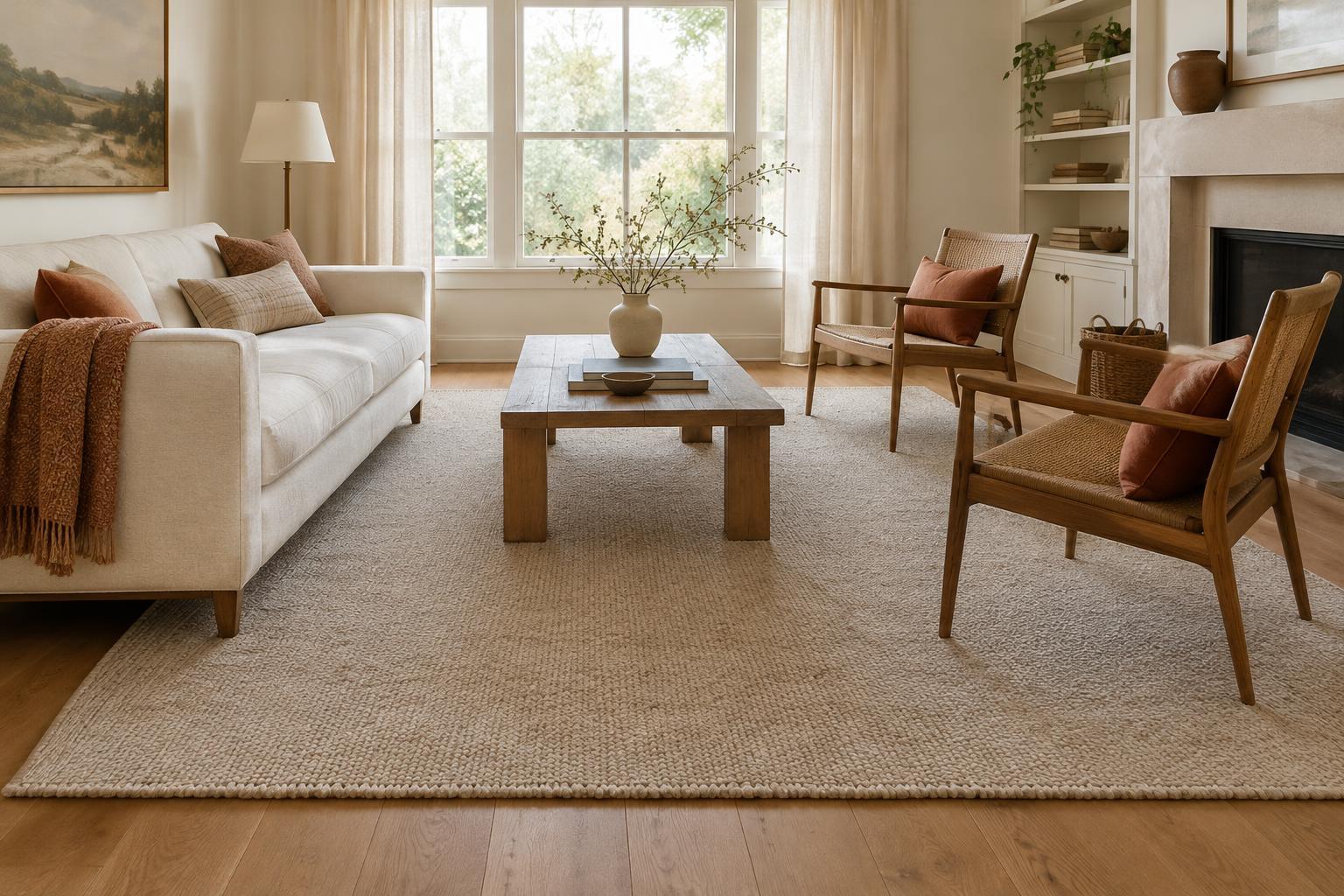
A rug does not need to fill the entire living room. Its main job is usually to connect the furniture where people sit. Before shopping, mark out the proposed rug with painter’s tape or sheets of paper. This lets you see whether the rug anchors the sofa and chairs without reaching awkwardly into a doorway or walkway.
Measure the seating arrangement as it is actually used. Include the front edges of the sofa and chairs, and note where people step when getting up. If you expect to rearrange the furniture, allow some flexibility rather than choosing a size that works in only one exact layout. A rug that looks generous under the furniture often feels more intentional than one that barely reaches the coffee table.
Choose a placement that connects the furniture
There are several workable ways to place a living room rug. In a spacious seating group, all the main furniture can sit on it. In many rooms, placing the front legs of the sofa and chairs on the rug provides the same sense of connection while using a smaller size. Whichever approach you choose, aim for a consistent relationship between the rug and the major seats.
A rug that sits only beneath the coffee table may make the seating area feel disconnected. If that is the rug you already own, try moving it to a smaller conversation corner or another room rather than forcing it to serve a larger layout. When one chair sits apart from the sofa, check whether it can touch the rug without blocking a route through the room.
Leave some visible flooring around the rug where possible, but do not treat the border as a rigid rule. The useful test is whether the rug defines the seating area and leaves comfortable paths to doors and nearby furniture.
Let daily use guide the material
Think about how the room is used before falling for a particular texture. A dense, low-pile rug is often easier to move chairs across and less likely to catch small items than a deep, fluffy one. A softer pile may feel welcoming in a quiet room where people often sit on the floor. If the living room also hosts meals, crafts, pets or frequent visitors, consider how readily you can clean the rug.
Materials vary in feel and upkeep, and construction matters too. Wool can offer a soft, resilient feel, though individual rugs have different care requirements. Cotton rugs may be lighter to handle, while some synthetic options are designed with straightforward cleaning in mind. Check the care instructions for the specific rug rather than assuming that every rug made from one fiber behaves the same way.
A suitable rug pad is worth considering, especially on a smooth floor. It can help limit slipping and keep the rug lying more evenly. Choose a pad that is compatible with both the rug and the floor finish, and trim it so it does not show beyond the rug’s edges.
Use color and pattern to support the room
Look at the large surfaces already in the room: the floor, sofa, curtains and walls. A rug can bring those colors together without repeating each one exactly. If the upholstery is patterned, a quieter rug may provide a visual rest. If most furnishings are plain, a pattern can add interest while helping the seating area feel distinct.
Consider the rug from a standing position as well as in a close-up image. A tiny, high-contrast pattern may look busier across a large floor than it does in a sample. Conversely, subtle variations in color or texture can add depth without drawing attention away from the furniture. Bring a sample into the room if you can, and view it in both daylight and evening light.
Check the final fit before deciding
Once you have a likely size, tape its outline on the floor and walk through the room. Open nearby doors, pull out any movable seats and check that the rug will not end where feet naturally land when someone rises from the sofa. If the outline feels cramped or leaves a chair stranded, adjust the size or the furniture arrangement before buying.
Finally, think about what you will be willing to maintain. A rug that suits your routine, feels comfortable underfoot and holds the seating group together will do more for the room than one chosen for appearance alone. The best fit is not a universal measurement; it is the one that makes your particular living room easier and more pleasant to use.