Start with the surface you have
The right protection depends on what the tabletop is made of and how it is finished. A sealed wood table, a painted surface, glass and stone may react differently to heat, moisture and cleaning products. If you have the maker’s care instructions, use them as your starting point. Otherwise, choose gentle habits and test any new cleaner or protective accessory in an inconspicuous spot.
It helps to think about three separate risks. Heat can affect a finish or leave a mark when a hot dish sits in one place. Spills can seep into joints, linger beneath a covering or stain a porous surface. Scratches often come from moving objects rather than setting them down. A few well-placed layers address these risks more effectively than covering the entire table all the time.
Give hot dishes their own landing place
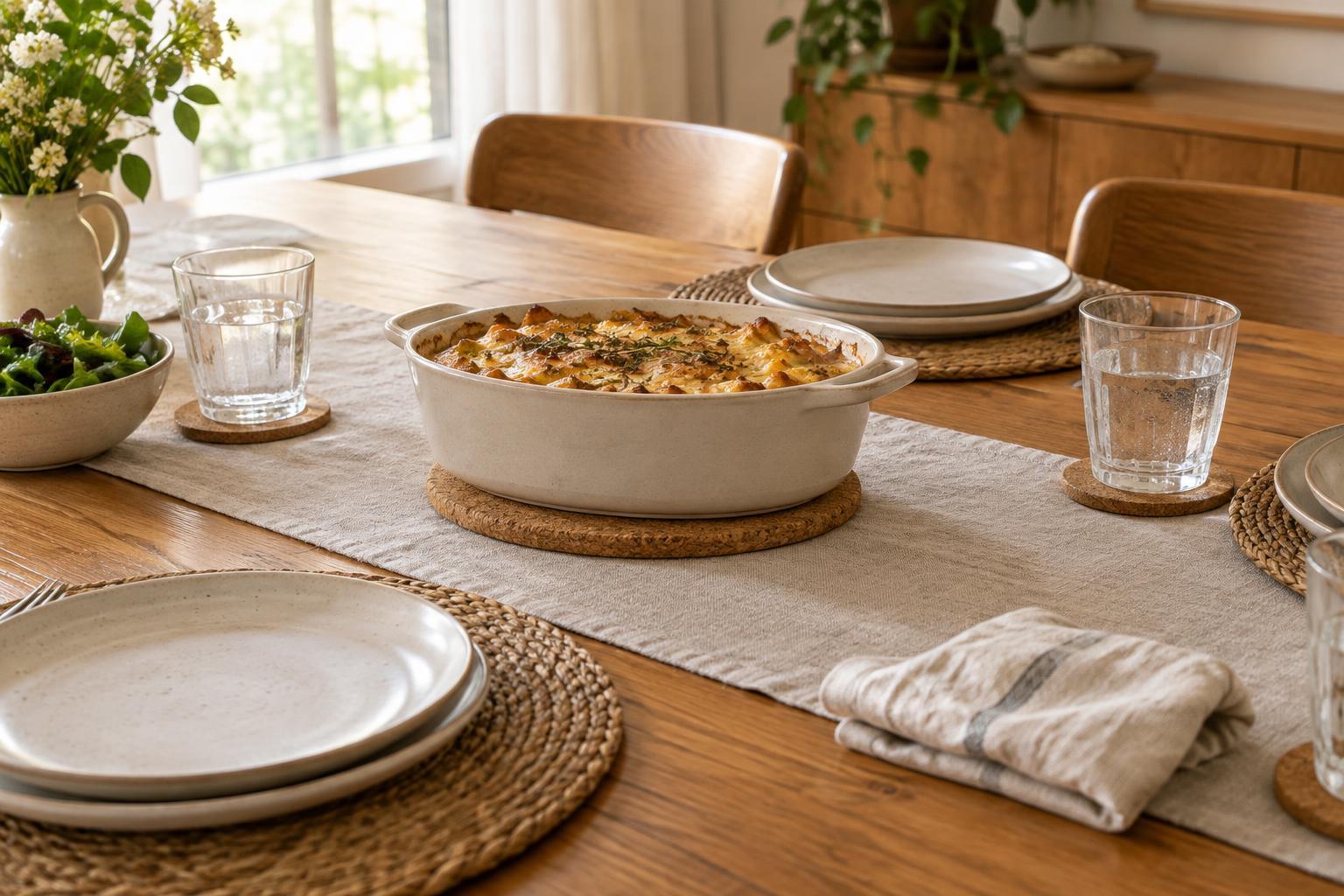
Put a trivet or heat-rated mat under serving dishes before they reach the table. An oven mitt folded beneath a casserole may seem convenient, but it is less stable than a flat trivet. Check that the trivet is large enough to support the whole base of the dish and has feet or a backing that will not scrape the tabletop. For large platters, two sturdy trivets may offer better support than one small one.
Avoid placing pans, baking trays or dishes straight from the oven on a placemat or tablecloth unless the product is specifically intended for that heat. Decorative fabric, cork and woven materials vary in how well they insulate, and heat combined with trapped moisture can be particularly hard on some finishes. Keep a few dependable trivets near the dining area so nobody has to improvise while carrying a hot dish.
Use layers where drinks and food are served
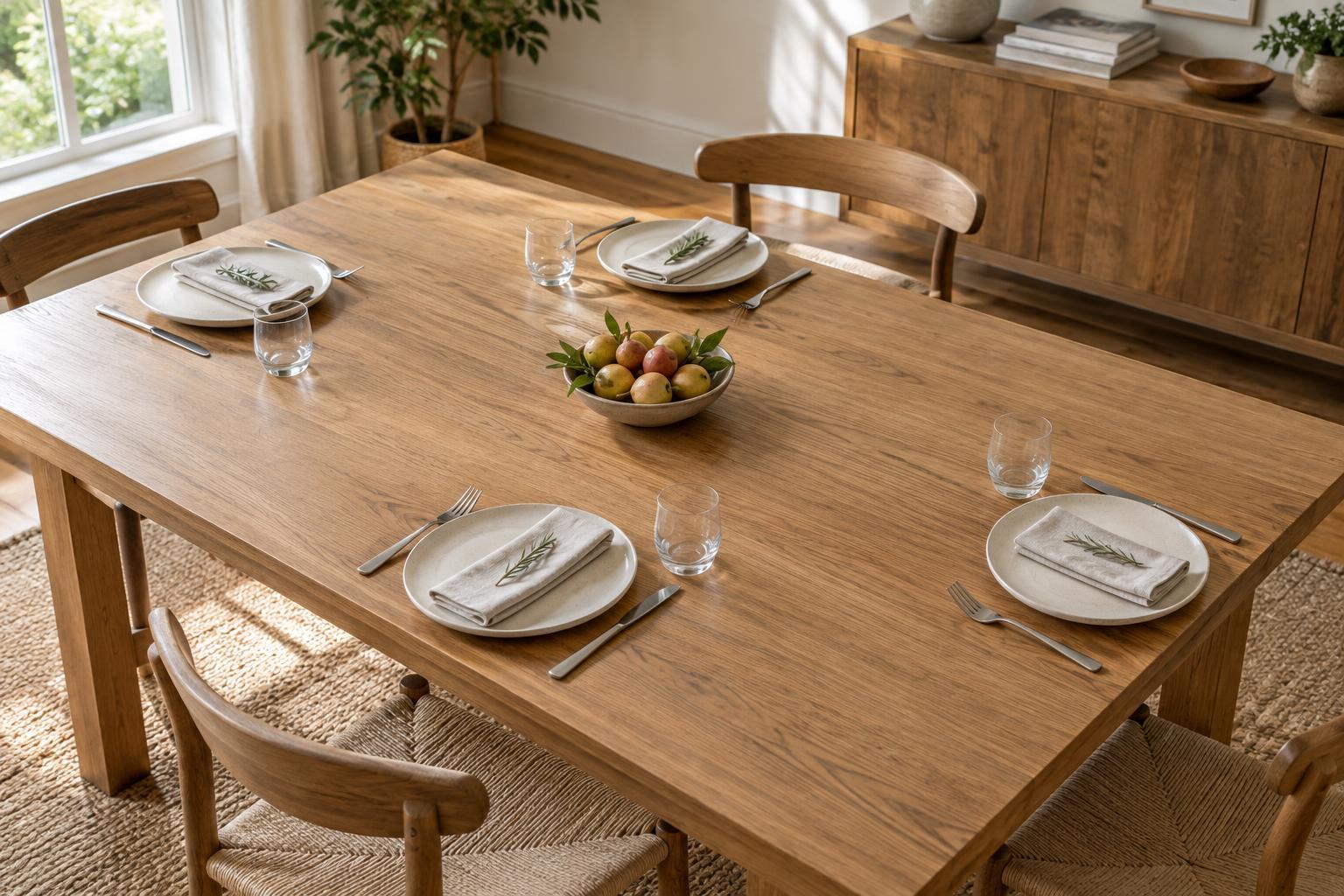
Placemats define each setting and catch crumbs and small drips. Coasters are useful even at an informal meal, especially for cold glasses that collect condensation. A tablecloth softens the look of a room and makes cleanup easier when it is washable; for a table that needs more protection, consider a suitable table pad beneath it. Check that any pad or mat is compatible with the table’s finish, since some backings can leave marks or discoloration if left in place.
You do not need every layer at once. A runner with individual placemats leaves much of a handsome tabletop visible, while a washable cloth may be simpler for a long meal with several shared dishes. Whichever arrangement you choose, lift the coverings afterward to check for moisture and crumbs. Let the surface dry before replacing anything that sits against it.
Make spills and scratches easy to prevent
Keep a soft, absorbent cloth nearby when serving. Blot spills promptly, paying attention to seams, edges and the area beneath dishes. Follow with a lightly damp cloth if needed, then dry the spot rather than leaving water to evaporate under a placemat. For sticky spills or stubborn marks, start with the gentlest cleaning method recommended for the surface; abrasive pads and strong cleaners can damage a finish while trying to remove a small stain.
To reduce scratches, lift serving pieces when you rearrange the table instead of sliding them. Feel the bottoms of ceramic bowls, vases and candleholders: an unglazed or rough base can mark a surface during an otherwise careful meal. A placemat, soft protective pad or smooth tray can give those pieces a safe place to sit. Brush away crumbs before wiping, because grit caught under a cloth can act like an abrasive.
Build a setup you will actually use
The easiest table protection is close at hand and simple to clean. Store trivets with serving dishes, keep coasters where guests can reach them and choose placemats or cloths that suit the way you wash linens. Neutral, reusable basics can work across everyday breakfasts, family dinners and more dressed-up gatherings; color and pattern can come from napkins or a runner.
Before a meal, set out landing places for hot dishes and drinks rather than waiting for them to arrive. Afterward, clear the table, check beneath the layers and wipe up any remaining moisture. Those small routines help protect the surface while leaving room to enjoy the table as part of the room, not as something too delicate to use.