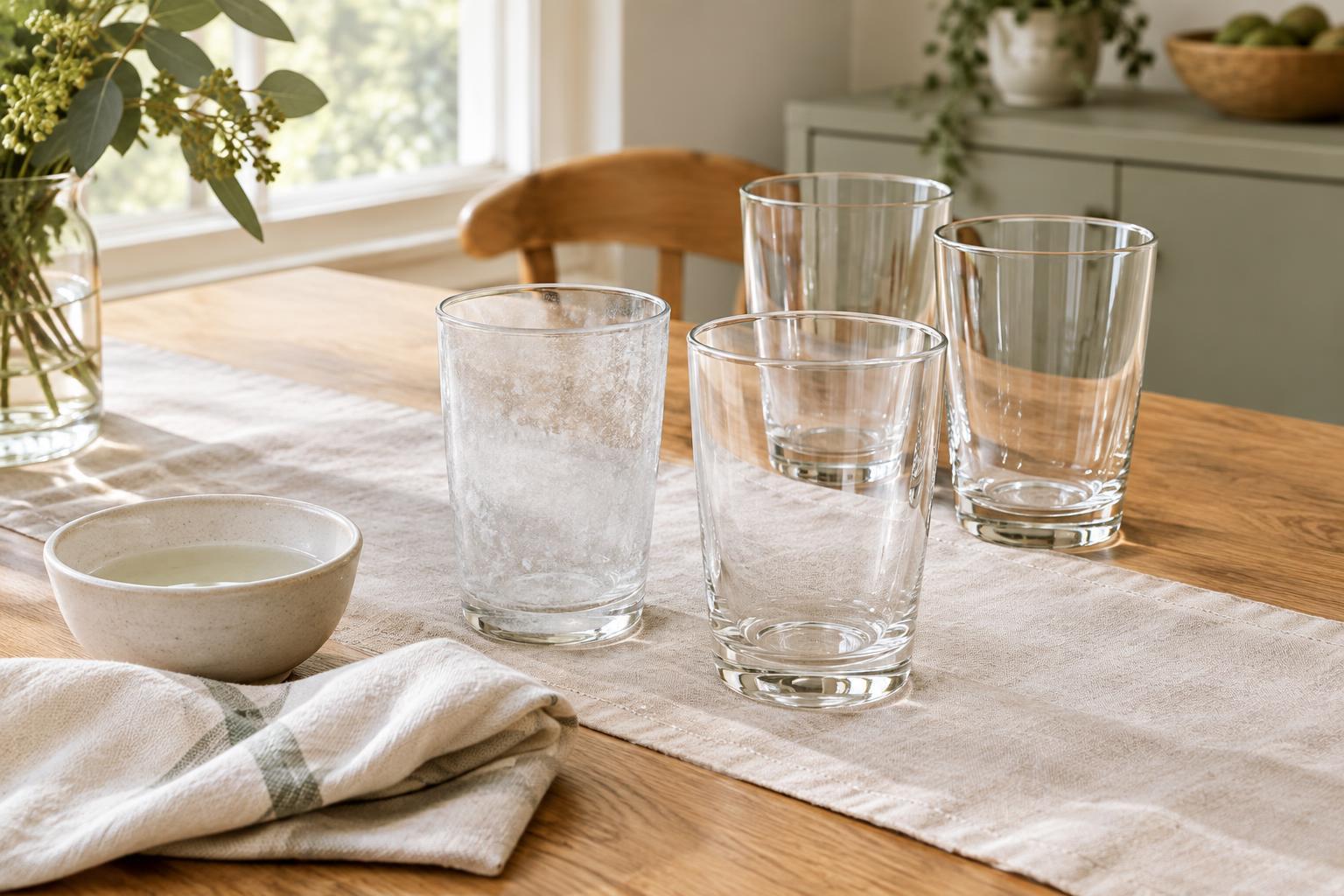
First, find out what caused the cloudiness
A clear glass can turn hazy for several reasons. Hard water may leave mineral deposits as droplets dry. Detergent residue can create a similar-looking film, especially if glasses are crowded in the dishwasher or too much detergent is used. Both can often be removed. Etching is different: it is wear on the glass surface itself and may leave a cloudy appearance that cleaning cannot reverse.
Try wiping a small area with a soft cloth dampened with white vinegar, then rinse it thoroughly. If that patch looks clearer, mineral deposits are a likely cause. If a thorough rinse improves the glass, leftover detergent may be involved. When the haze remains after gentle cleaning, or the glass feels rough rather than smooth, etching may be the explanation. Test in an inconspicuous spot first, particularly on decorated or specialty glasses.
Remove mineral deposits gently
For plain, undecorated drinking glasses, start with warm water and a small amount of dish soap. Wash with a soft sponge, rinse well, and check the surface. If the cloudy film remains, fill a basin with a mixture of equal parts white vinegar and warm water. Let the glasses soak for about 10 to 15 minutes, then wipe them gently with a soft cloth or sponge. Rinse thoroughly and dry with a clean, lint-free towel.
For a stubborn patch, apply a little diluted vinegar directly with a cloth and give it a few minutes before wiping. Avoid scouring pads and abrasive powders: they can scratch the glass without solving the underlying problem. Do not combine vinegar with bleach or other cleaning chemicals. If a glass has a metallic rim, painted decoration, applied finish, or other delicate detail, follow its care instructions instead of soaking it in vinegar.
Adjust the way you wash glasses
If cloudiness returns quickly, focus on the washing routine rather than repeating a deep clean. When washing by hand, use only the dish soap needed to clean the glass, then rinse until the surface no longer feels slippery. Drying promptly with a clean towel can reduce the spots left when water evaporates. A towel washed without heavy fabric softener is less likely to leave its own film.
In the dishwasher, leave space between glasses so water can reach their surfaces and they do not knock together. Use detergent according to the package and your machine’s guidance; adding extra may leave residue rather than improve the wash. If your dishwasher has a rinse-aid dispenser or a water-hardness setting, check its manual for how to use it. Clean the filter and other accessible parts as directed by the manufacturer so the machine can rinse effectively.
Protect glasses that need extra care
Not every drinking glass belongs in a hot, forceful dishwasher cycle. Thin glassware, pieces with decoration, and glasses labeled for hand washing deserve a gentler approach. Wash them one at a time in a lined sink or plastic basin to reduce the chance of chips. Use warm rather than very hot water, avoid sudden temperature changes, and hold each glass by its bowl instead of twisting its rim or stem while drying.
For dishwasher-safe everyday glasses, choose a suitable glassware or lower-temperature cycle if your machine offers one. If the glasses repeatedly emerge cloudy despite a well-maintained dishwasher and careful detergent use, try hand washing a few for comparison. That simple test can help you decide whether the haze is related to the wash cycle, the water, or wear already present on the glass.
Keep a clear-glass routine for everyday dining
A little attention after each use is easier than tackling an entire cupboard of cloudy glasses. Rinse glasses that held sticky drinks before the residue dries. After washing, check that they are fully dry before storing them, and keep the storage shelf clean so dust or cupboard film does not settle on them. If water spots are common in your home, towel-drying a few glasses destined for the table can make the setting look fresher.
For entertaining, inspect glasses when you set the table rather than just before guests arrive. A quick wash and careful dry may be all a lightly spotted glass needs. Save vinegar cleaning for glasses that actually have removable buildup, and set aside etched pieces if their appearance bothers you. The goal is not a complicated polishing ritual, but a practical routine that keeps reusable glasses pleasant to use day after day.