Start with the meals you actually serve
A bowl earns its place at the table when it suits several meals, feels comfortable to eat from and fits easily in the cupboard. Before choosing a set, think through a typical week: porridge or yogurt at breakfast, soup at lunch, perhaps a grain bowl or pasta at dinner. The most useful collection usually covers those meals with a few versatile shapes rather than a separate bowl for each recipe.
Look beyond the stated capacity. A bowl filled to the rim may hold plenty, but it will be awkward to carry or eat from. Its usable space depends on the shape of the sides and how much room you like to leave for stirring, toppings or a spoon. If you can handle a bowl before buying it, picture a normal portion in it and check that the base sits steadily on a table.
Choose a medium bowl for everyday meals
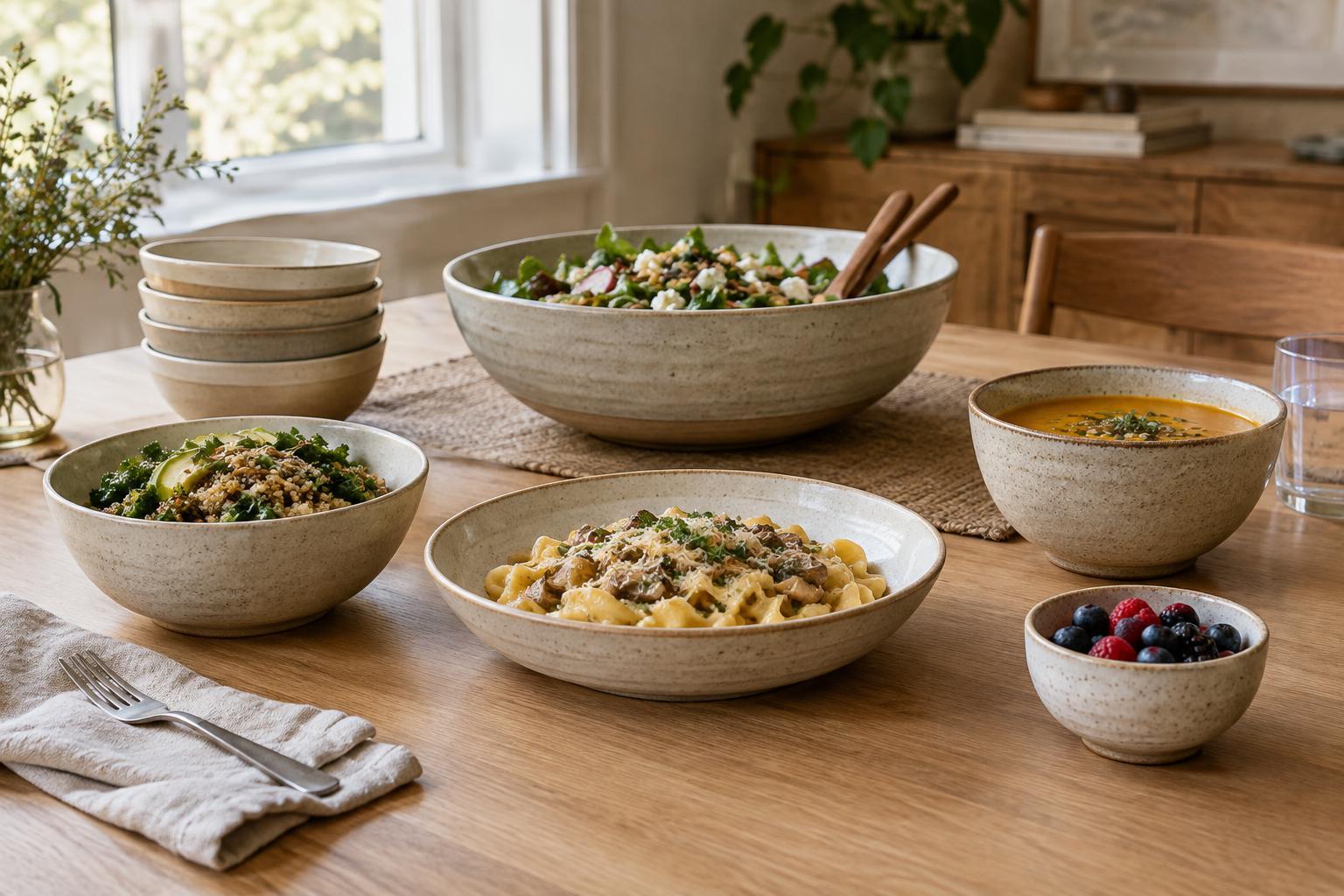
A medium bowl is the workhorse of many tables. It should be deep enough for cereal with milk or a serving of soup, yet open enough for yogurt, fruit, rice or vegetables. Gently sloping sides make it easier to reach food with a spoon and tend to make the bowl feel less cramped than a narrow, tall shape with the same stated capacity.
For a first set, choose a size that holds your usual breakfast or soup portion with visible space above it. A substantial foot or broad base helps prevent wobbling, while a rim you can grip makes a filled bowl easier to lift. If your household often eats one-bowl dinners, try the size with those meals in mind; a breakfast bowl may feel too small once grains, vegetables and toppings are combined.
Add a wide, shallow shape if you serve pasta or composed dishes
A wide, shallow bowl sits between a plate and a soup bowl. Its open surface gives pasta, salads and composed meals room to spread out, while a raised edge helps contain dressing, sauce or loose ingredients. It can also make a simple meal feel considered without requiring an elaborate table setting.
Depth matters here. A very flat bowl may not hold a saucy dish comfortably; a very deep one can hide ingredients and make cutting or gathering food difficult. Look for a gently curved interior and an edge that leaves enough space for a fork. If cupboard room is limited, decide whether this shape would replace some dinner plates in your routine rather than adding a second full set of dishes.
Keep small bowls and serving bowls in proportion
Small bowls are useful for berries, olives, nuts, dips, sauces or a little dessert. At a shared table, they keep accompaniments contained and make it easy to pass them around. Choose a size that suits the amounts you usually put out: an oversized bowl can make a small portion look lost, while a tiny one may need constant refilling. A few matching or coordinated small bowls often do more work than many single-purpose pieces.
For serving, one generously sized bowl can hold a salad, roasted vegetables or a shared side dish. A wide opening makes food easier to toss and guests easier to serve; a deeper shape helps contain leafy or bulky ingredients. Check its weight before committing. A serving bowl should be comfortable to carry when full and easy to place at the center of your table without crowding everyone’s plates and glasses.
Check how the bowls live between meals
The best bowl shape for your table must also work in your kitchen. See whether several bowls stack securely without sticking together or taking up too much shelf height. Consider whether your spoons reach the bottom comfortably, whether rims leave enough room in the dishwasher and whether the material suits the way you reheat or serve food. Check the maker’s care guidance rather than assuming every bowl can go from refrigerator to microwave or oven.
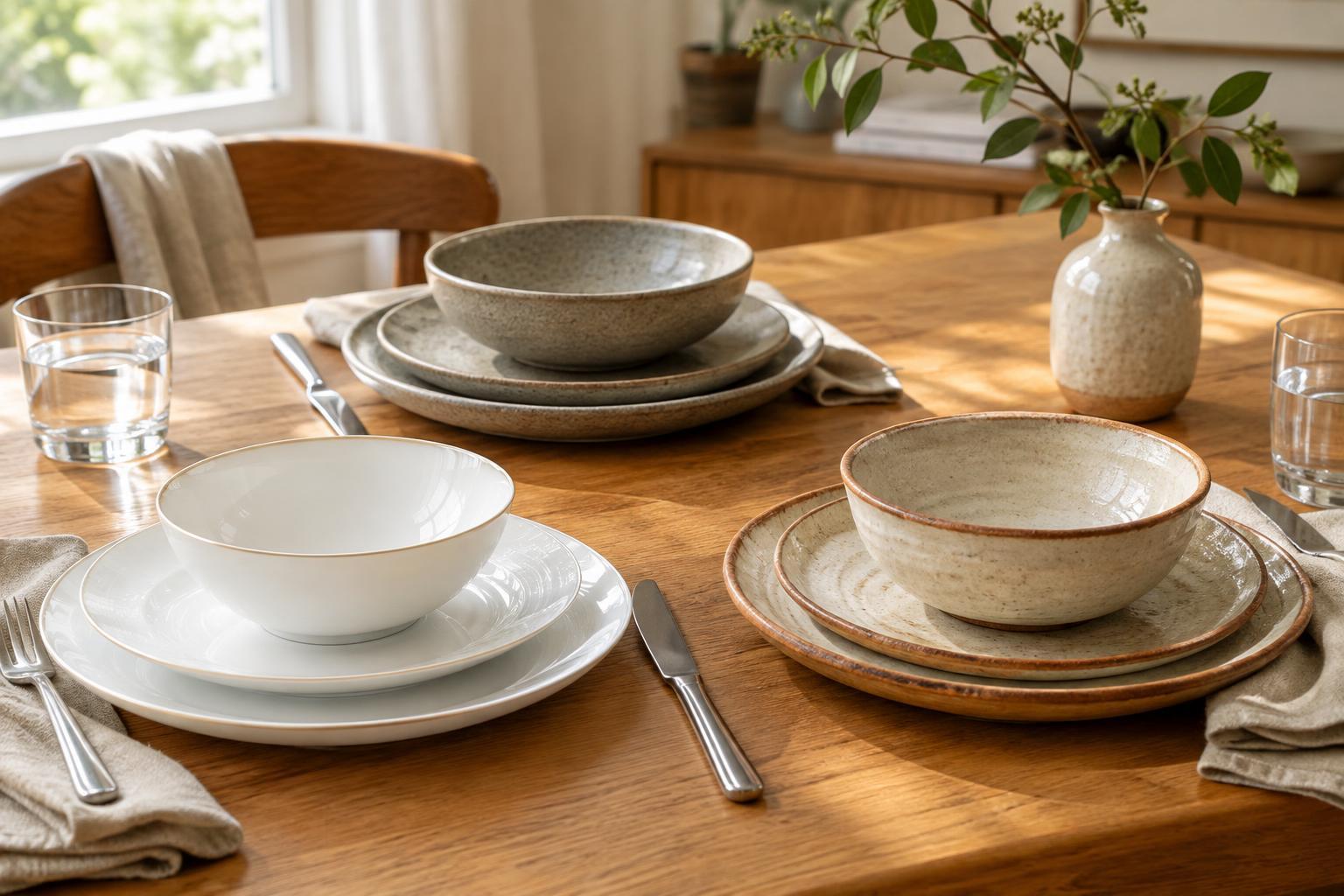
You do not need every bowl to match exactly. Repeating a color, material or simple shape can make mixed pieces feel connected. Start with enough medium bowls for regular diners, then add shallow, small or serving bowls as your meals call for them. That approach keeps the cupboard manageable and gives each piece a clear reason to be there.