Start with the food you actually serve
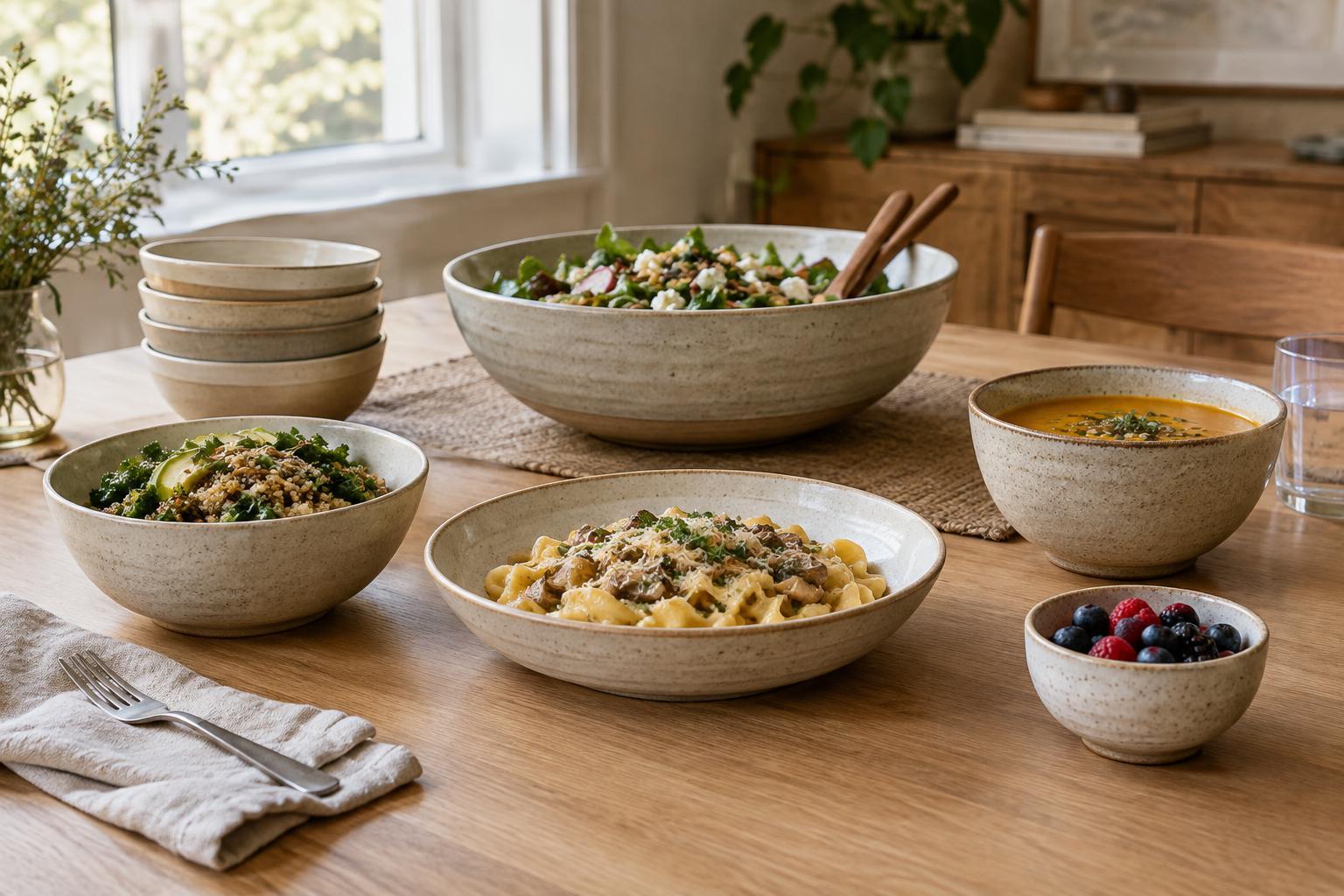
The most useful dinner plate is the one that works for an ordinary weeknight meal. Think about what you put on the table most often: a main dish with two sides, a generous salad, a saucy meal or several small portions. A broad, flat eating area gives separate foods room to sit side by side. A slightly raised rim can help contain dressing, gravy or juices. If your meals are often served in deep sauces, a shallow bowl may be a better companion to dinner plates than an unusually deep plate.
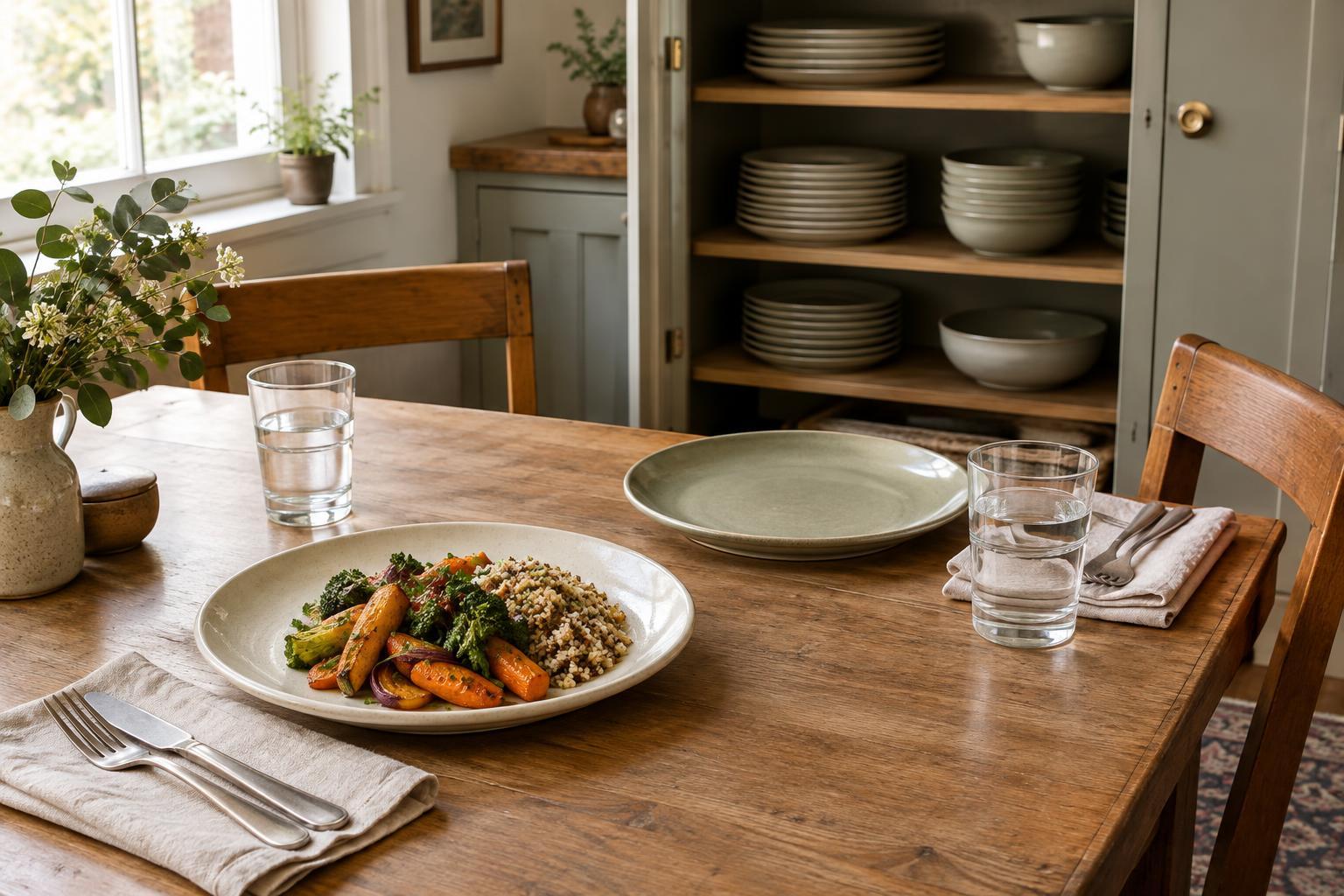
Notice how much usable space a plate offers, not just its outside diameter. A wide decorative rim can make a plate look generous while leaving a smaller area for food. If possible, place a typical portion on a plate before committing to a set. You are looking for enough room to eat comfortably without making everyday servings look lost.
Check the table before choosing a size
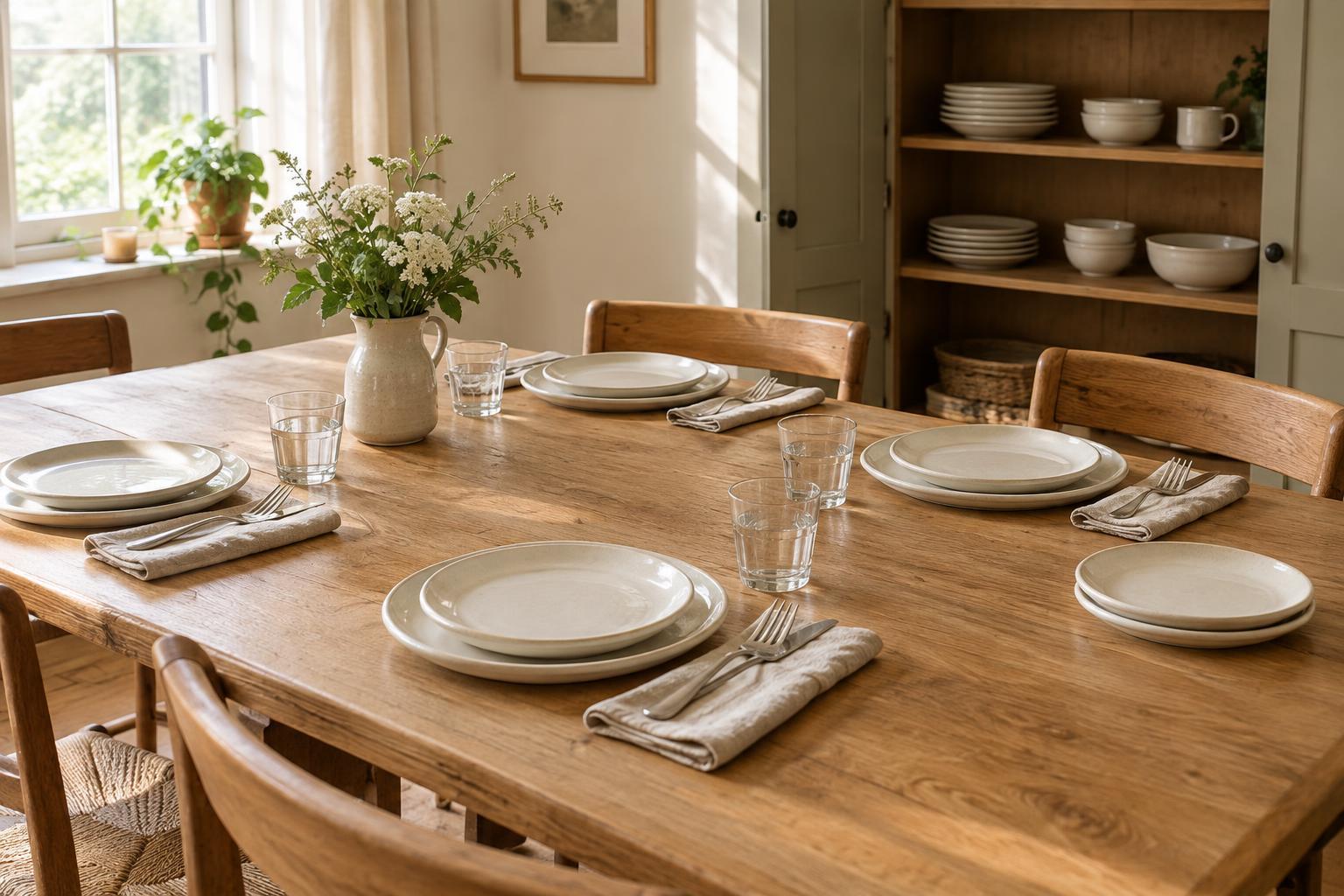
Dinner plates share space with glasses, cutlery, serving dishes and, sometimes, a placemat. Set one place as you normally would and measure the room it takes. Then picture every seat filled. A plate that looks balanced alone may feel crowded when guests need space to move their glasses or pass a dish.
The shape matters too. Round plates are easy to combine with most table linens and serving pieces. Plates with squared edges can give a setting a more structured look, but their corners may take up extra room when places are close together. If you like to layer a smaller plate on top for a starter, try that arrangement before buying. The goal is a setting that leaves people comfortable, not one arranged so tightly that no one can reach the bread.
Measure the route from cupboard to dishwasher
Storage is easiest to assess before you bring a full set home. Measure the usable depth and width of the shelf where the plates will live, accounting for hinges or a door frame that narrow the opening. Check shelf height if you plan to keep a tall stack. A plate should be easy to lift out without tipping the entire pile.
If you use a dishwasher, measure the clearance in its lower rack and look at the spacing between supports. Deep rims, wide edges and unusual shapes may not sit securely even when the stated diameter seems suitable. Consider how you handle the plates as well: a large, heavy plate can feel cumbersome when you are carrying several or clearing the table. One sample plate is often more informative than measurements alone.
Choose a finish and material you will enjoy maintaining
Ceramic plates vary widely in weight, thickness and finish. Rather than choosing by material name alone, pick up a plate and notice its balance. Run a finger around the edge to see whether it feels comfortable to hold, and check whether the underside is smooth where it will rest on a table or stack against another plate.
Look for the maker’s care guidance if dishwasher or microwave use matters to you; suitability can depend on the specific plate and its decoration. A glossy finish may show cutlery marks or fingerprints differently from a matte one, while a textured surface may need more attention when washing. Light colors make food easy to see and mix readily with other table pieces. Pattern and darker color can bring warmth, especially if the design still appeals to you beside the meals you serve most.
Build a set around daily life
Before deciding how many to buy, count your usual diners and think about how often you wash dishes. Include a little flexibility for guests or a broken plate, but avoid buying so many that they crowd out the pieces you use every day. If replacement matters, check whether individual plates are available rather than only complete place settings.
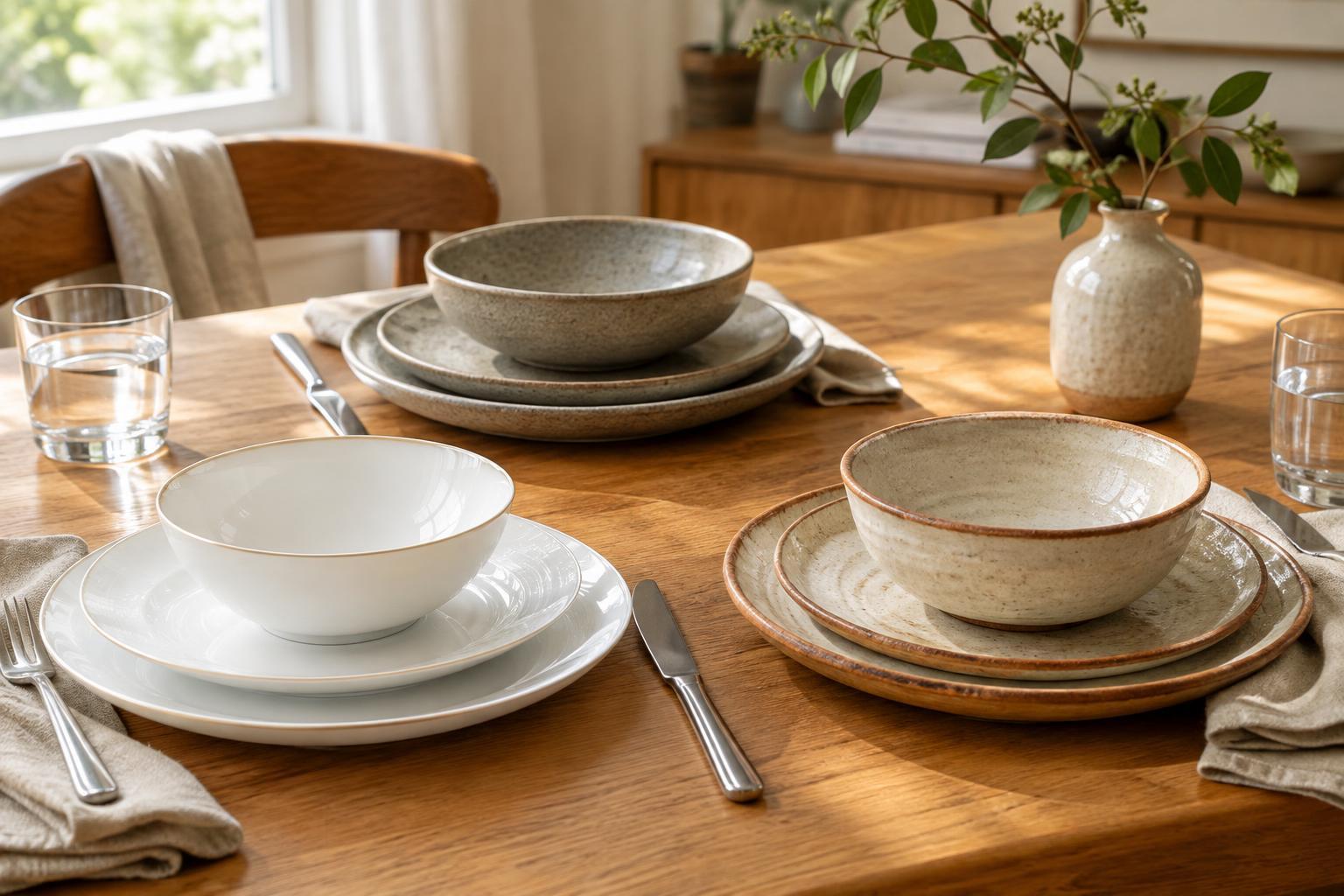
You do not need every piece on the table to match. Dinner plates in a versatile color can sit happily beside collected side plates, bowls and serving dishes. If you are undecided, try one or two plates at home first. Serve a meal, clear them, wash them and put them away. A plate that feels right at each step is more likely to earn its cupboard space than one chosen for appearance alone.