Start with the way you eat
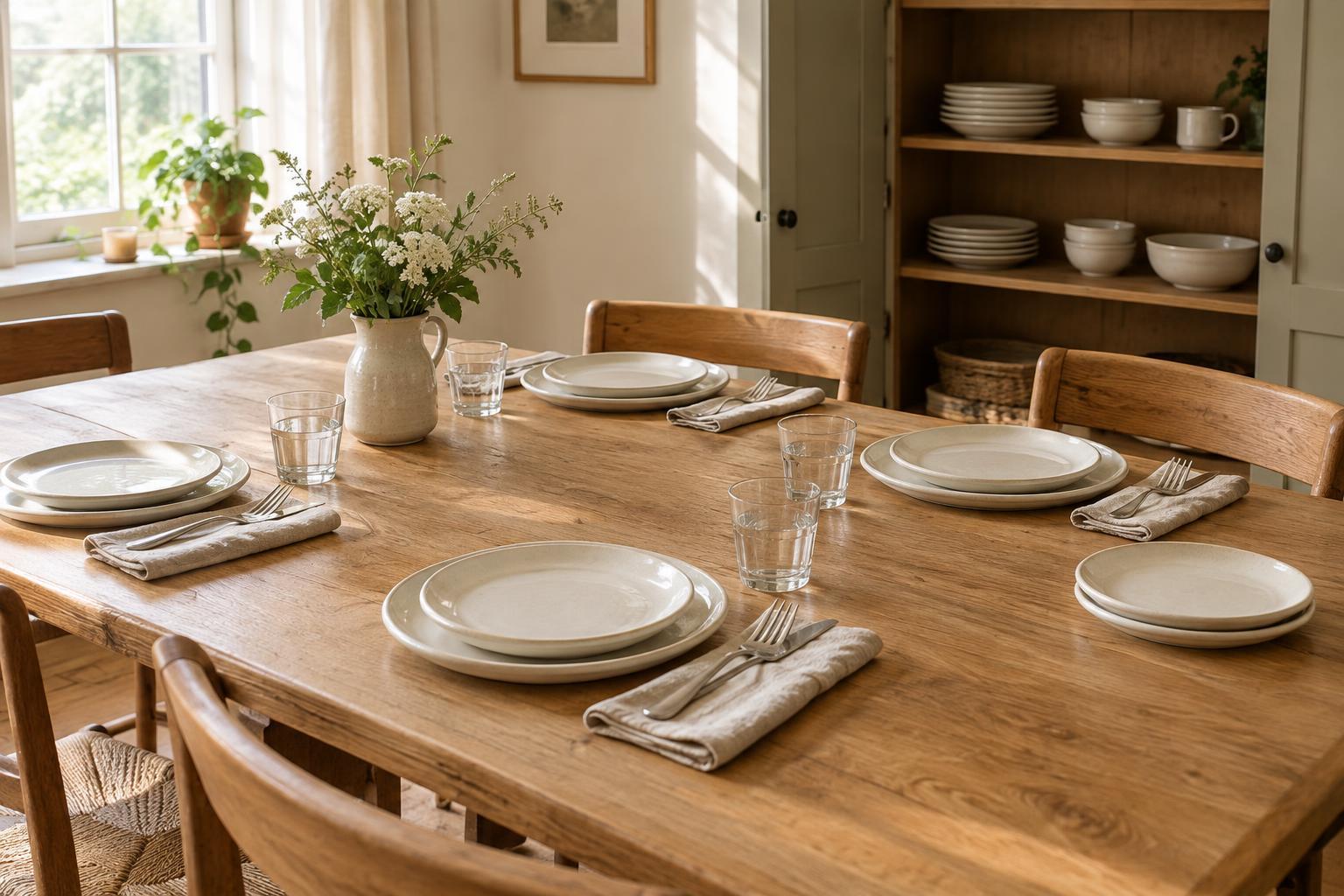
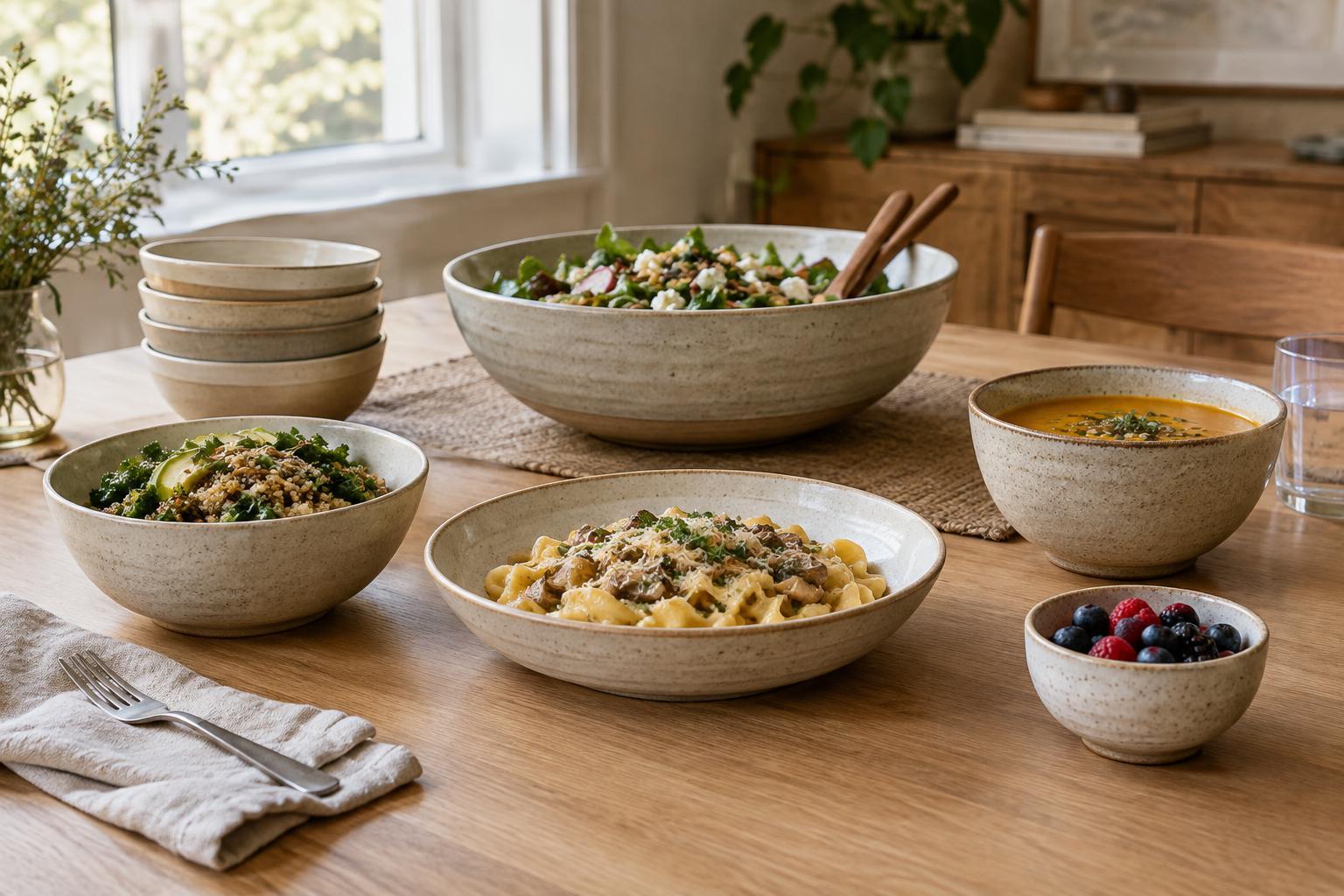
Dinnerware has to do more than look good on a table. A plate you reach for every morning should feel comfortable to carry, fit in your cupboards and handle the washing routine in your home. Before comparing materials, think about your most common meals. Wide dinner plates may suit shared suppers, while deeper bowls can be more useful if you often serve pasta, soups or grain dishes.
Pick up a few pieces in person if you can. Notice the weight of a plate held in one hand, the shape of its rim and whether a stack feels steady. Check that the bowls sit comfortably in your dishwasher or sink and that your usual portions fit without crowding. These details often matter more in daily use than the name of the ceramic.
Porcelain: a refined look with practical range
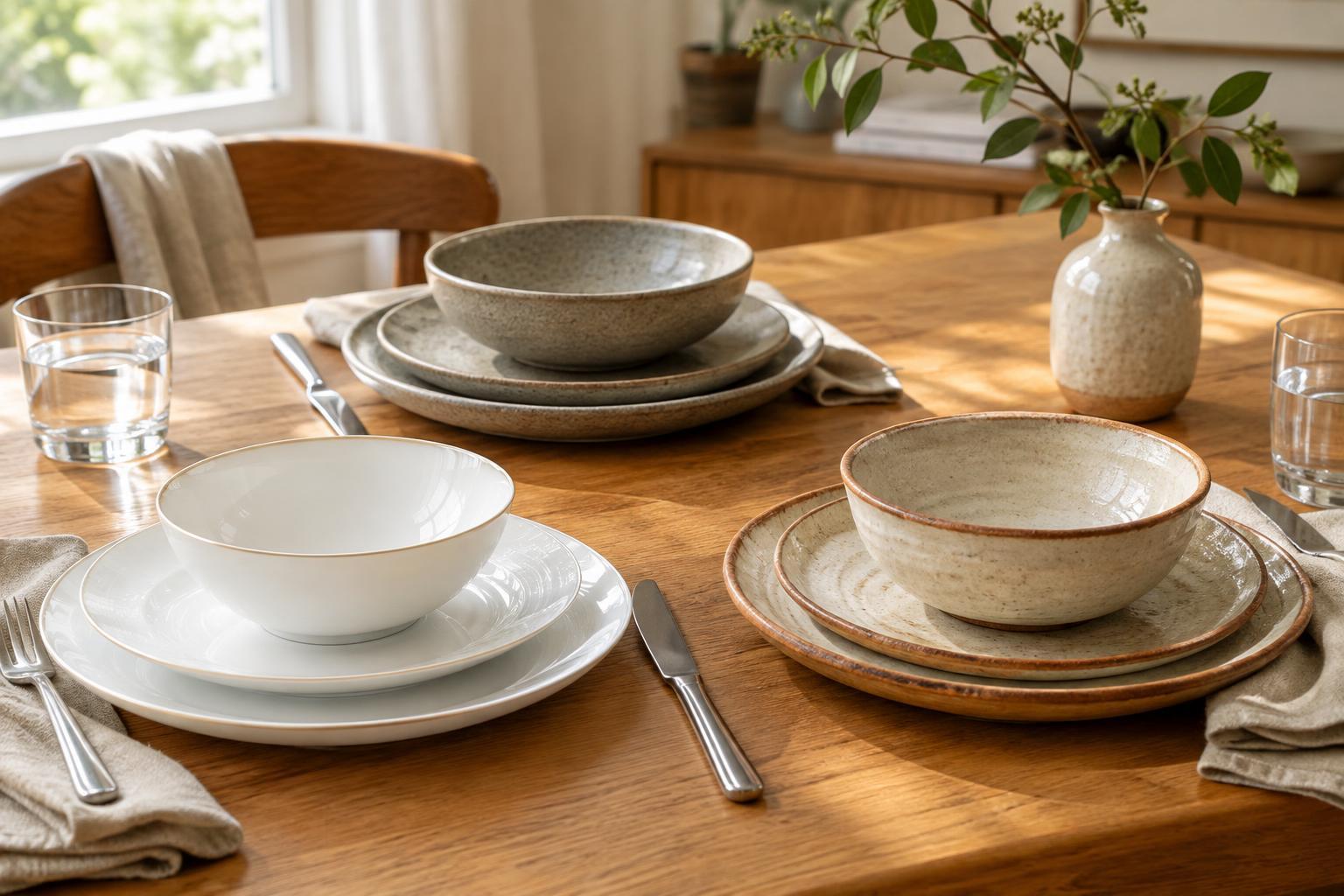
Porcelain is a ceramic made from a clay body that is fired at high temperatures. It is commonly associated with a smooth surface, relatively thin profiles and a clean, bright appearance. A simple white porcelain plate can be a flexible backdrop for food and easy to pair with colorful linens or serving dishes. Porcelain does not have to be formal; many shapes are designed for everyday meals.
Thin does not automatically mean fragile, and thick does not guarantee strength. Durability depends on the particular piece, including its shape, glaze and manufacture. Look closely at the edges, especially if you tend to stack plates tightly. A broad, delicate rim may be less convenient in a busy kitchen than a simpler profile. Follow the maker’s instructions for dishwasher and microwave use rather than assuming all porcelain can be treated alike, particularly if it has metallic decoration.
Stoneware: substantial and relaxed
Stoneware is usually fired to a dense, relatively nonporous finish. It often has a warmer, more substantial feel than porcelain, though weights vary considerably between collections. Its range of glazes makes it appealing if you like soft color variation, speckling or a handmade-looking table. A set of stoneware bowls can make an ordinary lunch feel considered without requiring a formal setting.
That reassuring weight can become a drawback when you are carrying several plates or lifting a high stack onto a shelf. Deep rims and irregular silhouettes can also take up more cupboard and dishwasher space. If you like the look of stoneware, test how the pieces stack and whether the glaze is pleasant to handle and easy to clean. Some finishes show marks from metal utensils more readily than others; checking a sample piece may help if that would bother you.
Earthenware: character with more care to consider
Earthenware is generally fired at lower temperatures than porcelain or stoneware. The clay body tends to be more porous, so a sound glaze is especially important on surfaces that meet food and water. Earthenware can offer expressive colors and a familiar, casual feel, making it lovely for a dining table where individual pieces are part of the pleasure.
For daily use, pay particular attention to the maker’s care guidance and to the condition of the glaze. Chips or cracks deserve a closer look, especially where food or moisture can reach the exposed body. Do not assume that a rustic appearance means a piece is oven-, microwave- or dishwasher-safe. Earthenware may be a good choice if you love its look and are happy to give it the handling its particular finish requires; it is less convenient if you want a set you can use without much thought.
Choose a set that will work beyond the shop shelf
Once you have a material in mind, compare individual pieces rather than buying a large matching set by default. Start with the plates and bowls you use most, then add serving pieces only when you know they fill a need. Check that the base of each piece feels stable, that rims are comfortable to hold and that replacement pieces are available if continuity matters to you. A smaller set of dependable essentials can be easier to live with than a crowded cupboard of rarely used shapes.
You can also mix materials. Porcelain plates with stoneware bowls, for example, can look cohesive when they share a color family or a similar silhouette. A patterned earthenware serving dish can bring character to otherwise simple place settings. Repeating one element—such as a warm white, a rounded edge or a matte-looking finish—helps the table feel intentional without making every piece identical.
Whatever you choose, avoid abrupt temperature changes unless the maker says the item can handle them, and give stacked pieces enough room to prevent knocks. The most useful dinnerware is not necessarily the toughest-looking or most decorative. It is the collection you can set out, clear away and enjoy again tomorrow.