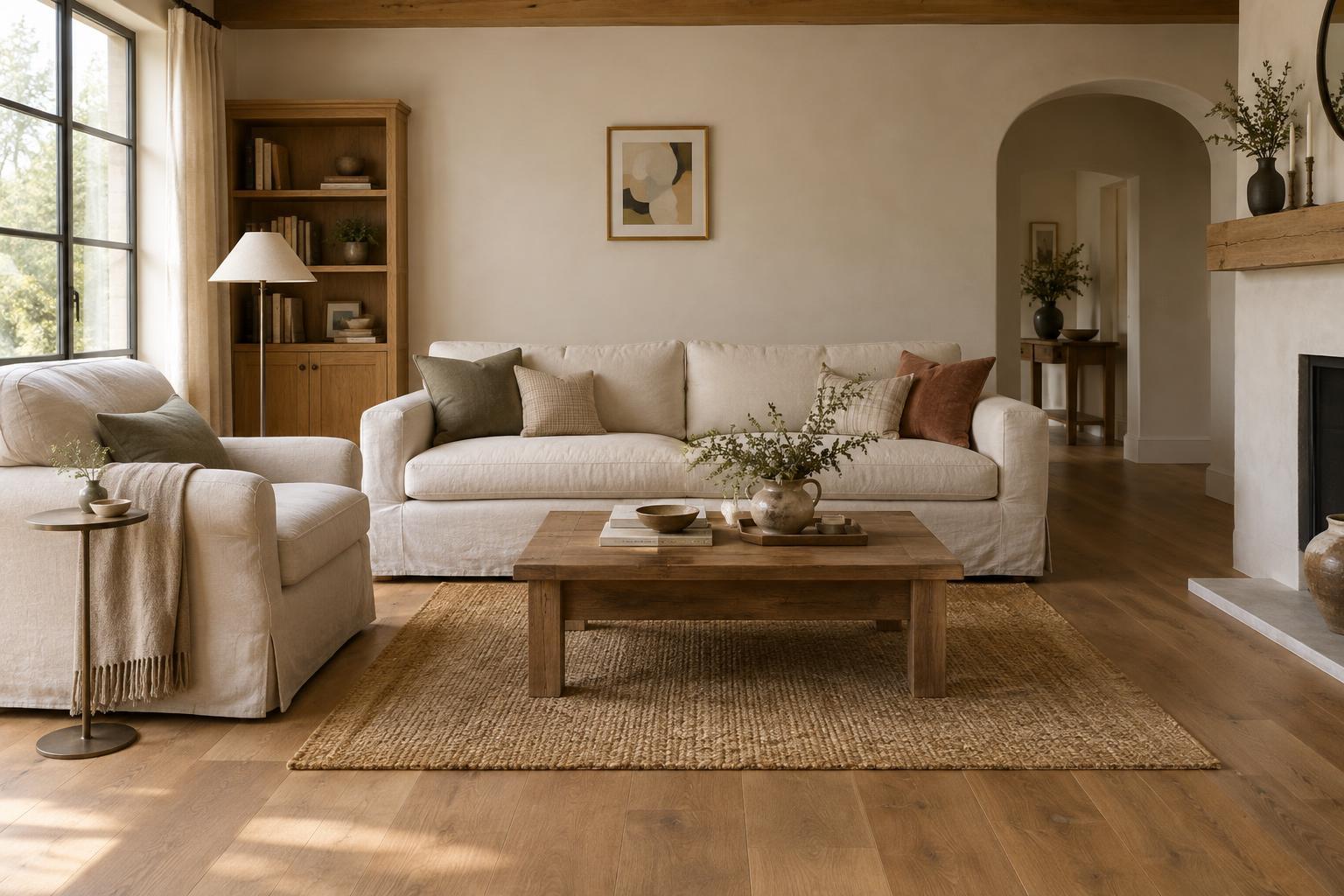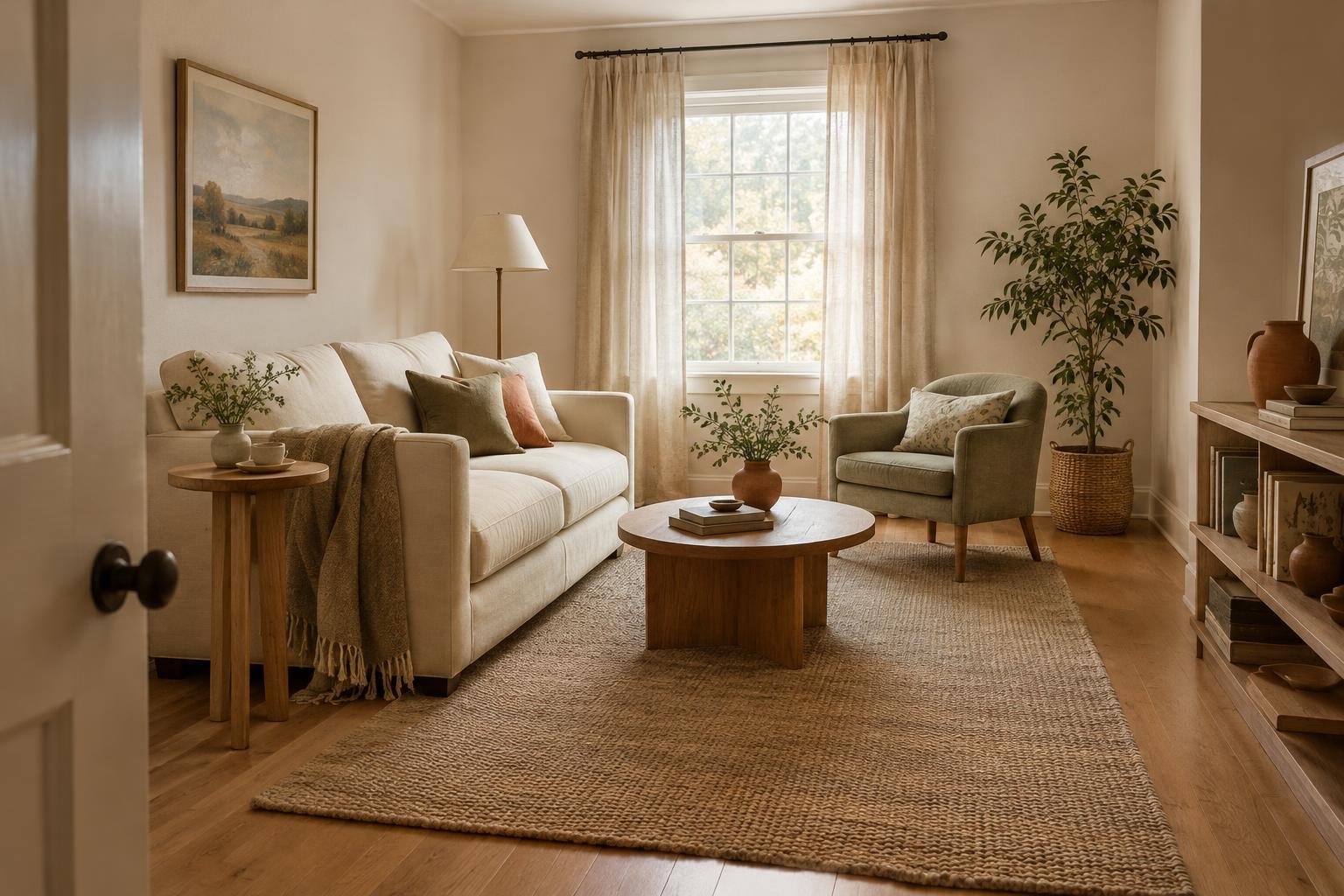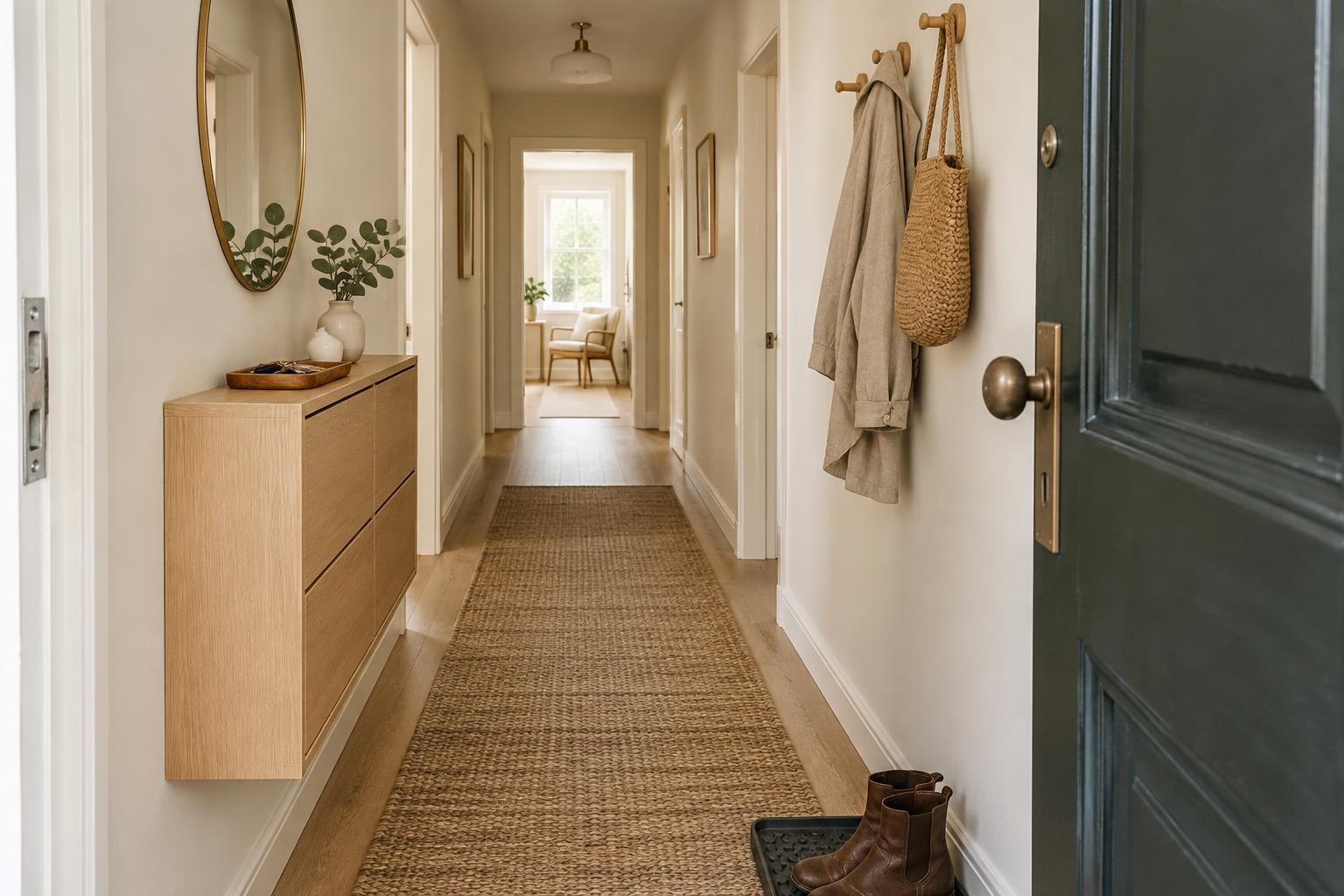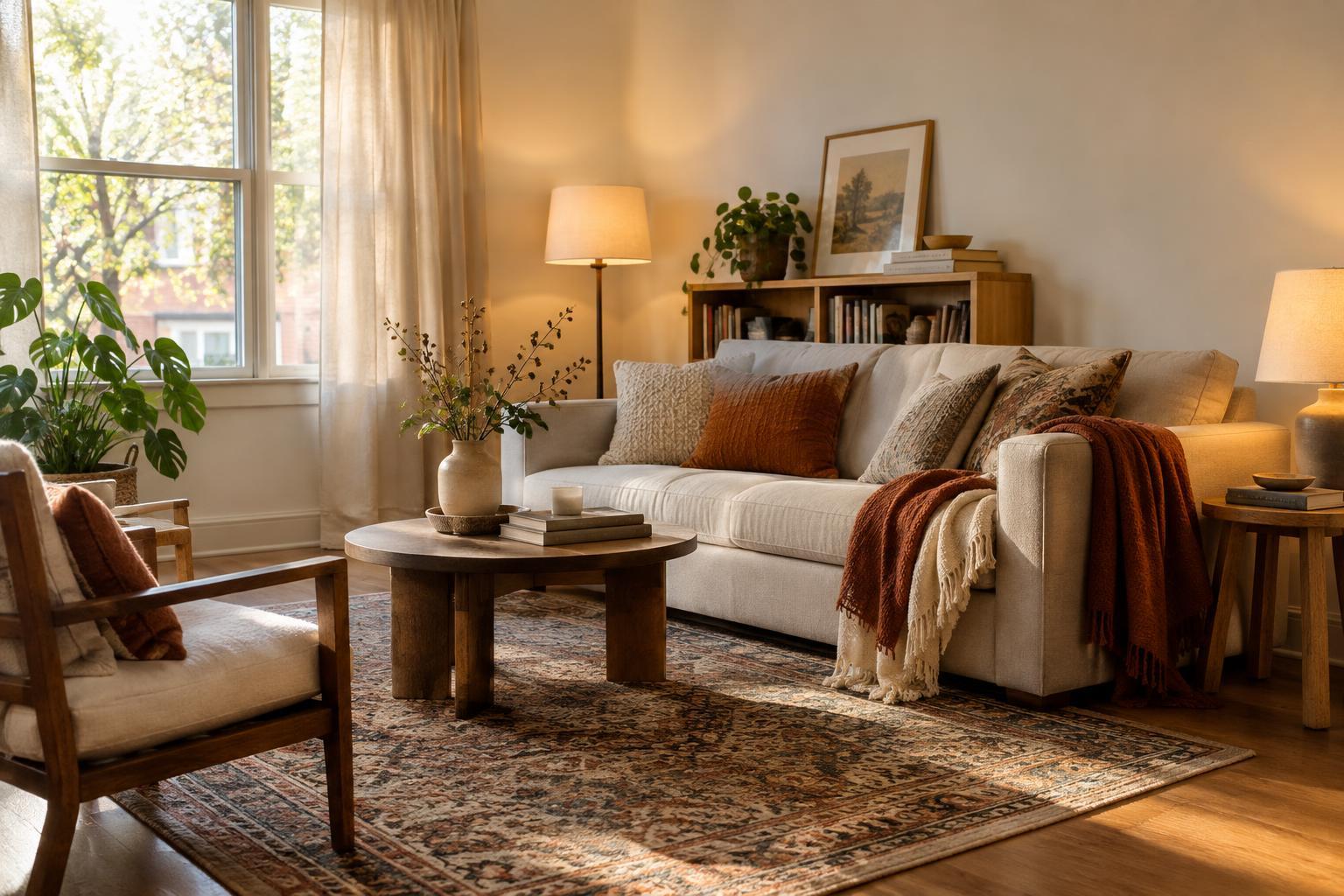
Start with what the room already offers
Before buying anything, notice what makes the room feel unfinished. Is the seating crowded into one corner? Does the window look bare? Are useful surfaces hidden under everyday clutter? Choose one or two problems to solve first. A clearer goal, such as making the living room feel comfortable for conversation, is more helpful than trying to change everything at once.
Rearranging furniture can make a surprising difference. Try pulling a sofa slightly away from the wall, moving a chair closer to the main seating area, or giving a reading spot its own lamp and small table. Keep walking paths clear and check that doors, drawers, and vents can still function. If you share the rental, make sure the new arrangement works for everyone’s daily routines, not just for a photograph.
Use textiles to add color and softness
Textiles are an easy way to introduce a palette without touching the walls. A washable throw, cushion covers, curtains, or a rug can repeat colors you already like while softening hard surfaces. Instead of matching every piece, choose a few related tones and vary their textures. For example, a smooth cotton curtain can sit comfortably beside a nubby cushion and a woven basket.
A rug can also define a zone in an open-plan room or make existing flooring feel less prominent. Measure before ordering, and use a suitable rug pad to reduce slipping while protecting the floor. Curtains can change the feel of a window, but check whether existing rods can support their weight. If you are considering a tension rod, follow its load guidance and test the fit carefully rather than assuming it will suit every window.
Layer light instead of relying on one fixture
Overhead light is useful, but it may not provide the atmosphere you want in the evening. Add a table lamp near the sofa, a floor lamp beside a chair, or a small light on a shelf where an outlet is available. Several modest sources let you brighten the places you use while leaving other parts of the room calmer. Matching lamps is not necessary; a shared finish or shade color can help them feel connected.
Choose bulbs that work with each fixture’s specifications, and place cords where they will not be tripped over or pinched by furniture. If a room has limited outlets, avoid overloading them with adapters. Even without adding a new lamp, moving an existing one closer to where you read or gather can make the space more useful.
Add personality with portable details
Art, books, ceramics, and plants can give a rental character while remaining easy to move. Try leaning framed art on a sturdy shelf or placing a small grouping on a console rather than covering every wall. Give each arrangement some breathing room: a few objects with different heights often feel more deliberate than a crowded row. Trays are useful for gathering small items that otherwise spread across a surface.
If you want to hang something, review your rental agreement before making holes or using adhesive products. Removable does not always mean damage-free: adhesives can affect certain paints and finishes, particularly if they are applied or removed incorrectly. Follow the product directions, check weight limits, and test in an inconspicuous place when appropriate. For valuable or heavy pieces, a freestanding display may be the simpler choice.
Make the update easy to live with—and undo
A rental-friendly refresh should fit the way you actually use the room. Leave a clear place to put down a cup, store the throw when it is not needed, and choose fabrics you can clean without fuss. If you host regularly, lightweight stools or a movable side table may be more useful than a decorative item that occupies precious floor space.
Work in stages so you can see what each change accomplishes. Rearrange first, then add the textile or light that addresses the biggest gap. Keep any original hardware, fittings, or furnishings in a safe place if you have permission to swap them, and document the room’s condition before making changes. The aim is a space that feels like yours now, without making the next move harder.