Start with the path through the space
Before choosing furniture or paint, notice how the entryway works on an ordinary day. Where does the door swing? Where do people pause to take off shoes, set down keys or hang a coat? Walk through while carrying a bag and check whether anything catches your sleeve or makes you turn sideways. In a narrow space, an uninterrupted route often matters more than adding another piece of storage.
Keep the floor as clear as possible, especially near the door. If several people use the entry, decide which tasks truly need to happen there and which can move to a nearby closet or room. A small landing place for daily essentials is usually more helpful than trying to store every coat, shoe and spare bag in one tight passage.
Choose storage that earns its space
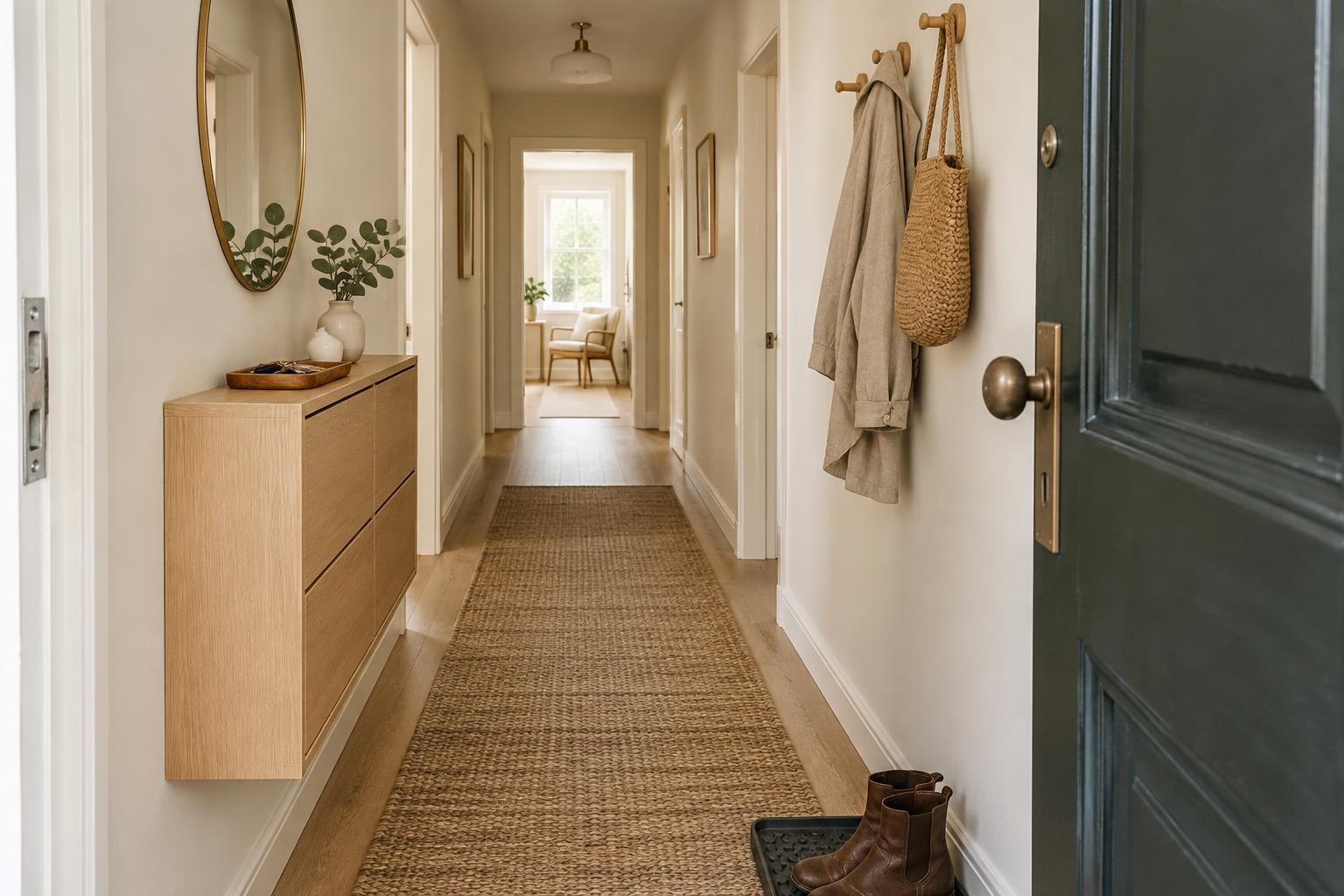
Shallow, wall-mounted pieces can provide function without taking over the walkway. A narrow shelf gives keys and mail a home; a row of hooks holds the coats and bags in regular use. Place hooks where items will not interfere with the door or brush against people passing by. If you need shoe storage, look for a slim cabinet or a low rack that fits fully against the wall.
Closed storage can calm the view, but it needs to be easy to use. A cabinet that blocks the path when opened may be less practical than a simple basket tucked beneath a shelf. Give each item a clear destination, then keep a little spare room for guests. Rotate out-of-season outerwear elsewhere so the entry remains ready for the things you reach for now.
Make the first impression feel warm
A welcoming entry does not need many decorations. Choose a limited palette that relates to the rooms beyond it, then add texture through a woven basket, a wood shelf or a washable runner. Lighter wall colors can help the space feel open, while a deeper color can make it feel intentional and cozy. The better choice is the one that works with the available light and the mood of your home.
A mirror can reflect light and offer a last glance on the way out, provided it sits where it will not be knocked by the door or bulky bags. One picture, small wall hanging or favorite object can add personality without filling every surface. Leaving some wall space bare gives practical pieces room to breathe and makes the entry easier to keep tidy.
Plan for light, dirt and daily wear
Good lighting makes the entry easier to use when hands are full. Aim for light that reaches the hooks, storage and floor rather than relying only on a fixture farther down the hall. A wall light or compact lamp may work if there is a suitable spot; if not, consider whether the existing overhead light can be improved. Keep cords out of the walking path.
Materials should suit the traffic the entry receives. A sturdy mat at the door helps catch grit, while a low-profile, easy-care runner can soften a long passage without becoming a trip hazard. Check that rugs lie flat and that the door clears them. For shelves and trays, choose surfaces you can wipe after wet umbrellas, muddy keys or the occasional spilled drink.
Finish with a routine you can maintain
The most functional entryway is one that can be reset quickly. Give keys a tray or hook, designate a spot for outgoing items, and avoid turning the nearest surface into a holding area for everything without a home. If shoes regularly gather by the door, make space for the pairs worn most often rather than expecting everyone to carry them away each time.
After living with the arrangement for a week or two, look for friction. Does a hook sit too high? Does a basket get pulled into the path? Move or remove what is not working. A narrow entryway rarely needs a perfect set of matching furnishings. It needs enough clear space to move comfortably, a few reliable places to put things and a warm detail that welcomes you in.