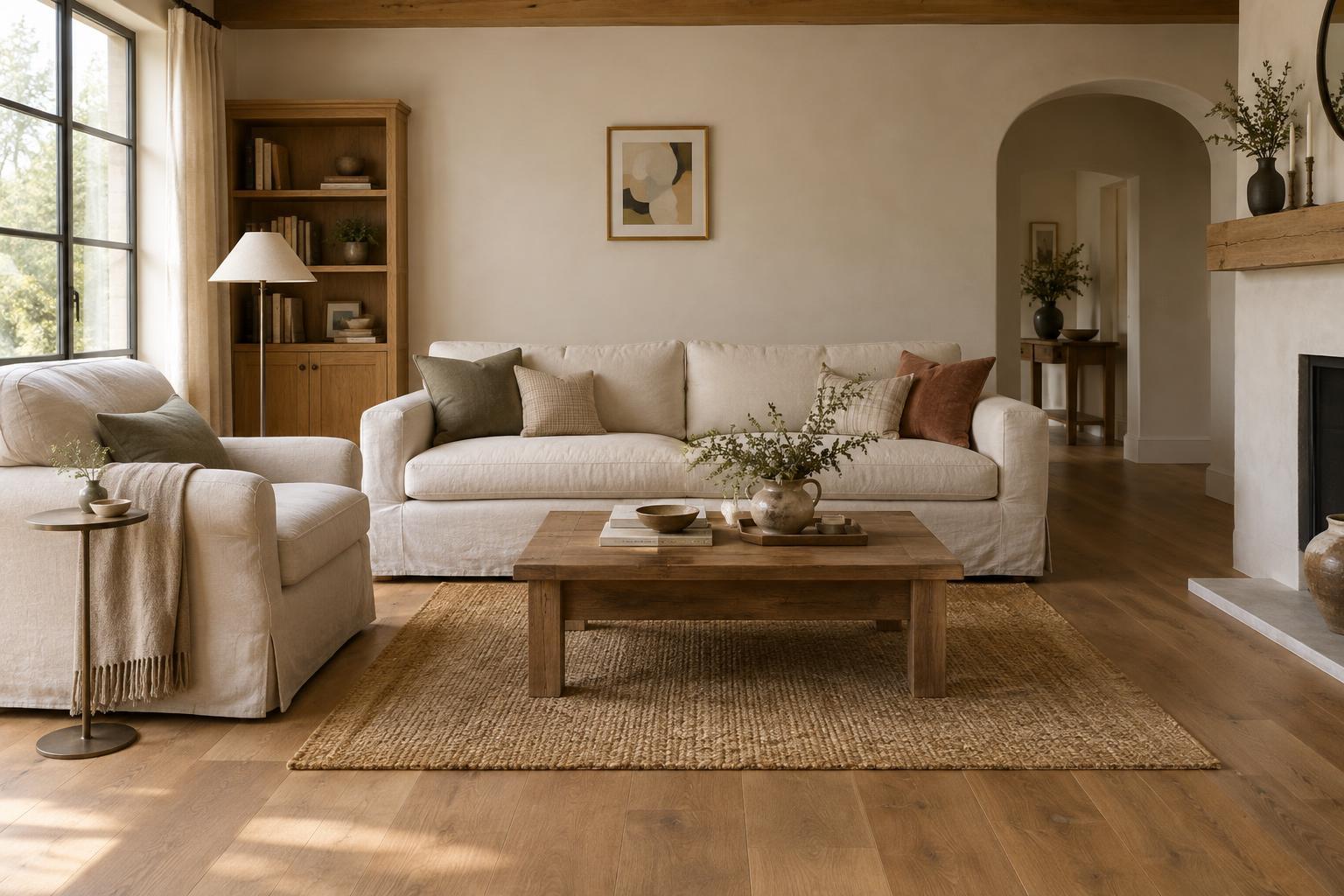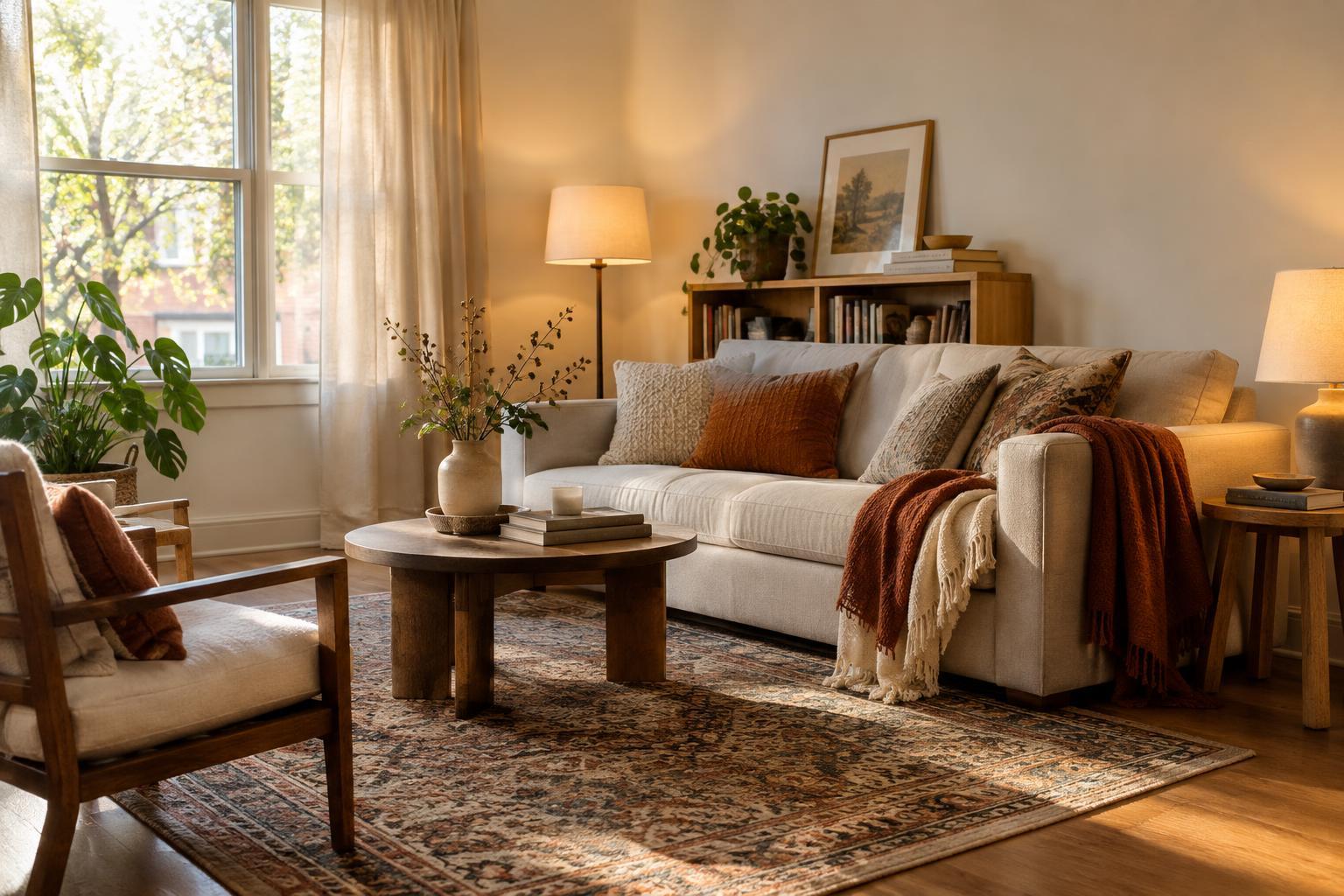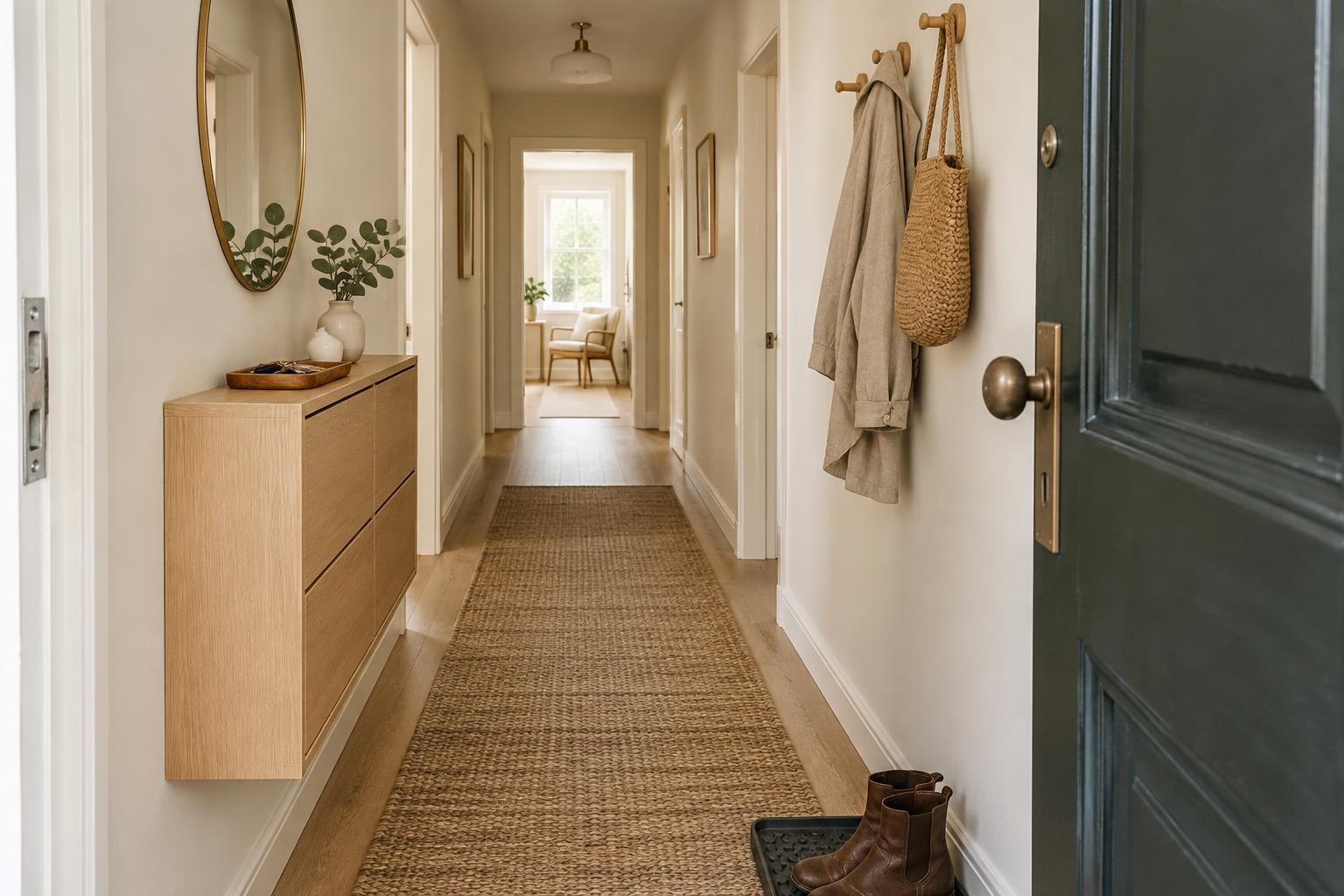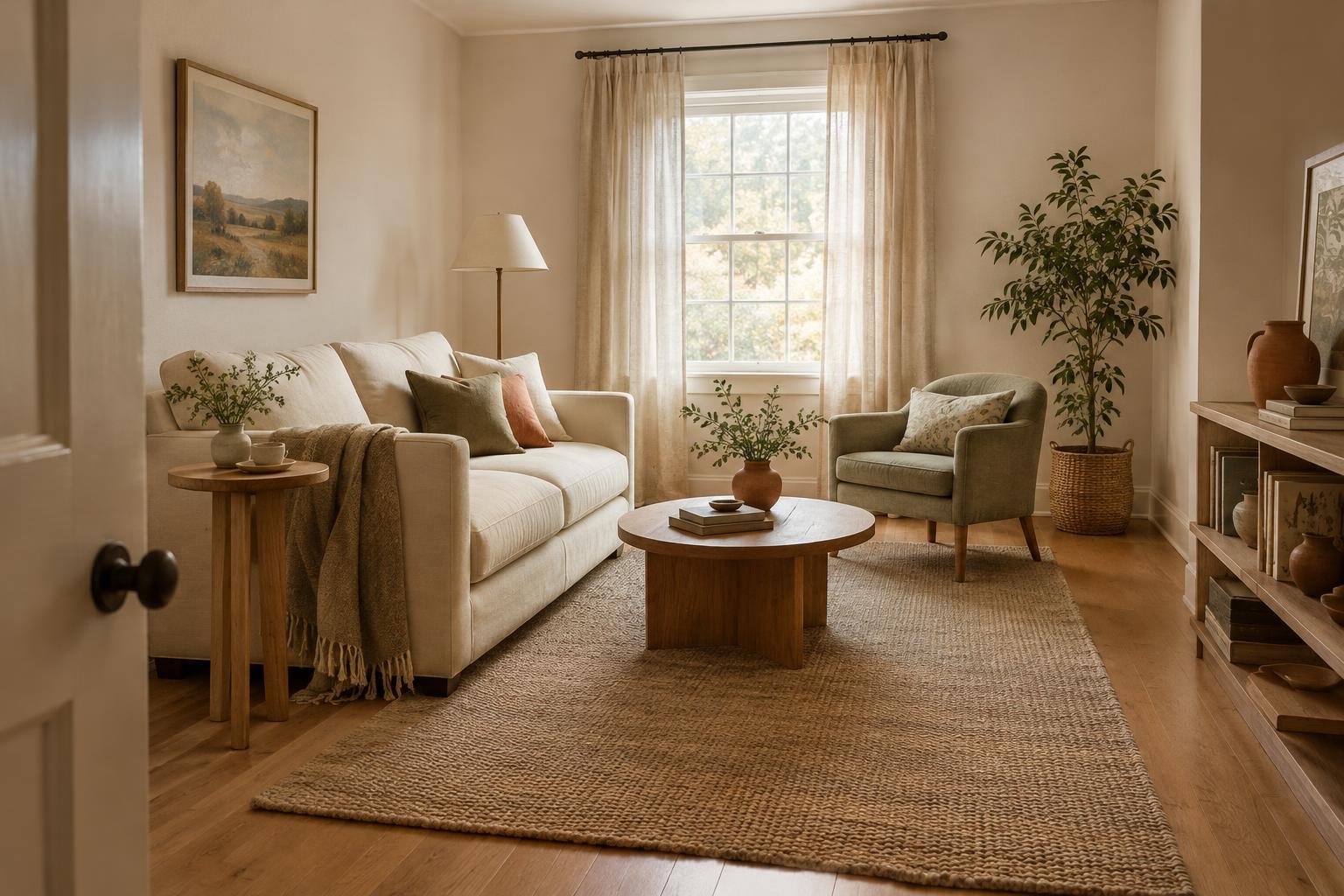
Start with space to move
Before buying anything new, notice how you use the room. Where do you walk, sit, open doors or pull out drawers? Keep those routes clear first. A room often feels crowded not because it holds too much overall, but because furniture interrupts the places you need to move through every day.
Try removing one or two pieces, then live with the layout for a few days. If the room works better, you may not need replacements. When arranging what remains, resist the urge to push everything against the walls automatically. A sofa or chair set slightly away from a wall can sometimes create a more comfortable seating area, provided there is still an easy path around it.
Choose furniture for the room’s jobs
Decide what the room needs to do before deciding what it needs to hold. A small living room might need seating for two, a place for drinks and somewhere to store throws. It may not need a large coffee table, several side tables and an extra chair used only occasionally. Prioritizing everyday activities makes it easier to leave useful empty space.
Look for pieces that earn their footprint: a side table with a shelf, a bench that can be moved when guests visit, or a cabinet that keeps everyday items behind doors. Measure both the furniture and the space around it before committing. A compact piece is only helpful if you can still open it, walk past it and use it comfortably.
Give the eye a calmer path
Small rooms do not have to be pale or minimal, but a little visual consistency helps. Repeating a few colors across cushions, artwork and larger furnishings can make separate objects feel connected. If you love pattern, give it a clear role: perhaps patterned curtains or one upholstered chair, balanced by quieter surfaces nearby.
Pay attention to what you see first from the doorway. A clear view toward a window, a favorite piece of art or a well-styled shelf can give the room a focal point. Keep nearby surfaces relatively simple so the eye has somewhere to rest. This does not mean hiding every personal object; a small group of meaningful things often has more presence than many items scattered across the room.
Use light and textiles with intention
Light changes how open a room feels throughout the day. Avoid placing tall furniture where it blocks a window if another position is possible. A mirror can help reflect light, especially when it faces a bright part of the room, but it will also reflect whatever sits opposite it. Check that view before deciding where to hang one.
Textiles bring warmth without requiring much floor space. Curtains hung high and allowed to fall neatly can soften a wall; a rug can define a seating area without adding another piece of furniture. Choose sizes deliberately. A rug that accommodates at least the front legs of the main seating often feels more connected to the room than a small rug floating in the middle. Keep throws and cushions to a number you can use without constantly moving them aside.
Make room for the things you keep
Clutter tends to gather where storage does not match daily habits. Put a basket near the chair where you read, a tray where keys usually land, or a closed box on a shelf for small items you want close at hand. Storage works best when it is easy to reach and just as easy to put things back.
Finally, leave some shelves, corners and tabletops partly empty. Open space is not wasted space: it lets the furnishings you chose stand out and gives you flexibility when you bring out a lamp, a vase of branches or an extra chair for a guest. A welcoming small room is not one with nothing in it, but one where everything has room to be used.