Start with a feeling, not a symbol
Summer decorating often begins with a familiar image: stripes, lemons, shells, flowers or leafy prints. Any one of these can make a room feel fresh. When the same image appears on the cushions, artwork, tableware and towels, though, it can start to feel like a set. Before choosing a motif, decide what you want the room to feel like. Airy and quiet? Colorful and sociable? Relaxed and coastal? That answer gives you more room to work than a literal theme.
For an airy room, you might choose pale blue, warm white and a single striped cushion rather than several nautical objects. For a more playful room, a citrus-print tablecloth could provide the bright note while the rest of the setting stays simple. The motif becomes an accent that supports the mood, not a rule that every purchase has to follow.
Give the motif one or two places to land
Choose a focal point before adding seasonal details. A patterned throw on a sofa, a print above a sideboard or a tablecloth in the dining area is often enough to establish the idea. Leave some nearby surfaces plain so the eye has somewhere to rest. If you love a bold botanical pattern, for example, pair it with solid cushions and an unpatterned rug rather than repeating leaves at every scale.
Small motifs can be especially effective on useful objects. A striped napkin, a floral cushion cover or a fruit-colored pitcher can bring summer into an everyday routine without requiring a full-room change. Try arranging the pieces you want to use in one place before distributing them around the room. If they look like a matching collection, remove a few and bring back familiar, season-neutral items.
Use color and texture to carry the season
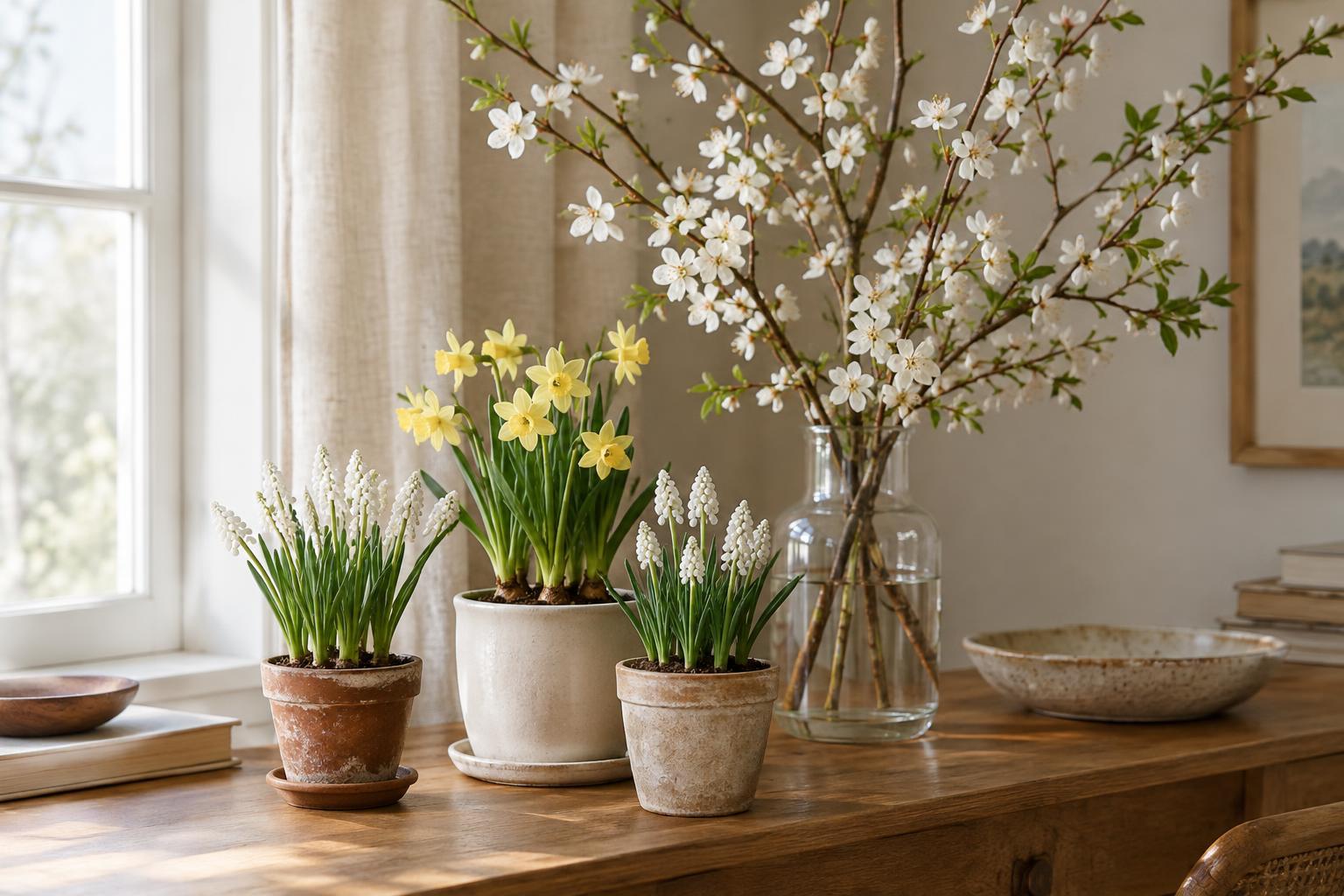
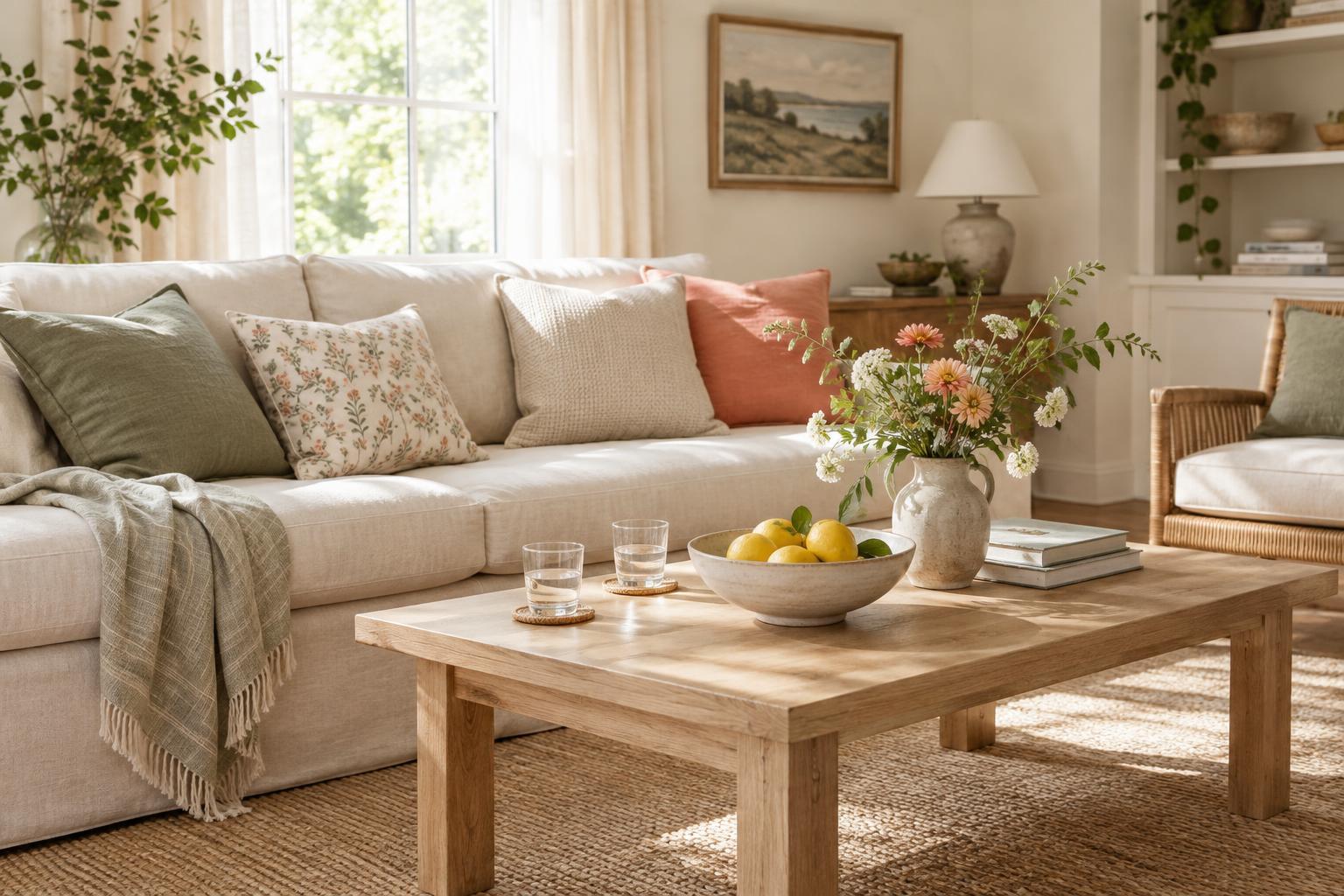
A room can suggest summer without a single recognizable summer print. Cotton or linen-feel textiles, woven textures, clear glass and lighter colors can shift the atmosphere while keeping the furniture and larger pieces unchanged. Look at the colors already in the room, then pick one or two that feel brighter in a warm-weather setting. Soft green may connect a leafy cushion to existing plants; terracotta may make a simple dining table feel sun-warmed.
Texture also helps a motif blend in. If a shell-shaped dish feels too literal on its own, set it beside a plain ceramic vase and a woven tray. The mix makes it one interesting shape among several, rather than the start of an undersea display. You do not need every piece to be pale or breezy: a dark wood table or substantial sofa can give lightweight summer accents something to contrast with.
Mix scales, but limit repetition
If you want more than one pattern, vary what each contributes. A broad stripe can sit comfortably with a small floral, while two large, high-contrast prints may compete for attention. Keeping a shared color between patterns helps them feel connected. You can also place pattern in different parts of a room: perhaps a cushion on the sofa and napkins on a nearby table, with plain textiles between them.
Repetition is most useful when it is subtle. Echo the yellow in a lemon-print cloth with a few flowers, for instance, rather than adding lemon-shaped accessories. A single visual link makes a space feel considered without spelling out the motif. Step back and look at the whole room, not just the styled corner. If your eye lands on the same symbol everywhere, swap one of those pieces for a solid color or a different texture.
Choose pieces that can stay useful
The easiest seasonal updates to live with are often items you can use in more than one setting. A striped throw can move between a chair and the end of a bed. Colored glassware can brighten a summer table and still work for everyday drinks later on. Neutral trays, baskets and vases can hold changing arrangements without needing to be replaced each season.
When summer is over, you may only need to put away one conspicuous print and change a few flowers or textiles. The rest can remain because it belongs to the room, not just to a theme. That is a helpful test before bringing anything home: would you still enjoy this piece when it is no longer part of a summer display? If the answer is yes, it is more likely to make the room feel personal rather than temporarily dressed up.