Start with a spot and a simple palette
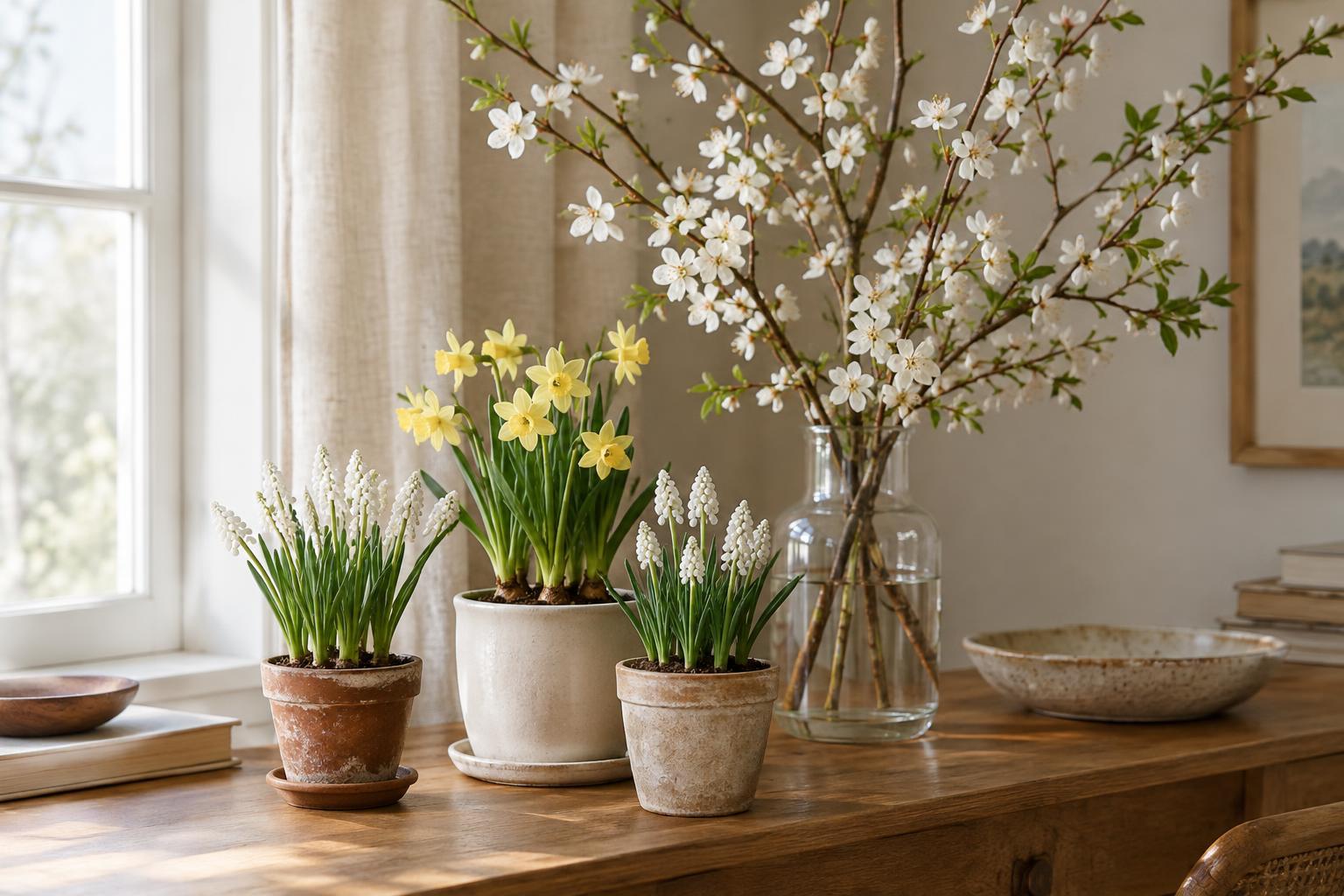
Potted bulbs and flowering branches make a natural pairing: the bulbs bring color close to the table, while the branches add height and an airy outline. Before choosing either, decide where the display will live. A dining table calls for branches short enough that people can see across it. A sideboard or entry table can accommodate a taller vase, provided the branches have room to spread without catching on a walkway.
Keep the palette narrow so the different shapes feel connected. White or pale yellow flowers sit comfortably with fresh green foliage and natural wood. Pink blossoms can be the main color against cream ceramics and clear glass. You do not need matching flowers; repeating one vessel material or one flower color is often enough to make separate pots and a vase read as a single arrangement.
Choose bulbs and branches that suit the space
Look for potted bulbs with firm leaves and some buds still to open, rather than choosing only fully open flowers. Muscari, narcissus, hyacinths and tulips each give a different effect: small muscari can fill a shallow grouping, while taller tulips have a looser silhouette. Consider scent as well as color. A fragrant pot may be welcome in an entryway but overpowering on a dining table.
For height, try a few flowering branches such as cherry, quince or forsythia, depending on what is available locally. Select stems with visible buds and an interesting shape, and check that the vase can support their weight. If you cut branches from your own garden, take them where pruning will not spoil the plant’s shape. Buds may open at different rates, and some may not open indoors at all, so let the branches’ lines be part of the display even before they flower.
Build the arrangement in layers
Place the tallest vessel first, slightly off center rather than directly behind the bulbs. Add a little water, set the branches in place and turn the vase as you work. Leave open space between stems so their buds remain visible. A heavy ceramic vase helps anchor long branches; for a lighter vessel, use fewer or shorter stems to keep the arrangement stable.
Group two or three bulb pots at the base, varying their heights with a low bowl, a small stand or a stack of sturdy saucers. Keep plants in their nursery pots if that makes watering easier, then slip the pots into decorative containers. A tray beneath the grouping catches drips and gives the pieces a shared boundary. Finish with restraint: a linen runner or a few smooth stones may be all the display needs. Avoid packing moss tightly around bulbs, where it can hide overly wet soil.
Keep flowers fresh without making a mess
Give cut branches a clean vase and fresh water. Remove any leaves that would sit below the waterline, and change the water when it clouds. Keep the arrangement away from strong heat and direct afternoon sun, which can shorten the display’s useful life. As blossoms fade, remove individual stems or replace them with fresh greenery rather than rebuilding everything.
Potted bulbs need a different routine. Check the soil with a finger and water when it begins to feel dry, letting excess water drain before returning each pot to its decorative container. Bulbs sitting in water can deteriorate quickly. If the display shares space with curious pets or young children, check the safety of your chosen plants and place pots, stems and standing water out of reach where needed.
Let the display change with the season
A spring display need not look identical every week. When the bulbs finish flowering, remove spent blooms and let the leaves remain while they are green. Whether the bulbs will grow well again depends on the variety and growing conditions, so treat replanting as an option rather than a guarantee. The empty decorative pots can hold herbs or small foliage plants later in the season.
The tray, vase and textiles can stay in use long after the first blossoms are gone. Replace flowering branches with leafy ones, or leave the vase empty and let its shape provide height. Reusing the same few essentials makes seasonal decorating less about buying a complete new look and more about noticing what is growing now.