Start with the space each person needs
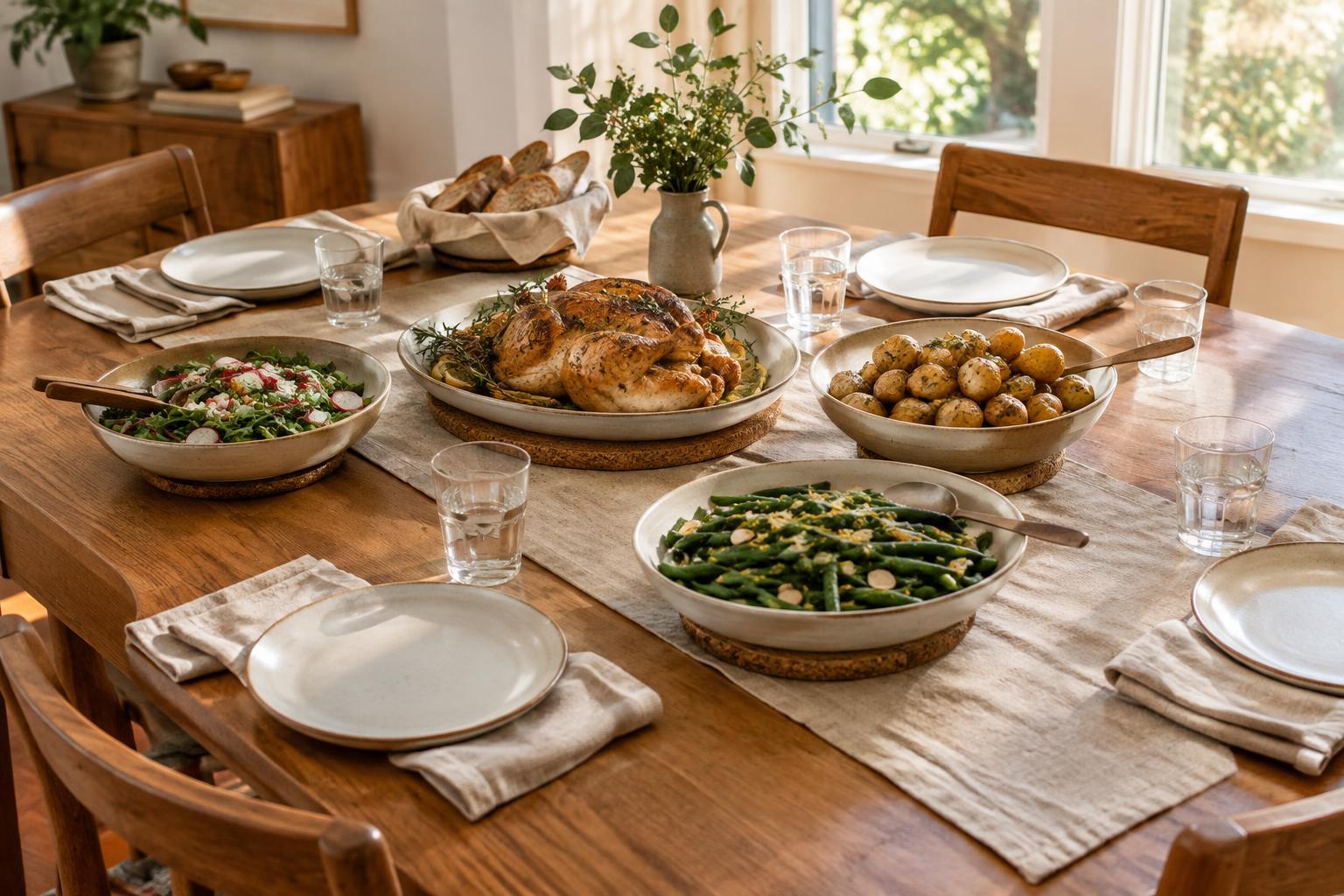
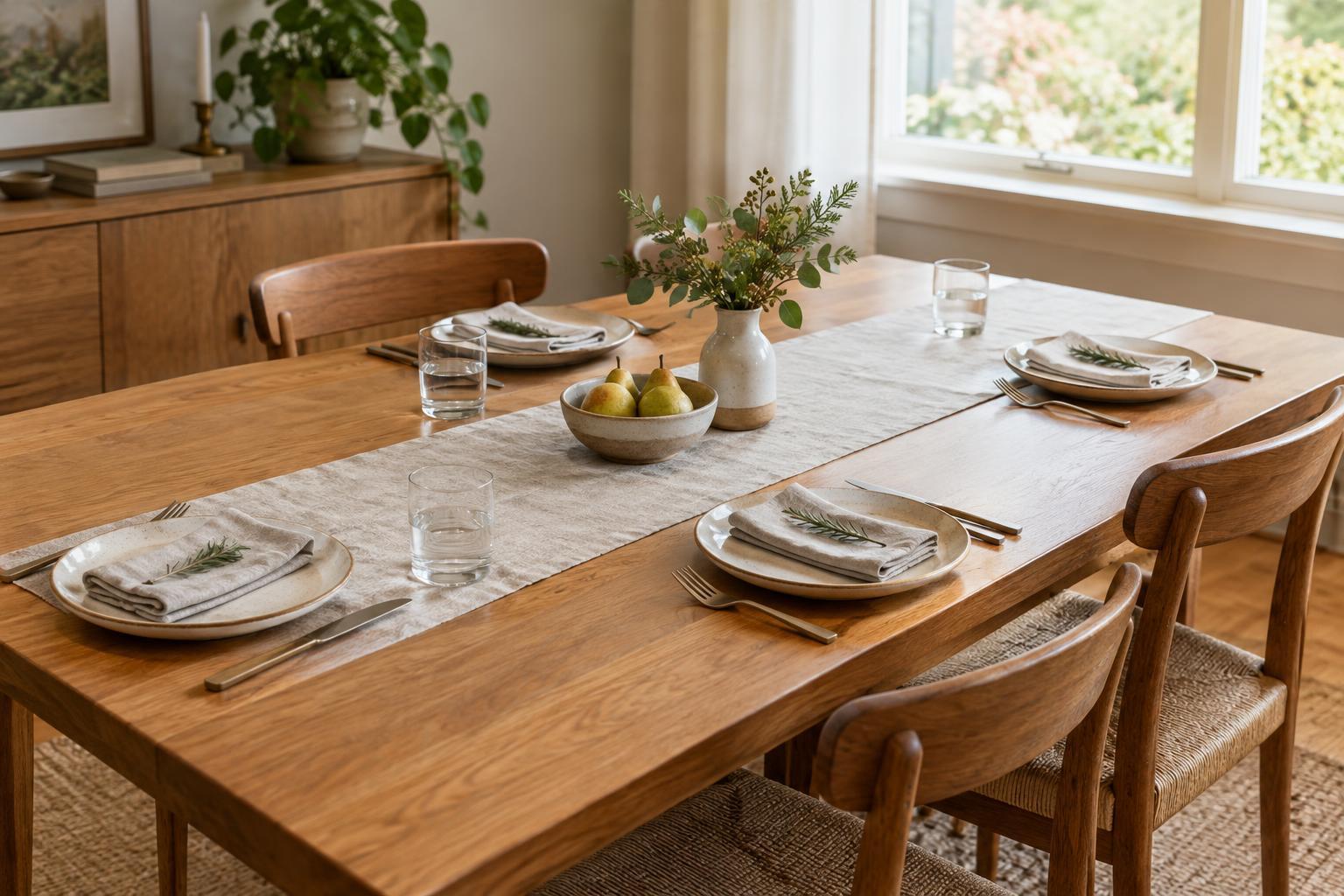
A runner works best when it frames the meal rather than competing with it. Before laying one down, set a plate, cutlery, a glass and a napkin at a typical seat. Repeat at the seat directly opposite. The open strip between those two settings is the space your runner can occupy comfortably. This quick test is more useful than choosing a runner by the table’s overall width alone.
Leave enough bare tabletop for people to put down their glasses and move their cutlery without catching the fabric. If you use placemats, let their inner edges guide the runner’s width; a little visible table between mat and runner helps each element feel intentional. On a narrow table, skip placemats or choose a slimmer runner rather than squeezing both into the same space.
Choose a width that suits the table
A runner does not need to cover a large part of the tabletop to have an effect. A narrow band of linen or cotton can bring in color while preserving room for everyday dishes. If a runner you own is too wide, try folding it lengthwise with a neat edge facing out. Check that the fold lies flat before adding plates or serving bowls.
Length matters, too. A runner that stops short of the table ends gives a compact table a tidy, casual look. One that extends over the ends can feel softer and more dressed up, provided the hanging fabric does not brush against seated guests’ legs or chairs. On a table with a leaf or an irregular shape, lay the runner out first and judge it from the seats as well as from above.
Keep the center useful
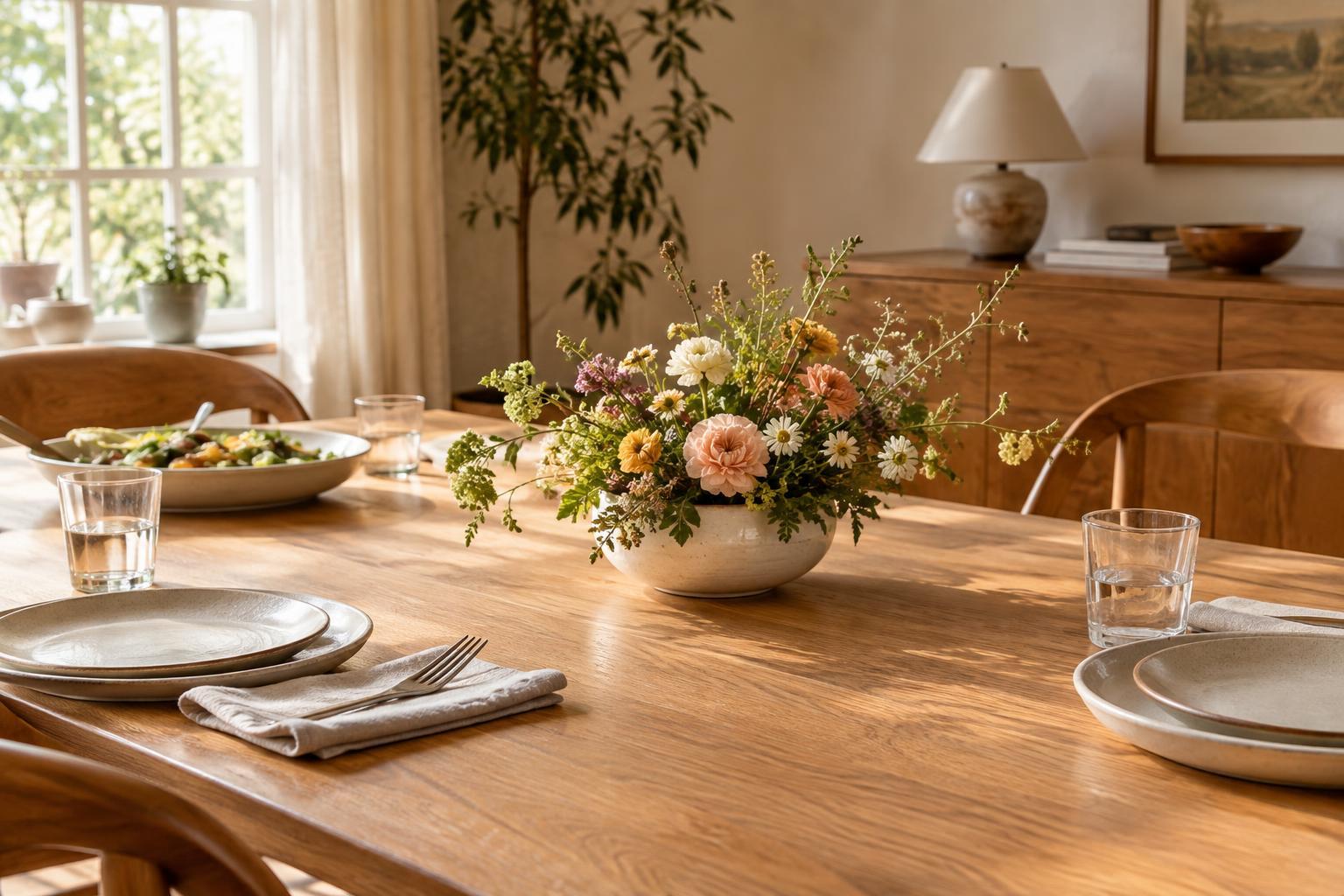
The middle of the table often has several jobs: holding serving dishes, condiments, water and perhaps a small decoration. Decide which of those needs space before arranging a centerpiece. A runner can define that shared zone without requiring you to fill every inch of it. One low bowl, a few small objects or simply the fabric itself may be enough.
If dishes will be passed around, keep the runner clear where people are likely to reach. Use stable, heat-safe surfaces beneath hot serving pieces rather than relying on fabric to protect the table. Leave room to put a dish down without shifting a vase or candle first. For a relaxed meal, an uncluttered center is often more inviting than an elaborate display.
Adjust the layout for your seating plan
A lengthwise runner is a natural fit for a rectangular table, but it is not the only option. On a wide table, shorter runners placed across the width can connect pairs of opposite seats. In that arrangement, make sure each person still has a flat, stable area for their plate and glass; the fabric should not bunch where a place setting rests.
For a round table, test a shorter runner across the center rather than trying to make it follow the curve. Keep the ends away from chair seats and consider a small centerpiece so the fabric remains visible. If every seat is in use and space is tight, it is fine to put the runner away for the meal and use it on a sideboard instead.
Let texture do some of the decorating
A runner can make a simple table feel considered even when everything else is practical. Washed linen brings a soft, relaxed texture; smooth cotton gives a cleaner outline. A subtle stripe can add direction without making the center feel busy. If your dishes or napkins have strong patterns, a quieter runner gives them room to stand out.
For everyday use, choose a fabric you are comfortable cleaning and storing. Smooth out creases that could make glasses wobble, and check that any fringe or tassels stay clear of plates and serving dishes. Once the table is set, sit down in one of the chairs: if you can reach your glass, lift your plate and share a dish easily, the runner is doing its job.