Start with the view from a chair
A centerpiece can look perfectly proportioned from above and still block the person sitting opposite. Before choosing a vase or tray, sit at the table and look across it at the height of another seated guest’s face. That view matters more than how the arrangement looks from the doorway. If you can imagine having to lean around flowers to talk, the centerpiece needs to be lower, narrower or more open.
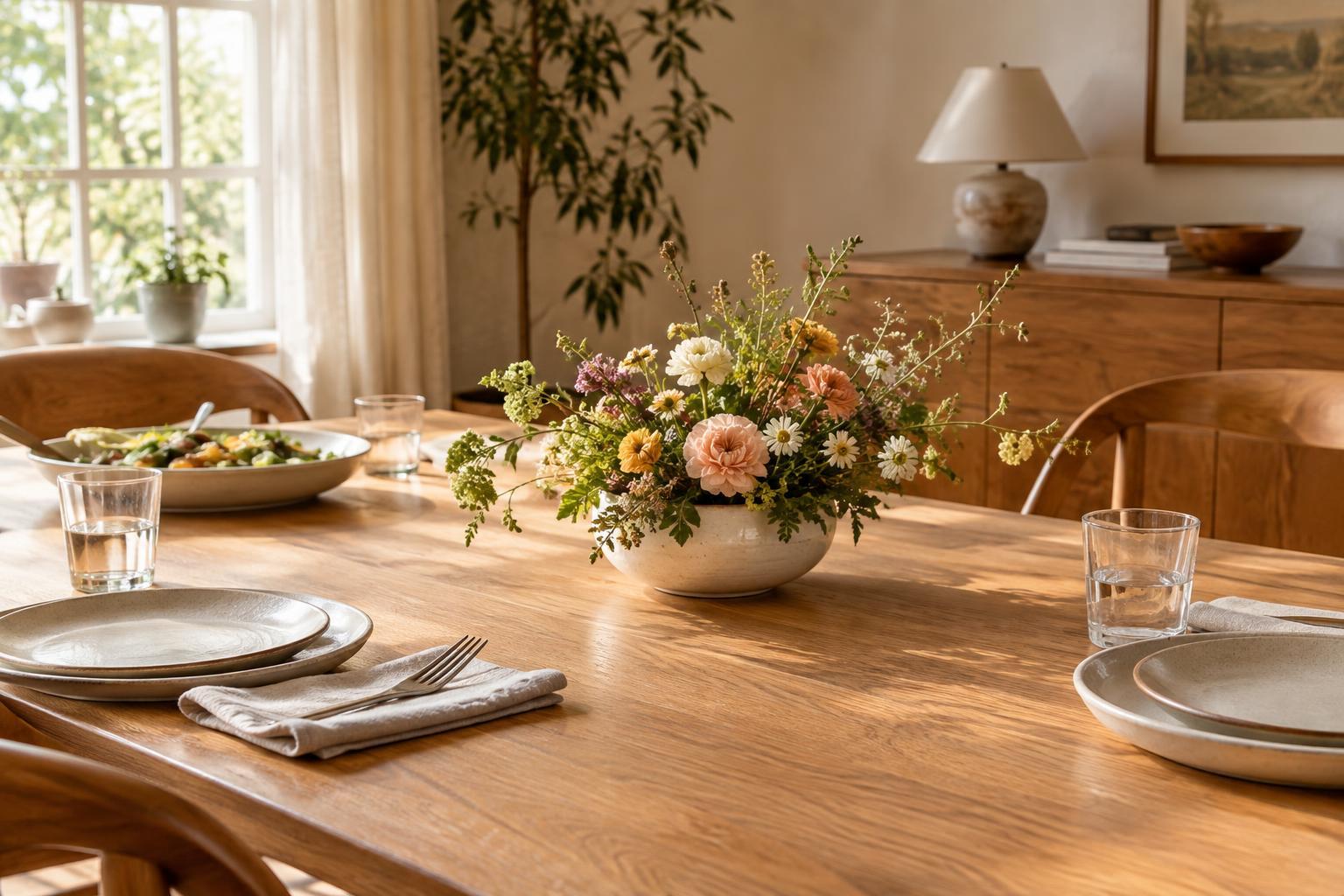
As a starting point, keep a solid arrangement below the seated sight line. Around 10 to 12 inches tall often works for a low centerpiece, but chair height, table height and the shape of the arrangement all make a difference. A few wispy stems may cause less obstruction than a dense bouquet of the same height. Treat any measurement as a guide, then test the finished arrangement from several seats.
Leave room for the table to work
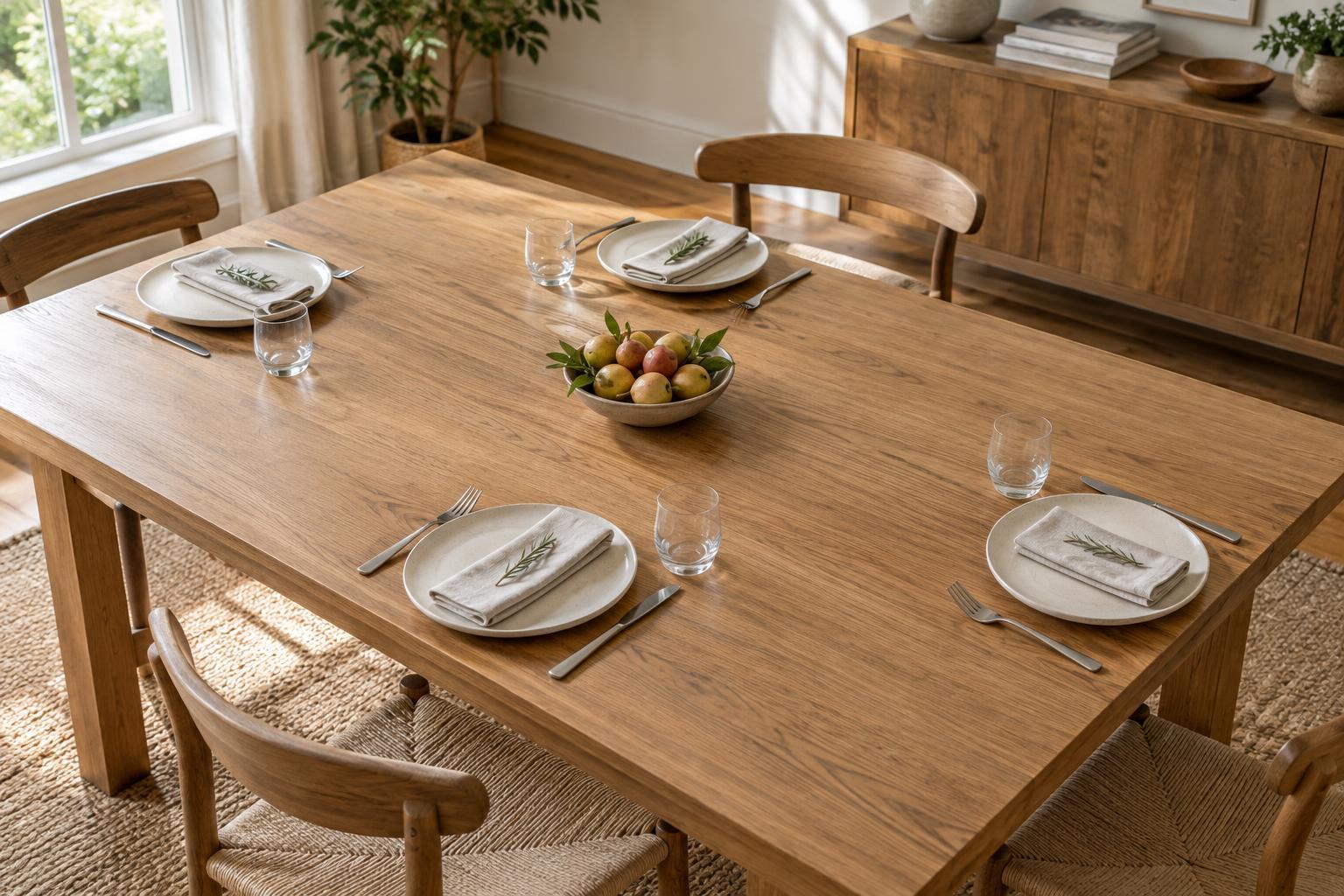
Height is only half the decision. A centerpiece also needs to share the tabletop with plates, glasses, serving dishes and guests’ hands. Set out the essentials before measuring the space available in the middle: a place setting at each seat, any dishes that will stay on the table and the glasses you expect to use. The clear area left between them is your practical limit, not a target you need to fill.
On a round table, one compact arrangement often feels calmer than several objects spread toward the place settings. On a long rectangular table, a series of small pieces can follow its shape while leaving gaps for shared dishes. Keep trays and low branches clear of plate edges, and check that sleeves will not brush against them when guests reach for food. If the meal will be served from the table, give the serving dishes priority.
Choose a shape that suits the conversation
A low bowl, shallow dish or short vase is a straightforward choice when everyone should be able to see across the table. The arrangement does not need to be flat: texture from leaves, fruit, flowers or a folded linen runner can give it presence without adding much height. Grouping a few objects on a tray also makes it easy to lift the entire centerpiece away if more room is needed.
A taller centerpiece can work when its narrow base leaves useful table space and its fuller portion sits clearly above seated eye level. The area between the tabletop and the upper arrangement should remain open, rather than filled with leaves at face height. Check that the vessel is stable and that branches do not droop into anyone’s view. This approach is less forgiving on a small table, where a tall piece can feel close even when it does not fully block a face.
Test the arrangement before guests arrive
Build the centerpiece where it will be used, then sit in the chairs around it. Look toward the seat opposite and toward the people who would sit diagonally across from you. A round table may have several important sight lines; at a long table, check both the middle and the ends. Turn the arrangement if one side is fuller, and make small changes by trimming a stem or moving an object inward.
Try a brief table rehearsal with plates and glasses in place. Can you pass a serving bowl without lifting it over the flowers? Is there space to set down a water jug? Can guests see one another without shifting in their chairs? If the answer to any of these is no, removing one element may help more than rearranging everything. Leave enough space around candles to keep nearby materials clear, and avoid placing a strong scent directly beside food.
Keep a flexible version for everyday dining
The most useful centerpiece is one you can adjust as the table changes. A short vase can hold a few stems for dinner and move to a sideboard when extra dishes arrive. A small bowl of fruit can stay on the table through a casual meal, while a runner can add color without occupying the serving area. Reusable pieces in materials you enjoy make it easier to create a welcoming setting without building a new arrangement for every occasion.
When in doubt, begin with less. A modest centerpiece that leaves faces visible and hands free will often feel more generous than a larger display that guests must work around. Once the table is set, you can add height or texture where there is genuinely room for it. The goal is not to fill the center; it is to make the people gathered around it comfortable.