Start with what you have
A collection of dinnerware often grows one piece at a time: everyday plates, a few inherited bowls, or dishes bought because their color was hard to resist. They can share a table without looking like a compromise. The goal is not to make every place setting identical. It is to give the eye enough repetition to understand that the mix is intentional.
Before setting the table, lay out the pieces you want to use and notice what they have in common. Look for a shared color, similar shapes, or a recurring finish, such as glossy glaze or visible stoneware texture. You need only one or two connections. If a piece feels unrelated to everything else, set it aside for another meal rather than trying to make every dish work at once.
Choose a color thread
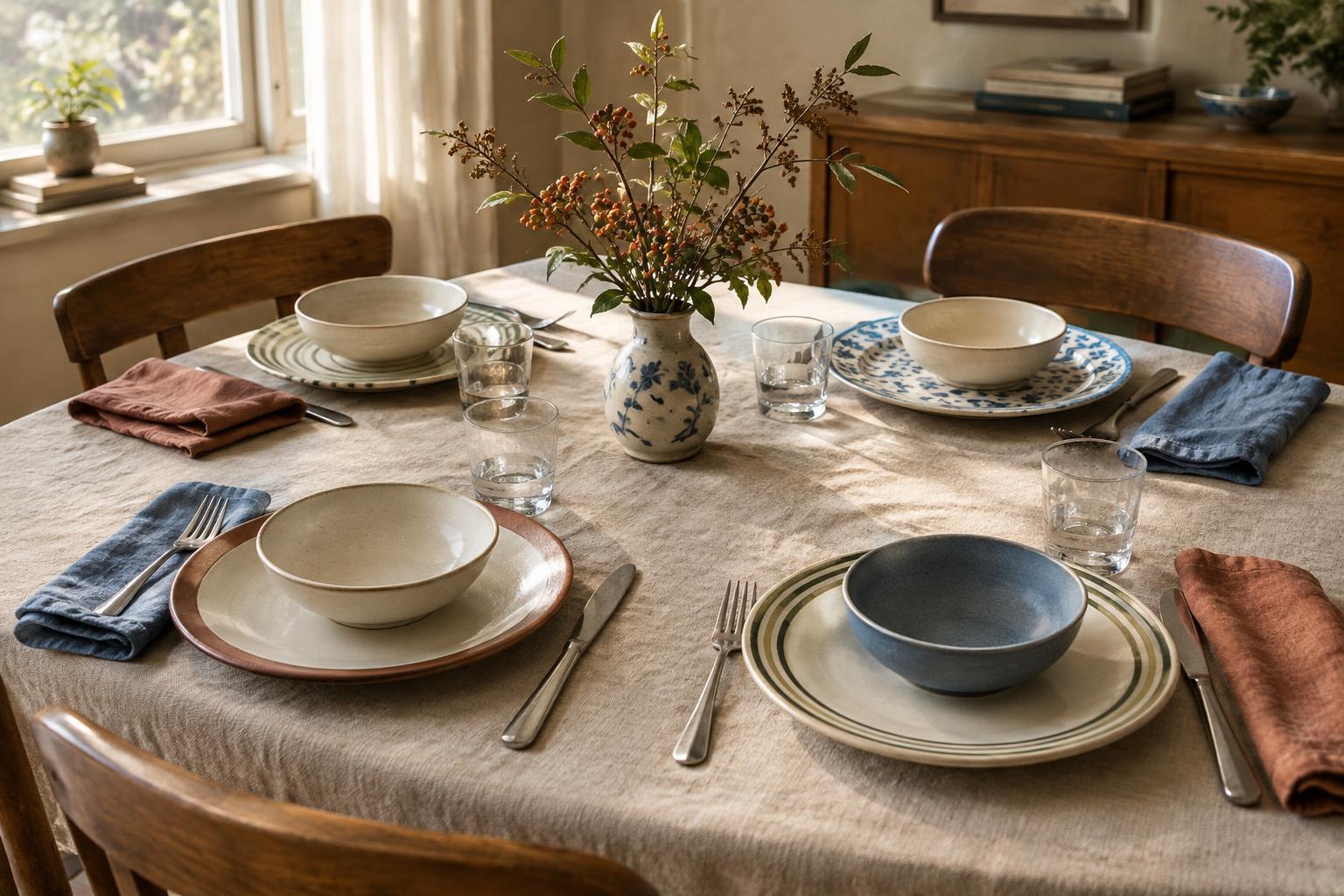
Pick one color that appears across several pieces, even if it shows up in different amounts. A blue rim, a blue floral print and a solid blue bowl can sit together because the color moves around the table. Neutrals such as cream, white, charcoal or warm brown can provide a quieter link when the patterned dishes are more varied.
It helps to limit the colors that dominate each place setting. If a dinner plate has a busy multicolor design, pair it with a solid bowl or a small plate that repeats just one of its colors. The mix can still include other shades in the details. Keeping the largest surfaces relatively calm gives those accents room to be noticed without making the table feel crowded.
Balance pattern with plain surfaces
Patterns are easier to combine when they differ in scale. Try a broad stripe beside a small floral, or a loosely painted motif beside a fine speckle. Two dense patterns of similar size may compete, especially when stacked. If that happens, put a plain plate between them or move one pattern to another place setting.
Think about the table as a whole, not just each stack of dishes. A patterned plate at every seat can work when the tablecloth and napkins are simple. If you prefer a printed tablecloth, use more solid dinnerware and let one patterned bowl or serving dish provide contrast. Leaving some visual breathing room makes individual pieces easier to appreciate.
Repeat details across place settings
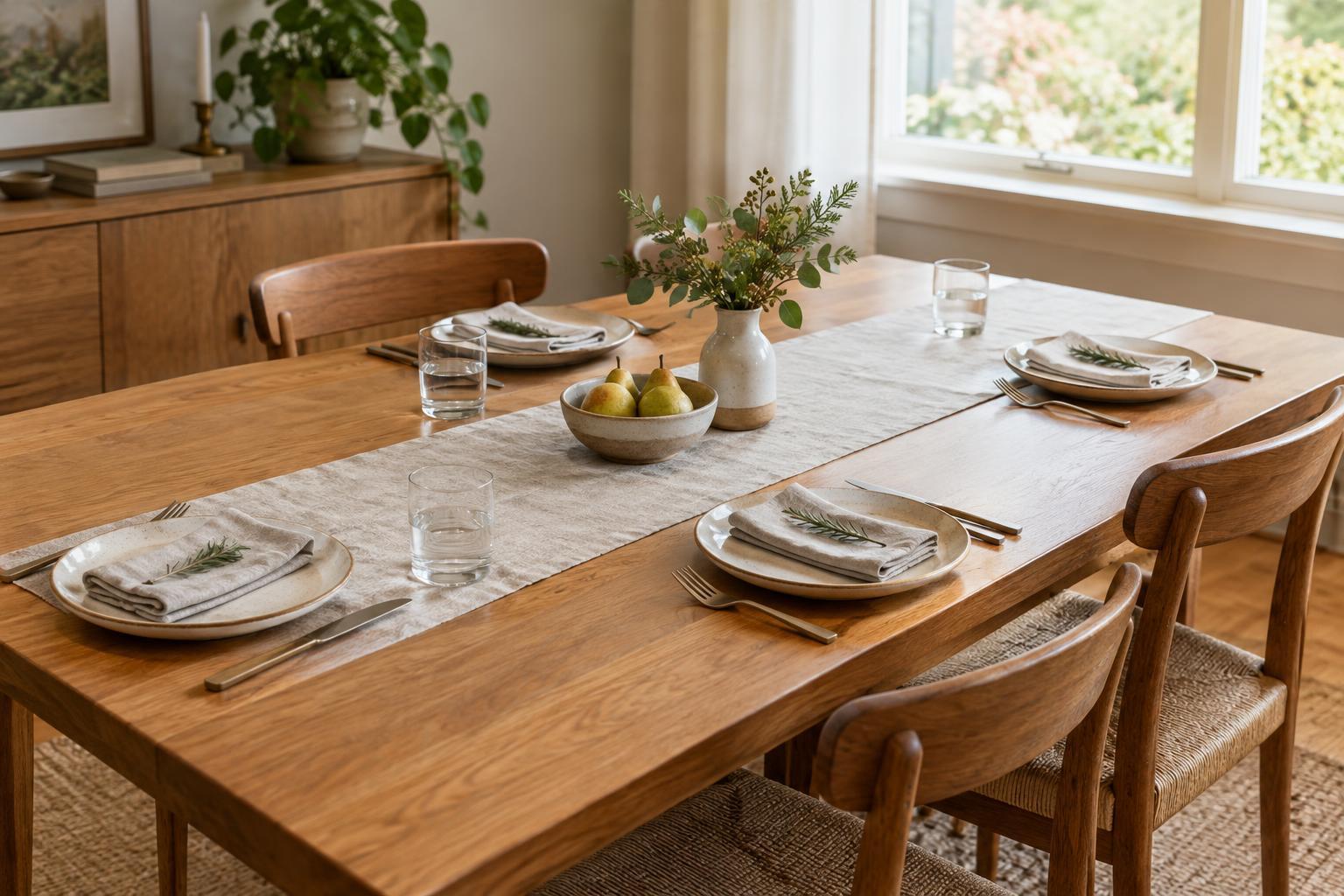
Repetition can make an assortment feel organized without requiring complete sets. You might use the same napkin at each seat, alternate two plate styles around the table, or give everyone a bowl in a similar shape. A consistent arrangement also helps: place each napkin in the same position and keep glasses lined up in roughly the same way.
If you have only two matching plates, they do not need to sit next to each other. Space them apart so their color or pattern appears at different points around the table. Serving pieces can help carry that connection further. A platter that echoes a color in the dinner plates ties the center of the table to the individual settings, even when no two stacks are alike.
Use linens and a quick test to finish
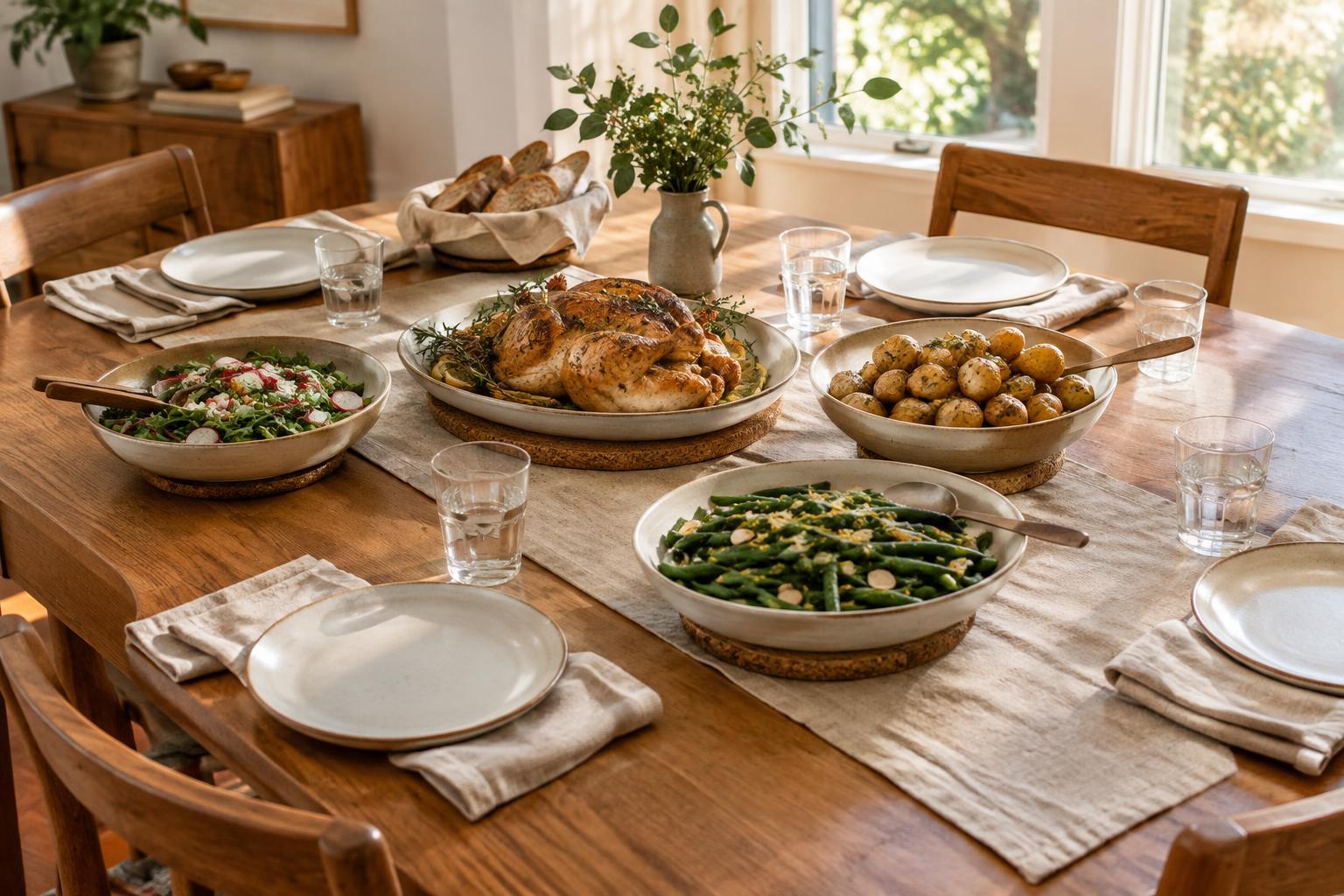
Linens are useful when dishes have different colors, materials and histories. A plain tablecloth or runner gives everything a shared background; napkins can pick up a color from a patterned plate. If the dinnerware already has plenty of detail, choose textiles with a noticeable texture rather than another print. There is no need to buy something new: a familiar set of napkins may be the link the table needs.
Set one complete place before arranging the rest. Check that the pieces are comfortable to use together and that a bowl or small plate does not hide the feature you wanted to show. Then step back and look at the full table. If one area feels too busy, swap a patterned piece for a plain one or repeat a color on the opposite side. Small adjustments are usually enough to make a collected table feel welcoming and ready to use.