Start with the space people need
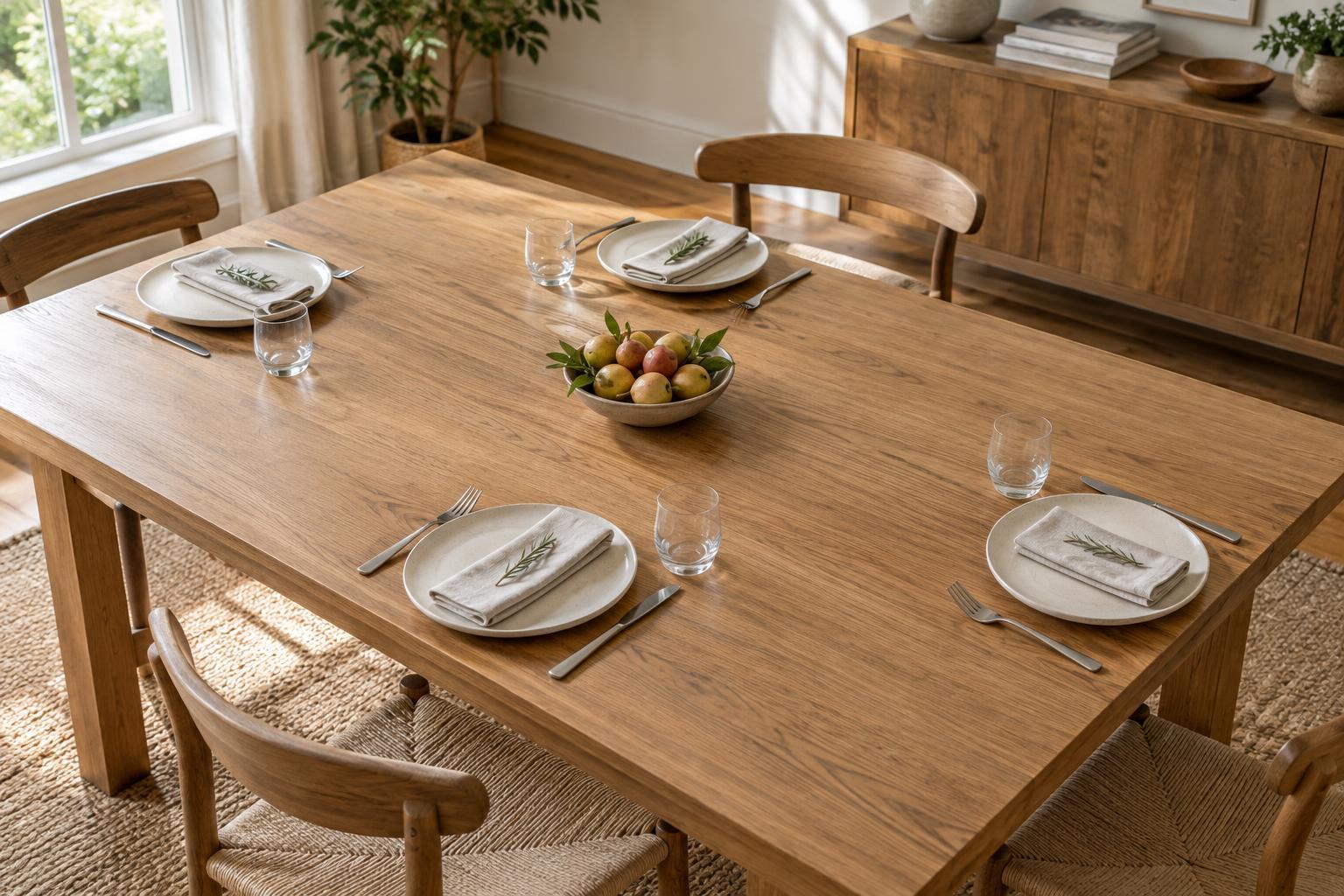
Family-style dining works best when the table feels generous rather than crowded. Set a place for each person first, including a plate, glass, napkin, and cutlery. This shows you how much room remains for food. Keep the area directly in front of each setting clear enough for someone to eat comfortably and set down a serving spoon while passing a dish.
Next, look at the route dishes will take around the table. Guests should be able to lift a bowl without reaching across glasses or leaning over someone else’s plate. On a long table, it may be easier to repeat a frequently used item, such as bread or a simple side, than to ask everyone to pass it from one end to the other. Leave a clear path for arms and hands; empty space is part of a useful table setting.
Give the main dish a convenient position
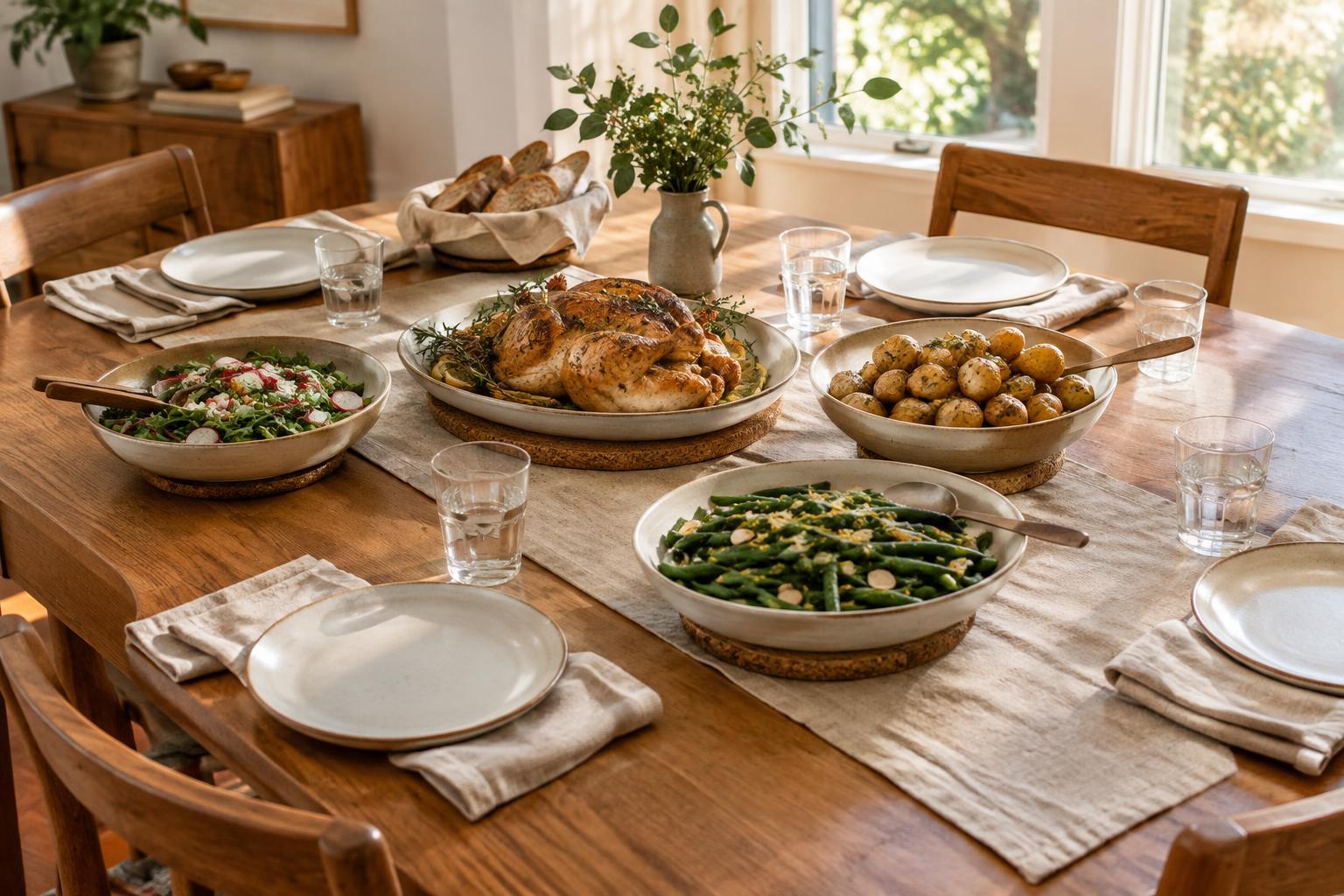
The main dish often deserves a central position, but the exact middle is not always the most practical spot. Place a large platter where several people can reach it or pass it easily. If it is heavy, awkward, or very hot, set it near the person who will help serve. That way, guests do not have to lift a full roasting dish over glasses and smaller bowls.
Arrange side dishes around the main platter according to their size and how often people are likely to use them. Low, broad bowls are useful in the center because diners can see over them and reach into them. Keep tall items, such as pitchers or flower arrangements, toward the ends or off the table if they interrupt conversation. A small bowl of sauce can sit near the food it accompanies, provided both can be reached without a long stretch.
Make every dish easy to use
Give each serving dish its own spoon, fork, or tongs before it comes to the table. Choose a utensil that can rest securely inside the dish or on a small plate beside it, so handles do not slip onto the tablecloth. For food with several components, such as a salad, tongs or a generous pair of servers can be easier to manage than a small spoon.
Think about the order in which people will serve themselves. Put bread and spreads close enough to be passed together. Keep dressings and sauces beside, rather than on top of, the foods they accompany so guests can choose how much to add. If two dishes look similar but contain different ingredients, a brief introduction when the meal begins can help everyone choose without having to guess.
Protect the table without complicating it
Hot serving dishes need a stable landing place. Set out trivets or heat-resistant mats before carrying food to the table, and make sure they are large enough for the base of each dish. A folded cloth may look inviting, but it can bunch up beneath a heavy pan. Check that platters sit flat and that handles do not project into the space where someone might reach for a glass.
A runner can bring color and texture to the center of the table, but serving dishes should stand securely on it. If the runner is thick or uneven, place dishes directly on the tabletop with appropriate protection underneath. Keep decorations simple and movable. A few small accents are easier to work around than a centerpiece that must be dismantled before dinner can begin.
Adapt the arrangement as the meal unfolds
A small table does not need to hold every dish at once. Bring out the main course and its closest companions, then keep extra bread, refills, or less-used condiments on a nearby counter. Refill bowls when they are low instead of beginning with oversized serving pieces. This keeps the center open and makes it easier for people to pass food.
Once everyone has served themselves, notice what is no longer needed. An empty platter can leave the table, while a popular dish can move closer to the people asking for seconds. These small adjustments make the arrangement feel natural. The goal is not perfect symmetry: it is a table where the food looks welcoming and everyone can share it comfortably.