Start with the room, not the paint chip
A small paint chip is useful for narrowing choices, but it cannot show how a color will feel across an entire wall. Light, nearby surfaces and the size of the painted area all affect what you see. Before collecting samples, spend a little time noticing the room as it is. Where does daylight enter? Which walls stay shaded? When do you use the space most?
Look at the elements you plan to keep: flooring, countertops, upholstery, curtains and woodwork. A warm off-white beside a cool gray sofa may read differently than it does on its own. Rather than trying to find a color that looks identical in every condition, aim for one whose variations you enjoy. A shade that feels gentle at breakfast but too stark under your evening lamps may not suit a room where you relax after dinner.
Make samples large enough to judge
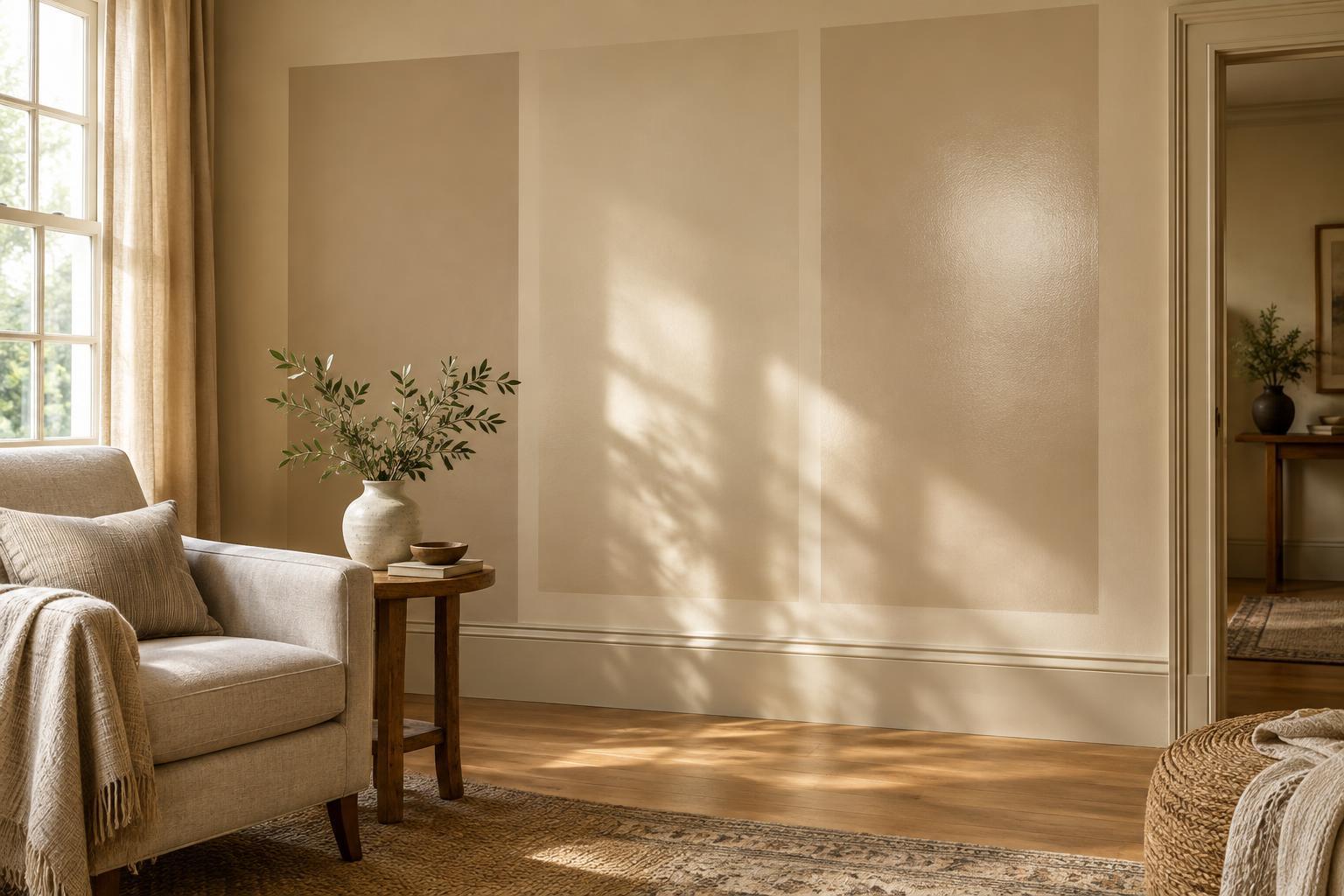
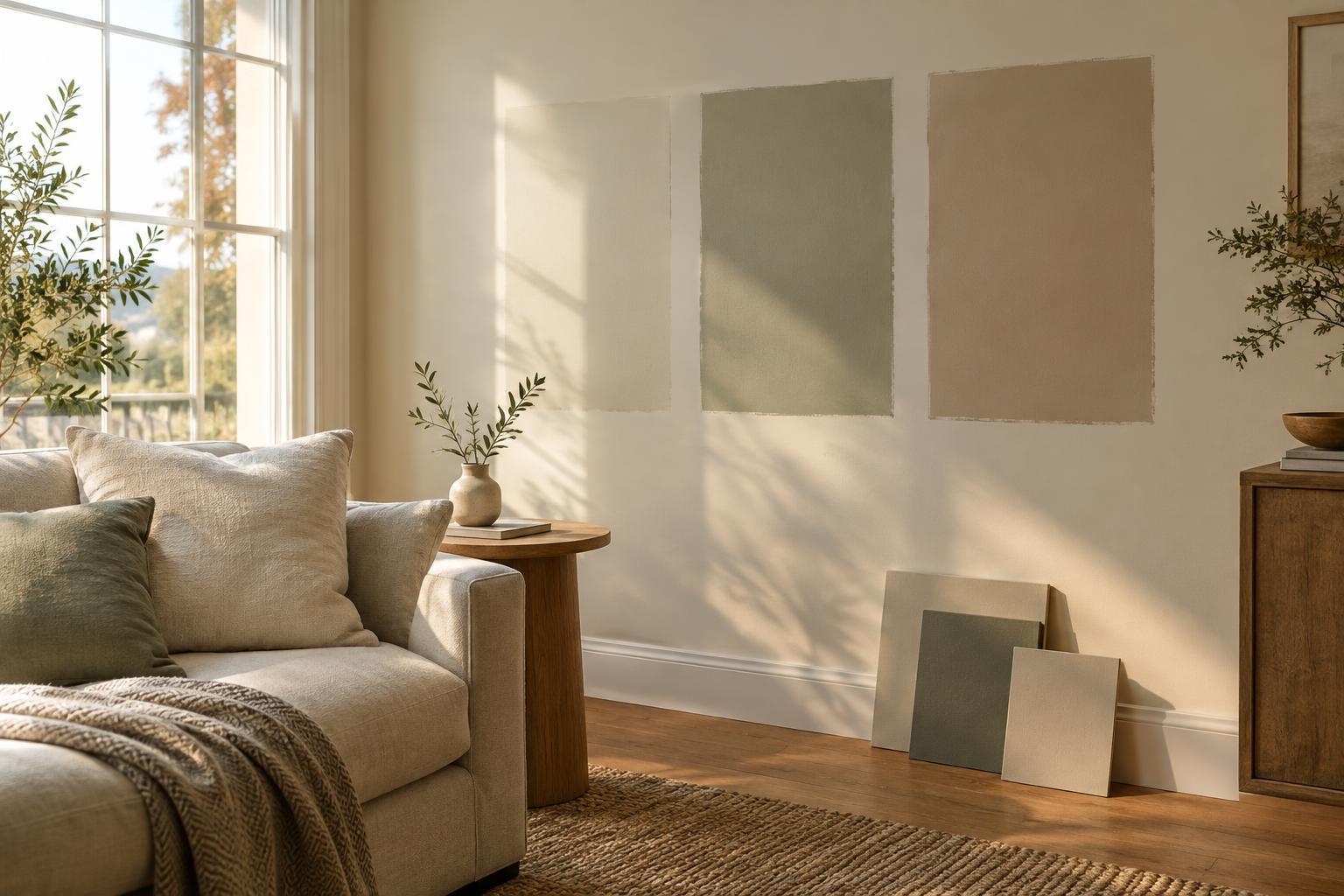
Choose a short list of two or three contenders and use actual sample paint when possible. Paint each color in a generous area, or apply it to a movable sample board. Follow the sample paint’s instructions for coats and drying time; an uneven or partly dry patch can give a misleading impression. Label each sample on the back of a board or beside the patch so similar shades do not get mixed up.
A board lets you move the same color between walls and hold it near a sofa, rug or curtain. A patch on the wall shows how the paint sits against the room’s existing surfaces. Either method is useful, but keep in mind that the old wall color can influence your perception. If it is vivid or very dark, leave some space between test patches, or view a sample against a neutral surface. For the closest comparison to the finished result, test over a surface prepared as you intend to prepare the wall.
Check each color as the light changes
View your samples at several points in the day rather than making a decision during one quick visit. Morning daylight, midday brightness and late-afternoon light can each bring out different qualities. Move a sample board to a bright wall and a shaded wall. Notice whether the color still feels appealing in the spots you see most often, not just in the best-lit corner.
Repeat the test after dark with the lamps and ceiling lights you normally use. The type of bulb and the placement of a lamp can change how a wall appears, especially next to a shade that is cool, warm or strongly colored. If you usually rely on table lamps for a softer atmosphere, judge the paint under those lamps. You do not need to document every hour; a few observations during your normal routine will reveal more than a paint chip viewed under store lighting.
Compare undertones with your furnishings
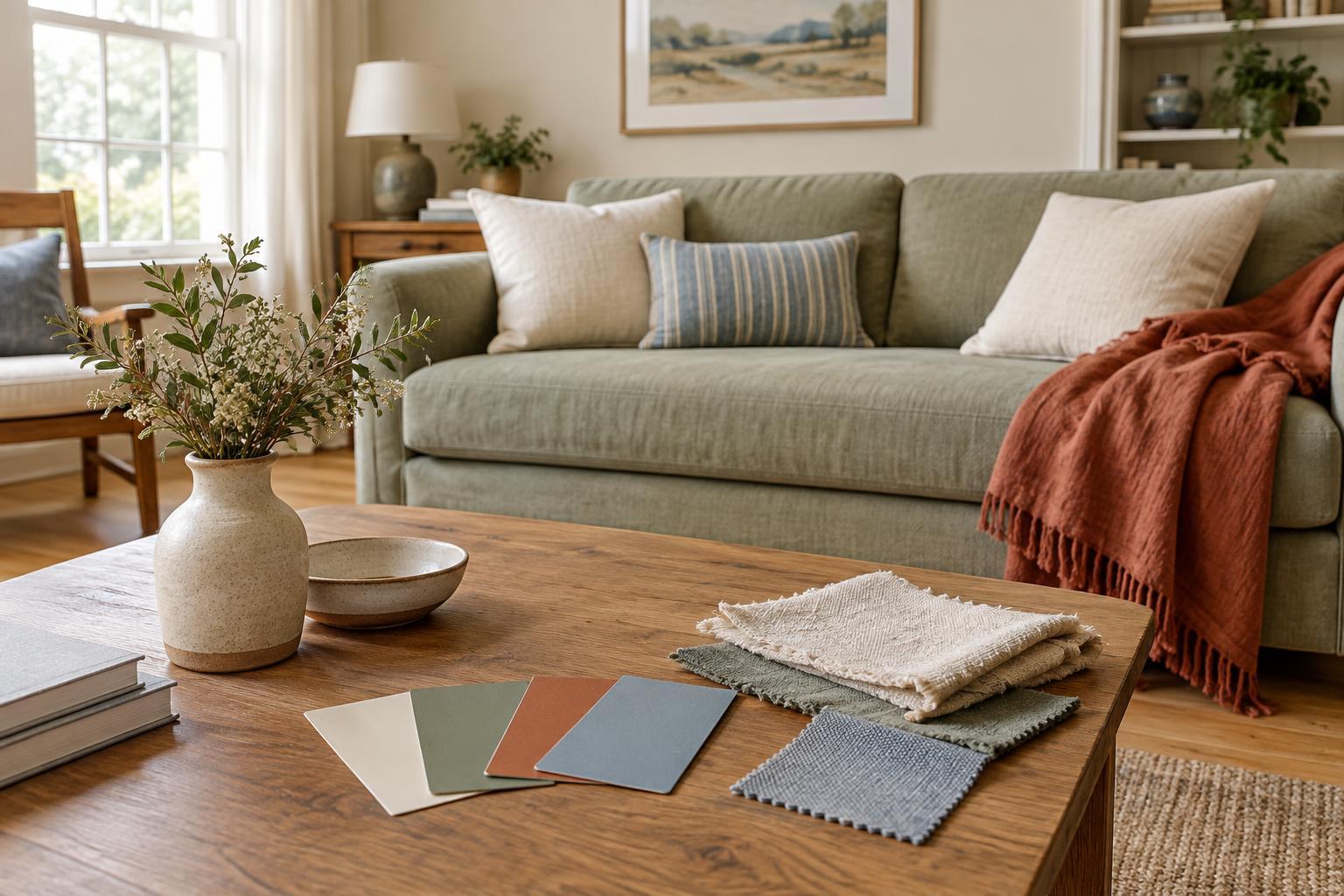
When two colors seem nearly identical, place their samples side by side and then separate them. A comparison can make subtle pink, yellow, green or blue undertones easier to notice, while viewing each sample alone helps you judge how it feels as part of the room. Hold the colors near permanent features such as tile and flooring before weighing them against accessories you can easily change.
Consider the effect you want rather than asking whether a shade is simply warm or cool. A creamy wall might make a dining area feel inviting beside natural linen and wood, while a cleaner white may suit the same room if its fixed surfaces are cooler. Neither choice is universally right. Check how the paint works with several textures, too: a color beside a glossy cabinet can appear different beside a matte woven curtain. If one sample repeatedly makes an important feature look out of place, it may be worth trying a different undertone.
Make the final choice with the finish in mind
Once you have a favorite, consider whether your test represents the paint you will actually use. A sample made in one finish may not look exactly like a finished wall in another. More reflective finishes can show light differently and may draw attention to surface imperfections, while flatter finishes tend to create a softer appearance. Check the available finish options for the room and, if the distinction matters to you, test the intended product and finish before buying enough for the whole space.
Give yourself a final day to live with the leading color. Look at it while the room is in use, with the curtains as you normally keep them and the lights set for an ordinary evening. If you still like it in both its flattering and less flattering moments, you have a stronger basis for committing. Testing cannot eliminate every surprise, but it can turn a guess based on a tiny chip into a choice grounded in your own home.