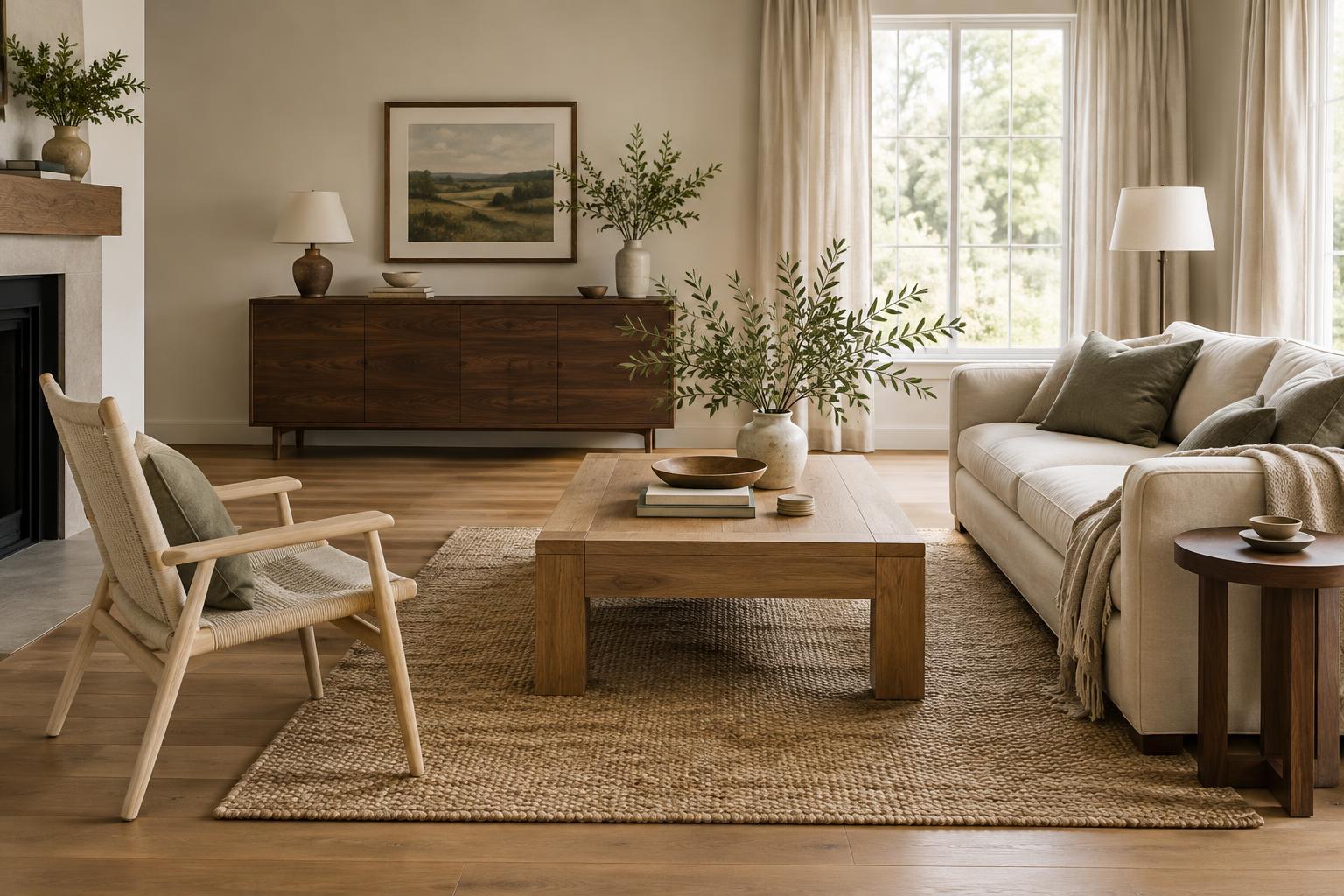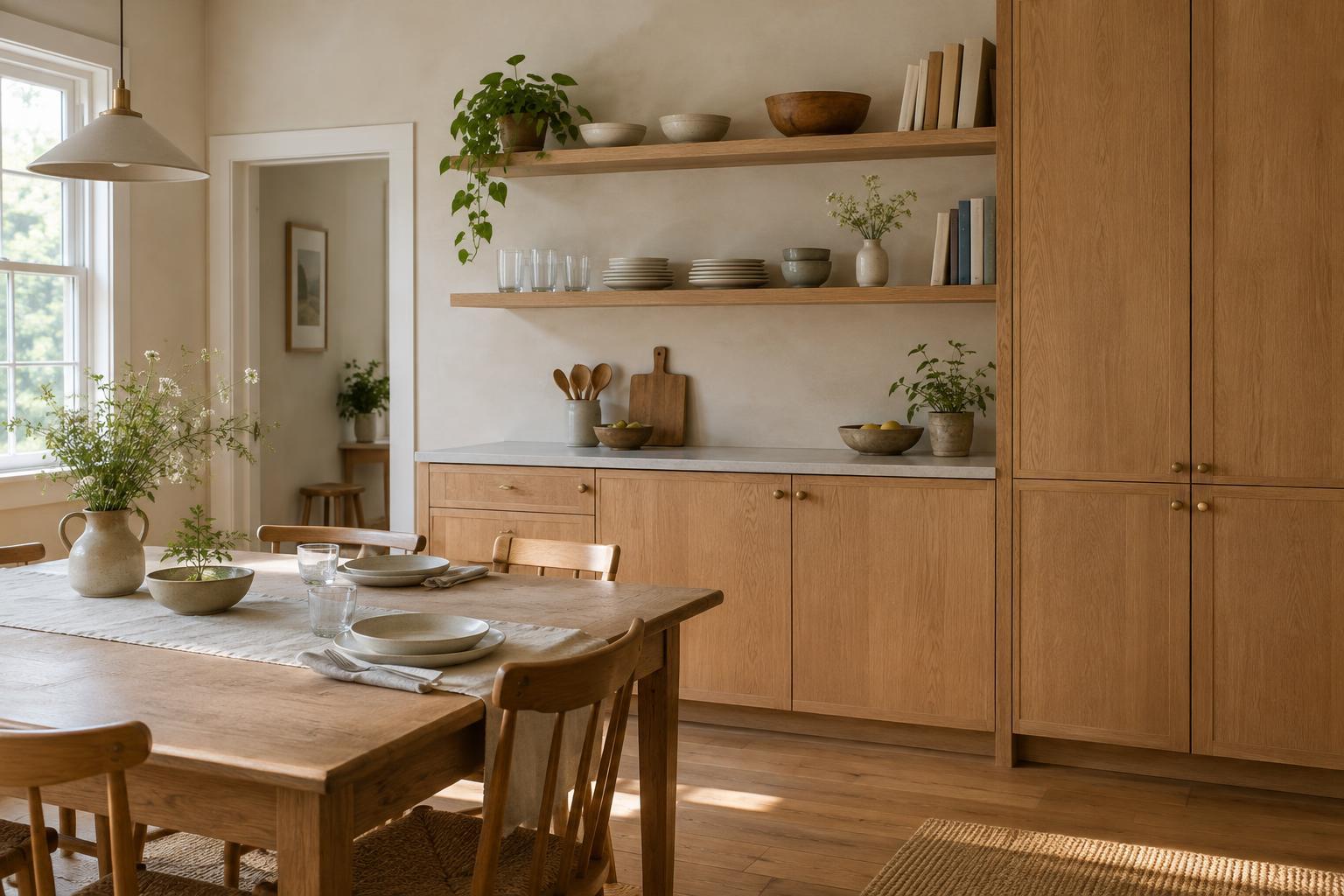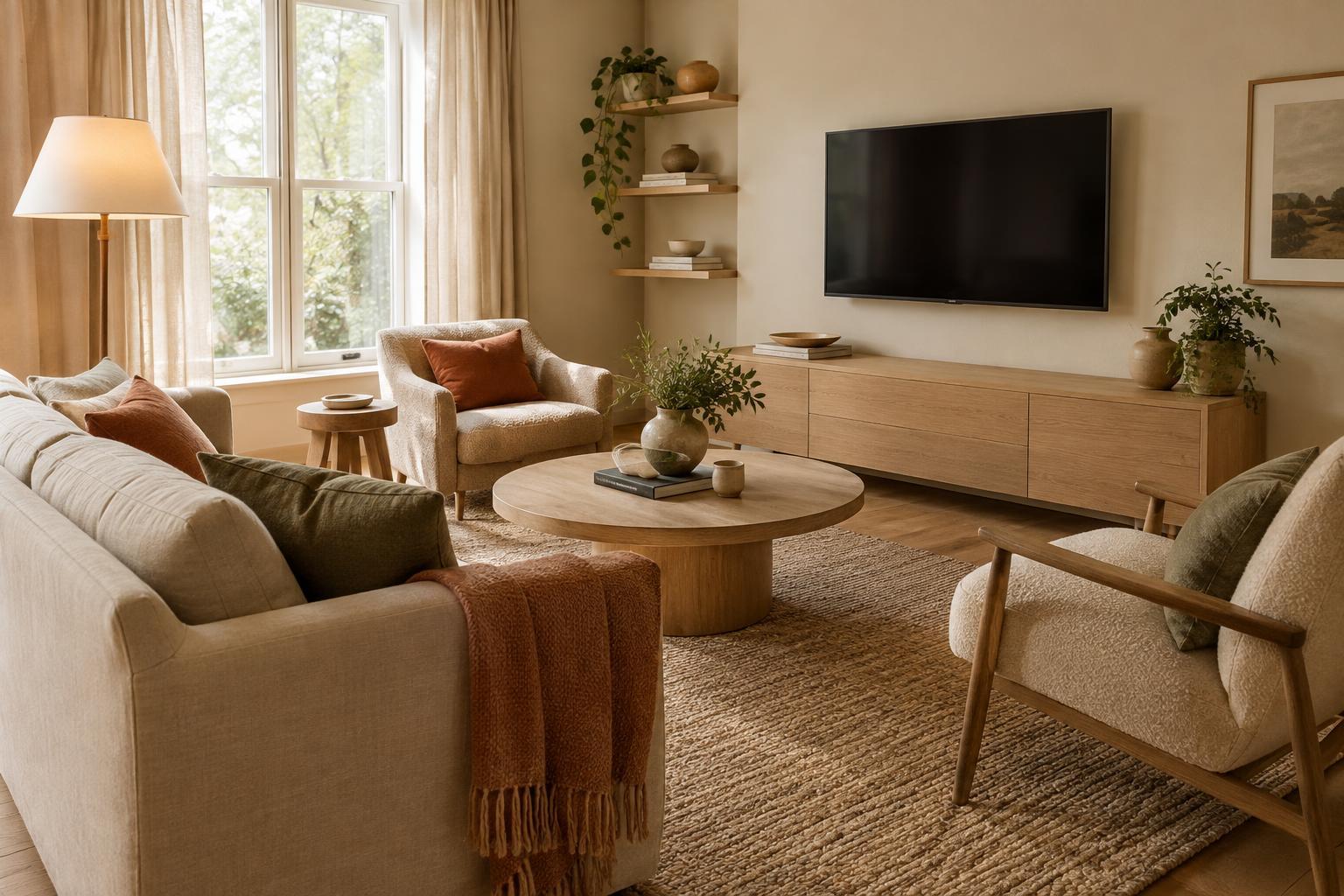
Start with what the shelves need to hold
Before arranging anything, decide what the shelves are for. A living room bookcase may need to hold plenty of books, while kitchen shelves might need space for dishes you use every day. Styling works best when it supports that purpose rather than hiding it. Take everything off one shelf at a time, wipe it down and sort the contents into three groups: things you use, things you love to see and things that belong somewhere else.
Put the useful items back first. Keep frequently reached-for pieces at a comfortable height, and place heavier objects on sturdy lower shelves. Then choose a smaller number of decorative pieces to accompany them. You do not need to discard a collection to make it look considered; rotating a few items into storage can give both the display and the stored pieces a fresh moment later.
Give each shelf a little breathing room
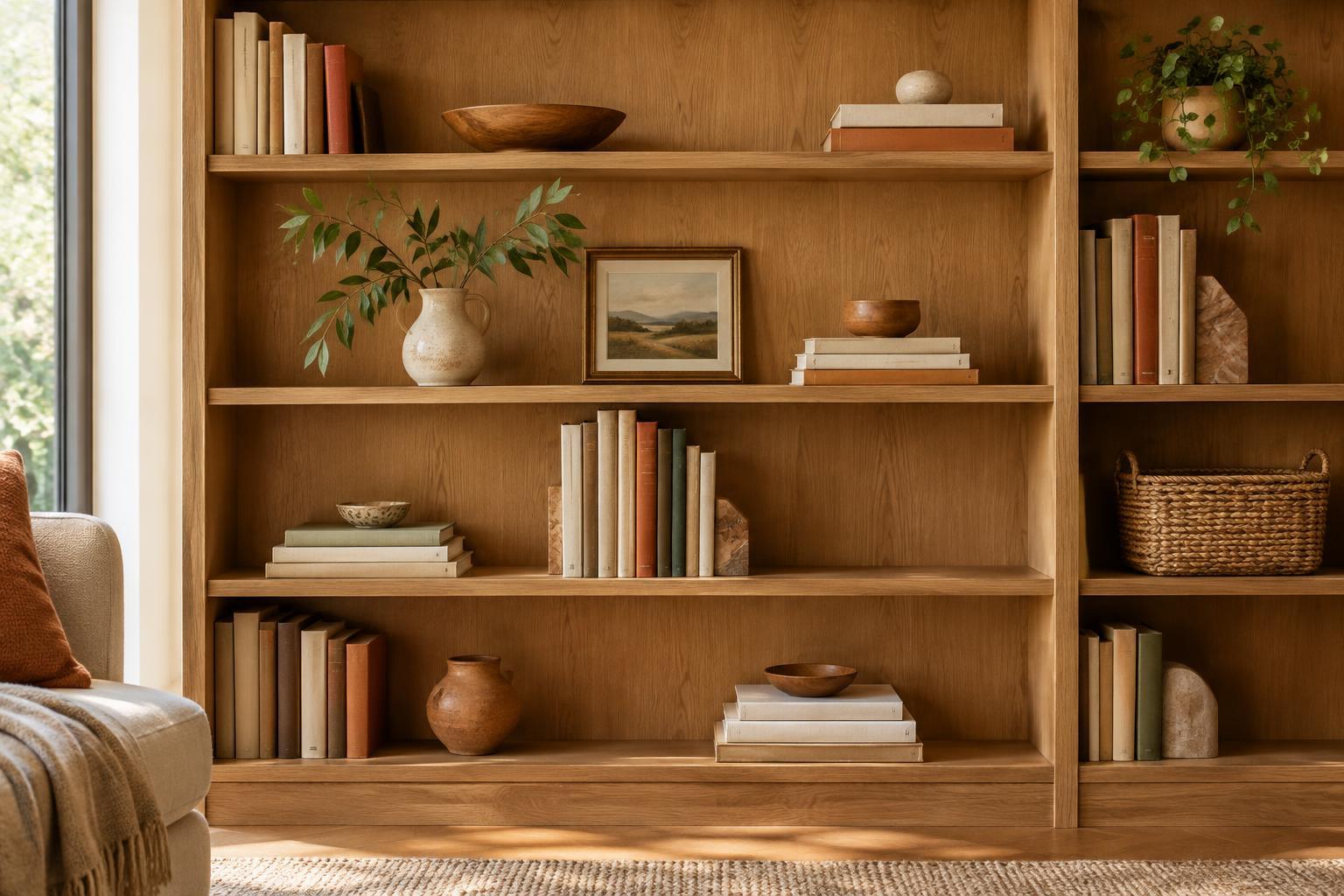
Clutter often comes from treating every inch of shelf as space that must be filled. Leave a visible gap beside a stack of books or around a favorite vase so its shape is easy to appreciate. The gaps do not have to match from shelf to shelf. A full row of books can sit comfortably above a more open shelf, provided the overall bookcase does not feel packed edge to edge.
Look at the shelves from across the room as well as up close. From a distance, you will notice whether one area feels especially dense or whether several tall objects are competing for attention. If the arrangement feels busy, remove one or two small pieces before changing everything. A clear patch of shelf can do more for the display than another decorative object.
Build simple groups instead of scattering small objects
Small items tend to look tidier when they have a clear relationship. Gather two or three pieces on a tray, place a low bowl beside a short stack of books, or set a framed picture behind a single small object. These groups give the eye a place to rest. They also make dusting and rearranging easier than a long line of unrelated ornaments.
Vary height and shape within each group, but avoid repeating the same formula on every shelf. Upright books, horizontal stacks and an occasional leaning frame can create a relaxed rhythm. If you stack books beneath an object, choose a stable stack and keep it low enough that it does not look precarious. Let a few shelves be mostly books or mostly practical storage; every shelf does not need a styled vignette.
Use color and materials to connect the display
A shelf can hold many different things and still feel cohesive when a few colors or materials recur. You might repeat warm wood, pale ceramics and dark book spines across the bookcase, or bring in a color that already appears in the room’s textiles. Repetition is more useful than perfect matching: two pottery pieces with slightly different glazes can feel connected without looking like a set.
If bright packaging or mixed supplies make open shelves feel restless, consider a box or basket for the items that need to stay nearby. Choose containers that fit the shelf without crowding it, and label them if that helps you find what is inside. Keep favorite books and personal objects visible; the goal is not to erase character, but to give it a calmer backdrop.
Adjust the arrangement as you live with it
Once the larger pieces are in place, step away for a day before adding anything else. Notice where your eye lands and whether the shelves still work during ordinary routines. A beautiful arrangement that blocks the plates you reach for each morning will quickly become frustrating. Move practical items forward when needed, and leave enough room to lift them out easily.
Shelves rarely stay fixed, and that is part of their appeal. When new books arrive or a seasonal branch comes indoors, make space by moving something out rather than squeezing more in. A quick edit now and then is usually enough to preserve the balance. The most welcoming shelves look lived-in because they make room for both daily use and the objects worth keeping in view.