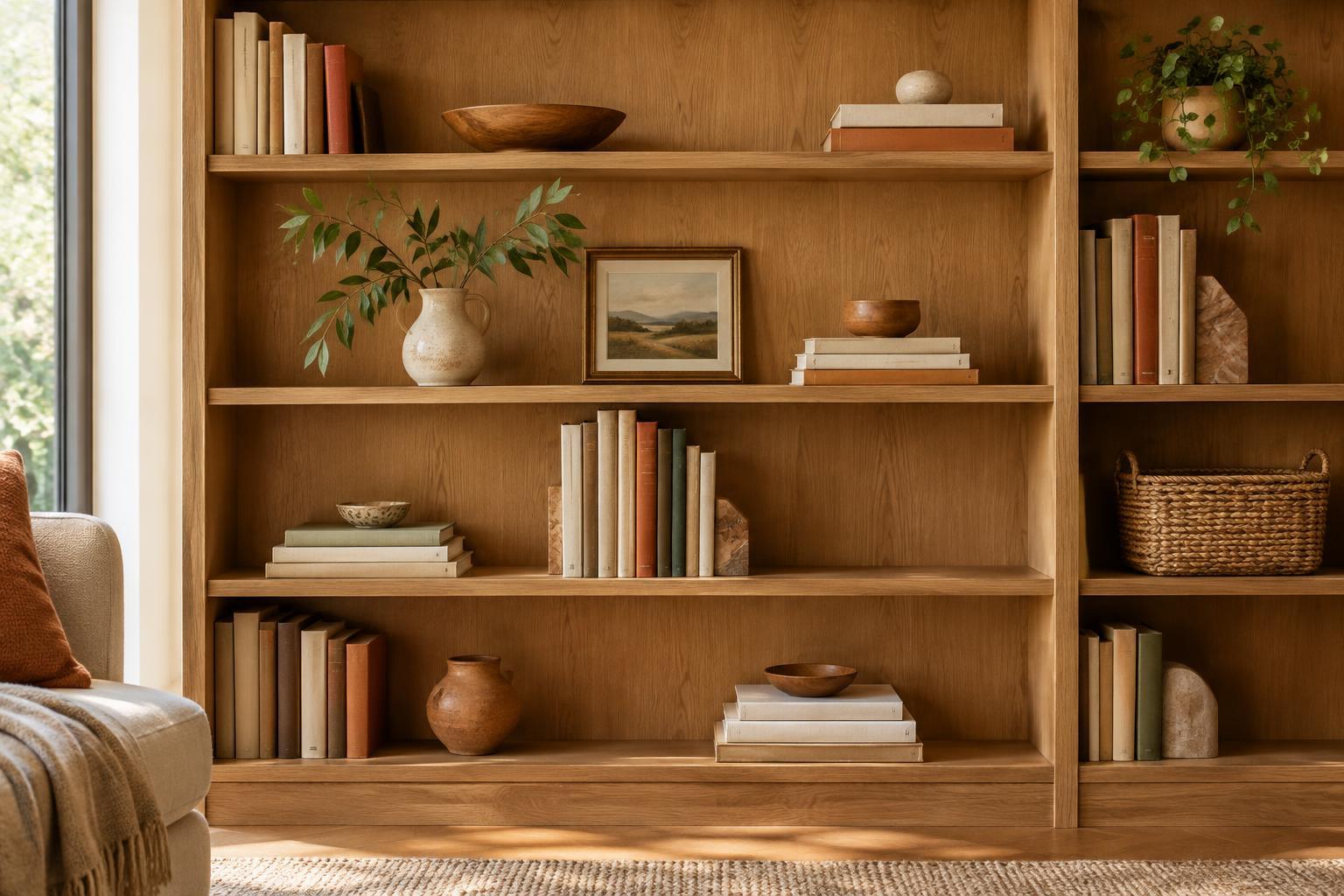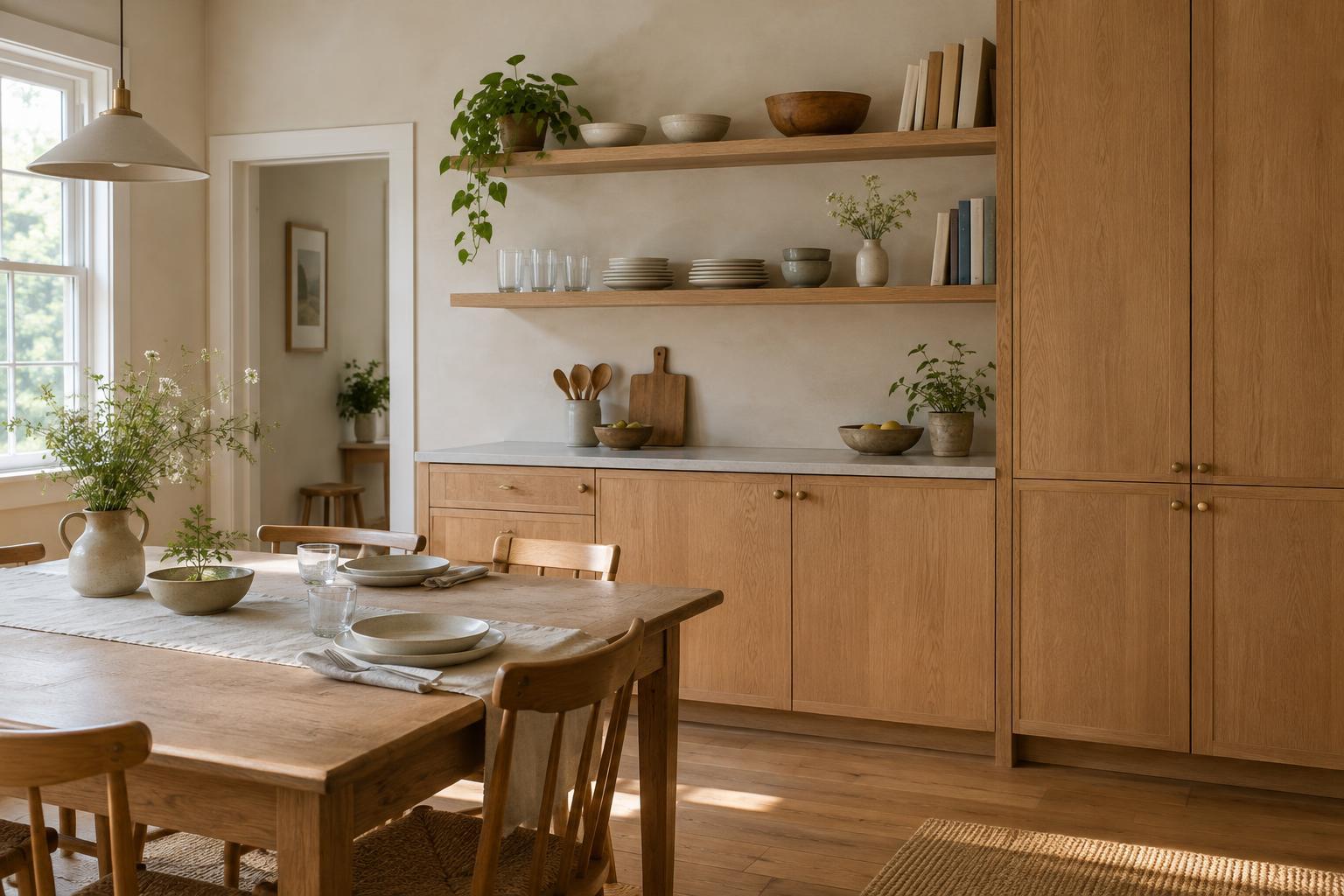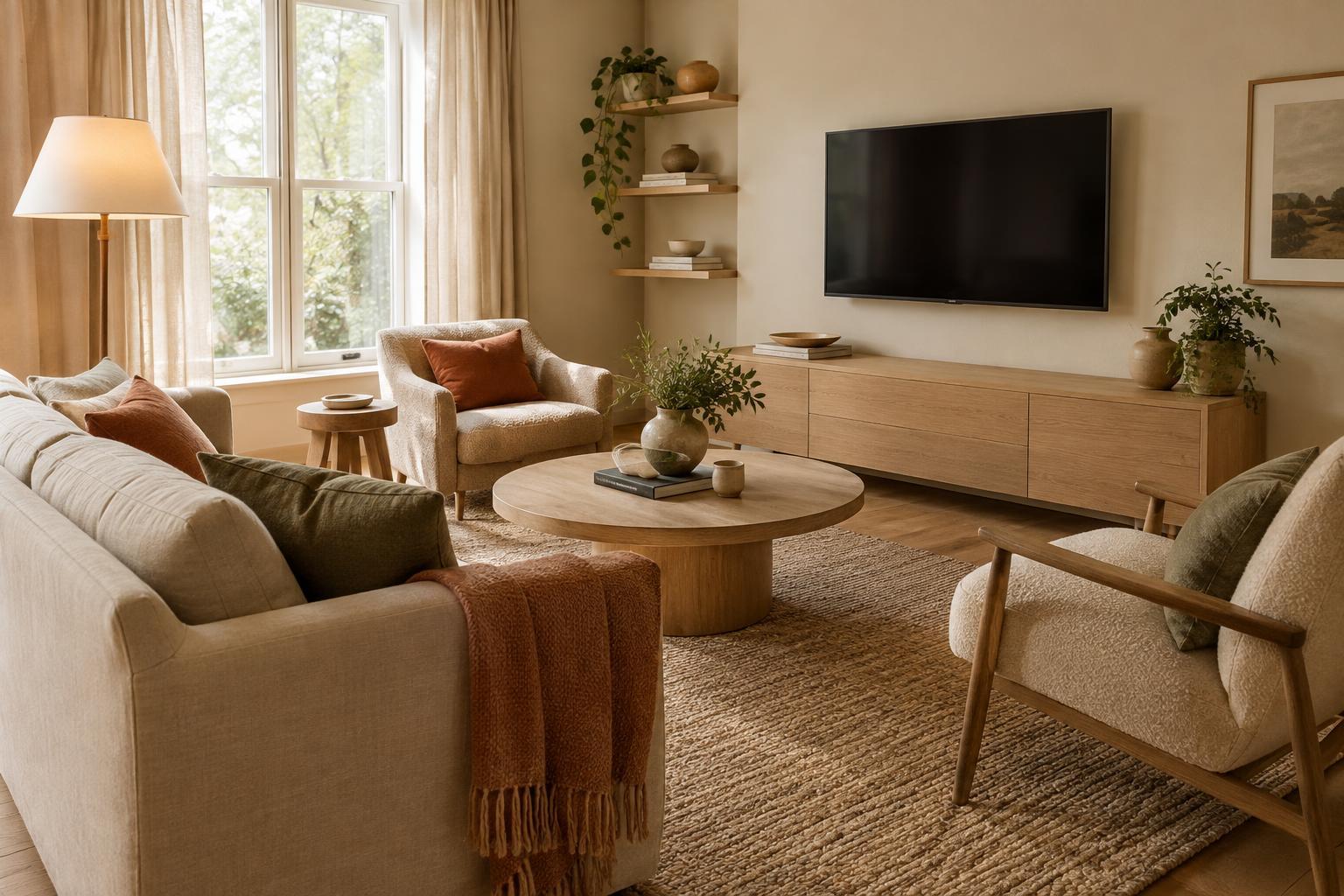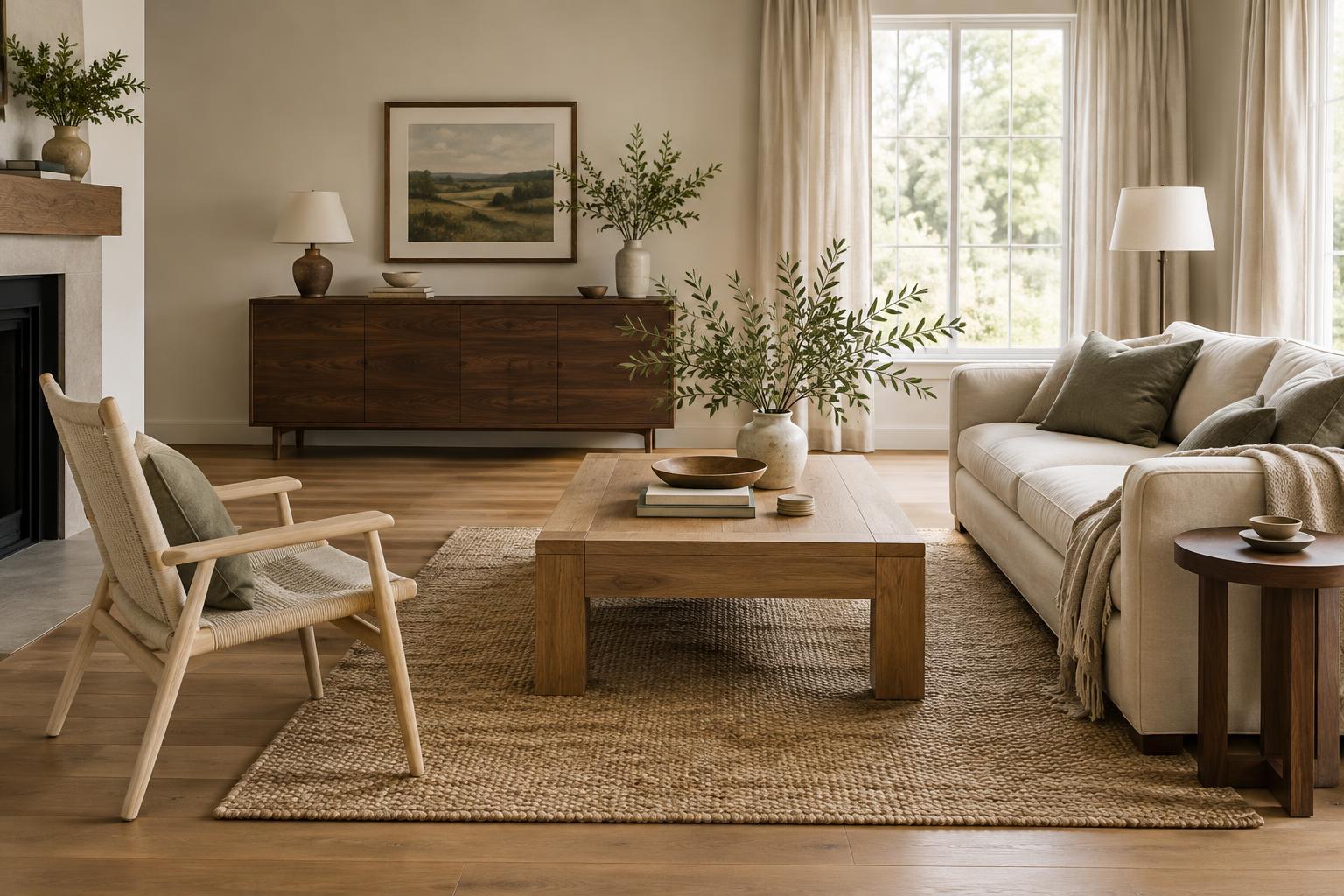
Start with the wood that is already there
Mixing wood tones becomes easier when you stop treating every piece as a separate decision. First, look at the largest fixed surfaces in the room: flooring, built-in shelves, doors or exposed beams. You do not have to match them, but they provide a useful starting point. A large oak floor, for example, will remain visible around the furniture and influence how every new finish looks.
Choose one wood tone to lead the room. It might be the floor, a dining table or a prominent cabinet. Let other tones play supporting roles rather than giving every finish equal attention. This creates a sense of order while leaving room for pieces acquired at different times. If the dominant wood is medium-toned, both a lighter chair and a darker side table can look at home beside it.
Notice undertones, not just light and dark
Two woods can be different shades yet still sit comfortably together when their undertones relate. Some finishes lean golden, reddish or gray; others look more neutral. Check pieces in the room where they will live, preferably at more than one time of day. Artificial light and nearby wall colors can change how a finish appears.
Undertones are a guide, not a rule that every item must follow. If a warm honey-colored table makes a gray-brown cabinet look especially cool, give them some space or add an element that connects them, such as a rug containing both warm and cool colors. If two finishes are almost the same but not quite, a clearer contrast may look more deliberate than a near match.
Repeat each tone to make it feel intentional
A single piece in an unrelated finish can appear accidental. Repeating its tone elsewhere, even on a smaller scale, helps it belong. A dark wood coffee table might be echoed by a picture frame, the legs of a chair or a wooden tray. Those accents need not be identical; the aim is to create a visual connection across the room.
Spread the repeats around rather than placing all the dark or light wood on one side. In a dining area, for instance, a pale table can be balanced by light wood frames on a wall opposite it, while darker chair legs find an echo in a nearby cabinet. Step back and look at the room as a whole. If your eye gets stuck on one corner, moving an accessory may be enough to restore balance.
Give the furniture breathing room
Wood-on-wood comparisons are most noticeable when pieces touch. A side table pressed against a timber cabinet invites you to inspect the difference between their finishes. A lamp, upholstered chair or stretch of wall between them lets each piece stand on its own. In a small room where separation is limited, a rug can soften the transition between wood flooring and wooden furniture.
Texture also helps a collected room feel warm rather than busy. Linen curtains, a woven seat, ceramic lighting or a matte painted surface offer a pause between visible grains. Keep the broader color palette fairly calm if the furniture already has plenty of variation. This does not mean everything must be beige: a consistent accent color can connect pieces with different histories and finishes.
Edit for a shared feeling, not a perfect match
Finish and shape matter alongside color. A glossy, sharply lined piece may feel more out of place beside relaxed, matte furniture than a wood of a different shade would. Look for a shared quality, such as simple silhouettes, worn finishes or rounded edges. When a piece feels disconnected, changing its hardware or placing a familiar material nearby may help without requiring a full refinish.
Before replacing anything, try rearranging what you own. Move a small wooden piece to another part of the room, remove an accessory that adds one more competing finish, or introduce a textile that links the main colors. The goal is not to disguise every difference. It is to give each piece a clear place in a room that feels comfortable, layered and lived in.