Start with clean, completely dry bedding
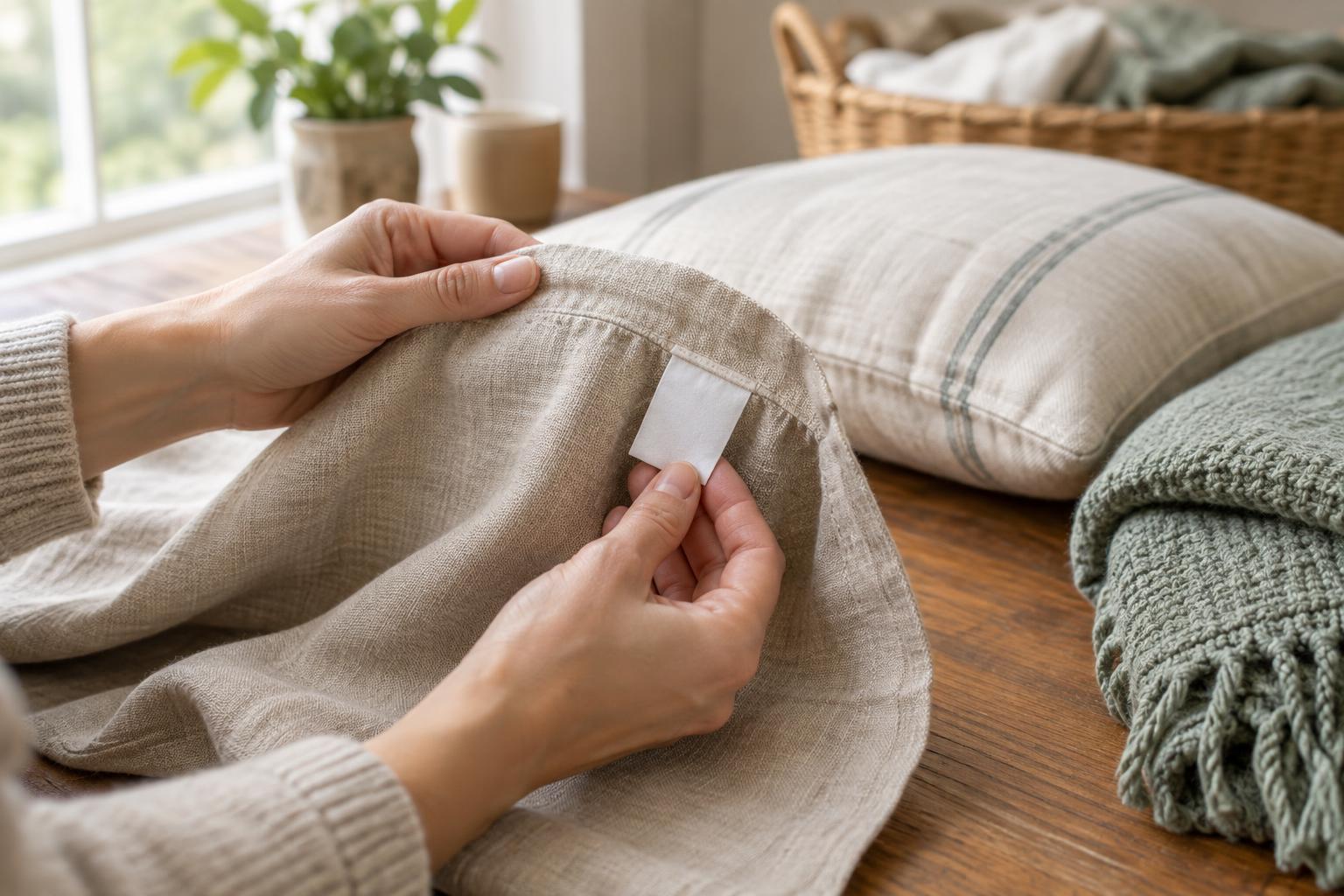
A musty smell often begins before bedding reaches the cupboard. A blanket that feels dry on the surface may still hold moisture in its thick seams, filling or tightly woven layers. Wash or clean each item according to its care label, then give it enough time to dry throughout. If you are unsure, spread it out in a well-ventilated room for a little longer before folding it away.
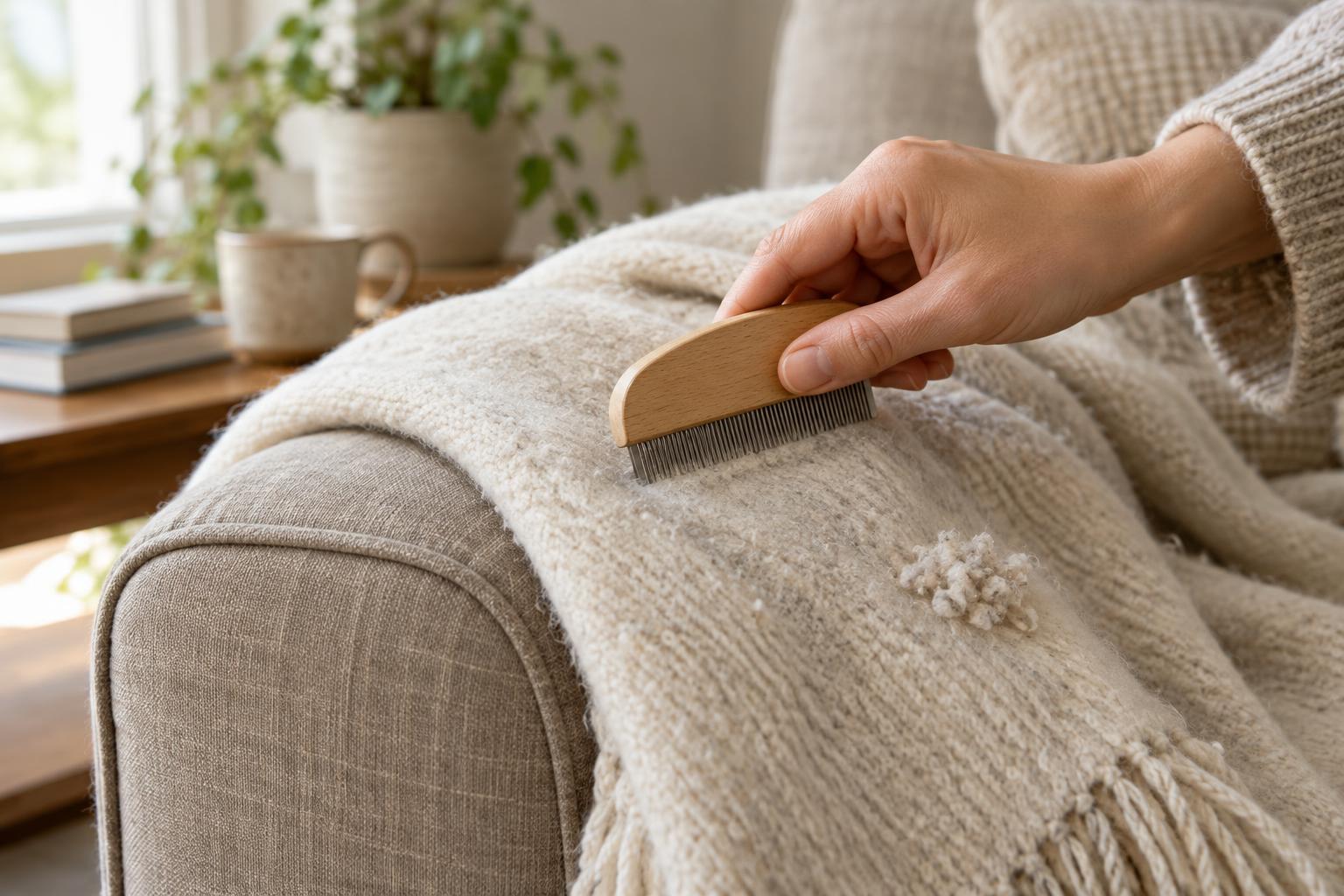
Put away only bedding you would be happy to use on a bed today. Crumbs, body oils and spills are harder to deal with after months in storage and may attract pests. There is no need to wash a clean spare set every time you reorganize a shelf, but anything used recently should be freshened before a long stay in the cupboard. Let freshly ironed or tumble-dried pieces cool before stacking them.
Choose a dry place before choosing a container
A storage bag cannot make a damp space dry. Before filling an under-bed drawer, wardrobe or linen closet, check for condensation, leaks and persistent stale smells. Bedding tends to fare better in a clean, dry part of the home with some air circulation than in a garage, shed or basement where conditions may change more dramatically. Keep it away from exterior walls or floors that feel damp.
Leave a little room around stored items rather than packing every shelf tightly. A simple shelf liner or clean storage bin can keep textiles off dusty surfaces, while an occasional open cupboard door makes it easier to notice a problem early. If the storage area itself smells musty, address the source before returning clean bedding; perfume or scented sachets will only cover the odor temporarily.
Match the storage method to the textile
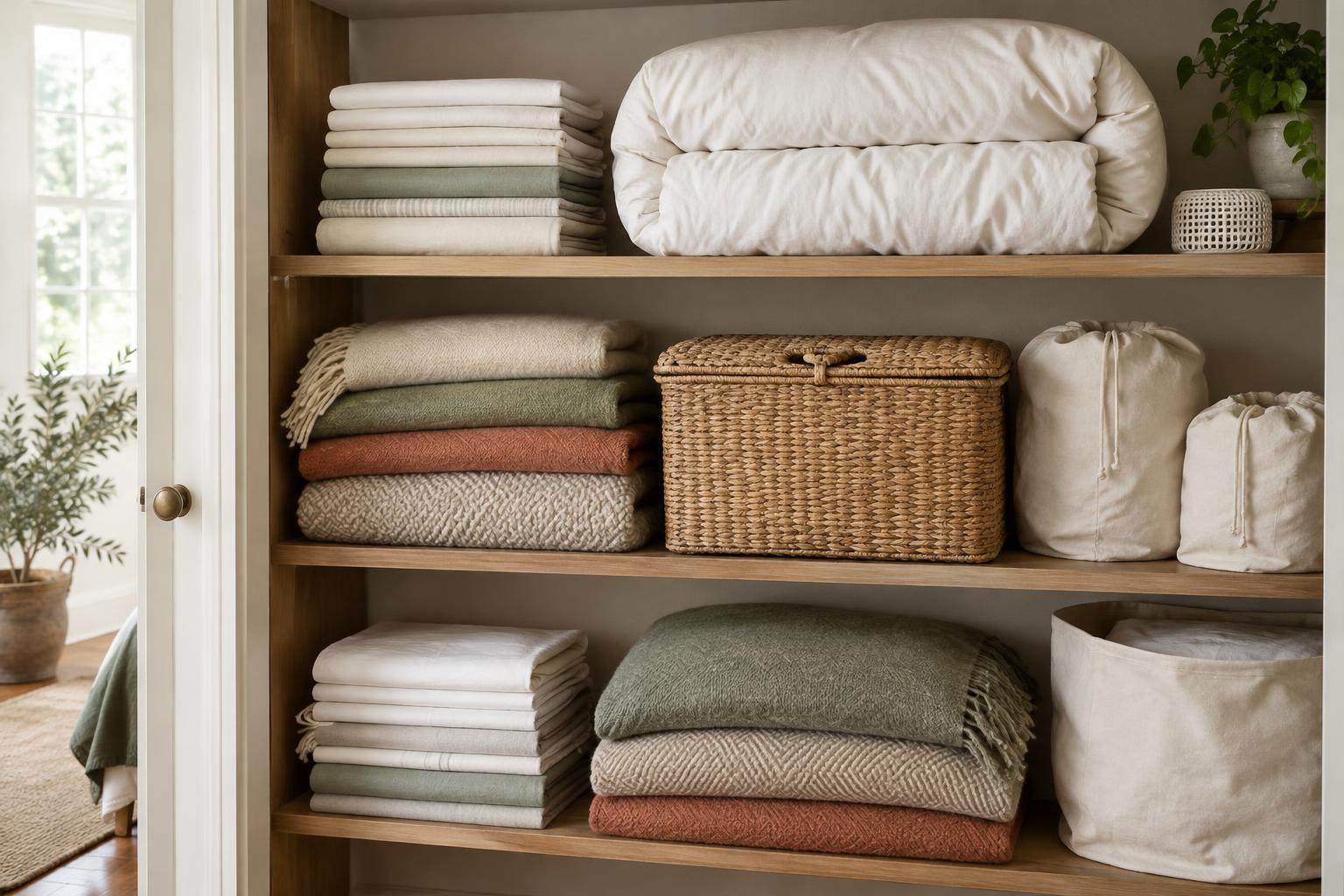
Cotton or linen sheets can be folded into a breathable fabric bag or tucked inside one of their matching pillowcases. This keeps sets together without adding another bulky container. Clean, dry lidded bins can also protect bedding from dust, especially in an exposed storage area. Whichever option you choose, avoid pressing fabric in so tightly that it stays creased or cannot be removed easily.
Bulky blankets and duvets need more room. Loosely folded storage helps preserve their loft and makes it easier to check that they are dry. Vacuum bags save space, but prolonged compression may not suit every filling; check the care guidance for down, wool or specialty bedding before using them. For delicate wool blankets, choose a clean, breathable cover that protects against dust and pests without trapping residual moisture.
Keep fragrance and moisture control simple
A fresh linen cupboard should smell neutral, not heavily perfumed. Strongly scented products can transfer to bedding and may be unpleasant when the sheets are next used. If you like a gentle scent, keep a sachet nearby rather than pressed against the fabric, and make sure it is dry and cannot spill. Avoid putting damp soap, plant material or homemade mixtures into a storage bag.
Moisture-control products may help in a storage space that is otherwise suitable, but they are not a fix for a leak or ongoing dampness. Follow the product directions and keep any liquid-collecting container where it cannot tip onto textiles. If bedding develops a musty smell, take it out, check the storage area and clean the item according to its care label. Do not return it until both the bedding and its storage spot are dry.
Build a small rotation habit
Store the most-used spare sets where you can reach them easily. Put freshly cleaned pieces behind or beneath older sets so the same sheets are not always left untouched. When seasons change, unfold stored blankets and check for odors, stains, damp patches or signs of pests. This quick review is easier than discovering a problem just before guests arrive.
For a welcoming guest bed, keep one complete sheet set and an appropriate blanket together, with enough space to lift them out without disturbing everything else. A label on an opaque bag or bin can save rummaging, especially if you store different bed sizes. The goal is not an elaborate system: clean, fully dry textiles in a suitable space, checked now and then, are the foundation of bedding that is ready to use.