Start with the label, not the laundry pile
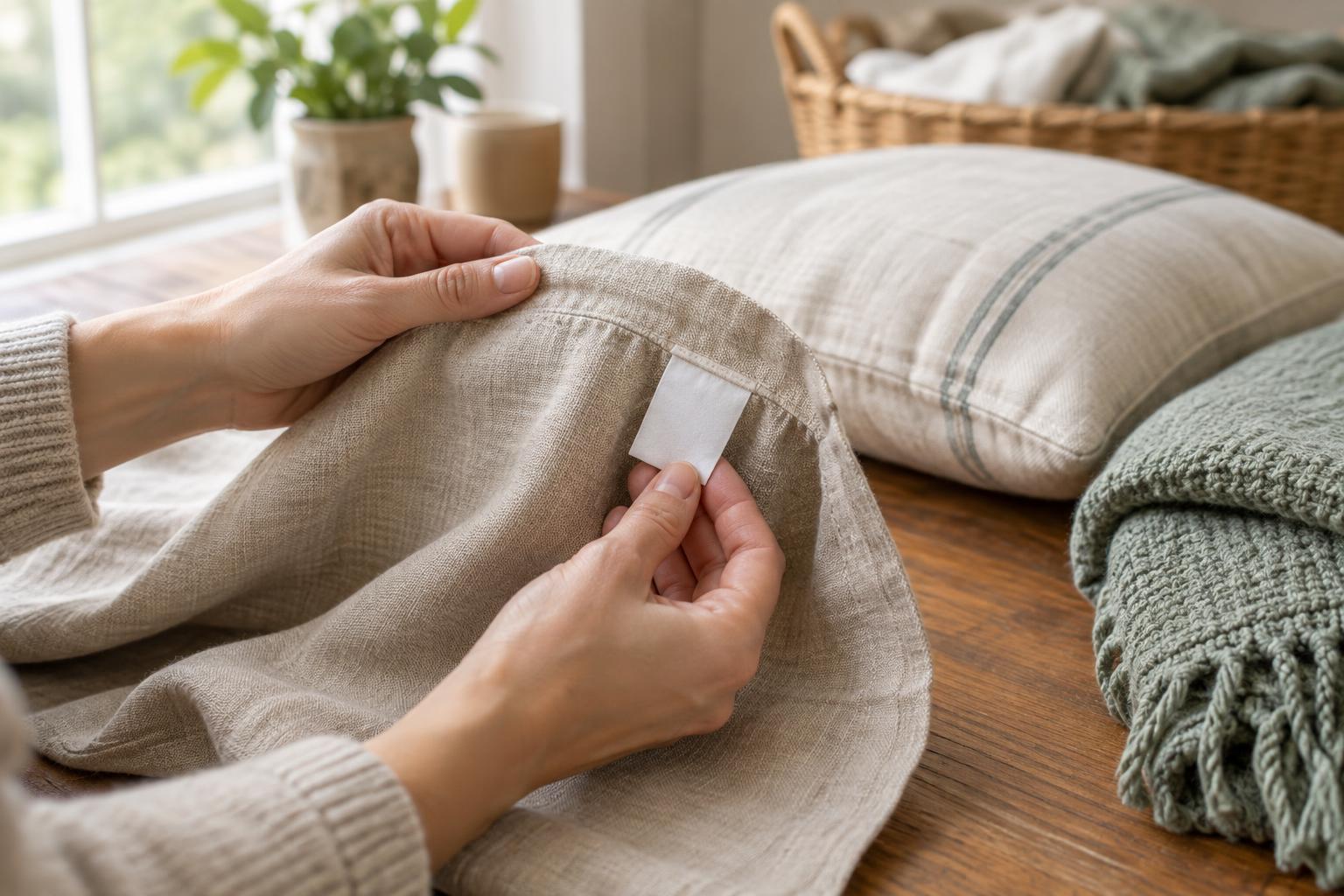
A stack of napkins, a sofa throw and a set of cushion covers may look like one convenient load. Their care labels may tell a different story. Check each item before washing, especially if it is new to your home or has a decorative finish. Labels may be sewn into a seam, tucked behind a cushion-cover opening or attached to the underside of a table runner. Take a moment to find them before sorting.
Read the full label rather than looking only for a temperature. A fabric-content line describes what the textile is made from; the care instructions describe how the finished item should be cleaned. A linen cover with embroidery, for example, may need different handling from a plain linen napkin. If a removable cover and its insert have separate labels, treat them as separate items. When care information is missing or unclear, a gentle approach is safer than guessing that the item can tolerate heat or vigorous agitation.
Decode the main care symbols
The wash tub symbol concerns washing. A number inside it gives the maximum water temperature, not a target you must reach. A hand in the tub indicates hand washing; a crossed-out tub means the item should not be washed. Lines beneath the tub call for a gentler machine cycle. If the label uses words instead of symbols, follow those instructions in the same way.
A triangle addresses bleaching. A crossed-out triangle means do not bleach; other versions distinguish between permitted types of bleach. Check the wording or symbol on your particular label before adding any bleaching product, especially to colored or patterned fabrics. A square covers drying: a circle inside it refers to tumble drying, while other marks indicate ways to dry without a machine. Dots inside a tumble-dry symbol indicate heat level, and a crossed-out symbol means that method should be avoided.
An iron symbol gives ironing guidance, with dots indicating temperature and a cross ruling out ironing. A circle generally concerns professional cleaning; letters or lines inside it are intended for the cleaner. Symbol systems and label wording can vary, so do not force an interpretation if a mark is unfamiliar. Look for written instructions on the same label or check the maker’s guidance if you still have it.
Use the instructions to build sensible loads
Once you know what each label allows, sort by care needs as well as color. Sturdy, similarly colored cotton table linens may share a load, while a delicate runner or loosely woven throw may be better washed separately. Give large pieces room to move in the drum. An overfilled machine can make rinsing less effective and leave fabric twisted or heavily creased.
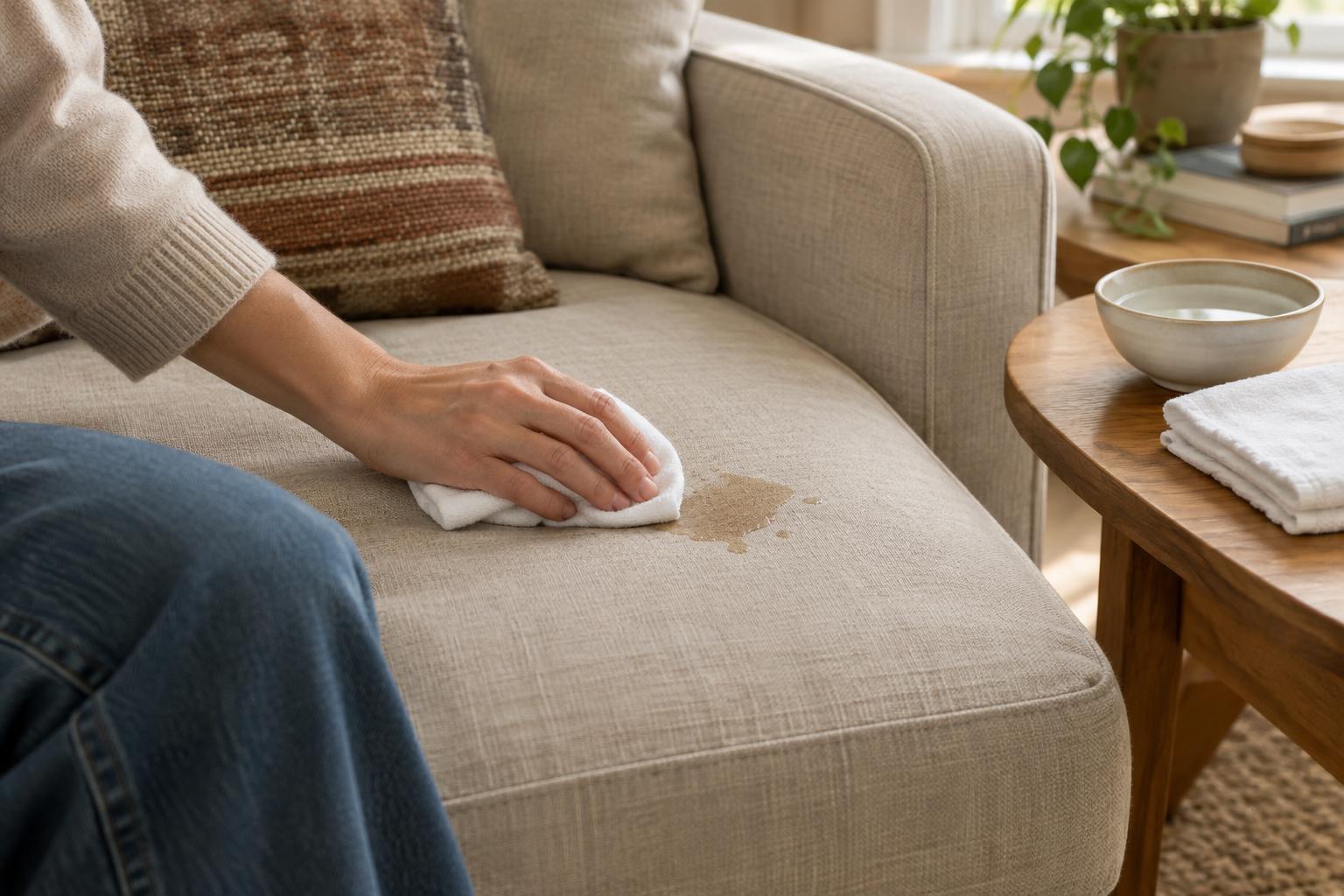
Use the gentlest suitable cycle and avoid treating the highest permitted temperature as the default. Fasten zips or buttons on cushion covers and turn embellished pieces inside out if their construction allows it. For a new, deeply colored item, washing it separately at first can help you spot any dye transfer before it reaches lighter textiles. Treat visible marks before washing according to the fabric’s instructions; rubbing hard at a stain can damage the surface even when the textile itself is washable.
Give drying equal attention
Drying is easy to overlook after a careful wash, yet heat and weight can affect a textile’s finish. Check whether tumble drying is permitted before moving a load into the dryer. When air-drying, support heavier pieces so they do not stretch while wet, and smooth table linens into shape before they dry fully. Keep brightly colored fabrics out of prolonged direct sun when practical, since exposure may contribute to fading over time.
Follow the ironing guidance only after considering details such as trims, coatings and printed designs. If ironing is allowed, try a less visible area first when you are unsure how a finish will respond. Do not assume that a fabric needing little ironing can take high dryer heat: washing, drying and ironing are separate instructions.
Make label-checking a habit
Care labels are most useful before something goes wrong. Read a label when you bring a textile home, then make a note of unusual instructions if the tag is awkward to reach. Keep removable covers with their matching inserts and avoid cutting out labels unless you have recorded the information elsewhere. This is particularly helpful for pieces used only occasionally, such as a holiday tablecloth.
A quick check before each wash can then answer three practical questions: Can this item be washed with the rest of the load? What drying method does it need? Does any trim or finish call for extra care? Following those answers may take a little more sorting, but it makes everyday care easier and helps the textiles you enjoy remain ready for the next gathering.