Let the evening set the pace
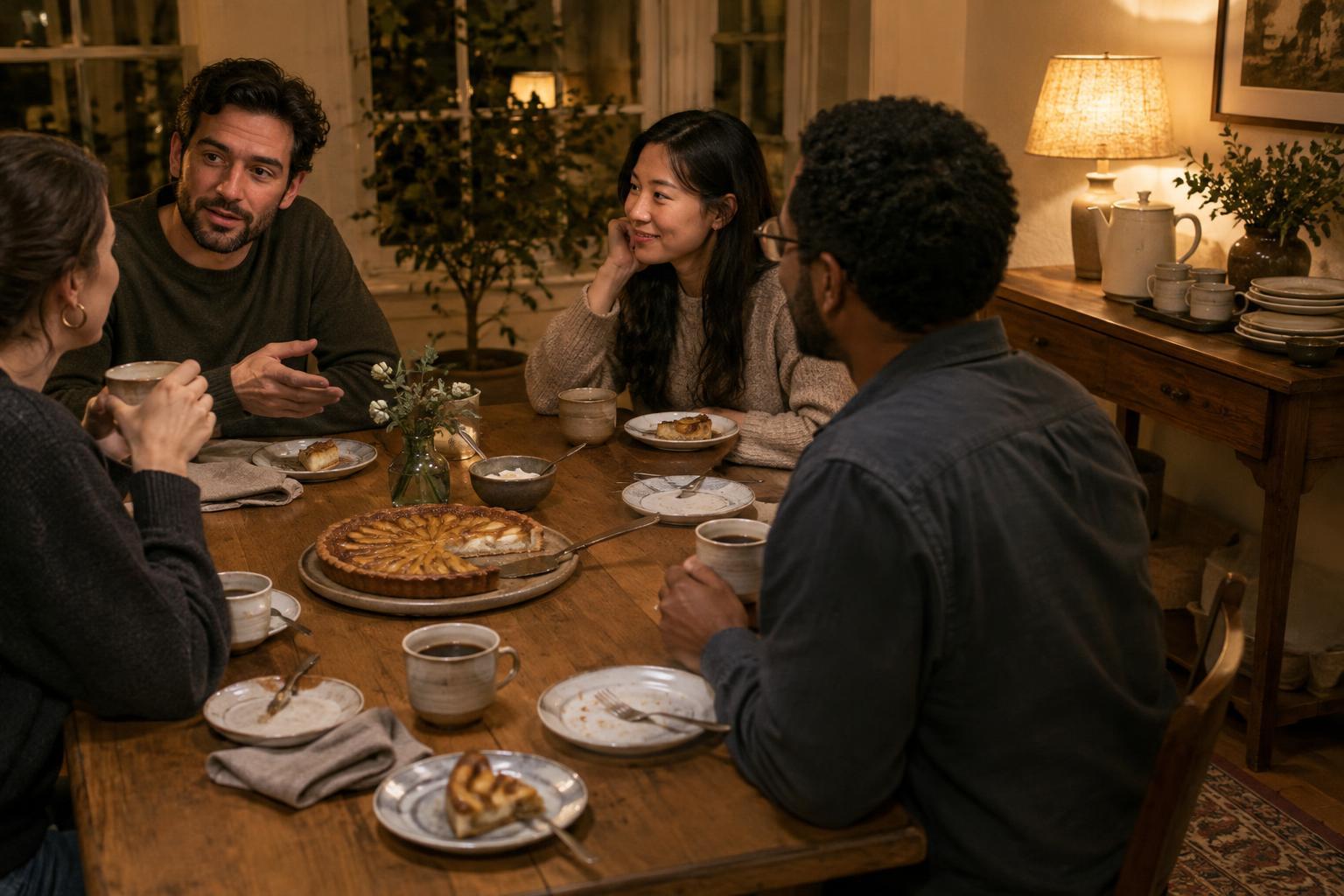
Dessert does not need a formal announcement. If guests are lingering over conversation, wait for a natural pause before bringing it out. Some people may be ready for something sweet while others are still finishing dinner, so a relaxed invitation works better than a sudden change of scene. Let guests know what is available, then give them room to choose whether to have it now or a little later.
Think about where everyone is most comfortable. At a dining table, dessert can arrive after a light clearing of the main-course dishes. If people have moved to the living room, a tray of small portions may be easier than asking them to return to their seats. Neither approach has to feel elaborate; the aim is to keep the gathering moving at its own pace.
Choose a dessert that waits well
A dessert that can be prepared before guests arrive gives you more freedom to enjoy the evening. Cake, cookies, fruit with something creamy on the side, or individually portioned sweets can be served without last-minute cooking. If a dessert needs chilling or warming, do as much as you can in advance and choose a serving time that will not pull you away for long.
Keep finishing touches simple. A bowl of berries, a jug of cream or a plate of sliced fruit can sit beside the main dessert so guests can add what they like. For a mixed group, it is thoughtful to offer a small alternative, such as fresh fruit, rather than expecting one dessert to suit everyone. Avoid making the choice feel like a separate production.
Set up a quiet serving station
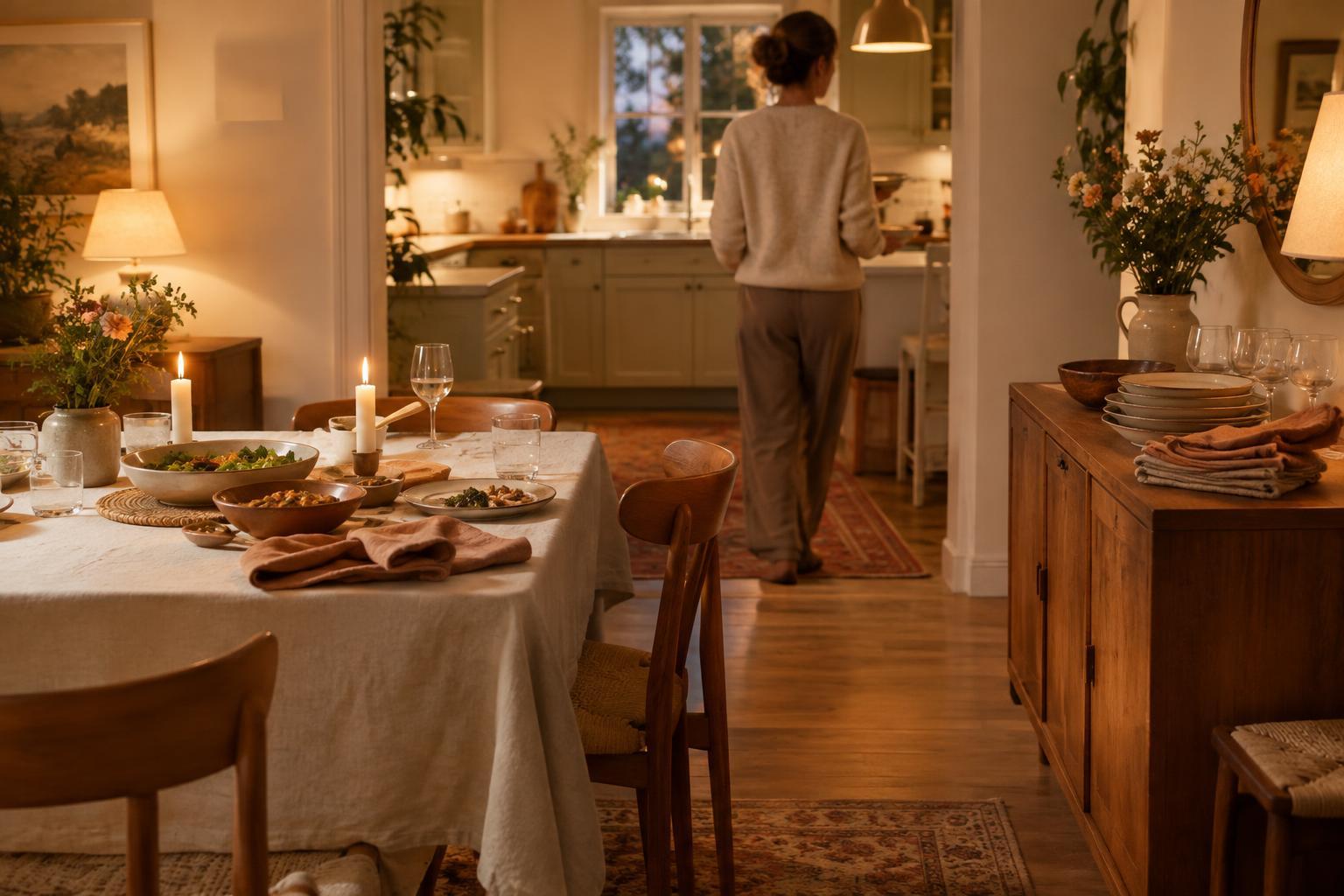
Before dinner, gather dessert plates, forks, napkins, cups and teaspoons in one accessible place. A sideboard, kitchen counter or small table can hold everything without crowding the dining table. Put the serving utensil with the dessert dish so you are not searching for it later. If guests will help themselves, leave enough clear space to set down a plate while serving.
For coffee, prepare the machine or brewer, fill the water vessel and put out cups before anyone arrives. Keep milk, sweetener and a caffeine-free option easy to find, but bring out anything that needs refrigeration only when it is time to serve. A tray makes it easier to carry several items at once and helps contain spoons, napkins and small spills.
Clear only what you need
A complete reset of the table can stall a pleasant conversation. Instead, remove the dishes that are in the way and leave water glasses or anything guests are still using. If the table has crumbs or spills, a quick wipe is enough. You can stack dishes out of sight and handle the full cleanup after guests leave.
Try serving dessert first, then offering coffee as people settle into it. That spacing gives you a moment to pour drinks without juggling plates and cups at once. If coffee takes time to brew, start it during a natural break in conversation and let guests know it is on its way. Anyone who would rather have tea or water can be served at the same time.
Make the final hour feel open-ended
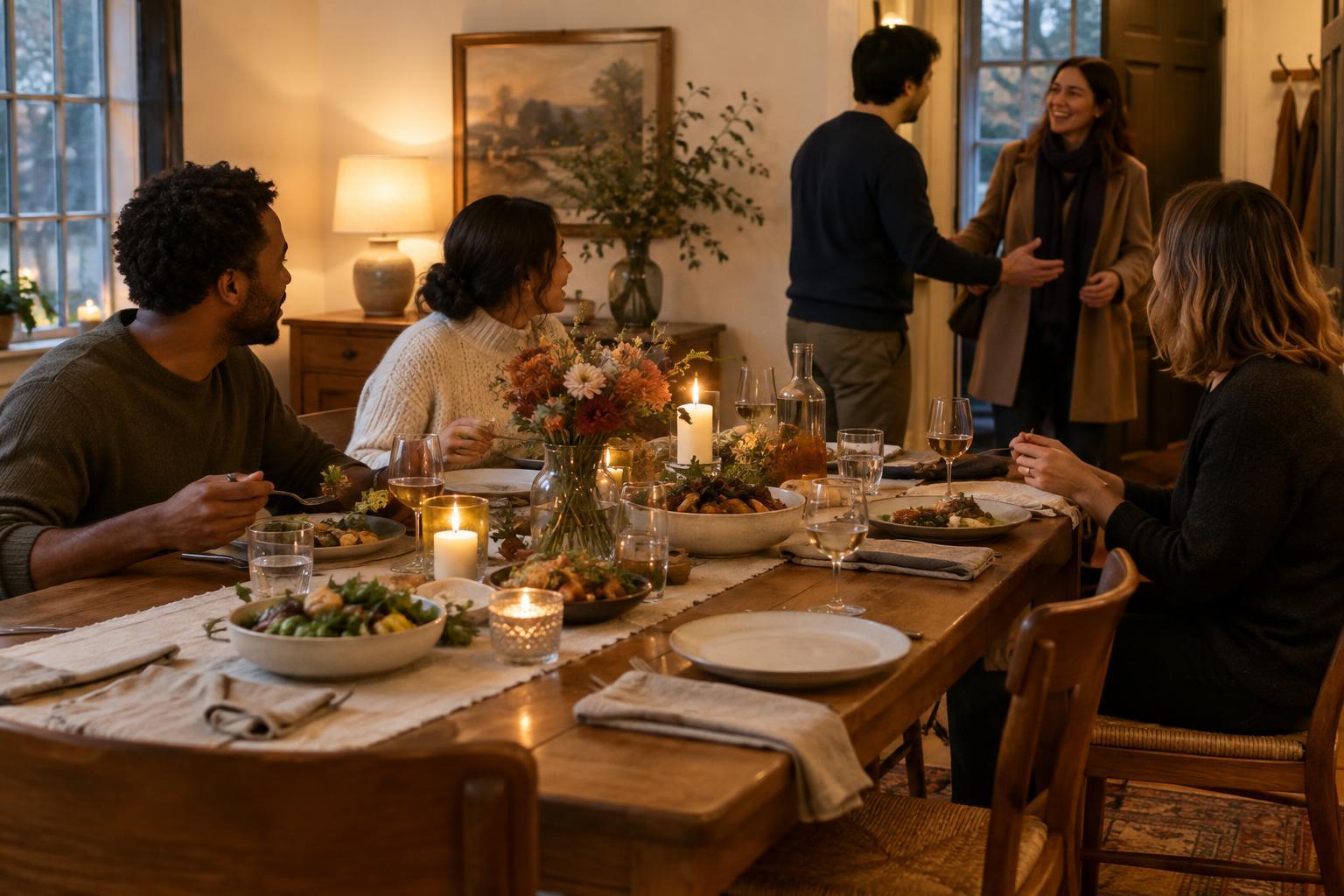
Dessert and coffee sometimes sound like a closing cue, even when you would be happy for everyone to stay. The atmosphere you create matters more than the menu. Keep lighting comfortable, leave water available and avoid clearing every cup as soon as it is empty. Guests who want another small piece or a refill should feel welcome to ask.
At the same time, there is no need to prolong the evening on anyone’s behalf. A simple dessert, served without hurry or ceremony, gives guests a comfortable way to linger or to leave when they are ready. The best preparation is often the kind no one notices: enough is ready beforehand that you can sit down, have a serving yourself and remain part of the conversation.