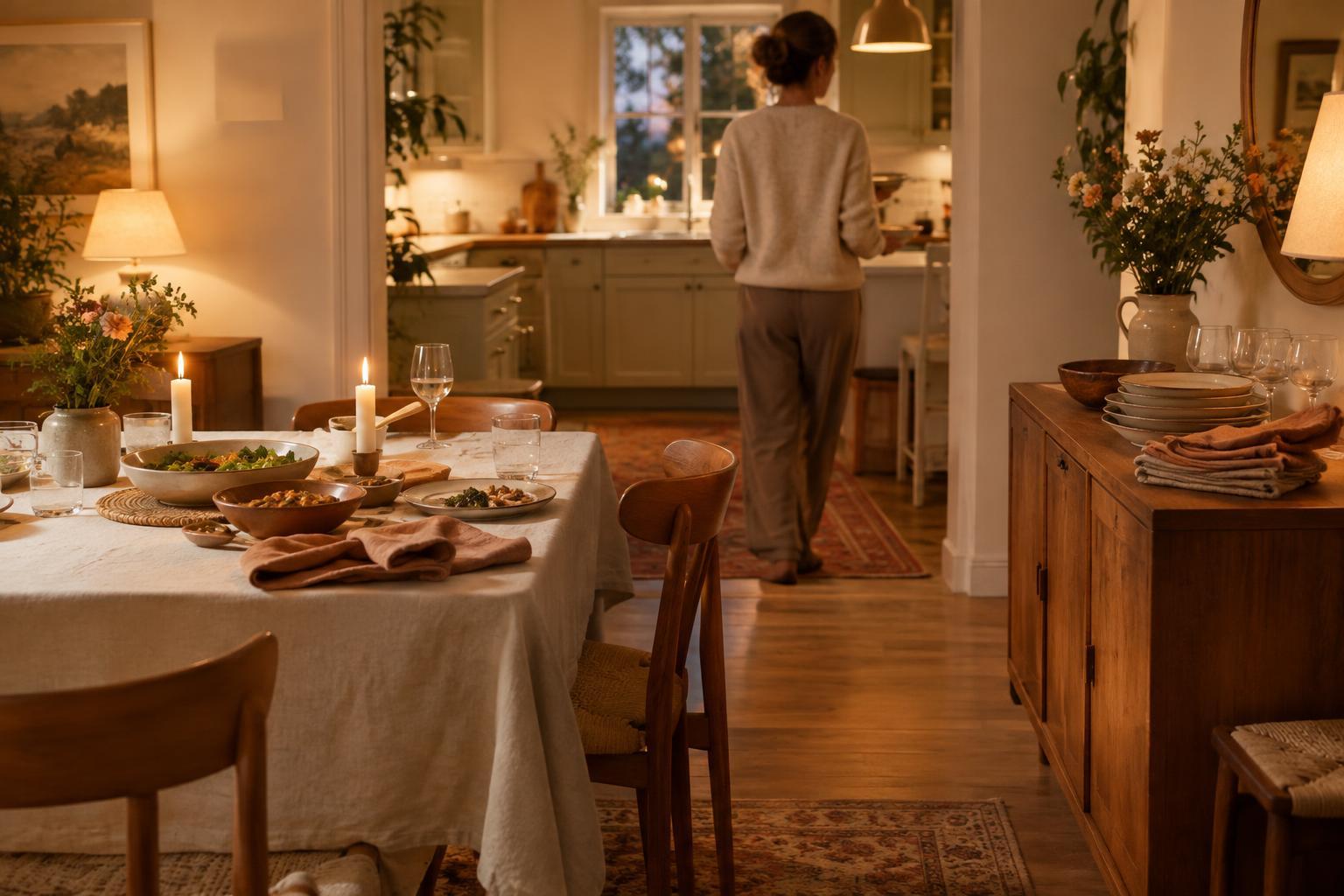
Decide what “done” means before anyone arrives
The easiest cleanup plan starts with a modest finish line. You do not need to put every plate away or return the room to its usual state before bed. Aim instead to clear food, handle anything that could stain or smell, and leave the sink and table usable in the morning. Once those essentials are covered, a stack of clean linens or a few glasses waiting to be put away can wait.
Give those essentials a place to land before guests arrive. Empty the dishwasher if you have one, clear a section of counter for used dishes, and set out a tray or tub for glasses. Keep a cloth, a small bin and fresh food containers within easy reach. These preparations are barely visible to guests, but they prevent the familiar moment when you are searching for a lid while everyone else is settling in for another conversation.
Choose a setup that clears easily
Think about cleanup as you set the table, without letting it dictate the look of the evening. A washable tablecloth or placemats can make a relaxed meal feel considered while protecting the surface beneath. Cloth napkins can go into one basket afterward; paper napkins need an obvious bin nearby. Serving food in a few practical dishes rather than many small bowls also means fewer things to collect later.
Create one simple drinks area, with water, glasses and any other drinks together. Guests can help themselves, and abandoned cups are less likely to appear across the room. If people are moving between spaces, place coasters where they will actually sit. Small choices like these support a warm, easy atmosphere and reduce the number of places you need to check at the end of the night.
Reset in moments, not in the middle of the party
A little clearing during the evening is helpful; disappearing into the kitchen for a full washing-up session usually is not. When you get up to refill water or bring out dessert, take a few empty dishes with you. Set them down in your prepared space and return. If guests offer to help, give them an easy task, such as gathering glasses or carrying a serving platter, rather than directing a whole cleanup operation.
Let the room remain lived in while people are enjoying it. A nearly empty serving bowl and a folded napkin are not emergencies. Focus on spills as they happen, especially on textiles or wood, and put away food that needs prompt refrigeration once people have finished eating. The aim is to keep the evening comfortable and the food handled sensibly, not to make the table look untouched.
Do a short closing round after goodbye
Once the last guest leaves, walk through the rooms you used with a tray or basket. Collect glasses, plates, napkins and any food left out. Put away leftovers in suitable containers and refrigerate perishable food rather than leaving it for morning. Then load the dishwasher or group dishes neatly beside the sink. A quick wipe of the dining table and any sticky counters will make the space feel noticeably calmer.
Check the spots that are easy to miss: a drink on a side table, a serving spoon under a napkin, or a damp cloth left in a heap. Take out rubbish if it is full or contains food scraps likely to smell. You can leave less urgent jobs, such as polishing glasses or rearranging cushions, for daylight. Setting a clear stopping point keeps a pleasant night from turning into an exhausting one.
Make the next morning part of the plan
Before bed, leave yourself an obvious starting point. Soak a pan that needs it, hang damp linens so they can dry, and keep items that belong elsewhere together rather than scattering them around the house. If the dishwasher is running, the table is clear and food is stored, you have done enough for the night. The remaining work is easier when it is visible and contained.
In the morning, put away the clean dishes, wash what remains and return the room to its everyday arrangement. Notice which parts of the plan helped: perhaps the drinks tray caught most of the glasses, or perhaps you needed more space for used plates. Adjust one small detail next time. A good hosting routine is not a performance of effortless tidiness. It gives you permission to enjoy your guests, then care for your home at a pace that feels reasonable.