Set a plan before you need one
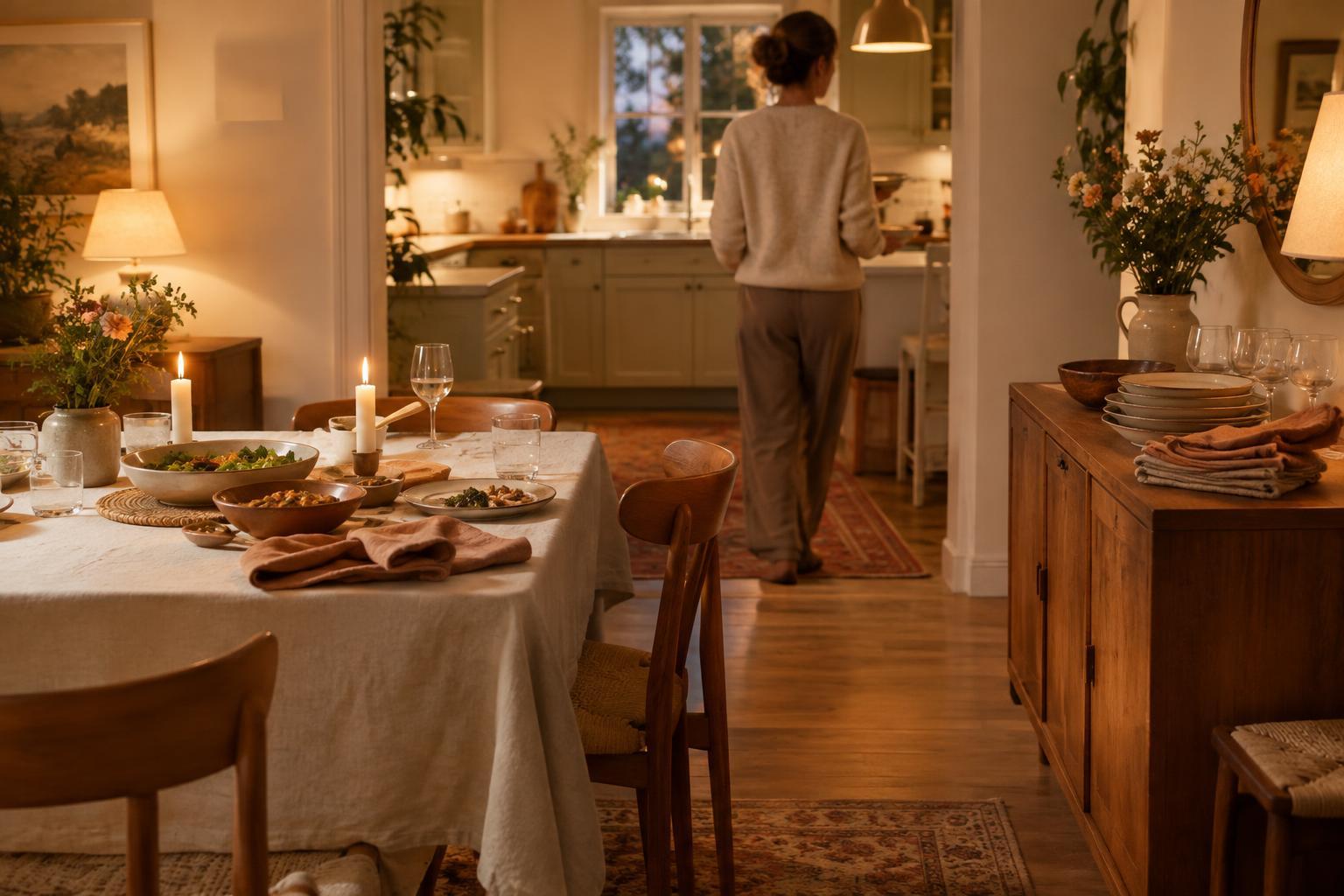
A guest running late is easier to handle when you have already decided how flexible dinner can be. An informal buffet may wait a little without much trouble, while a meal that is best served straight from the oven may not. Before guests arrive, think about which dishes can stay ready, which can be served later, and what time you are comfortable beginning.
It helps to make the timing clear in the invitation. “Come by at six; we’ll eat around seven” gives guests room to settle in while establishing a plan for the meal. If someone is delayed, that shared expectation makes the next decision feel less personal. You are keeping dinner moving, not making a judgment about their arrival.
Check in kindly and briefly
If a guest has not arrived when expected, send one short message rather than a series of updates. Ask whether they are all right and, if useful, when they think they might arrive. A simple note such as “Hope everything’s okay. We’re planning to sit down soon; let me know your timing when you can” conveys both care and a clear plan.
If they give an estimated arrival time, use it as a guide rather than a promise. Travel and other delays can be unpredictable. Let them know whether you will wait or begin: “We’ll start dinner at seven, and I’ll save you a plate.” That removes the pressure to race across town and lets everyone else relax. If you cannot reach them, you can still proceed at the time that works for the group.
Keep the meal moving
Waiting a few minutes may be natural if the food is not ready or the group is enjoying a drink. Waiting indefinitely can leave other guests hungry and the host distracted. Once you have chosen to begin, invite everyone to the table without turning the missing person into the evening’s main subject.
Serve food in the way that will make it most pleasant for the people who are there. You might leave a portion of a main dish to serve later, while putting shared sides on the table now. If a dish needs prompt refrigeration, put the late guest’s portion away rather than leaving it out. For a family-style meal, a covered plate or a small container can be less awkward than preserving an untouched place setting through every course.
Make the arrival easy
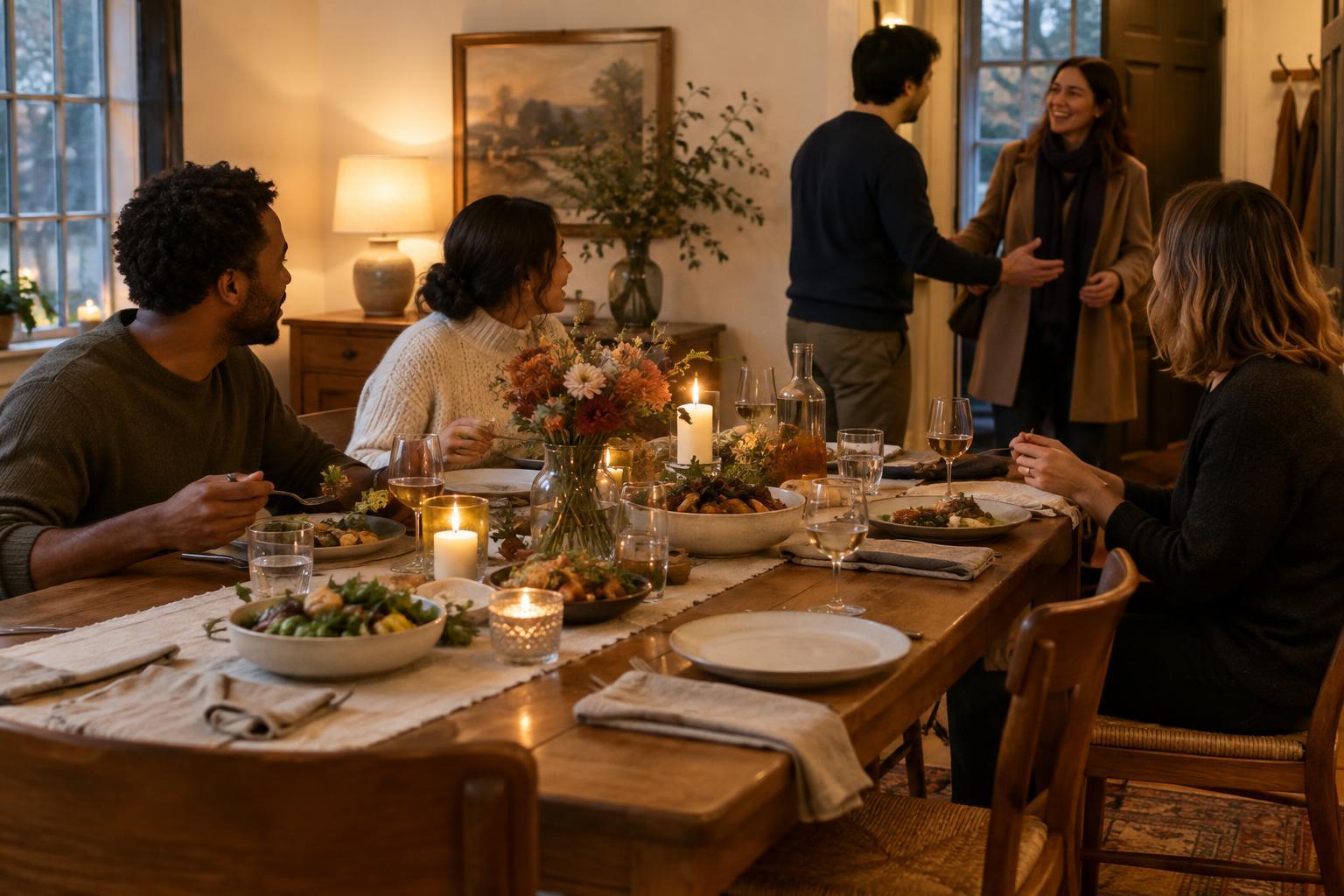
When the guest arrives, greet them warmly and give them a quick orientation: where to put their coat, what everyone is eating, and whether you have a plate ready. They may already feel embarrassed. Unless an explanation is needed to sort out a practical problem, there is no need to ask for one in front of the table.
Offer food without requiring everyone else to restart dinner. A late guest can join the current conversation while you bring out their portion, or they can settle in with a drink while you finish a course. If dessert is already underway, be straightforward: “We’ve just moved on to dessert, but I saved your dinner if you’d like it.” This lets them choose what feels comfortable.
Leave room for grace and boundaries
A one-off delay calls for flexibility, especially when someone has kept you informed. A repeated pattern may call for a different invitation plan. You can choose meals that are easy to serve in stages, invite that person for a more casual gathering, or state clearly that dinner will start at a set time. Boundaries work best when they describe what you will do rather than scold someone for what they might do.
The goal is not a perfectly timed dinner. It is an evening in which the food is cared for, the guests who arrived on time are comfortable, and the late arrival has a way to join in. A clear plan and an unhurried welcome can do more for that atmosphere than holding every plate until the whole table is present.