Start with the rooms you already enjoy
A seasonal update does not need to reach every corner of the house. Choose two or three places you see often, such as the entryway, sofa and dining table. These spots can make a change feel noticeable while the larger arrangement of furniture, lighting and storage stays the same.
Before bringing anything out, look at what is already working. A well-loved rug, a versatile lamp or a comfortable chair can remain the anchor throughout the year. Then decide what feeling you want in each chosen spot: lighter and airier, warmer and softer, or simply more suited to the way you use the room right now. This gives you a direction without requiring a new look from floor to ceiling.
Build a flexible base and change the layers
The easiest seasonal changes happen on top of a steady base. Neutral or familiar everyday pieces can support many looks, but they do not have to be beige or plain. A patterned sofa, painted wall or colorful tableware can also be a constant; the key is to choose seasonal additions that work with it rather than compete with it.
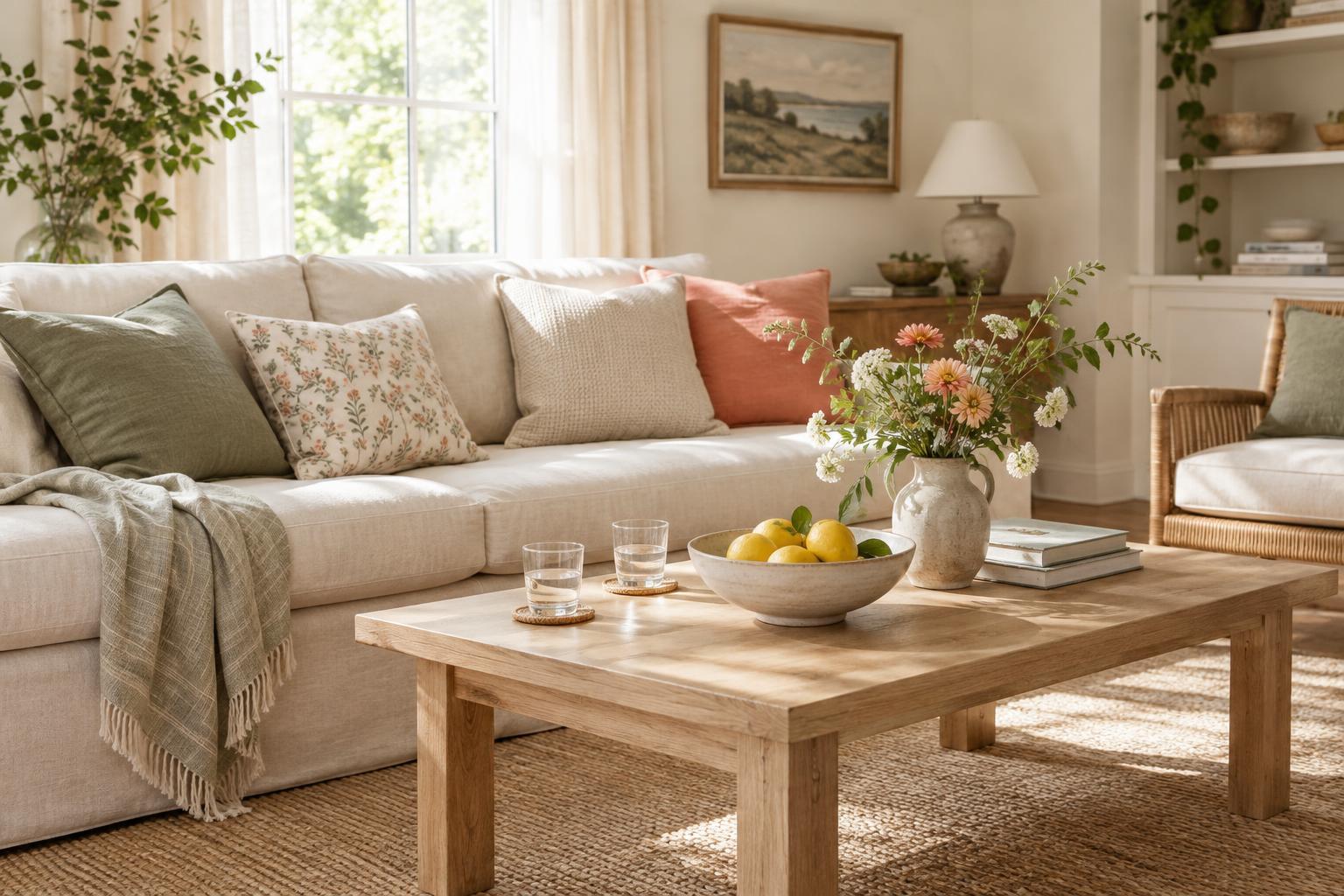
Textiles are especially useful because they affect both appearance and comfort. You might swap a light throw for a heavier one, change cushion covers, or put a different runner on the table. Choose materials according to how the room feels and how you live in it. A washable cover may be more useful in a busy dining area than a delicate fabric that needs careful handling. Keeping the change to a few removable layers also makes it easier to return to an everyday setup.
Use color and texture as seasonal cues
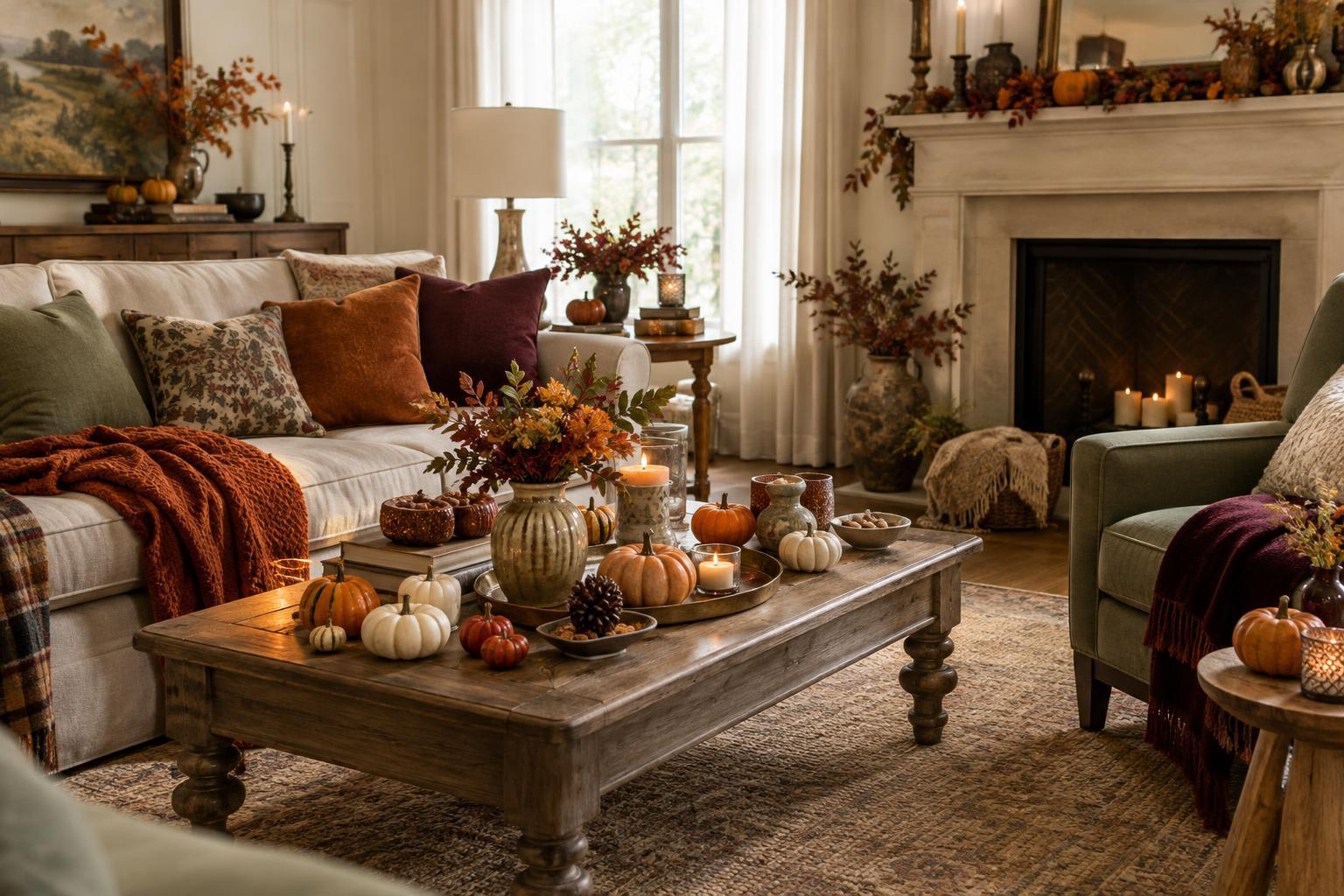
You do not need a separate color scheme for every season. Start with colors already present in your home and shift the balance. In brighter months, you might bring forward a pale accent from a rug or artwork. In cooler months, a deeper version of that color can appear in a throw, napkins or a vase. Repeating an existing color helps each change feel connected to the room.
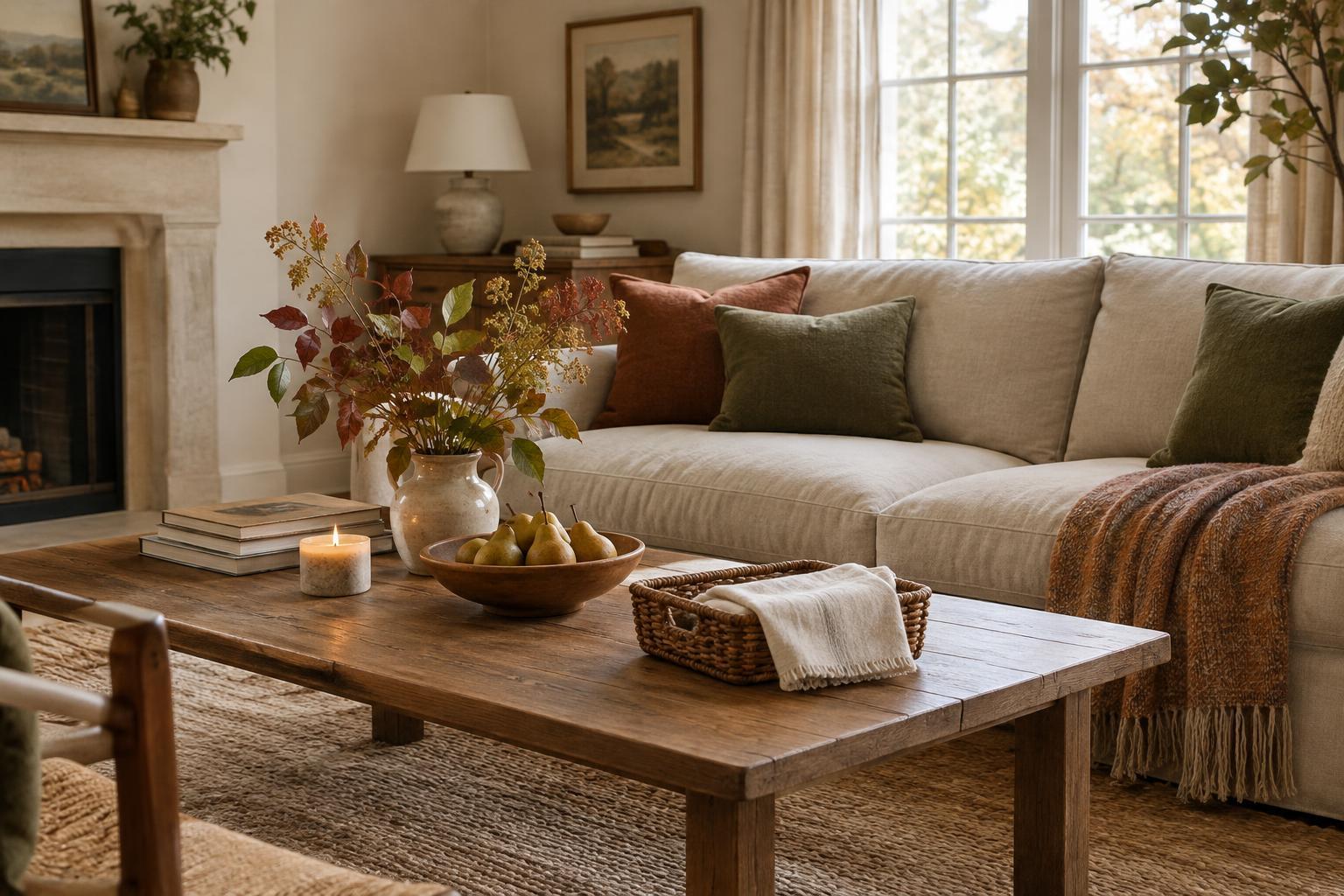
Texture can do just as much work as color. Smooth cotton, glass and open-weave pieces can give a space a lighter feel; wool, ceramic and woven baskets can make it feel more sheltered. These are options, not rules: a cool climate may call for a cozy throw in summer, while a warm climate may never need heavy winter layers. Let your comfort and the light in your home guide the choice.
Make one small display do the work
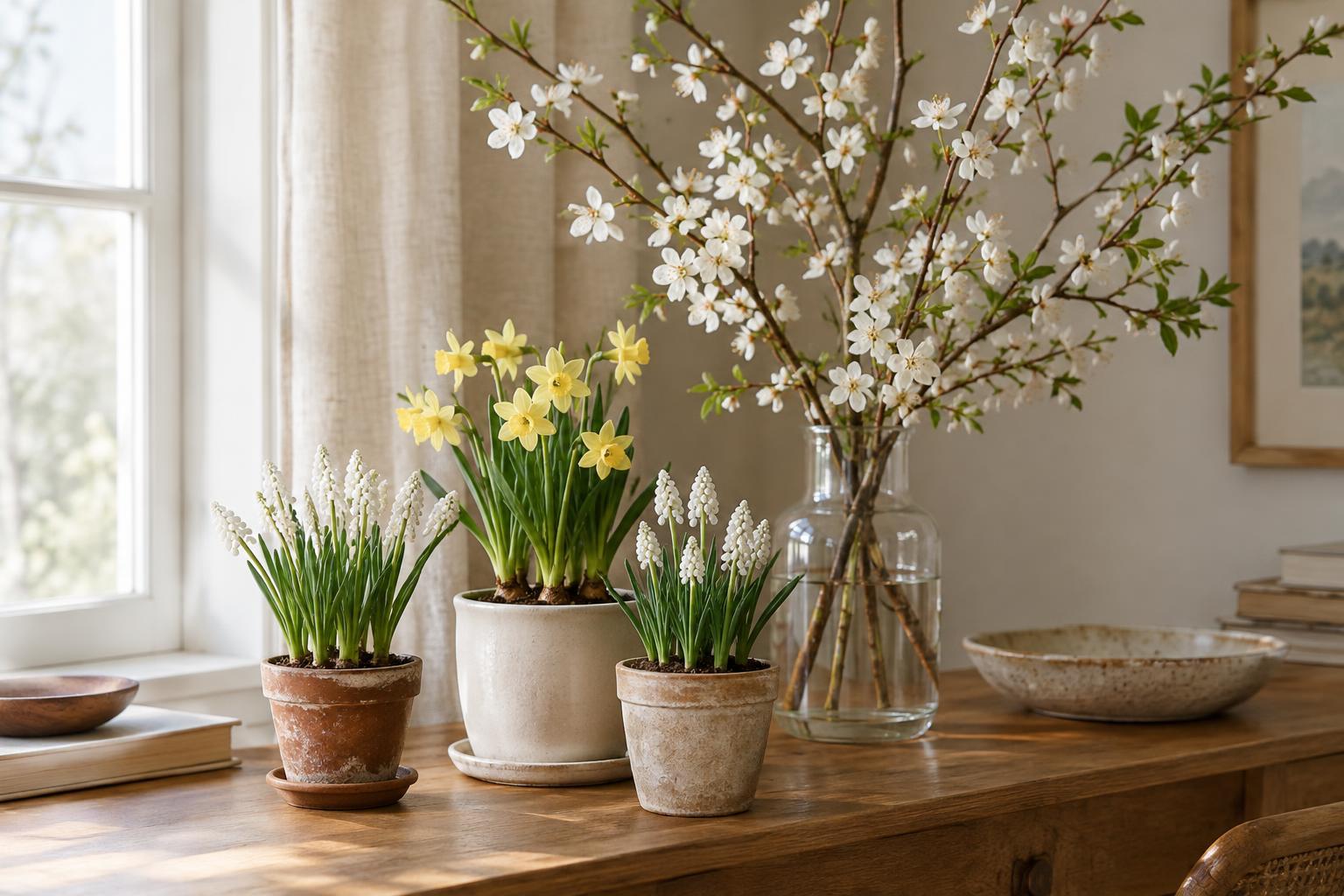
A contained arrangement can mark a change of season without spreading decorations across every surface. Try a tray on a side table, a simple centerpiece for the dining table or a small grouping on an entryway shelf. Use objects you already own as the starting point: a bowl, a vase, candleholders or folded napkins. Then add one seasonal detail, such as branches, greenery, fruit or a change of cloth.
Leave enough space for the surface to keep doing its job. A dining table still needs room for meals, and an entryway needs a place to set down keys. If a display must be moved every day, simplify it until it is easy to live with. Natural materials can be appealing, but check them regularly and replace anything that wilts or sheds.
Plan the swap before you pack things away
Seasonal decorating becomes easier when you know what you have. At the end of a season, gather the items you used and keep only those you enjoyed and expect to use again. Clean textiles as appropriate, protect fragile pieces and group small items so they are easy to find. A simple label such as “cool-weather table” is often more helpful than a broad box of miscellaneous decorations.
When the next season arrives, take out a few pieces before deciding whether anything is missing. Try them in a new combination or a different room. A runner can move from the dining table to a console, and a vase can hold branches instead of flowers. The aim is not to announce the season in every room. It is to make your home feel responsive to the moment while keeping the familiar parts that make it yours.