Start with what the room needs to do
Before moving furniture, make a short list of what happens in the living room most often. You might read on the sofa, watch a screen, talk with family, play on the floor or welcome friends for tea. Notice which activities happen at the same time. A layout that supports an evening conversation may also need a clear patch of floor for a child to play nearby.
Rank these uses rather than trying to give each one equal space. Choose a primary activity and one or two secondary ones. If conversation matters most, bring seats close enough to feel connected and give people somewhere to set a drink. If the room is mainly for relaxing with a screen, make sure the main seats have a comfortable view without requiring everyone to face the screen all day.
It helps to note what already works. A sunny corner may be the natural reading spot, while a low shelf near the entrance may be the easiest place for games. Planning around habits you already have can make the finished room feel more useful than a layout built only for a photograph.
Give movement its own space
Sketch the room and mark doors, windows, radiators, outlets and any furniture that must stay. Then trace the routes people take through it: from the entrance to the next room, from the sofa to a window, or from seating to a lamp switch. Keep those routes open before deciding where the smaller pieces belong.
A common layout mistake is placing a coffee table or accent chair in a path people use repeatedly. Try the arrangement on the floor before committing to it. Painter’s tape or a few sheets of paper can show the footprint of a table, while existing chairs can stand in for new ones. Walk through the room carrying a cup or a laundry basket. If you have to turn sideways or repeatedly step around a corner, adjust the plan.
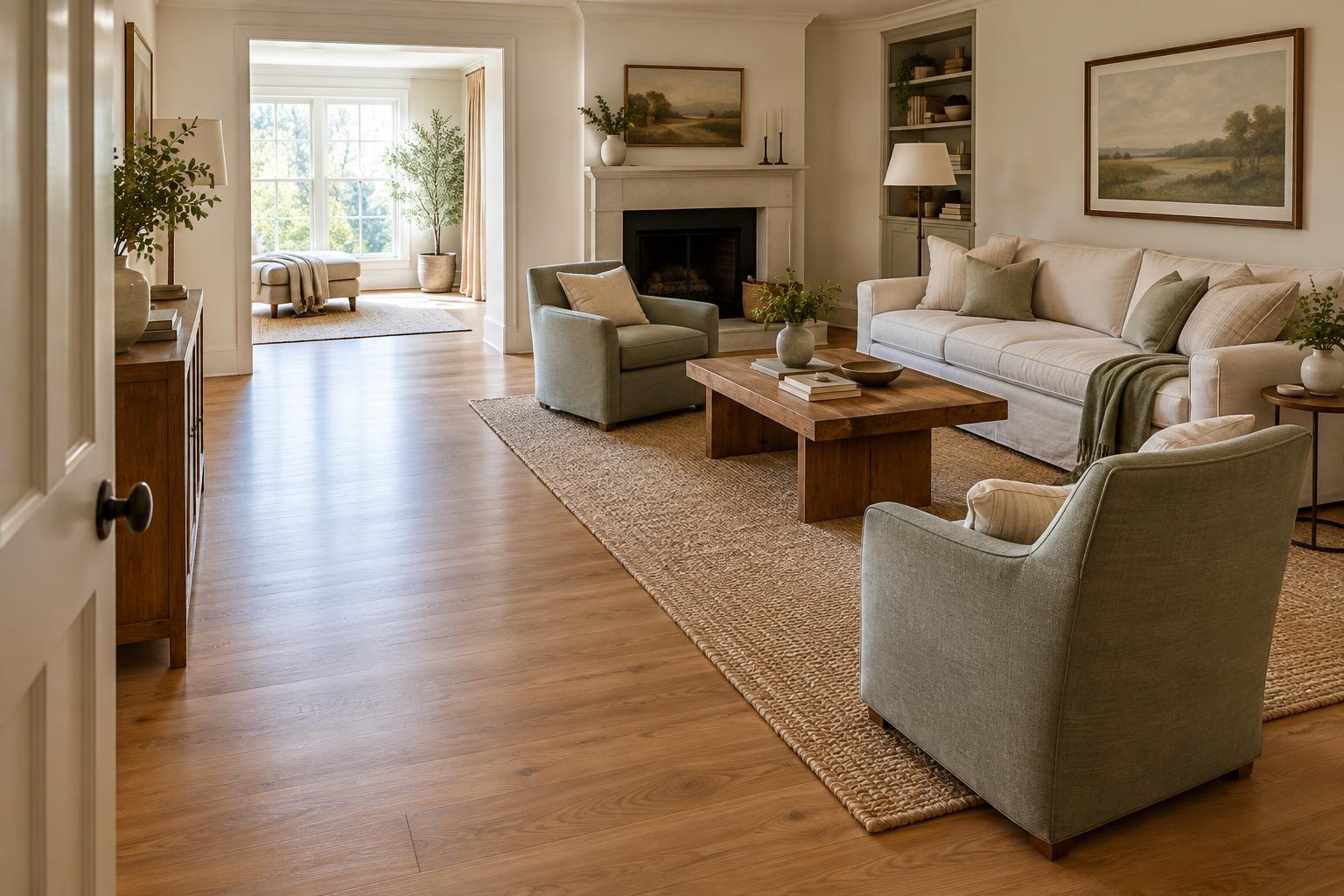
The goal is not a wide empty border around every object. It is a room that is easy to enter, cross and settle into. A sofa can sometimes float away from a wall to define a seating area, provided the route behind it remains comfortable to use.
Build a seating group, not a furniture lineup
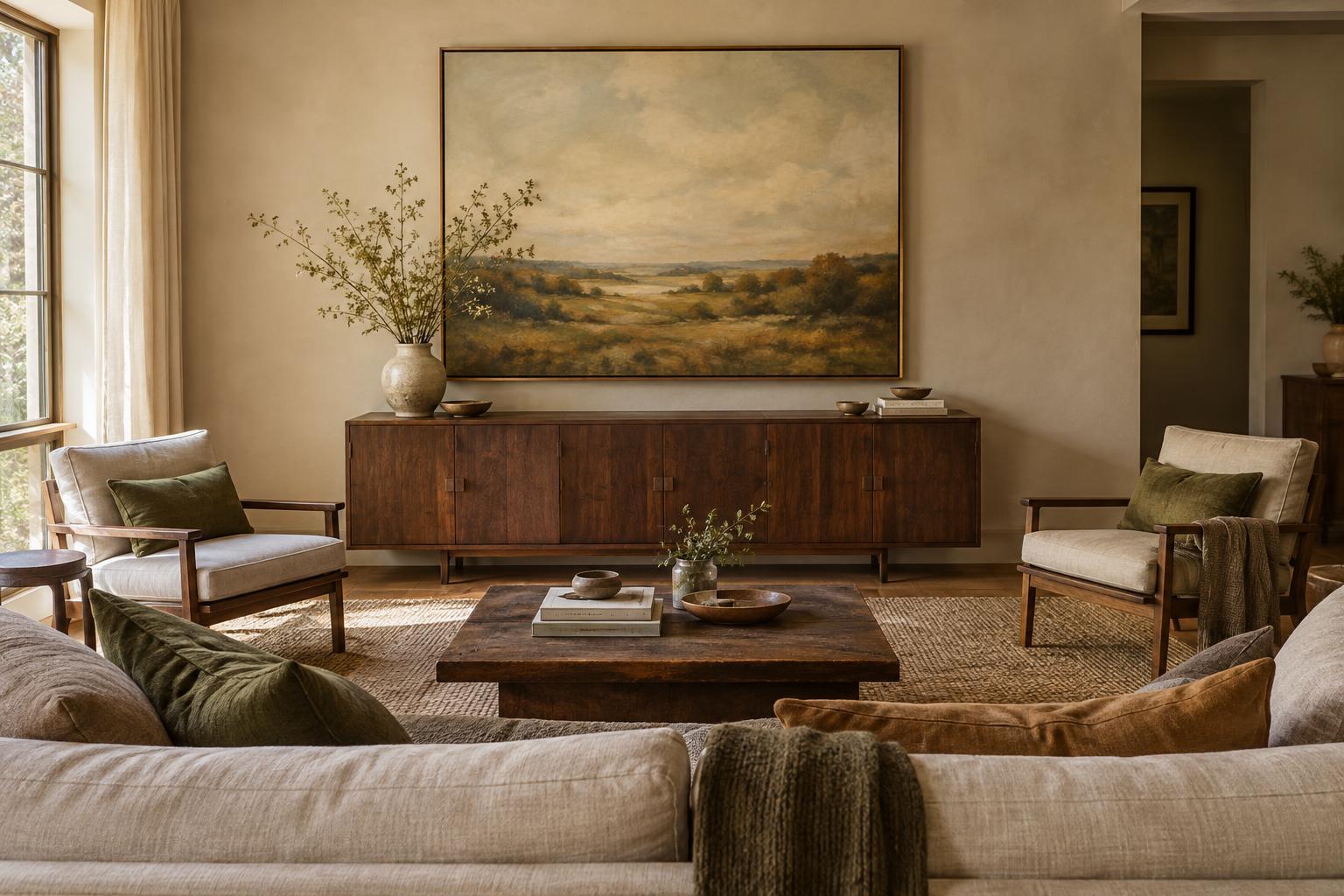
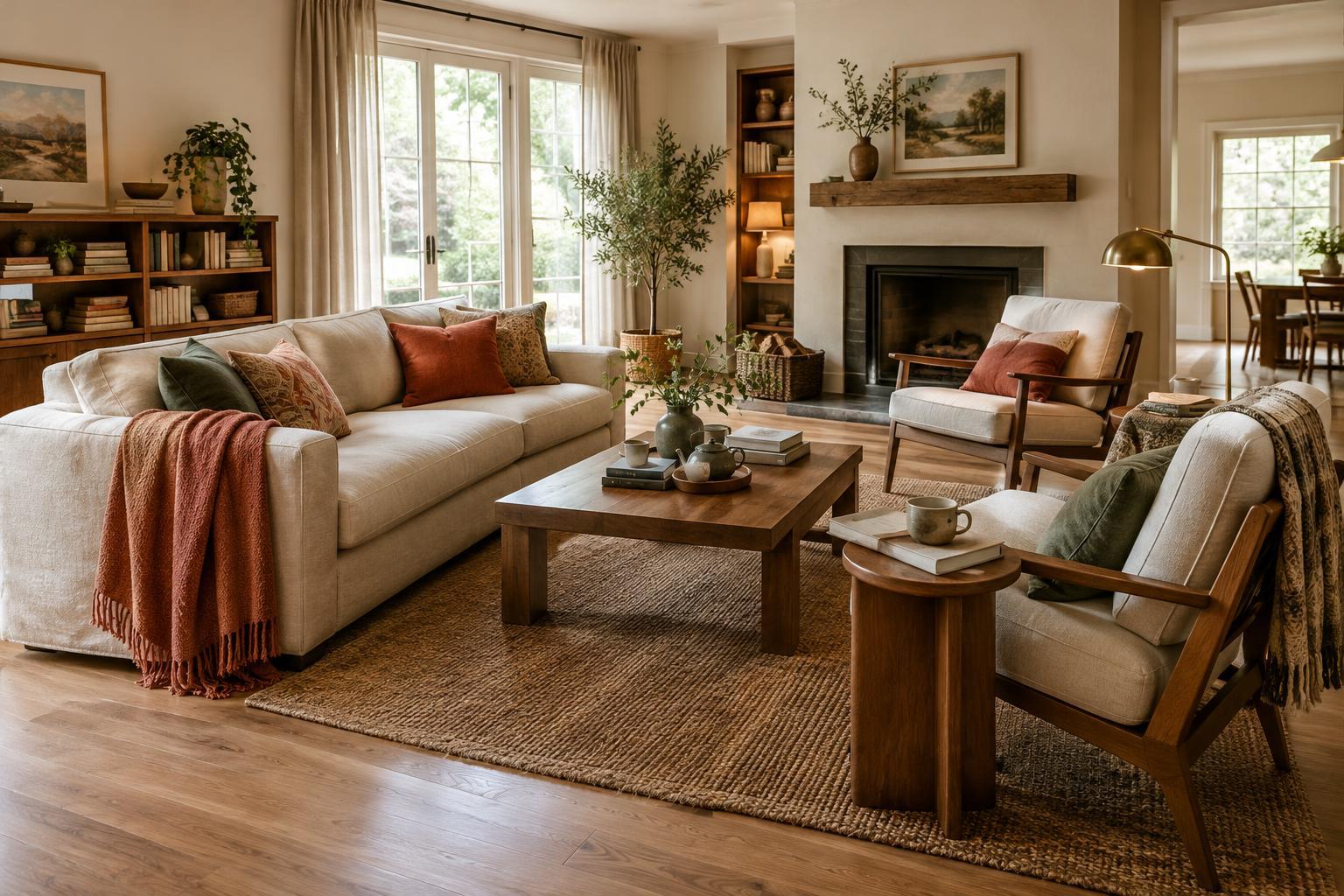
Start with the largest seat, then add chairs or a smaller sofa according to how people gather. Seating arranged only along the walls can leave a large gap in the middle and make conversation feel distant. Turning one chair toward the sofa, or placing two chairs across from it, often creates a more inviting group. Allow room for people to sit down and get up without brushing against another piece.
Every regular seat benefits from a reachable surface, whether that is a coffee table, a side table or a sturdy shelf nearby. Choose table shapes with movement in mind: a round table can soften a route around tight seating, while nesting tables can come forward when guests visit and tuck away afterward.
Use a rug to bring the group together if the room needs a clearer center. Rather than treating it as decoration alone, consider where feet will land when people sit and whether chairs can be pulled out easily. If an existing rug makes the furniture feel disconnected, try changing its position before replacing it.
Put light and storage where activities happen
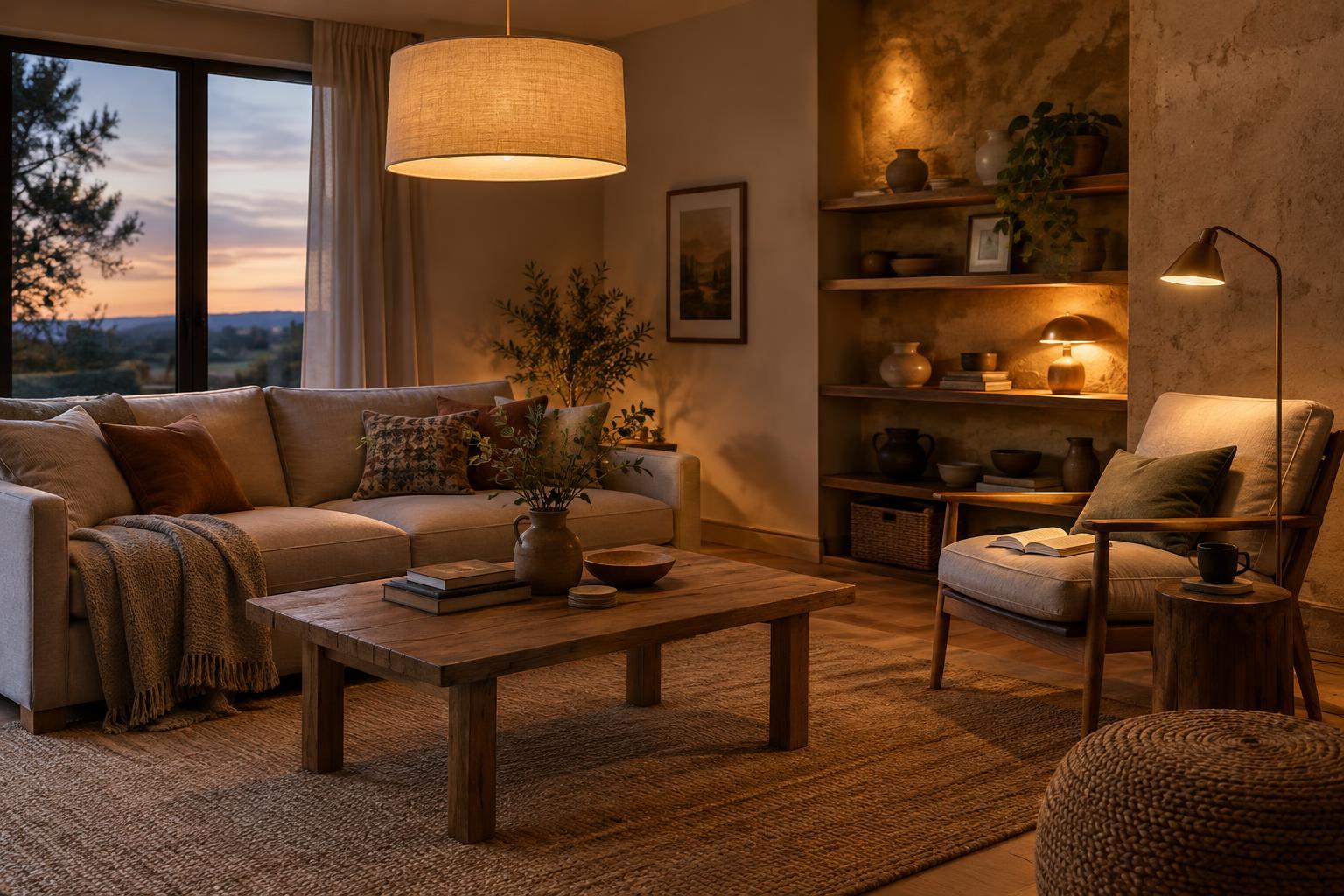
Once the main pieces are in place, plan lighting for actual tasks. A reading chair needs a lamp that lights the page without shining into someone’s eyes. Softer light near the sofa can make the room pleasant after dark, while a separate light at a games table lets one activity continue without brightening the entire space. Check that cords can reach outlets safely and do not cross a walking route.
Storage is most helpful when it sits near the activity it serves. Keep blankets close to the seats where they are used, games near the table where they are played, and a basket for small everyday items where they tend to collect. Closed storage can calm a busy view; open shelves are useful for things you want to reach often. A mix of the two usually gives a room breathing space without demanding that every object be hidden.
Textiles can support the layout too. Cushions make a deep sofa easier for different people to use, and a throw within reach makes a reading corner feel ready for a quiet hour. Choose pieces that suit your routines and are easy for your household to care for.
Test the layout on an ordinary day
Live with the arrangement for a week before buying anything to fill a gap. Notice where people actually sit, where they set down cups and which paths remain awkward. If a chair is never used, it may be facing the wrong way or lack a nearby light or table. Small moves can solve these problems without adding more furniture.
Finally, consider how the room changes when guests arrive. Can a lightweight chair join the conversation? Is there a place to set out snacks without blocking a doorway? A flexible living room does not need to be ready for a gathering at every moment. It needs a comfortable everyday arrangement that can make room for others with a few simple adjustments.