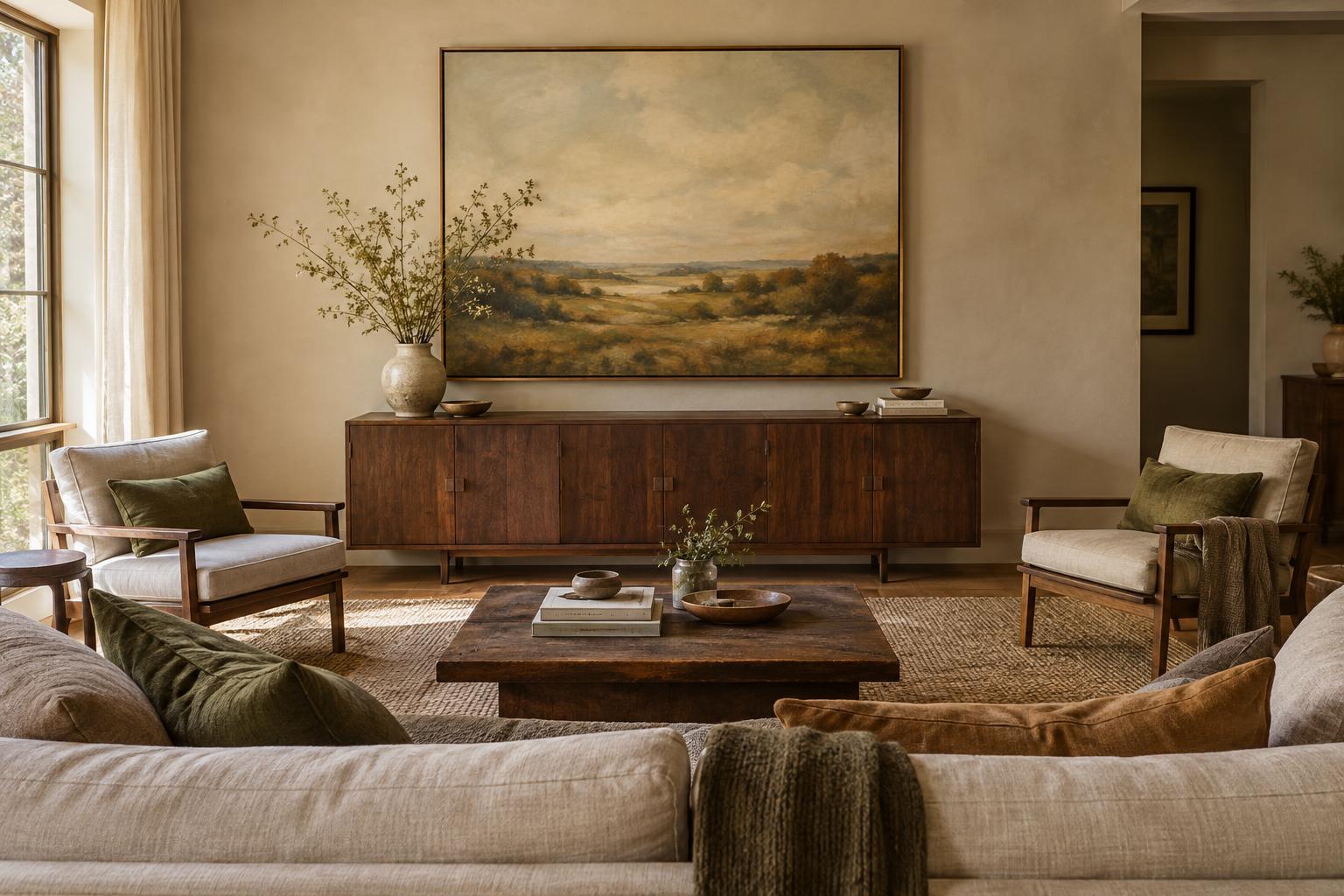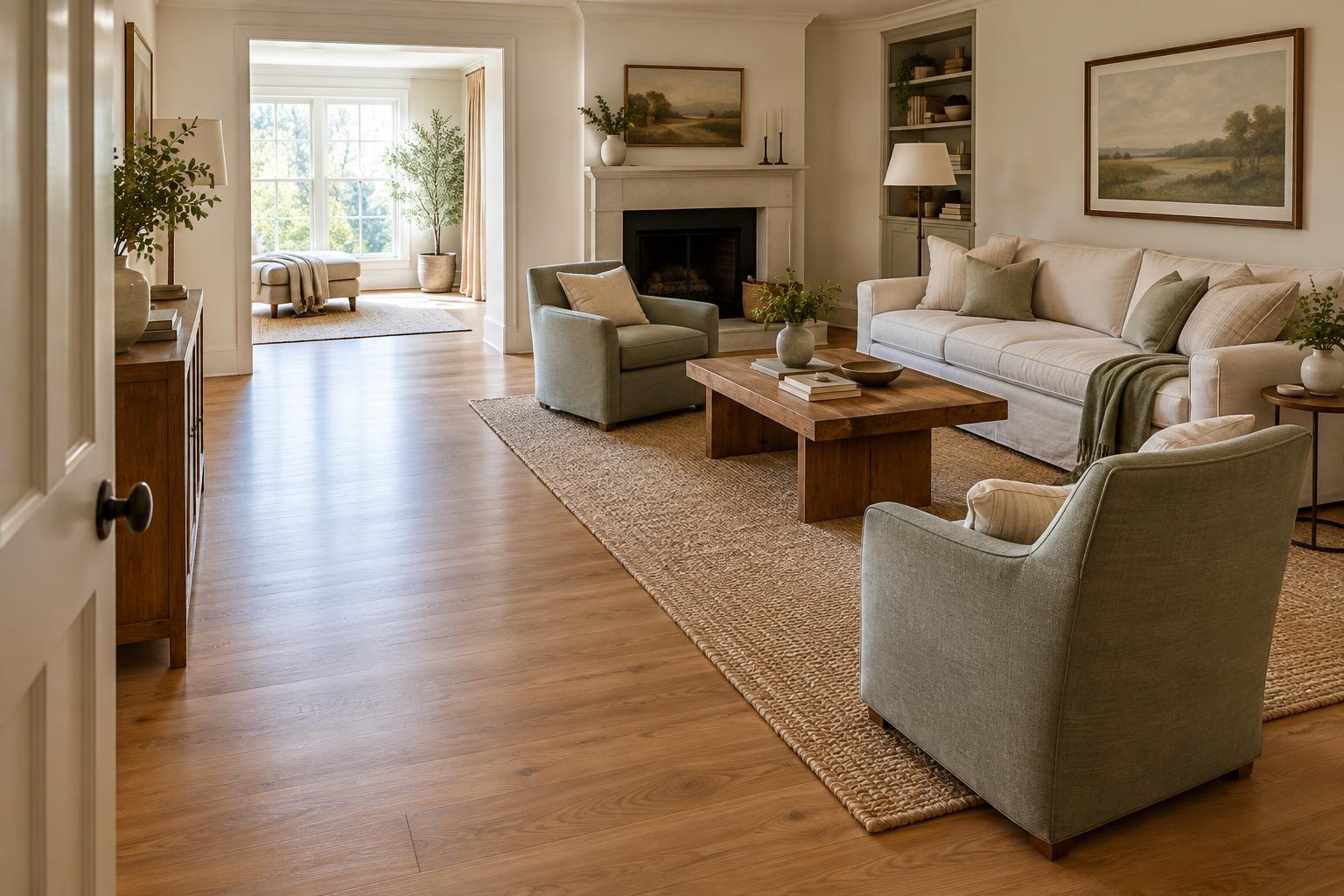
Begin with the room, not the fixtures
Before choosing a lamp, notice how you use the living room at different times. A seat where someone reads needs more focused light than a sofa used mainly for conversation. A dark corner may need a gentle glow, while a favorite picture or textured wall might benefit from attention. Sketch the furniture arrangement and mark the places where you sit, move through the room and want to draw the eye.
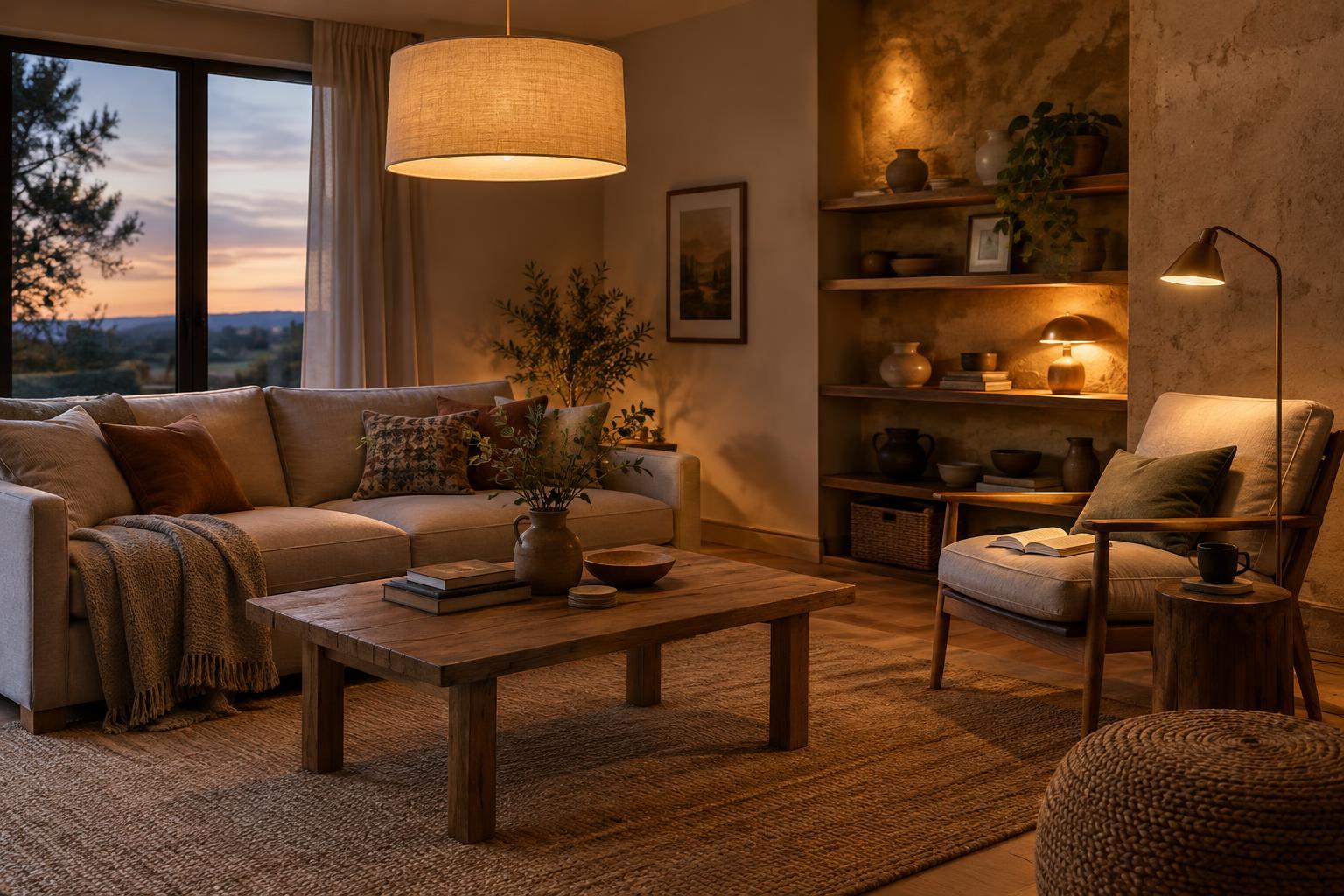
Layering means giving different lights different jobs. Ambient lighting provides a comfortable overall level. Task lighting helps with a specific activity. Accent lighting adds depth by highlighting a feature or creating a pool of light. You do not need a large collection of fixtures to achieve this. A ceiling light, two thoughtfully placed lamps and one small accent source can offer more flexibility than a single bright overhead light.
Set a gentle ambient foundation
Ambient light lets you navigate the room and see the people around you without making every surface equally bright. It may come from a ceiling fixture, wall lights or a floor lamp that directs light upward. If the room has a central ceiling light, consider using it at a lower level for relaxed evenings, if the fixture and bulb support dimming. A shade or diffuser can also soften a light that otherwise feels harsh.
Look for balance rather than perfect symmetry. In a long room, one light in the center may leave the ends feeling gloomy. A lamp at the far end can spread the glow and make the whole space feel connected. During the day, curtains that filter rather than block daylight can provide a softer starting point; at night, your ambient lights take over.
Put task light where it earns its place
Task lighting works best when it serves an actual seat or surface. Place a reading lamp beside a chair or at the end of a sofa, with the shade positioned to illuminate the page without shining into someone’s eyes. A small table lamp can help at a desk or puzzle table. Adjustable arms and directional shades are useful when several people share the room but want different levels of light.
Check the light from the position in which you will use it, not just while standing beside it. Sit down with a book, then look for shadows cast by your head or hands and for glare on a screen. Moving a lamp a short distance may solve either problem. Task lights can remain off when nobody needs them, keeping the room calm while making it easy to switch to a practical activity.
Use accent light to give the room depth
Accent lighting is less about brightness than direction. A picture light can bring attention to artwork; a small lamp on a shelf can reveal the shapes of books and ceramics. You might aim a suitable fixture toward a textured wall or let a shaded lamp brighten a quiet corner. Choose one or two features to emphasize so the room does not feel busy.
Pay attention to what the light does nearby. An exposed bulb reflected in a television screen or window can be distracting, even if it looks attractive from elsewhere. Likewise, a spotlight aimed at art should not become an uncomfortable point of glare from the sofa. Try a fixture in its intended place after dark before settling on its final angle.
Make the layers work together
For a cohesive feel, choose bulbs with a similar warm appearance across the lights you use together. Shades and surfaces will affect the result: a pale shade generally lets more light spread into the room, while a darker shade may direct more attention above and below the lamp. Textiles, wood and matte finishes can help light feel gentle by avoiding strong reflections. Where practical, put each layer on its own switch or use individual lamps, so you can change the mood without rearranging the room.
Test a few simple combinations. For guests, try ambient light with an accent lamp that makes the room feel welcoming. For reading, turn on a task lamp and leave enough background light to avoid a stark contrast. For a quiet evening, you may prefer several low, scattered lights rather than one strong source. If a corner still feels flat or a seat remains difficult to use, adjust placement before buying anything new. A good lighting plan grows out of the way you live in the room.