Start with the people at the table
Dining light has two jobs: making the meal easy to see and keeping faces comfortable to look at across the table. A dramatic fixture may look appealing when the room is empty, but a bright, exposed bulb at eye level can be distracting once everyone sits down. Before changing anything, sit in each dining chair after dark. Notice whether the tabletop has dark patches, whether the light shines into anyone’s eyes and whether you can see the person opposite you clearly.
Use those observations to decide what needs fixing. A dark tabletop may need a better-placed fixture or more light nearby; glare may call for a shade, a different bulb or a change in height. If the dining area shares space with a kitchen or living room, look at it from those seats too. The goal is not to make every corner equally bright, but to avoid a sharp contrast between a dazzling table and a dark surrounding room.
Position overhead light around the table
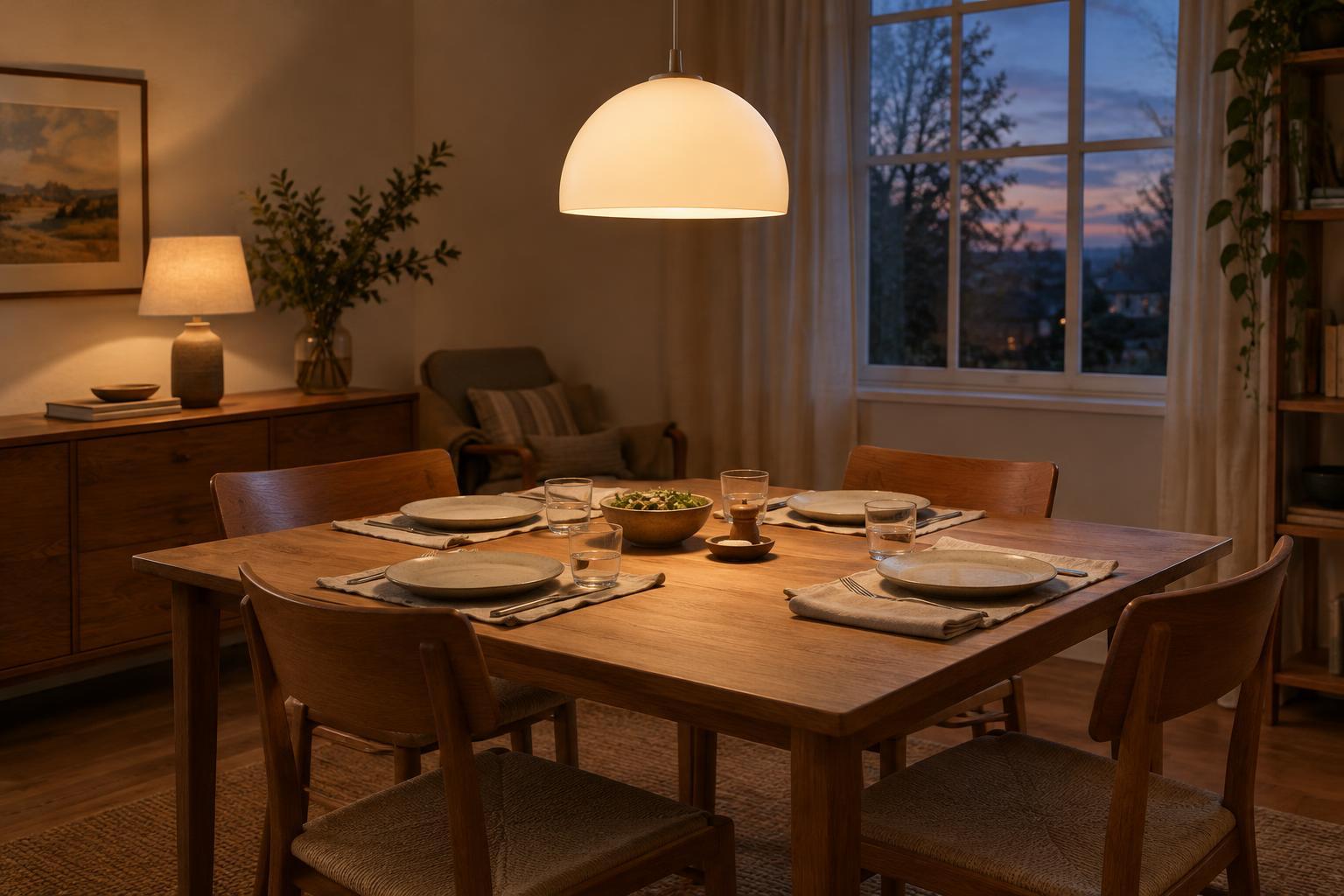
An overhead fixture usually works best when it relates to the dining table rather than the center of the room. Centering it over the eating area helps the light reach plates more evenly, especially if the table is not centered beneath the ceiling. For a long table, a linear fixture or multiple pendants may spread light more comfortably than one small shade. Check the arrangement at the table’s usual size and, if it extends, consider how it works with the leaves in place.
Fixture height is best judged from seated and standing positions. It should leave a clear view between diners while staying out of the way when people stand, carry dishes or reach across the table. If a shade feels intrusive, adjust it before assuming you need a smaller one. Also check where the light lands: a fixture with a narrow downward beam may illuminate the centerpiece while leaving the ends of the table dim.
Soften glare and support the room
The shade and bulb affect the experience as much as the fixture’s appearance. An opaque shade directs more light toward the table; a translucent one can give the surrounding area a gentler glow. Neither is automatically better. If you can see a bare bulb from a dining chair, a diffused or shielded light source may feel more comfortable. When replacing bulbs, follow the fixture’s requirements and compare how options look in your own room, where wall color and nearby surfaces can change the effect.
One ceiling fixture does not have to do all the work. A lamp on a sideboard, a wall light or gentle light from an adjoining room can make the dining area feel less isolated after dark. Keep supporting lights away from paths where chairs pull out and people carry plates. If you use candles, place them on stable holders where sleeves, napkins and reaching hands are unlikely to touch the flames, and never leave them unattended.
Make the lighting easy to adjust
Breakfast, homework and an unhurried dinner may call for different amounts of light at the same table. If the fixture and bulb are suitable for a dimmer, adjustable brightness lets you keep useful light for serving and clearing, then soften it while people linger. Without a dimmer, switching on a side lamp or turning off a brighter nearby light can create a similar change. Test your options during an actual meal rather than relying on how the room looks from the doorway.
Keep the arrangement simple enough to use every day. Guests should be able to see what is being served, and the person clearing the table should not have to work in near darkness. Once you have a comfortable setting, note which lights are on for ordinary meals and which small change makes the room feel more relaxed. A familiar routine is often more useful than a complicated scheme that takes effort to recreate.