Start with the meals you actually serve
The best everyday napkin is one you will reach for without thinking. Before choosing a fabric or color, consider where you eat, how often you do laundry and whether your meals tend to leave light crumbs or stubborn food marks. A family that uses napkins at every meal may value a generous stack that washes easily. Someone who mainly sets the table for dinner may prefer fewer napkins with a softer, more finished feel.
Think about how the napkin feels in your hands, too. It should be pleasant against your skin, easy to unfold and large enough to protect a lap without taking over a small table. If you can handle a sample in person, fold and unfold it. A napkin that looks crisp on a shelf but feels stiff or slippery may not be the one you enjoy using every day.
Choose fabric for comfort and realistic care
Cotton is a versatile starting point. It generally feels familiar, folds easily and can be washed regularly, though its texture and drying time vary with the weave and thickness. Linen has a relaxed drape and visible texture; it also wrinkles readily, which can be part of its appeal. Cotton-linen blends can offer a middle ground, but the exact feel depends on the particular cloth. Check the care label rather than assuming every napkin made from a familiar fiber can be washed the same way.
Look beyond the fiber name to the construction. Very thin fabric may feel insubstantial or show stains and wear more quickly, while a dense, heavy napkin can take longer to dry. A medium-weight cloth with neat, secure hems is often a useful balance for repeat use. If ironing is not part of your routine, choose a texture that still looks inviting when it comes off the drying rack with a few creases.
Find a size and color you will keep using
A smaller napkin can suit quick breakfasts, snacks and compact place settings. A larger one gives more coverage for dinner or meals with sauces. There is no need to buy separate sets for every occasion: choose a size that handles your most common meal comfortably, then use it more casually or fold it neatly as needed. If your table is small, test a folded napkin beside your usual plate and glass to see whether the setting still has breathing room.
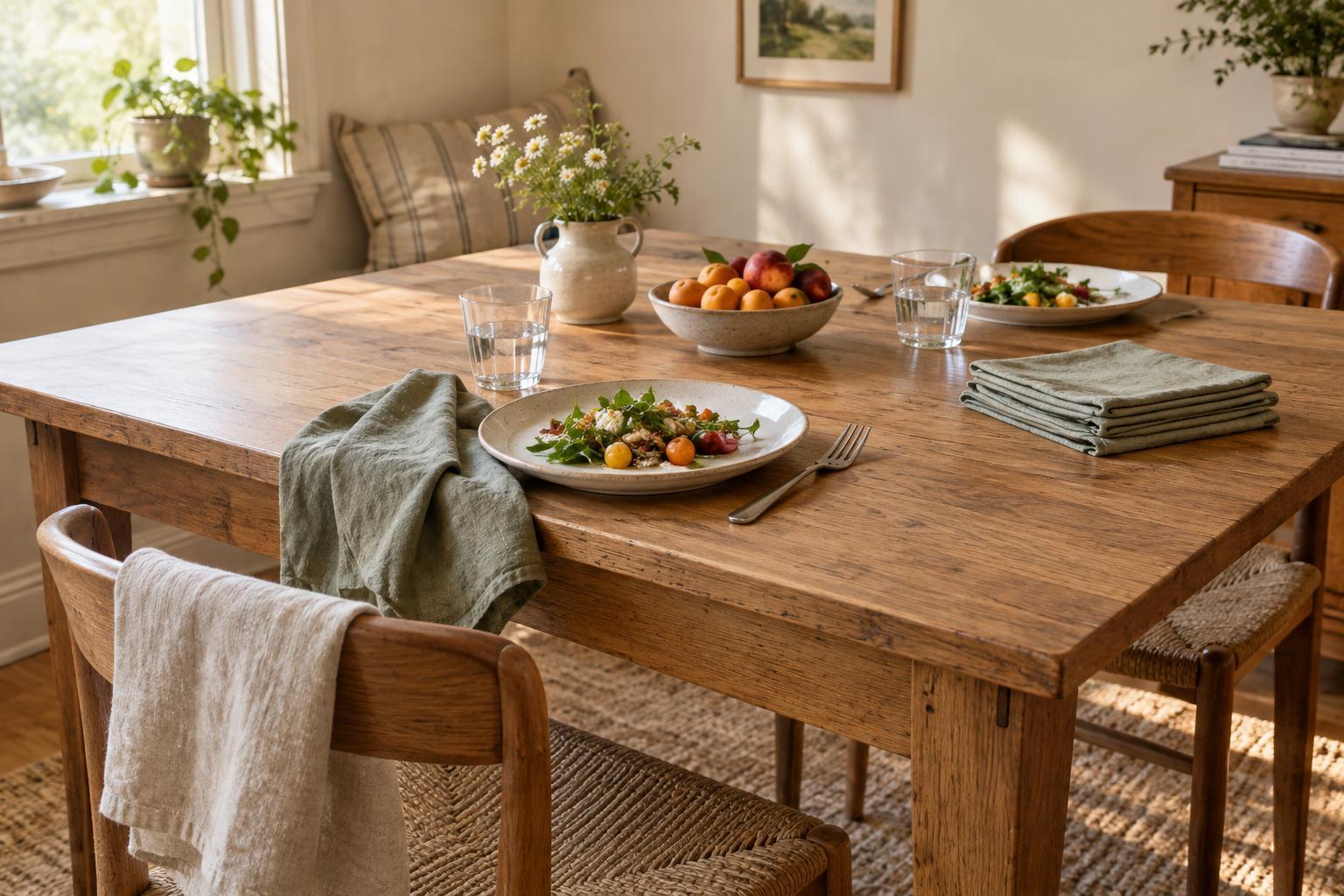
Color can make maintenance feel easier or harder. Pale napkins look fresh and can fit many table settings, but marks may be more noticeable between washes. Dark or patterned cloth can make minor marks less conspicuous, although it still needs proper cleaning. Muted colors and small-scale patterns are flexible choices if you use different dishes or tablecloths through the year. Buying napkins from the same set helps them look cohesive, but mixing related colors can also feel intentional.
Build a set that fits your laundry routine
Count how many napkins you use between laundry days, then allow a few extras for spills, guests or a load that has not yet been folded. This is more useful than choosing a set based only on how many chairs surround your table. If you are unsure about a fabric, begin with a modest number and see how it performs after several washes before adding more.
After a meal, shake out crumbs and set aside any napkin with a visible stain so it does not sit unnoticed in a pile. Follow its care label, and treat marks promptly with a method appropriate to the fabric. Let napkins dry fully before folding them away. A shallow drawer, basket or shelf near the dining area makes clean napkins easy to use, while a simple rotation helps prevent the same few from wearing out ahead of the rest.