Start with the way you get dressed
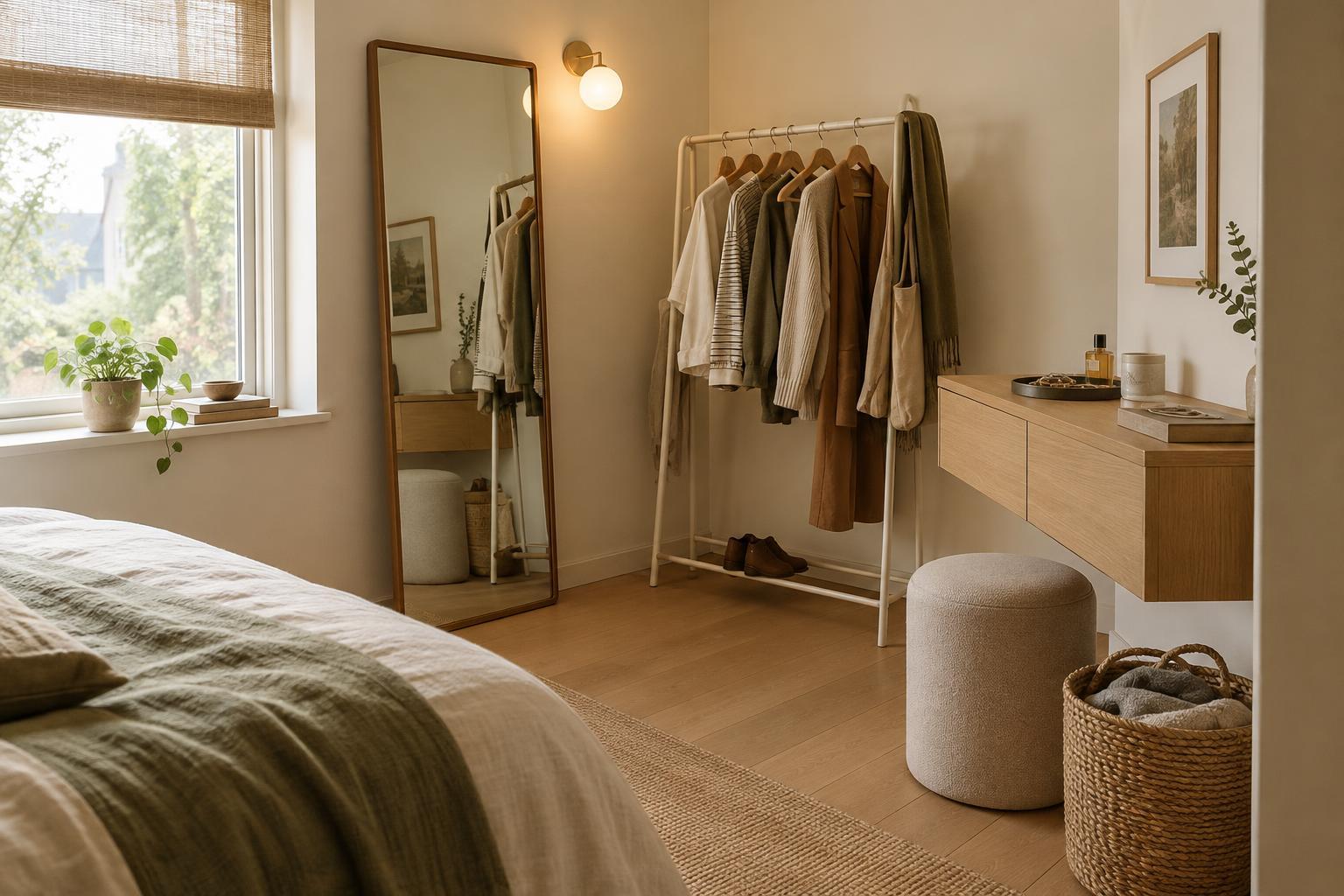
A dressing area can be as simple as a mirror, a place to sit and a small surface for the things you use every morning. Before moving furniture, notice your routine. Do you choose clothes at the wardrobe, lay them on the bed or carry them to another room to check the light? The goal is not to create a miniature walk-in closet. It is to bring a few useful steps together so getting dressed feels easier.
Choose a spot close to your clothing storage if possible, but protect the routes you use to move around the bed. Open wardrobe doors and drawers while testing the location. A corner that looks generous when everything is shut may feel cramped when you need to reach a lower drawer. If floor space is limited, use a wall-mounted mirror and the top of an existing dresser rather than adding a separate vanity.
Give each essential a place
Think of the area in three parts: clothing, small accessories and items in transition. Everyday clothes should be easy to reach without shifting stacks around. A shallow tray can hold frequently worn jewelry or a watch, while a drawer divider can keep smaller pieces from mixing together. Reserve a hook or short rail for the outfit you plan to wear next, rather than letting it settle on a chair.
The transition category matters most in a busy bedroom. Clothes that are clean enough to wear again need a designated hook, basket or shelf; otherwise they tend to form a pile. Keep that spot modest in size so it does not become overflow storage. If shoes live in the bedroom, place those you reach for often on a low shelf or mat where you can see them, and put less-used pairs elsewhere. For outfit inspiration beyond the room itself, browse Shoes and Accessories · A Stylish Man for shoes-and-accessories ideas.
Place the mirror and lighting for real use
A full-length mirror is useful only if you can stand far enough back to see your outfit comfortably. Try leaning a mirror in the proposed position before securing or hanging it, and check what it reflects. A view of a crowded shelf can make the corner feel busier; a clear stretch of wall or a softly furnished part of the room will usually feel calmer. Secure leaning mirrors appropriately, especially where they could be bumped.
Daylight can help when choosing colors, but it may not be available when you get dressed. Add a lamp or wall light that illuminates your face and clothes without shining directly into your eyes. If the corner has a small tabletop, keep the lamp’s base compact enough to leave working space. Check your outfit under the lighting you normally use, and adjust the position if strong shadows make it hard to see details.
Add comfort without crowding the room
A seat makes putting on shoes easier, but it does not have to be a dedicated dressing stool. A slim bench at the foot of the bed or a sturdy chair already in the room may do the job. Before buying anything, check that you can sit down, stand up and open nearby storage without moving the seat. If the chair is becoming a landing place for laundry, a smaller stool that cannot hold a large pile may be more useful.
Use textiles to make the area feel connected to the rest of the bedroom. A cushion on a bench, a soft rug underfoot or a fabric-lined tray can add warmth without introducing another color scheme. Repeat a material or tone already present in the bedding, curtains or furniture. This gives the dressing area its own purpose while helping it remain part of one restful room.
Keep the setup easy to reset
The best dressing area is one you can put back in order in a few minutes. Leave part of the surface empty so there is room to set something down while you get ready. Keep only current, frequently used items in the most accessible spots; a crowded display makes small essentials harder to find. When a tray, hook or basket fills up, treat that as a cue to put things away rather than add another container.
After using the arrangement for a week or two, notice where items actually land. If a bag repeatedly ends up by the door, it may belong there instead of in the bedroom. If you always carry accessories to the mirror, move their storage closer to it. These small adjustments are more valuable than a perfectly styled corner that does not fit your routine. A practical dressing area should make the bedroom easier to use, not give you another space to maintain.