Choose a spot that does not interrupt the meal
A drinks station works best a few steps from the dining table, where guests can reach it without passing behind occupied chairs. A sideboard, kitchen counter or sturdy console can all work. Before setting anything out, imagine someone carrying a full glass back to their seat: the route should be clear, well lit and free of bags, cords and narrow gaps.
Keep the station compact enough that it does not take over a surface needed for food. If you are serving dinner from a buffet or kitchen counter, give drinks their own end of the counter so people collecting food and people refilling glasses are not reaching across one another. A small tray can define the drinks area without requiring extra furniture.
Put the most-used items within easy reach
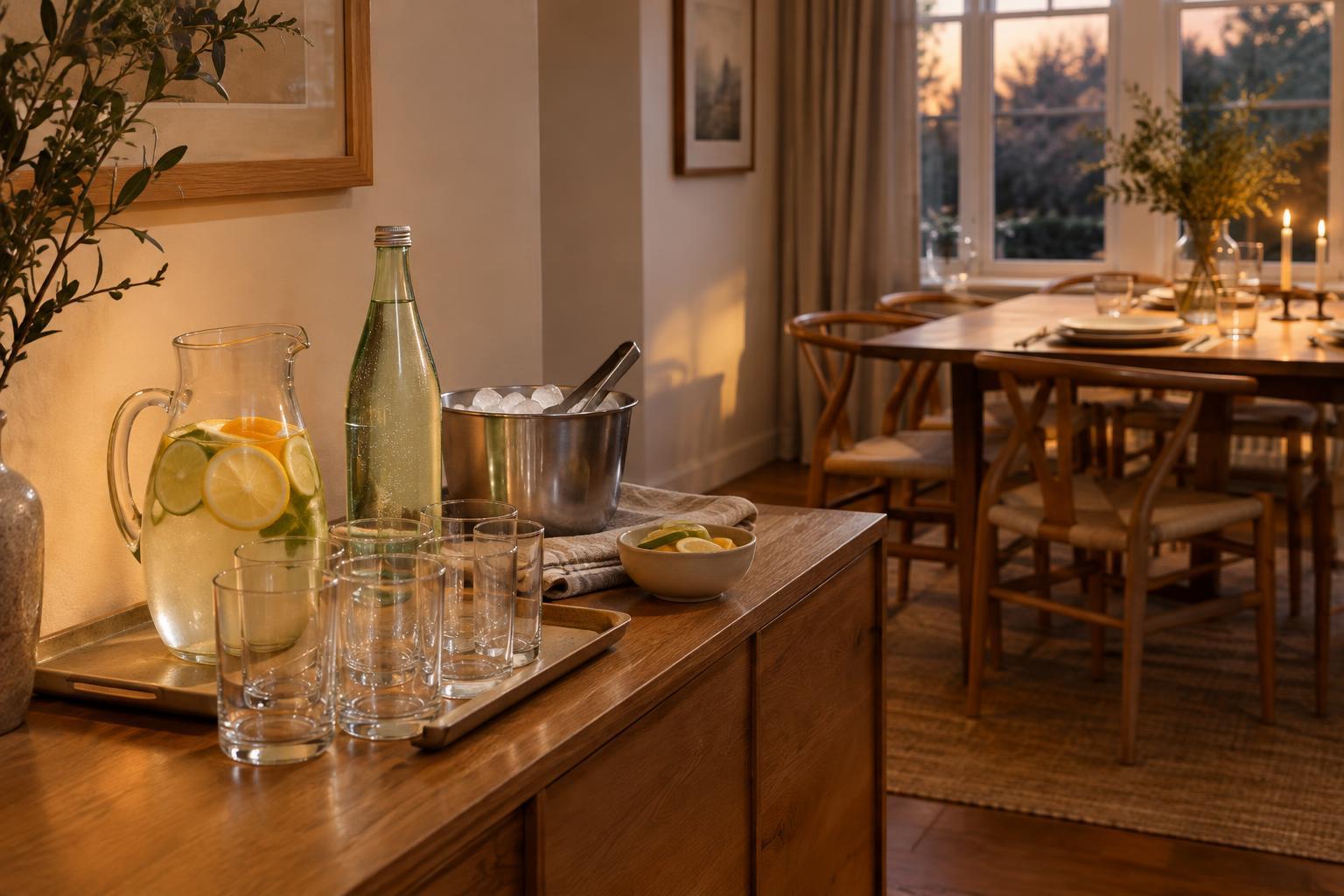
Arrange the station in the order a guest will use it: clean glasses first, then drinks, followed by any additions such as citrus slices. Leave a clear patch of surface where someone can set down a glass while pouring. Place heavier pitchers and bottles toward the back so they are less likely to be knocked over.
Water is the simplest starting point, even if you are offering other drinks. A pitcher and a few spare glasses let guests help themselves throughout the meal. If you offer more than one beverage, keep the choices visible rather than hiding bottles behind decorations. You do not need a different glass for every option; choose glassware that is comfortable to hold, stable on the surface and suitable for what you are serving.
Plan for ice, drips and empty containers
Cold drinks need a little more planning. Put ice in a container with a scoop or tongs rather than expecting guests to handle it by hand. If space allows, set chilled bottles in a small tub beside the pouring area. Keep any container that may collect condensation on a tray or another water-resistant surface, particularly if the station is on wood.
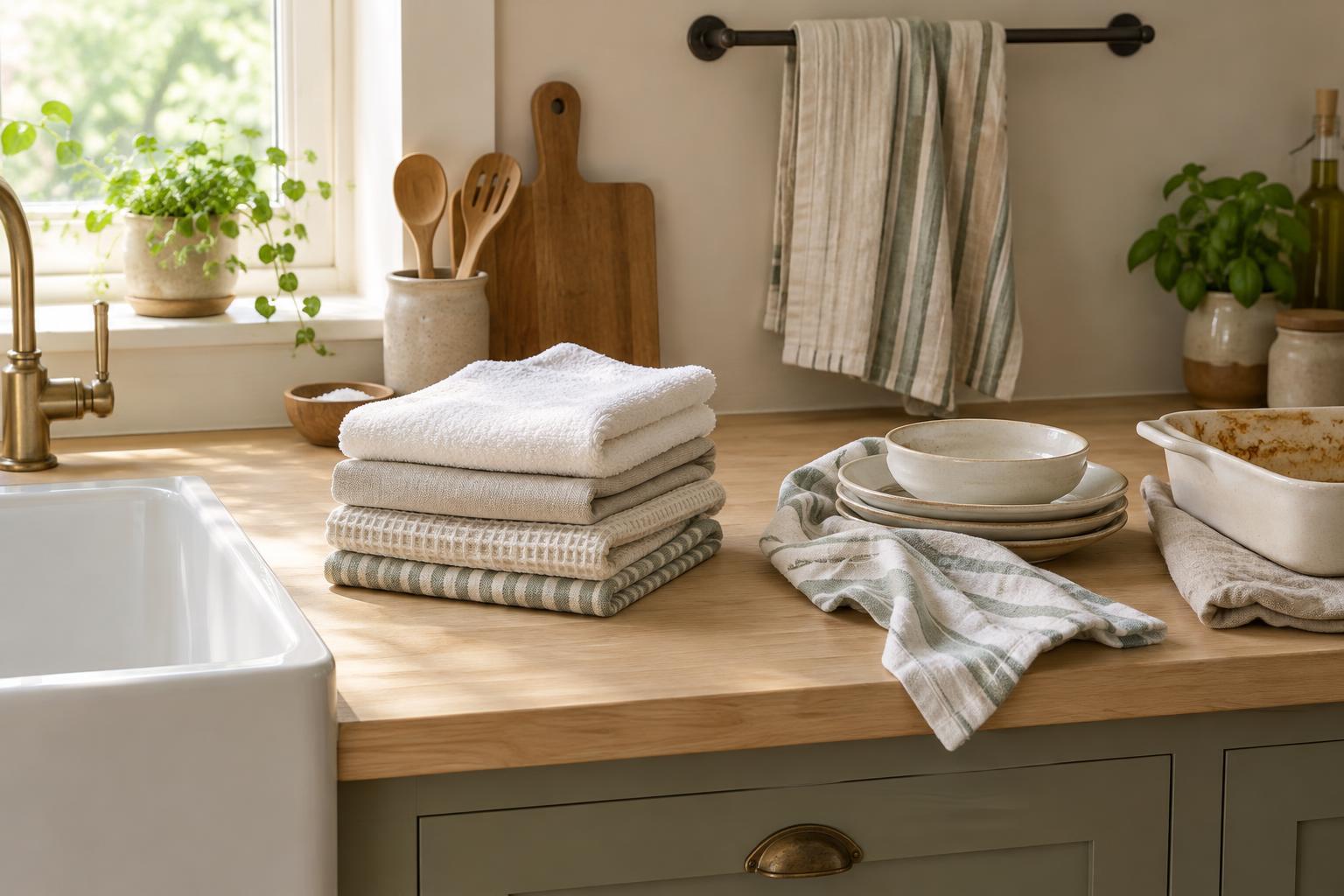
Place a folded cloth or a few napkins near the glasses for small drips. A discreet bowl for used citrus pieces, bottle caps or empty cans helps keep the surface usable as the evening goes on. Check the station occasionally for an empty water pitcher or a growing puddle, but there is no need to rearrange it constantly. A setup guests can understand at a glance should largely run itself.
Keep the dining table ready for dinner
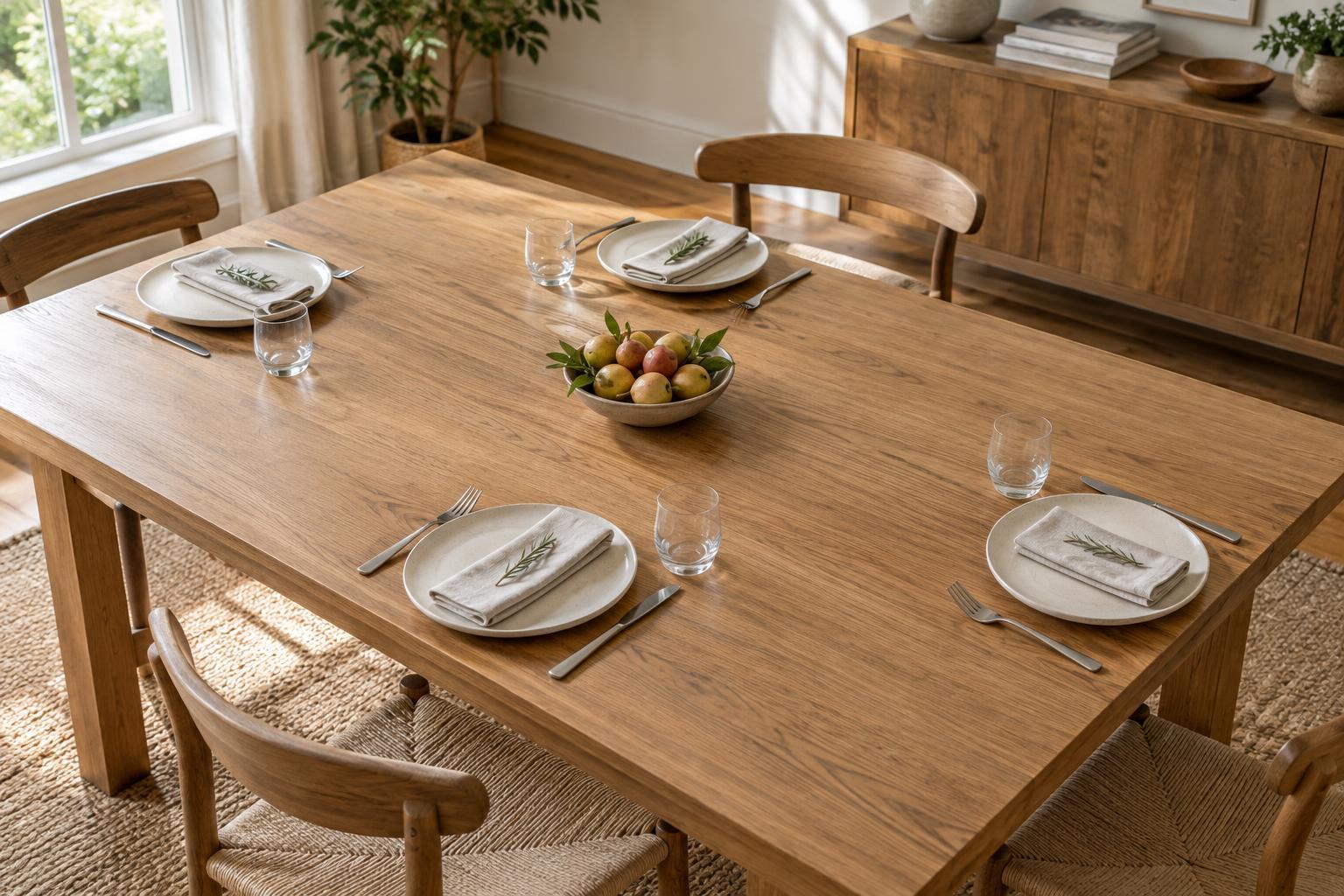
Moving refills away from the dining table makes room for serving dishes, place settings and conversation. Guests should still have a glass at their place, but spare glasses, bottles and ice can stay at the station. If someone may find it difficult to get up during the meal, offer to refill their glass at the table rather than relying entirely on self-service.
Think about when guests will first need a drink. If they arrive before dinner is ready, set up the station beforehand and mention where it is when you welcome them. During the meal, a quick reminder that water and refills are available is enough. The aim is not to make guests manage a complicated system; it is to make an ordinary need easy to meet.
Add atmosphere without crowding the setup
A drinks station can feel inviting without much decoration. A small vase or a bowl of citrus adds color, provided it leaves enough room to pour. Match any serving pieces to what you already use at the table, or repeat one material, such as glass or wood, for a quiet sense of connection. Avoid tall arrangements that hide the drinks or make guests reach around them.
Background music can make the space feel welcoming while guests get settled, but keep it low enough for conversation at the dining table. If instrumental music suits the evening, browse Instruments · Jazz Listening Room for more ideas. Once the station is stocked and the route to it is clear, leave the surface simple: the best finishing touch is enough space for guests to use it comfortably.