Start with what the window needs to do
Before adding anything, notice how you use the window. It may be the room’s main source of daylight, a place you open for fresh air or a view you enjoy from a favorite chair. Those jobs matter more than a display. Keep the center of the glass mostly clear if the room relies on it for light, and leave handles, latches and opening sections easy to reach.
Look at the window from both inside and outside. An arrangement that looks balanced from the sofa may appear crowded from the street, while a decoration hung against bright glass can become a dark silhouette indoors. Try placing a few objects temporarily before committing to hooks or ties. You may find that one accent at the side of the frame does more than a row of objects across the whole sill.
Choose a simple base that can stay
A useful window display begins with an element that works beyond one holiday: a small ceramic pot, a plain glass vessel or a lightweight hanging ornament in a shape you enjoy year-round. Choose one or two pieces that suit the room’s existing colors and materials. That base gives seasonal additions a place to belong, rather than making each update feel like a new project.
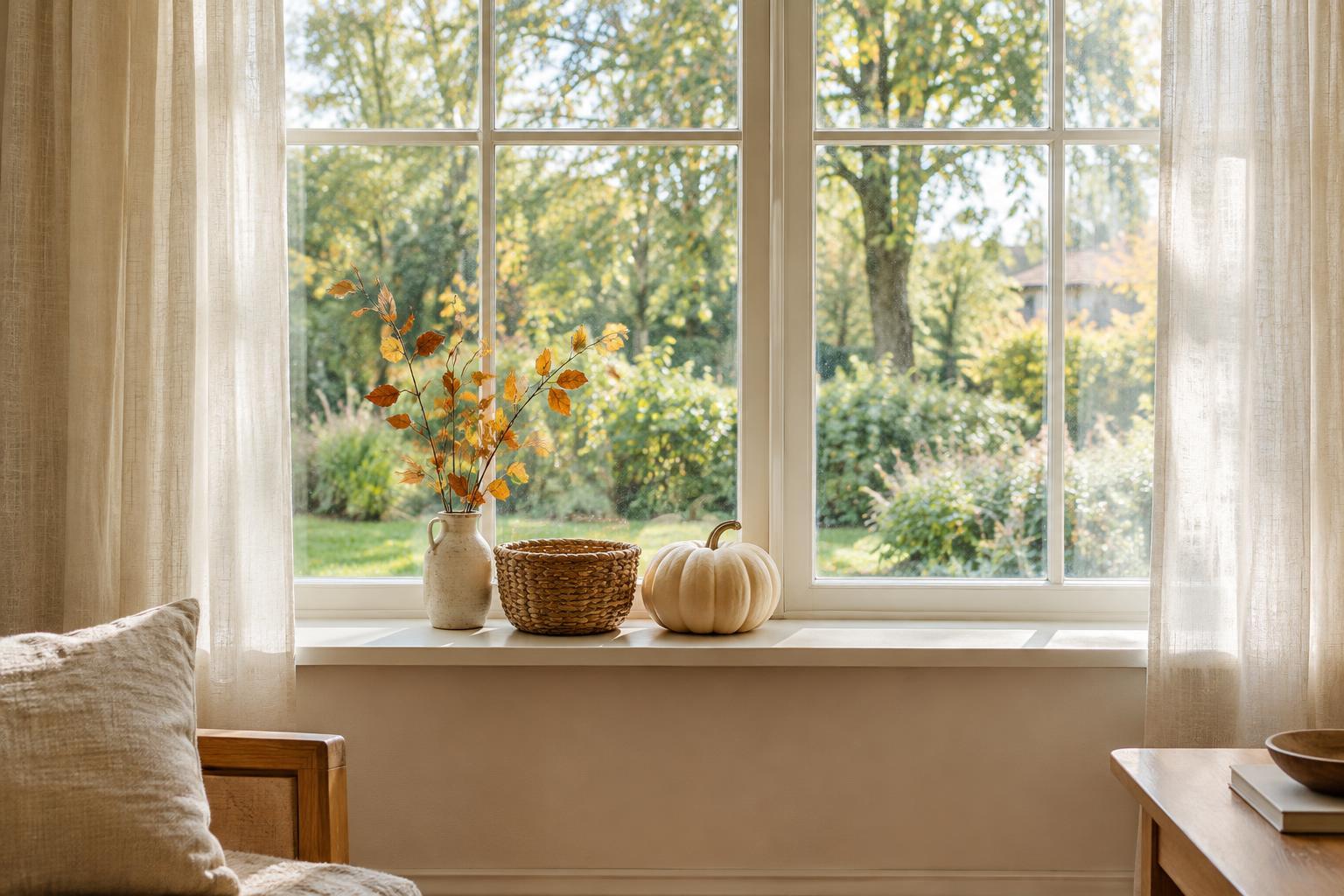
Keep the scale modest. A narrow sill might hold only one stable object, while a deep sill can support a small grouping with different heights. If you group pieces, leave space between them so the window remains easy to clean and the arrangement does not become a barrier. A tray can define a display on a wide sill, but only if it sits securely and does not interfere with opening the window.
Let texture and color mark the season
Seasonal changes do not need to cover the glass. In spring, a small pot of bulbs or a few flowering stems can bring a fresh shape to the edge of the window. Summer might call for an airy textile tieback or a clear vessel that keeps the view open. In autumn, a muted ribbon or a few dried stems can add warmth; in winter, a paper ornament or a simple branch can provide structure without taking much space.
Choose additions by how they look in daylight as well as by their color. Translucent paper and thin fabrics can soften a bright window, while dense greenery may make a small one feel darker. If the window faces a strong afternoon sun, check whether delicate colors fade or objects become uncomfortably hot. A display should be easy to move or adjust when the light changes.
Try repeating just one detail elsewhere in the room, such as the ribbon color in a cushion or the vessel’s texture on a nearby table. That small connection helps the window feel part of the room. It also lets the display stay restrained: the seasonal idea does not have to do all its work in one spot.
Keep the arrangement practical and easy to change
Windows collect dust and can develop condensation, so choose materials you can lift away and clean around. Keep paper, fabric and dried botanicals clear of damp glass, radiators, open flames and any moving window parts. Place breakable pieces where they cannot be knocked by curtains, pets or people reaching for a latch. For a hanging accent, check that its attachment is appropriate for the surface and weight, and that it will not obstruct a blind or shade.
Make each seasonal update a swap, not an addition. Remove the previous accent before bringing in the next one, then step back and check the room in both daylight and evening light. If the view feels busy or the sill becomes difficult to use, take away a piece. The best window display is one you can live with comfortably between the moments you stop to admire it.