Start with the way you eat
Flatware is one of the few things on a table that every guest handles throughout a meal. Its appearance matters, but comfort matters just as much. Before comparing sets, think about the meals you serve most often. A family table may call for sturdy, easy-to-wash pieces, while a small dining table might benefit from a slimmer shape that leaves more room beside each plate.
Decide which pieces you will use regularly, too. A basic place setting usually covers everyday meals, but you may want extra teaspoons if they disappear into lunch bags or are often used for coffee and dessert. Buying enough of the pieces you actually reach for can be more useful than choosing a large assortment of serving utensils you rarely need.
Judge weight by balance, not heft alone
A heavy fork can feel reassuring, but weight is a preference rather than a guarantee of quality. Light pieces can be pleasant to use, especially for children or anyone who prefers less bulk. What matters is whether a utensil feels controlled in your hand. Lift a fork and spoon as you would at dinner: the handle should feel secure without forcing you to grip tightly.
Check where the weight sits. A handle-heavy spoon may feel awkward as you bring it toward you, while a very light handle can make a larger spoon bowl feel unwieldy. Set each piece down beside a plate as well. Notice whether it rests neatly or tips when placed on the edge of a bowl. If you are shopping in person, handle several styles in succession; small differences become easier to notice.
Choose a finish you will enjoy maintaining
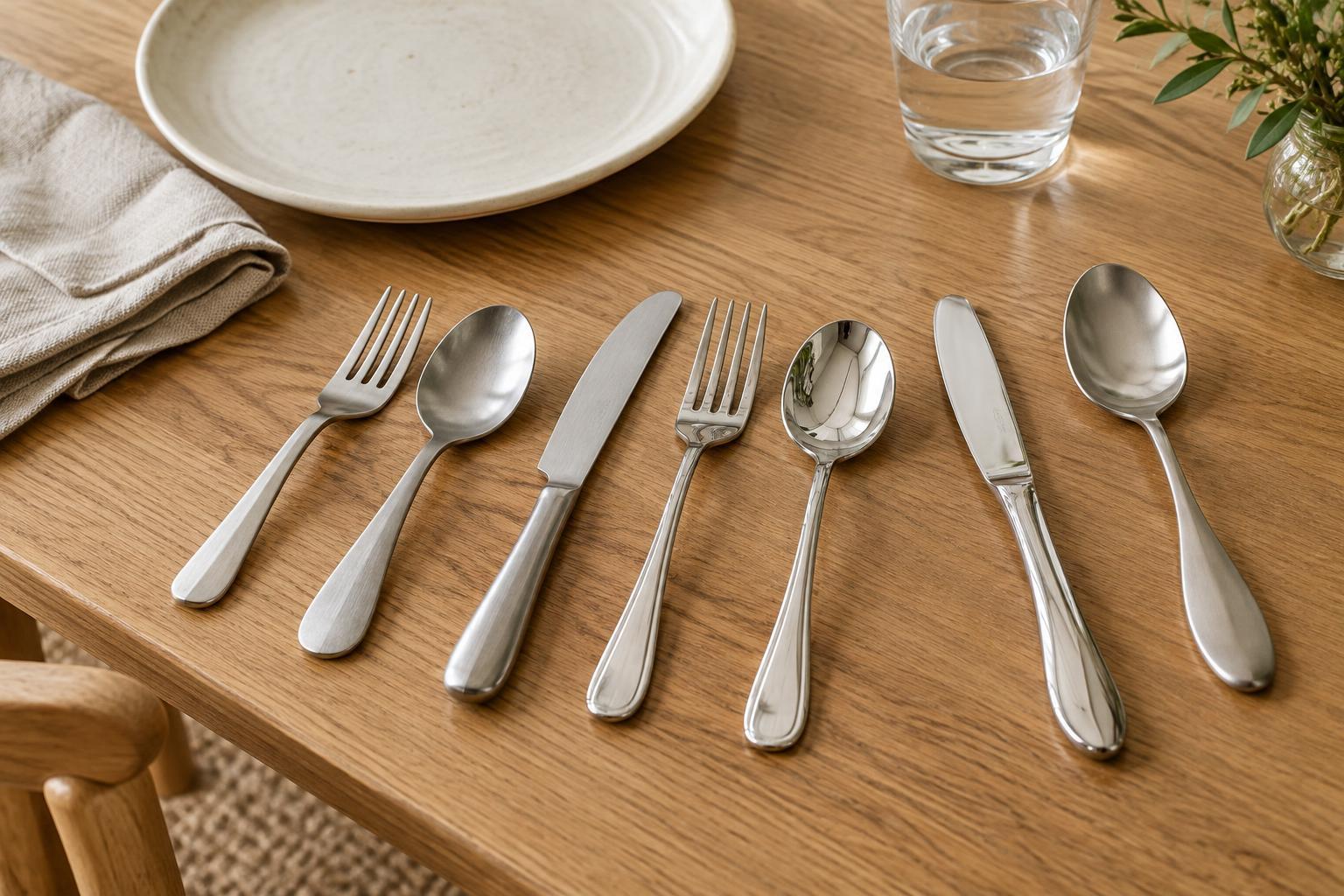
Polished stainless steel reflects light and works easily with both simple and dressed-up settings. It may also show fingerprints and water spots until wiped dry. Brushed or satin finishes have a softer look and can make minor marks less noticeable, though wear may appear differently across a textured surface. Neither finish eliminates cleaning; choose the one whose everyday appearance you like.
Look closely at the finish across every piece, not just the dinner fork on display. The spoon bowl, spaces between fork tines and transition from handle to head should look consistent and feel smooth. If you are considering a dark or colored finish, check the maker’s care guidance and, if possible, see how a sample looks after repeated use. A finish you must treat gently may be a poor fit for a busy everyday set.
Pay attention to the parts that touch your hand and mouth
Run a finger along the sides of a handle and the back of a fork. Edges should feel comfortable, with no rough spots that catch your skin or a napkin. A broad handle offers room to hold, while a narrow one may suit a more delicate table setting. Neither is automatically easier to use: handle length, thickness and shape all affect the grip.
The working ends deserve equal attention. Fork tines should be spaced and shaped in a way that feels useful for the foods you eat. A spoon should fit comfortably in your mouth, and its bowl should hold a practical amount. Check that a dinner knife sits securely in your hand and cuts the foods you expect it to cut. An attractive silhouette is less satisfying if one essential piece feels awkward.
Test a setting before committing to a set
If possible, buy or handle one place setting before purchasing enough for the whole table. Use it for a few ordinary meals, then wash and put it away as you normally would. See whether the pieces fit your dishwasher basket or drawer organizer, whether the finish suits your plates, and whether everyone at home finds them comfortable. This small trial can reveal more than a product photo.
When comparing stainless steel descriptions, you may see grades such as 18/10, referring to the approximate chromium and nickel content. Grades can help describe the material, but they do not tell you how a particular handle will feel or how carefully its edges are finished. Follow the maker’s washing instructions, rinse away food rather than leaving pieces soaking for long periods, and dry them if spots bother you. The right set is one you will gladly reach for at breakfast and set out again when friends come over.