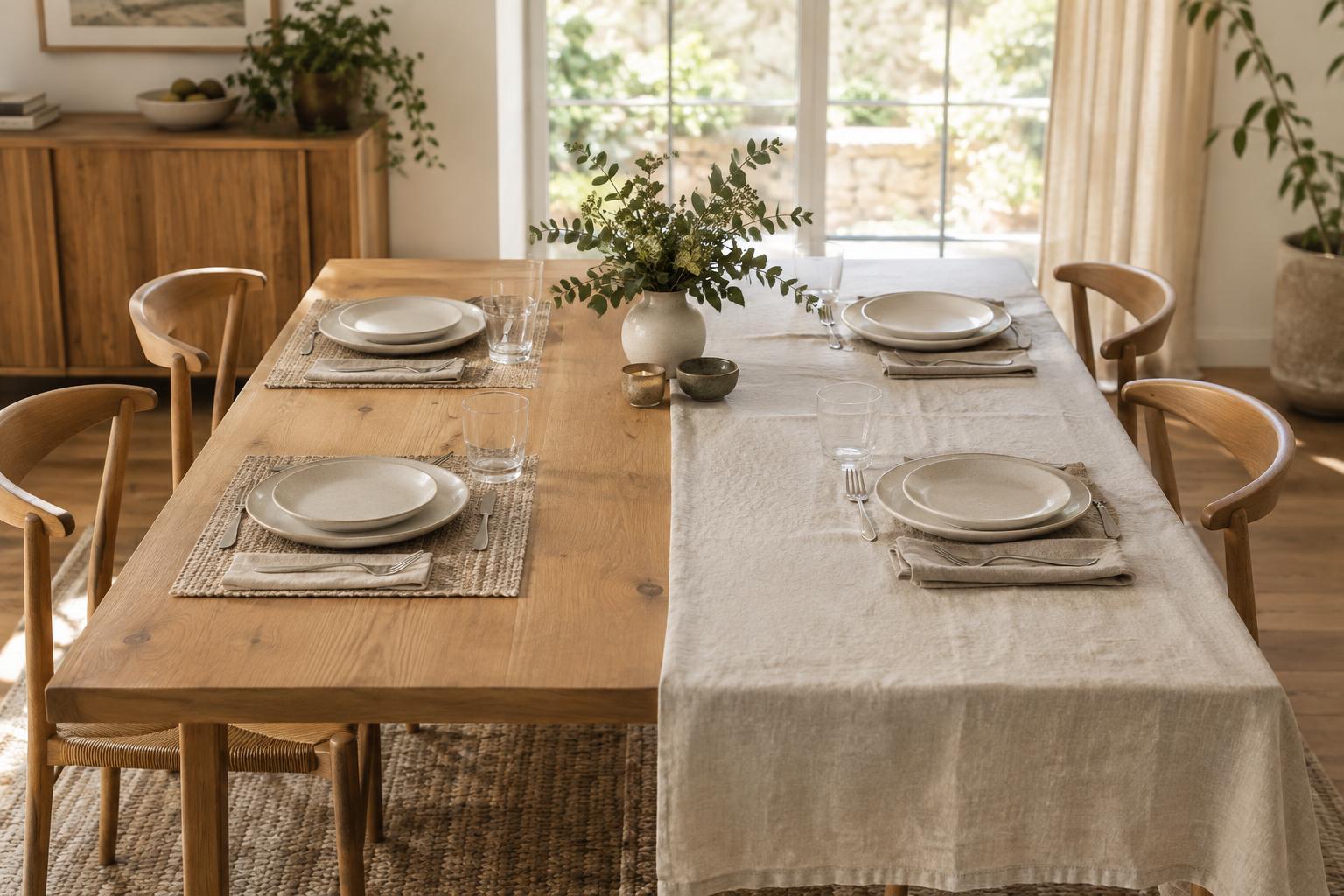
Start with the tabletop, not the old tablecloth
Measure the table itself from edge to edge with a tape measure. For a rectangular or oval table, record its length and width. For a square table, measure one side and check the other if the table is not perfectly even. For a round table, measure its diameter—the distance across the center from one edge to the opposite edge. Measure an oval at its longest and widest points.
If you use extension leaves, measure the table in every arrangement you regularly set for meals. A cloth that suits a compact everyday table may have a much shorter drop once the table is extended. Write down the tabletop dimensions and label each configuration before you shop. Keep your measurements in one unit, such as inches or centimeters, so the calculations stay simple.
Choose how far the cloth should hang
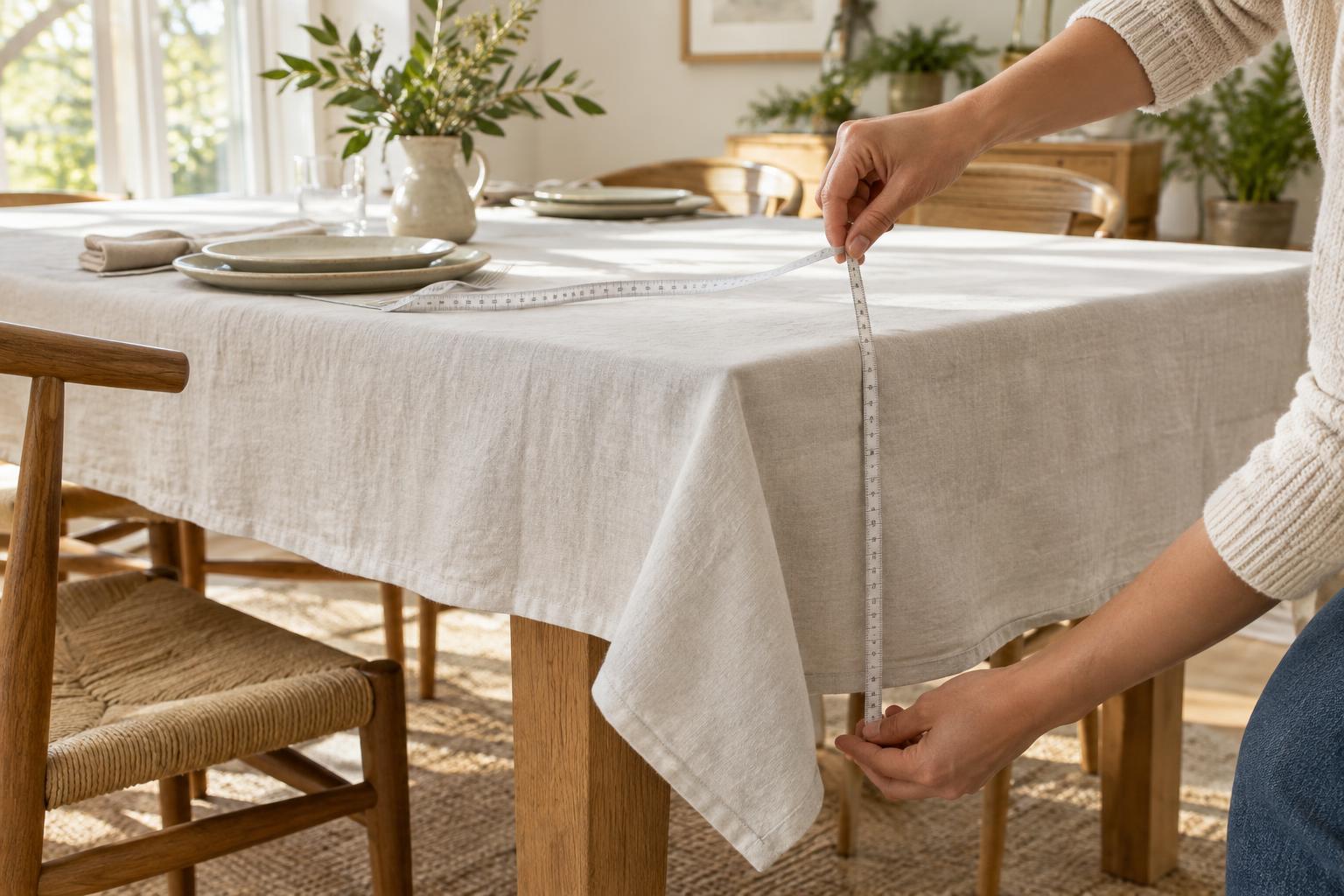
The drop is the distance from the tabletop edge to the bottom of the cloth. A shorter drop tends to feel relaxed and keeps fabric farther from seated guests’ laps; a longer one creates a more dressed-up look. As a starting point, consider about 6 to 10 inches for casual meals or 10 to 15 inches for a fuller drape. These are preferences, not rules: table height, chair arms, fabric weight, and the way you use the table all matter.
To picture the result, hold a tape measure down from the table edge to your proposed drop. Pull out a chair and sit down to check whether the fabric gets in the way. If you want a cloth to reach the floor, measure from the tabletop to the floor rather than assuming a standard table height. Keep fabric clear of feet and chair legs, especially where people walk around the table.
Calculate the size you need
Add your chosen drop twice to each tabletop measurement: once for each side. For a rectangular table, cloth length equals table length plus two drops, and cloth width equals table width plus two drops. A 72-by-36-inch table with a 12-inch drop calls for a cloth about 96 by 60 inches. The same method works for a square table; simply add two drops to each side length.
For a round table, add two drops to the diameter. A 48-inch-diameter table with a 10-inch drop needs a round cloth about 68 inches across. For an oval table, add two drops to both its length and width, then look for an oval cloth close to those dimensions. A rectangular cloth can also cover an oval table, but its corners will hang differently, so check whether you like that look before buying.
Check the drop of the size you can actually buy
Ready-made cloths may not match your calculated dimensions exactly. To find the drop of an available rectangular cloth, subtract the tabletop length from the cloth length and divide by two. Repeat with the widths. For example, a 90-by-60-inch cloth on a 72-by-36-inch table drops 9 inches at the ends and 12 inches at the sides. An uneven drop can be perfectly usable, but it helps to know what to expect.
For a round cloth, subtract the table diameter from the cloth diameter and divide by two. Before choosing the nearest size, confirm that the listed dimensions refer to the finished cloth. Check the care label as well: if a fabric may shrink when washed, that could affect how it fits later. A patterned cloth deserves another look at how its border or central motif will sit on your table.
Do a quick fit check before setting the table
Spread the cloth over the table and center it by comparing the overhang on opposite sides. On a rectangular table, check the ends and long sides separately; their drops may differ even when the cloth is centered. Smooth the fabric without stretching it, then place a chair at each setting to make sure guests can sit and move comfortably.
The best size is not necessarily the longest cloth that fits. For frequent meals, a manageable drop can make chairs easier to move and the cloth easier to straighten. For a special setting, you may prefer more fabric and a softer drape. Once you know your tabletop dimensions and favorite drop, keep them with your table linens so choosing the next cloth takes only a moment.