Start with the table you want to see
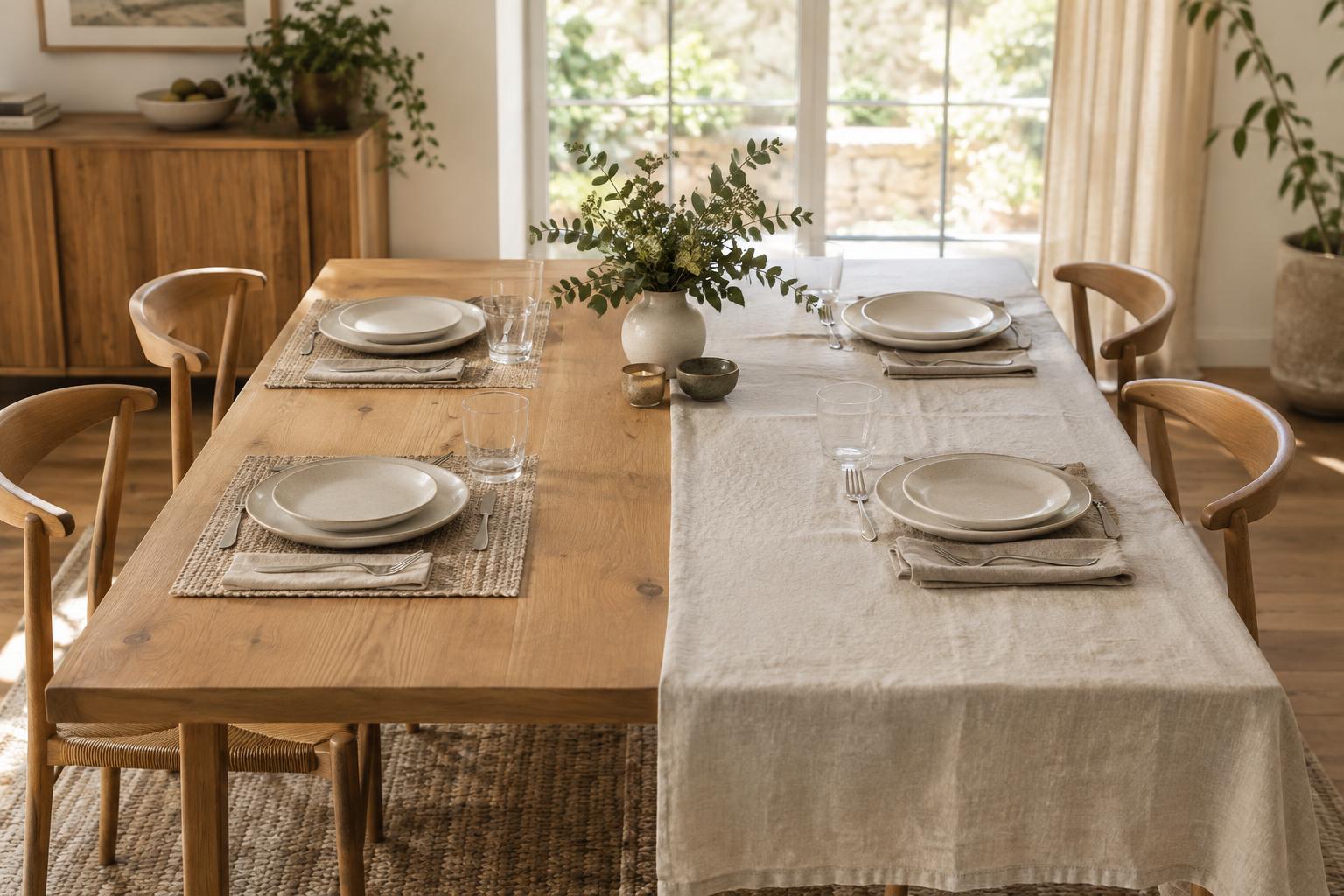
The simplest way to choose between placemats and a tablecloth is to ask whether the tabletop should be part of the setting. Placemats leave wood grain, stone, paint or another finish on display. They give each seat its own defined space while keeping the overall table visually open. If you like the look of your dining table, this can be an easy everyday choice.
A tablecloth changes the appearance of the whole surface at once. It can soften a room with many hard edges, bring color to a plain dining area or make mismatched chairs and dishes feel more connected. It also covers marks you would rather not make a feature. Neither option is inherently more formal: a relaxed cotton cloth can feel casual, while structured woven placemats can make a weeknight meal feel considered.
Think about the meals you actually serve
For quick breakfasts, lunches and small dinners, placemats are convenient because you can set out only the number you need. If one gets messy, you may be able to clean or replace that piece without clearing the entire table. They also make it simple to vary a setting: keep a neutral set for regular use and bring out a different color when you want a change.
A tablecloth is useful when you want one continuous backdrop, particularly for a longer meal with serving bowls, bread plates and shared dishes in the center. It helps the spaces between place settings look intentional rather than empty. For a busy buffet or a table used by children, consider how readily the fabric washes and whether you are comfortable with visible spills. A beautiful cloth that feels too precious to use may not earn its storage space.
If hot cookware or damp serving pieces often reach the table, do not rely on either textile alone. Use suitable trivets or pads where needed, and follow any care guidance for the tabletop. Placemats and tablecloths can help with everyday contact, but the protection they offer depends on their material and construction.
Choose proportions that make setting the table easy
Before buying placemats, check that each one has room for a plate and cutlery without crowding its neighbor. On a narrow table, smaller or softly shaped mats may work better than large rectangles. Leave enough clear space for glasses, serving dishes and the way people naturally reach across the table. A placemat should support a place setting, not turn the meal into a puzzle.
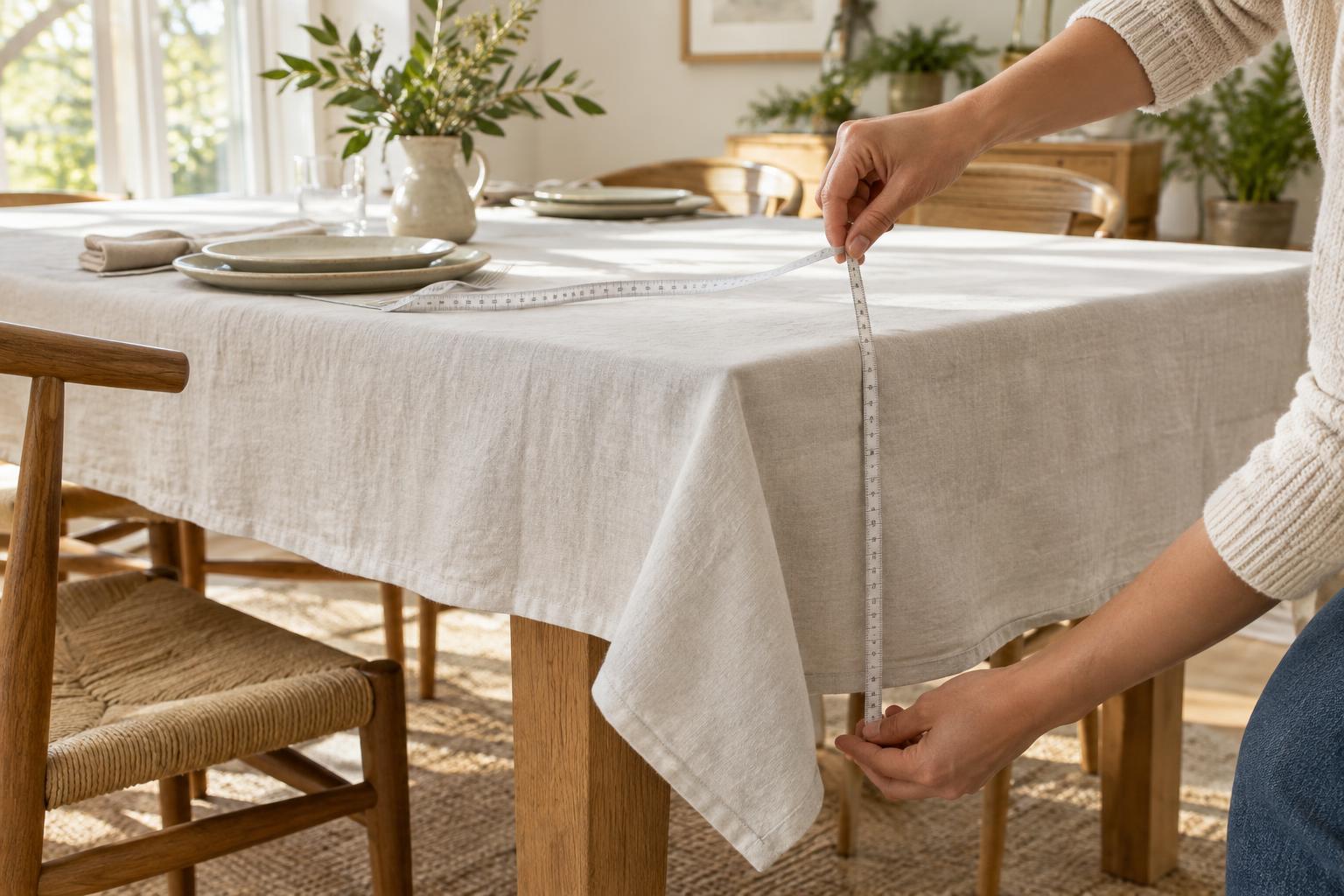
With a tablecloth, look at the drop: the fabric that hangs over the edge. A shorter drop tends to be practical for everyday meals, while a longer one creates a more dressed-up silhouette. Sit at the table before committing to a length; a cloth that catches on knees or chair arms will quickly become irritating. If your table extends, measure it in the arrangement you use most often, or decide whether you need a separate cloth for its extended size.
Round and unusually shaped tables deserve extra attention. A cloth that follows the table’s shape usually looks more deliberate, while placemats can be easier to adapt as seating changes. There is no need for every edge to align perfectly, but the setting should feel comfortable from every seat.
Let material and care guide the decision
Material affects both mood and maintenance. Linen and cotton bring a soft, lived-in quality to a tablecloth, though you may need to accept creases or spend time pressing them. Woven placemats add texture; smooth washable versions can be easier to wipe after everyday meals. Check the care label before buying, especially if you hope to machine-wash an entire cloth or frequently clean individual mats.
Also consider storage and drying space. A folded tablecloth is compact, but a large one may be awkward to wash and dry in a small home. Placemats can be simple to rotate, although rigid styles need a flat place to live. If you are choosing one option for regular use, pick the one you will happily clean and put away. Ease of use is part of a welcoming table.
Use both when the occasion calls for it
You do not have to commit to one approach for every meal. A practical combination is placemats for daily use and a tablecloth for gatherings or seasonal changes. That lets you enjoy the tabletop most days while keeping an easy way to shift the room’s mood. A runner offers another middle ground: it adds fabric and color down the center while leaving much of the table visible.
You can also layer placemats over a tablecloth when you want defined settings or an extra textural contrast. Keep the combination simple enough that plates sit steadily and guests have room to eat. For example, a plain cloth can anchor patterned mats, while a patterned cloth often looks calmer with solid mats. Start with the table, the number of people and the meal you are serving; the right choice is the one that makes those three things feel effortless together.