Start with the way you use your table
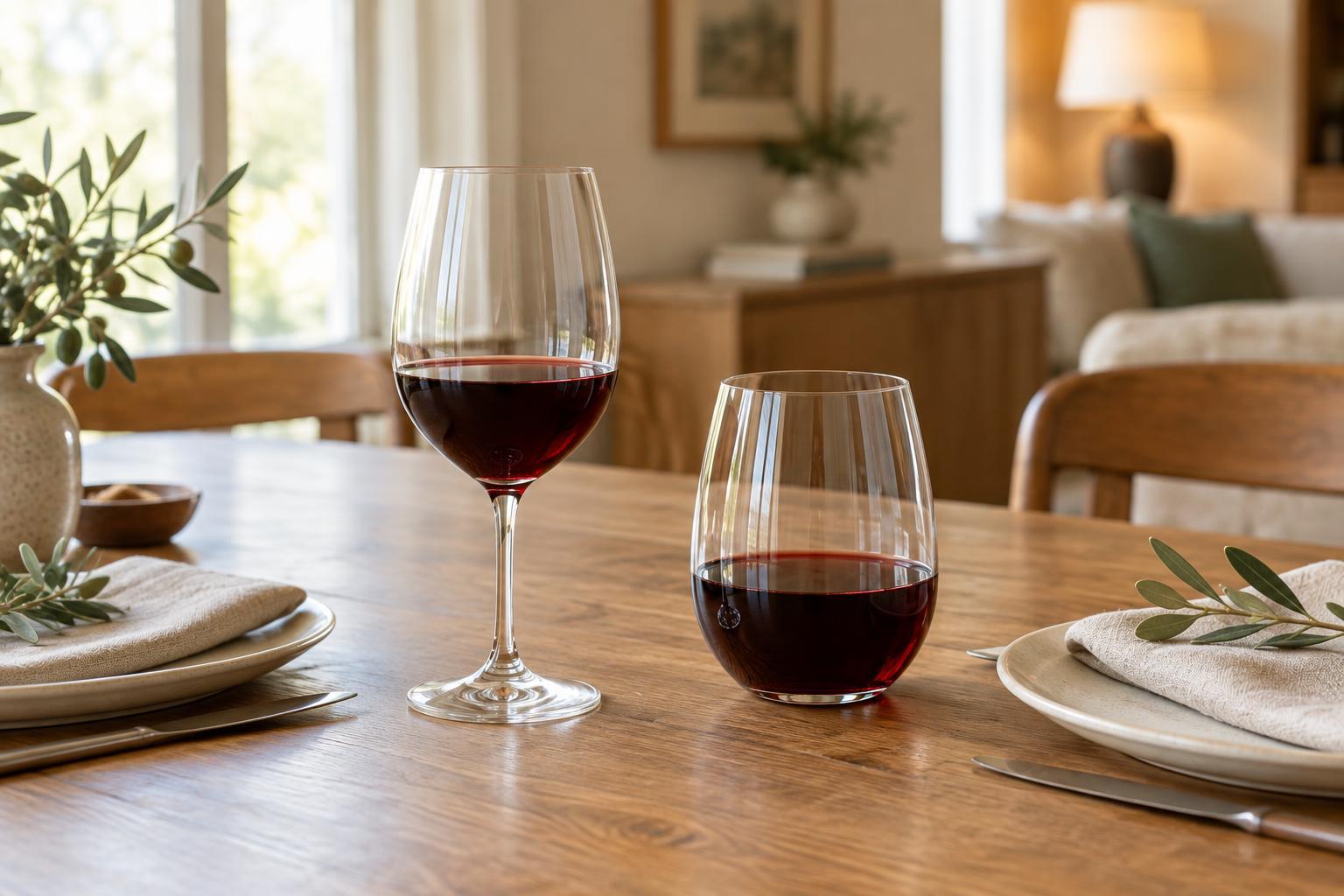
The best wine glass is not necessarily the most formal one. It is the glass that feels comfortable in your hand, fits your table and is easy enough to use again next week. Stemmed glasses can lend a meal a sense of occasion; stemless glasses often feel relaxed and unfussy. Neither choice needs to define the whole setting. A linen napkin and a simple stemless glass can look considered, just as a stemmed glass can sit comfortably beside everyday plates.
Think about the meals you host most often. Do you set a compact table for a few friends, or spread out serving dishes for a longer dinner? Do guests move between the table and a sitting area? Your usual routine is a better guide than an imagined perfect dinner party. It helps to consider where glasses will stand, how people will hold them and what happens when the evening is over.
What a stem changes
A stem gives you a place to hold the glass without wrapping your hand around the bowl. That may help keep a chilled drink cool for longer, particularly during a leisurely meal. It can also leave the bowl clearer of fingerprints. If you enjoy looking at the color of a wine or gently swirling it, the stem may make those small rituals feel more natural.
Stemmed glasses add height to a place setting. Alongside low plates and bowls, that vertical line can make a table feel elegant without requiring elaborate decoration. The trade-off is practical: a tall glass needs room above it in a cabinet, and its narrow stem asks for a little care when washing, drying and putting it away. On a crowded table, choose a stable shape with a base that has space to sit clear of serving platters.
Where stemless glasses shine
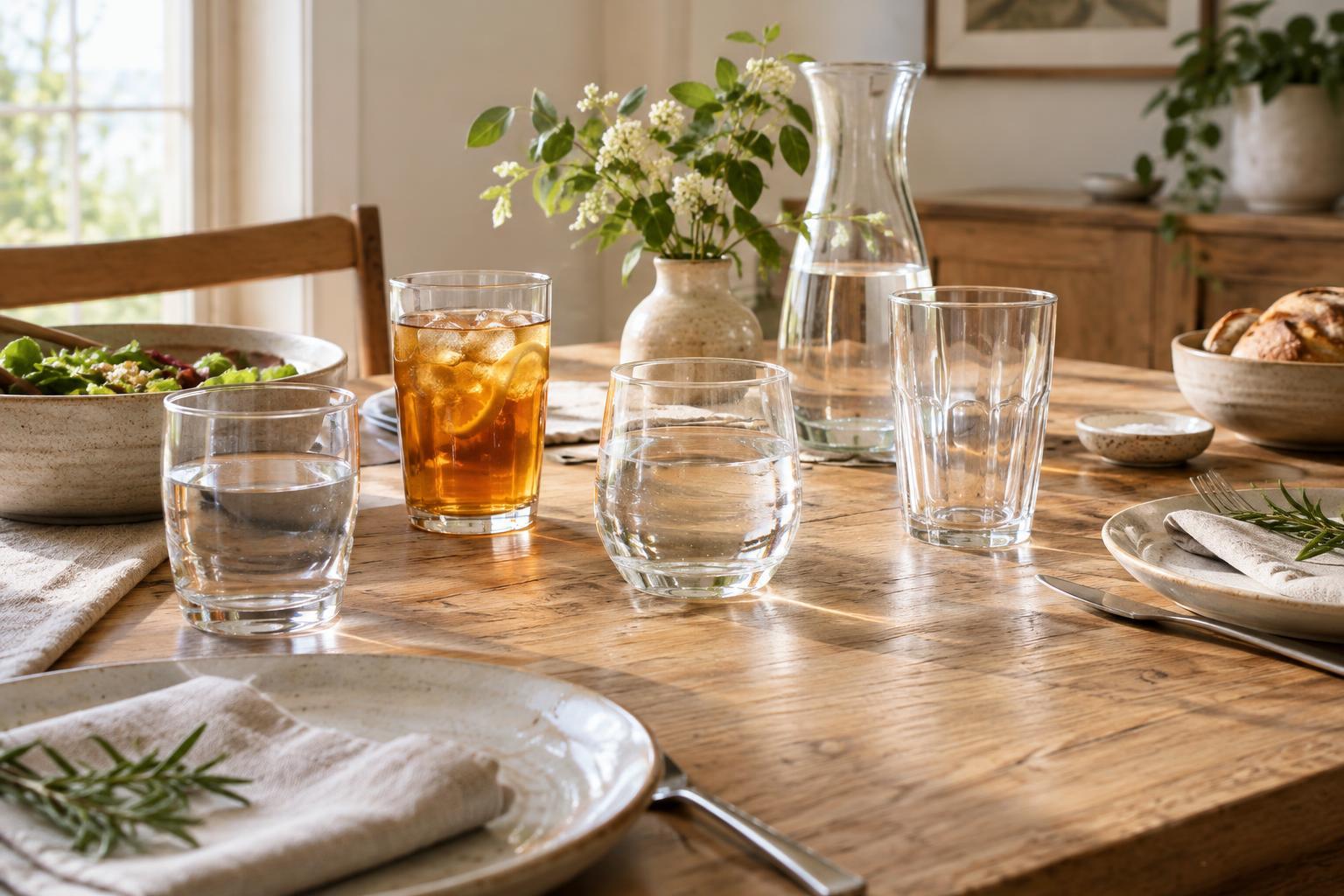
Stemless glasses have a lower profile that can suit casual lunches, shared plates and smaller dining spaces. Without a stem to navigate, they may be easier to store on a shelf or carry to another room. Some can double as water glasses or vessels for other drinks, making them appealing if you prefer a small collection of versatile tableware. Their simple outline also works well with textured linens, handmade ceramics and informal arrangements of flowers or branches.
The bowl is where your hand rests, so a chilled drink may warm more readily as you hold it. Fingerprints are also more visible, especially on very clear glass. Neither point has to be a problem for an ordinary meal; it is simply worth knowing which details matter to you. Look for a shape that feels balanced in your hand and has an opening that is pleasant to sip from, rather than choosing on appearance alone.
Consider size, shape and care before style
The stem is only one part of the decision. A generously sized bowl can feel awkward at a tightly set table, whether it is stemmed or stemless. Very delicate rims may be lovely to drink from but less appealing if you want glasses that everyone can handle without worry. If possible, hold a glass before buying it. Notice its weight, whether your fingers have a comfortable grip and how confidently it sits on a flat surface.
Check the care guidance for the particular glasses you choose. Some are suited to a dishwasher and others call for hand washing; a simple design does not automatically mean simple upkeep. Also measure the shelf where the glasses will live and, if relevant, the space between dishwasher racks. A beautiful set is much easier to enjoy when storing and cleaning it do not become special projects.
Build a setting that feels like yours
For a flexible table, you do not have to commit to one type for every occasion. You might keep stemless glasses for frequent meals and a small set of stemmed glasses for dinners when you want a little more ceremony. If storage is limited, choose the style you will reach for most and let the rest of the setting create variety. Changing a tablecloth, candleholders or serving bowl can shift the mood without requiring another set of glassware.
Whichever style you choose, consistency helps the table feel intentional. Glasses do not have to match perfectly, but similar heights or a shared color of glass can bring a mixed collection together. Leave each guest enough space to lift a glass without brushing a neighbor’s plate. The most welcoming choice is one that lets everyone settle in comfortably—and lets you enjoy the meal rather than worry about the table.