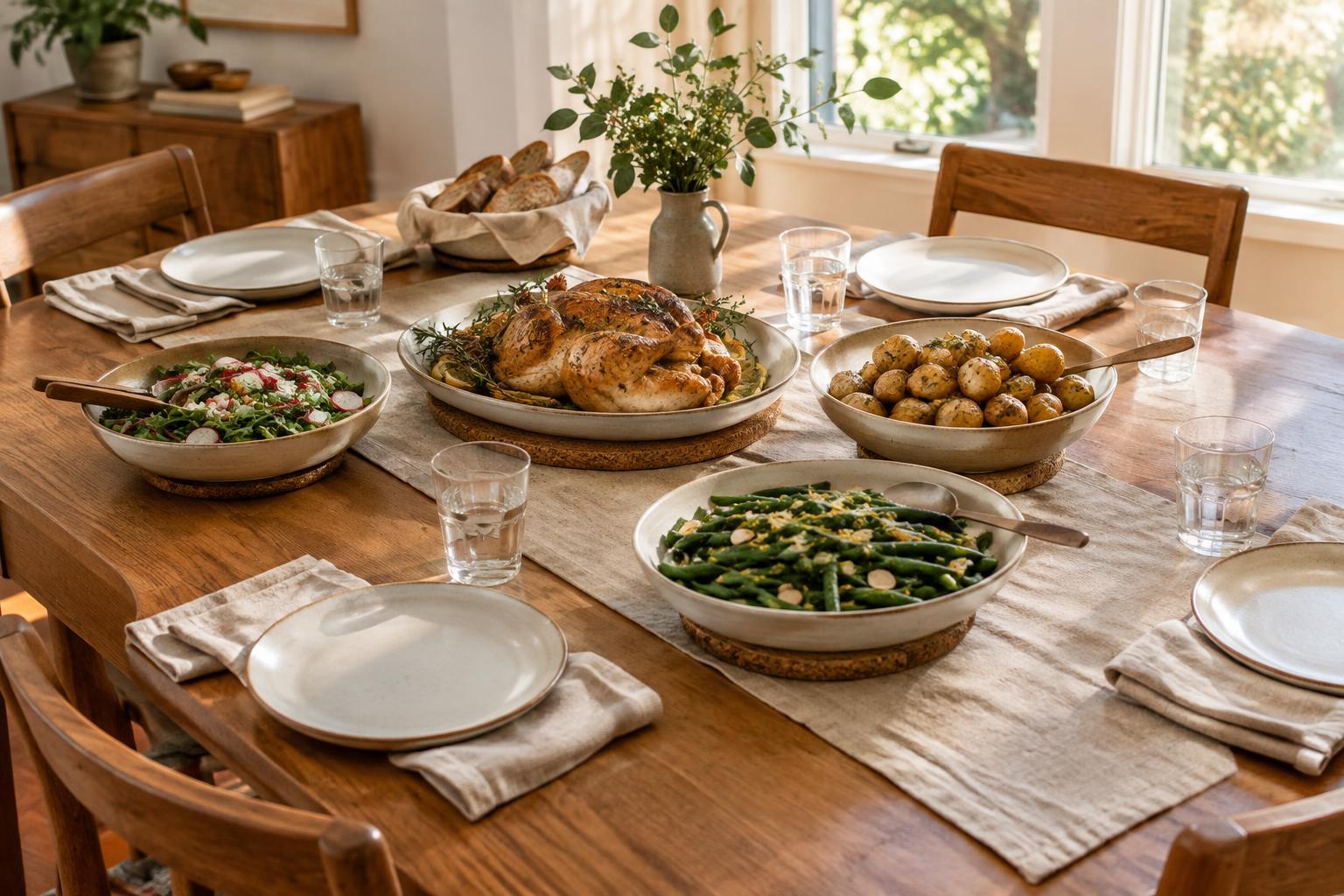
Start with the meals you serve most often
Cloth napkins can make an ordinary meal feel considered, but they should also work hard. Before choosing a color or pattern, think about when you will use them. A napkin for quick breakfasts needs to be easy to reach, wash and put away. One reserved for longer dinners might be larger or have a more deliberate texture. If you want one set to do both jobs, choose a comfortable medium-to-large size in a fabric you are willing to launder regularly.
Consider how many people usually sit at your table and how often you run a load of laundry. A set equal to your usual number of diners leaves no room for spills or a second meal before washing. A few extras make rotation easier without requiring a large collection. If storage is limited, a versatile neutral set can cover daily use and mix with seasonal table linens.
Choose a size that suits your place settings
Napkin sizes vary by maker, so check the listed measurements rather than relying only on labels such as dinner or luncheon. Smaller napkins, often around 16 to 18 inches square, sit neatly beside a plate and are convenient for casual meals. Larger ones, around 20 inches square or more, offer more coverage on a lap and more room for folding. These ranges are guides, not rules: a generous small napkin may be more useful than a thin large one.
Picture the napkin both folded on the table and opened in use. A large, thick square can feel crowded on a small café-style table, while a tiny napkin may feel insufficient for a saucy dinner. If you like to place napkins beneath cutlery or fold them over plates, measure the available space. Also check whether the stated size is measured before or after washing, since some natural fabrics may shrink.
Match the fabric to the feel you want
Cotton is a flexible starting point. It comes in many weights and finishes, usually washes easily, and can feel crisp or soft depending on the weave. A smooth cotton napkin gives a tidy look without demanding an elaborate fold. Cotton-linen blends can offer some of linen’s texture while feeling less rumpled, though performance varies with the blend and finish.
Linen brings a relaxed drape and visible texture that works well with pottery, wood and simple glassware. Its natural creases are part of the look for many tables, but anyone who wants a sharply pressed setting should expect to iron it. Heavier fabrics may feel substantial and absorbent, yet take longer to dry and form bulkier folds. Very thin fabrics are easy to store but may not feel as satisfying in use. When possible, handle a napkin before buying: its softness, weight and absorbency matter more than a fabric name alone.
Be honest about washing and ironing
Read the care label before committing to a set. Check the recommended wash temperature, drying method and whether the napkins need shaping after a wash. Dark colors may show lint, while pale colors may make food marks more noticeable. Patterns and mid-tone colors can be forgiving at the table, though the right choice is still one you will enjoy seeing often.
For everyday use, look for hems that lie flat and stitching that appears secure. Wash one napkin before using the whole set if you want to see how the fabric softens, shrinks or wrinkles. Treat spills promptly when practical, following the fabric’s care instructions, and let napkins dry fully before storing them. If ironing is not part of your routine, choose a fabric whose lived-in appearance you like; an easy-care napkin is only easy if you are happy with how it looks straight from the wash.
Build a set that works across occasions
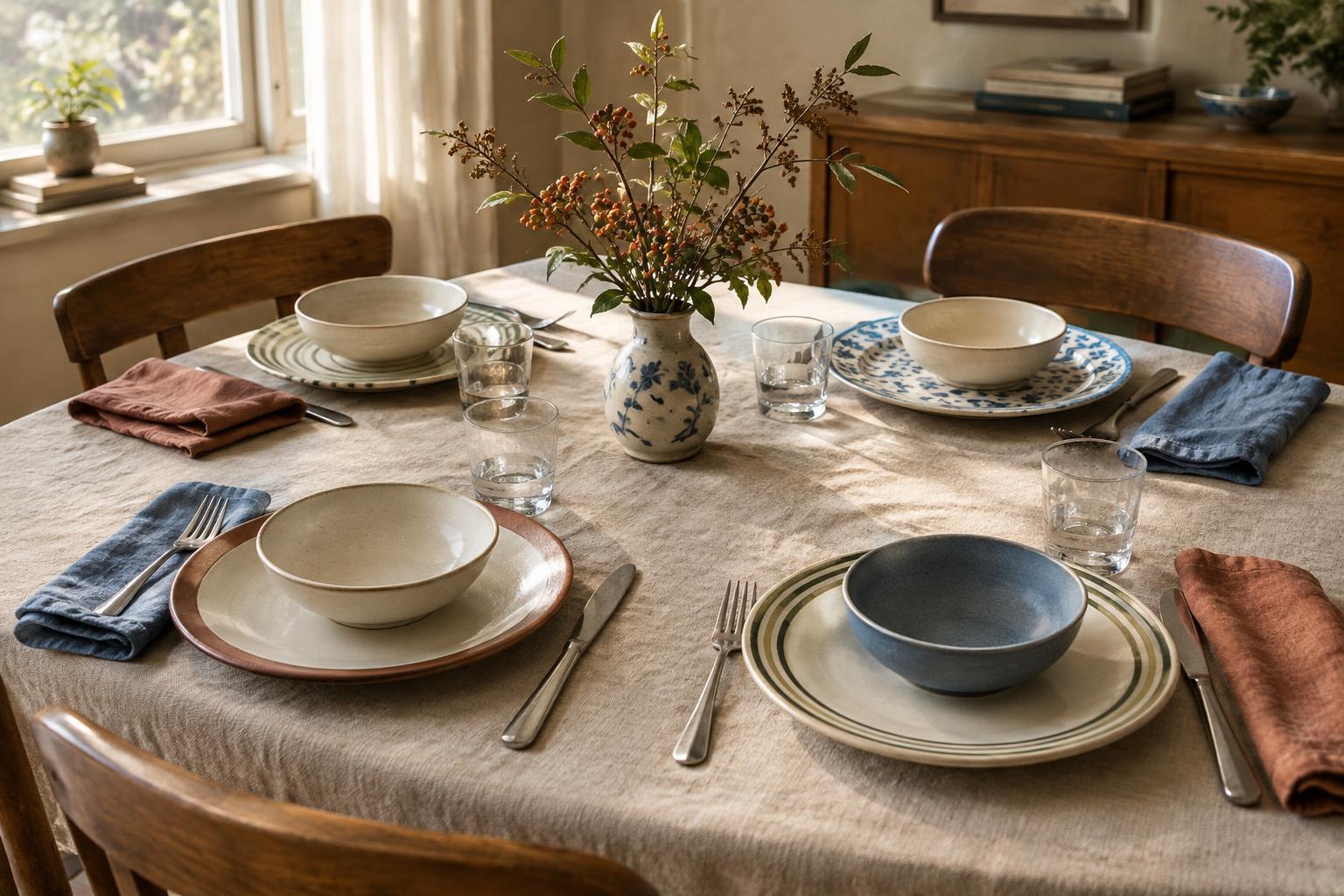
You do not need a separate set for every season. A core group in a color that complements your everyday dishes can change character with placemats, flowers or a different tablecloth. If you enjoy mixing patterns, repeat one color across the setting to make the combination feel intentional. Napkins do not all have to match, but keeping their size and weight similar helps each place setting feel equally comfortable.
The most useful choice balances appearance with repetition: setting the table, wiping hands, washing, folding and doing it again. Begin with enough napkins for your regular meals plus a few spares, then notice what you reach for. That experience will tell you whether your next set should be larger, softer, quicker to dry or simply a different color.