Start with the floor and the room
The best bath mat for one bathroom may be frustrating in another. Before shopping, look at the floor where the mat will sit. Smooth tile can become slippery when wet, while textured tile and grout lines may give a mat more purchase. Notice whether the floor is usually dry by the next shower or whether moisture lingers in the room. Ventilation, household size and how often the bathroom is used all affect how quickly a mat can dry.
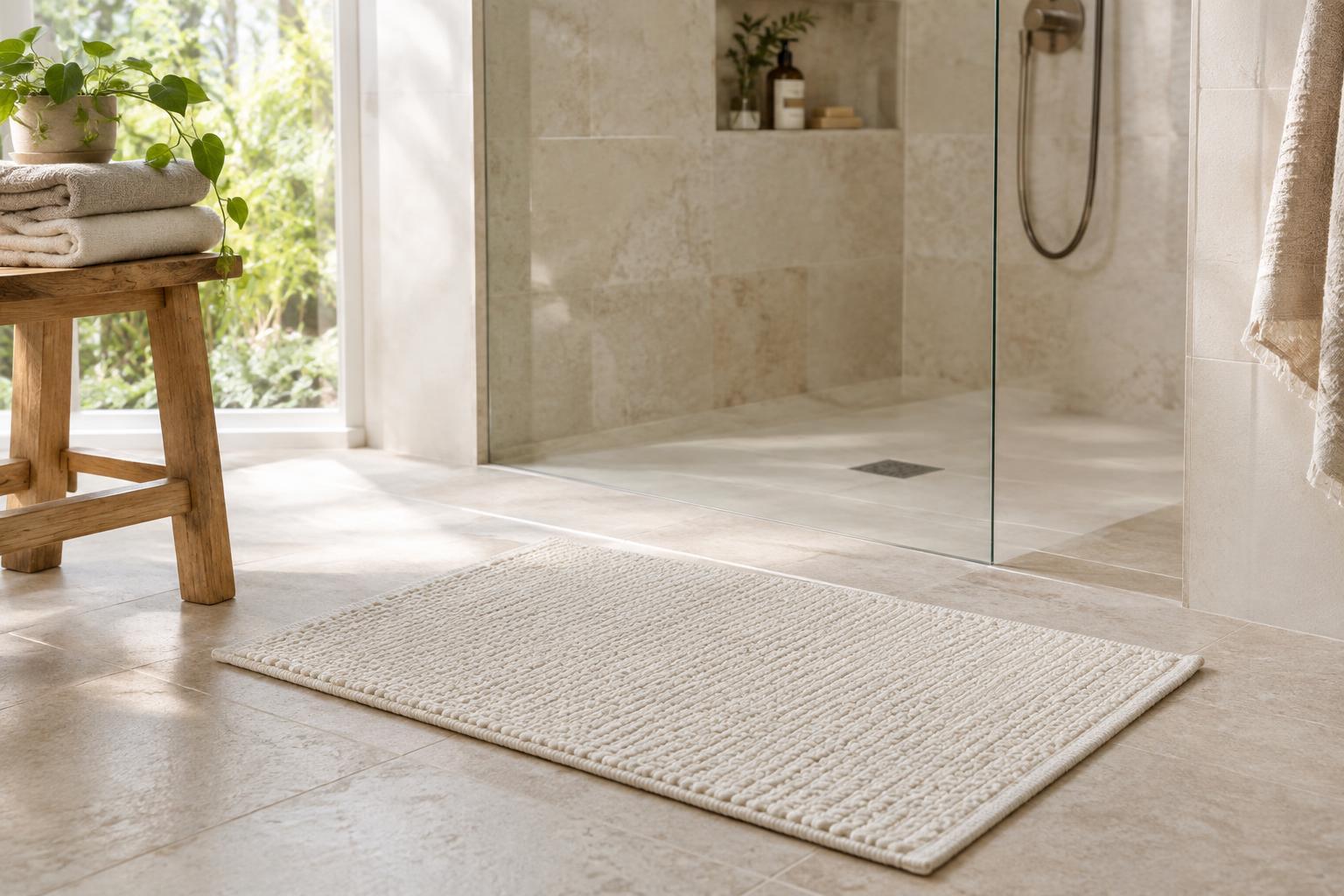
Measure the clear floor space outside the bath or shower, including the swing of the door. A mat should give you a comfortable place to step without bunching against a cabinet or sitting partly beneath a door. If the space is narrow, a smaller mat that lies flat is usually more useful than a generous one that has to be folded or pushed aside.
Look at grip, not just softness
A plush surface can feel inviting, but it does not tell you whether a mat will stay in place. Check the underside for a backing designed to grip the type of flooring you have, and read the maker’s care and floor-compatibility guidance. Some backings may be unsuitable for certain finishes or heated floors. If you are unsure, check your flooring guidance before leaving a backed mat in one spot for long periods.
A mat also needs full contact with a clean floor to grip well. Dust, soap residue and water beneath it can reduce traction, even if its backing feels tacky. Lay the mat flat, smooth out curled corners and lift it after bathing so the floor underneath can dry. If a mat repeatedly slides, changes shape or develops lifted edges, do not rely on its original grip; consider a different design.
Choose a material that suits your drying routine
Cotton is a familiar choice because it feels soft and is often easy to launder. Its weight and pile matter, though: a thick, dense cotton mat may hold more water and take longer to dry than a lighter, low-pile version. If you prefer an absorbent fabric mat, consider whether you have somewhere to hang it with enough air reaching both sides.
Synthetic microfiber mats can feel soft and may dry quickly, depending on their construction, but they still need regular washing and thorough drying. A woven or flatweave mat is less cushioned than a thick tufted one, yet its thinner profile can be easier to lift, hang and store. For a busy bathroom, practical handling may matter more than how plush the mat feels in the shop.
Rigid wood or stone-style mats work differently from fabric mats: they provide a surface to step onto rather than soaking up water in a pile. They can suit some rooms, but water may remain on or around them, and their stability depends on their design and the floor beneath. Check their care requirements and think about where splashes will go before choosing one.
Make drying part of the setup
Even a well-chosen mat may stay damp if it lies flat on a wet floor all day. Plan where it will go after use: over a towel rail, across the side of the tub or on another support that allows air to circulate. Avoid leaving a wet mat in a heap or pressing it against a wall. If several people shower in quick succession, two washable mats in rotation may be more convenient than expecting one to dry between every use.
Before buying, check the care label. Make sure the mat fits your washing machine if machine washing is recommended, and note whether its backing has limits on water temperature, bleach or tumble drying. Follow those directions rather than treating every bath mat like an ordinary towel. Wash it when it needs freshening, and let it dry completely before putting it back on the floor.
Use a simple final check
For most bathrooms, the strongest choice balances four things: enough grip for your floor, a size that lies flat, a surface that feels good underfoot and a drying routine you will actually use. A pale, fluffy mat may brighten the room, while a close-woven one may be easier to manage in a compact space. Choose color and texture after you have considered how the mat will behave when wet.
Once the mat is home, test it on a clean, dry floor before making it part of your routine. Step on it carefully and check whether it shifts, catches on the door or leaves a damp patch underneath after use. Those everyday observations are more useful than appearance alone. A bath mat earns its place when it makes stepping out of the shower comfortable without adding a persistent wet spot to the bathroom.