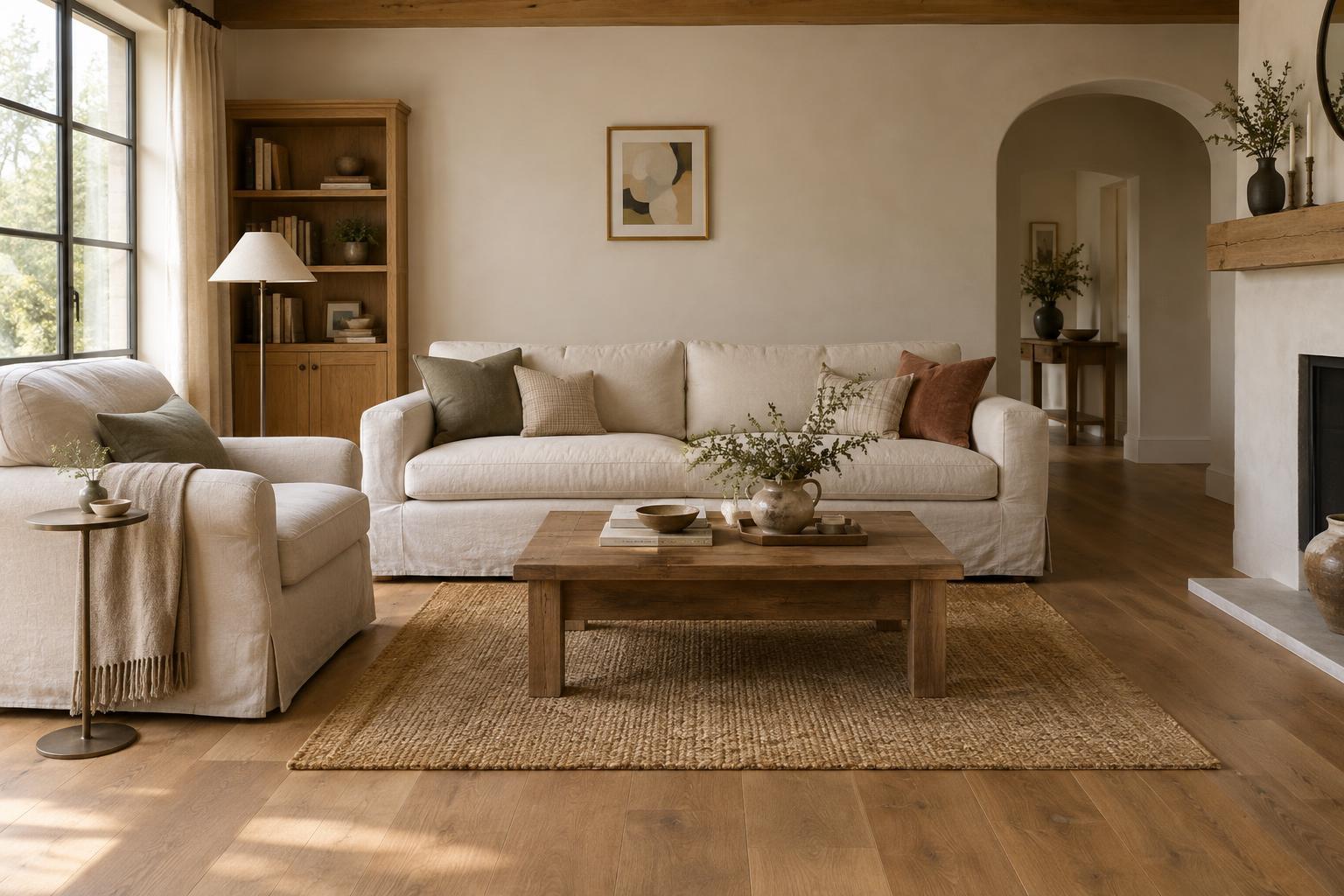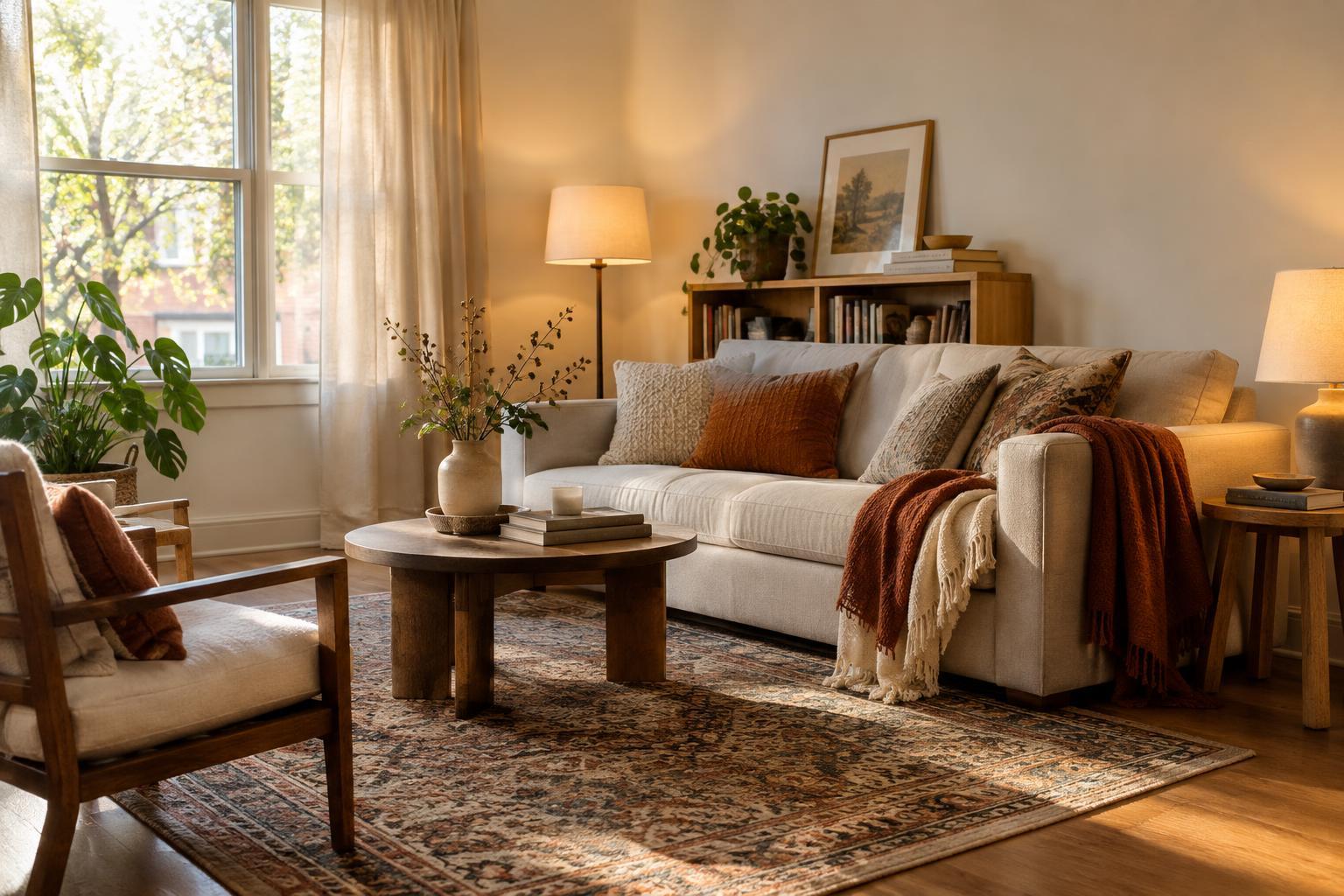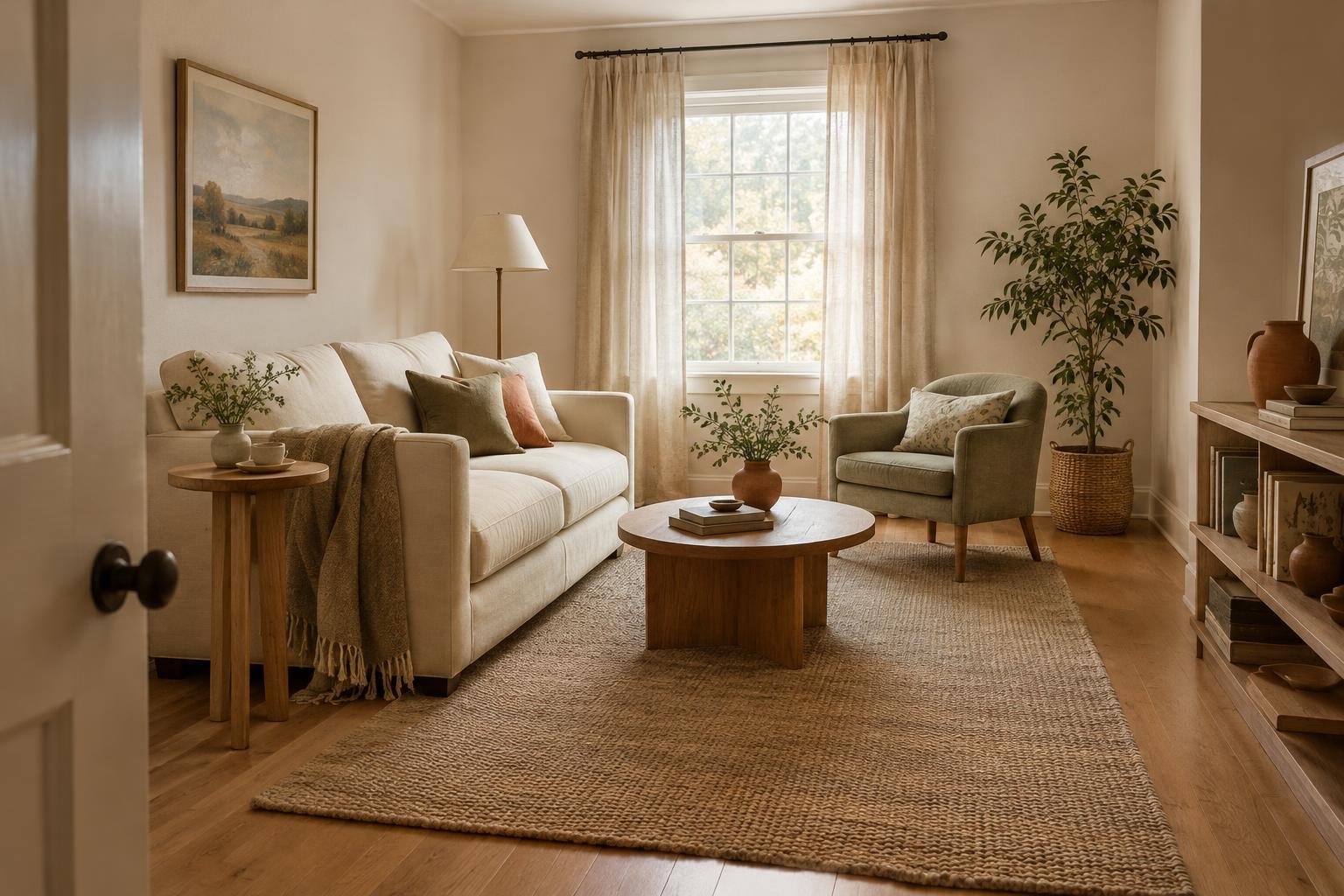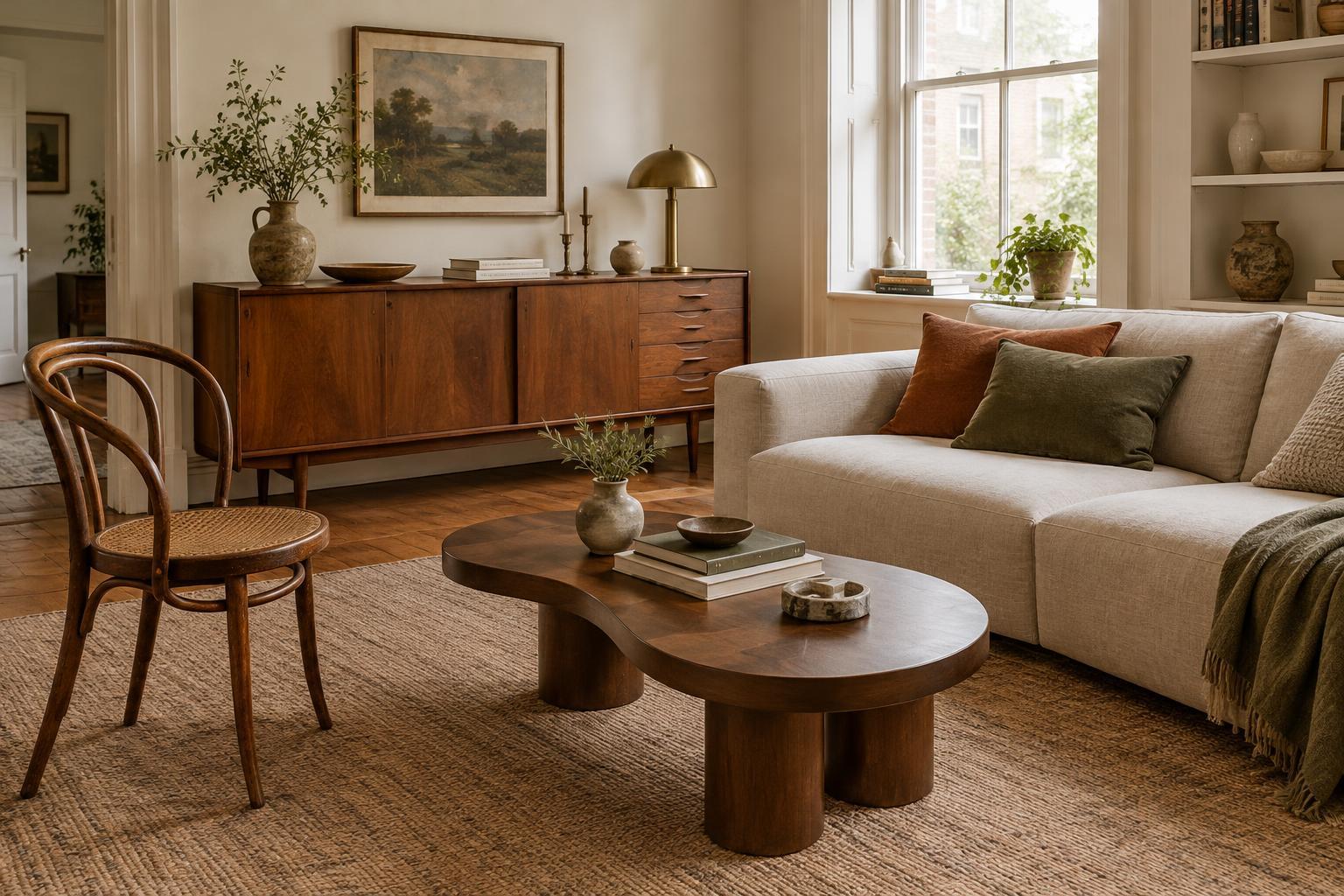
Start with the room you want to live in
Mixing vintage and modern furniture works best when the goal is a comfortable room, not an even count of old and new pieces. Before moving anything, decide how the space needs to function. A living room might need easy conversation and a clear path to the door; a dining room might need chairs that can be pulled out without bumping a sideboard. These everyday needs give you a useful test for every piece, whatever its age.
Choose one or two items to lead the room. A carved vintage cabinet can be the focal point against simpler modern seating, while a clean-lined sofa can anchor a collection of older tables and chairs. Let the supporting furniture be quieter. If every piece has an unusual shape, bold finish or decorative detail, the eye has nowhere to rest. You do not have to remove the personality; you can give it a little space.
Balance size and shape before matching styles
Proportion often matters more than period. A tall antique wardrobe beside a low modern sofa may feel disconnected unless something bridges their heights, such as a floor lamp, artwork or shelving. Likewise, a delicate vintage chair can disappear next to a deep, oversized sofa. Look at the width, height and visual weight of your furniture from the doorway, then adjust the layout before buying anything new.
Shapes can provide a subtle connection. A round vintage dining table may sit comfortably with modern chairs that have curved backs. A boxy contemporary coffee table can balance an ornate armchair if both have a similarly substantial presence. Avoid forcing a perfect match: a little contrast is what makes the mix interesting. Aim for pieces that seem able to share the room rather than pieces that look as though they came from the same set.
Give the mix a common thread
Color is an easy way to make different eras feel related. You might repeat a warm wood tone in a vintage sideboard and a modern picture frame, or bring the color of an older upholstered chair into a cushion on a newer sofa. The repeat can be small. Two or three echoes across the room usually feel more natural than trying to make every finish identical.
Materials can do the same work. Wood, linen, wool, glass and metal each have a distinct character, and using one material in more than one place helps connect separate pieces. If a vintage table has a dark finish, for example, a dark lamp base or tray can make it feel intentional among lighter modern furniture. Textiles are especially flexible: a rug can sit beneath both styles, while curtains and cushions can soften sharp lines without hiding them.
Let vintage pieces look lived-in, not neglected
Signs of age can add warmth, but there is a difference between character and a piece that is awkward to use. Check whether drawers open, chairs feel steady and surfaces suit their intended purpose. A slightly worn cabinet may be lovely for storing table linens; a wobbly chair is less inviting at a dinner table. Small practical improvements, such as cleaning hardware or adding protective pads, can help an older piece take part in daily life.
Resist the urge to refinish every vintage item so it looks new. A room often feels richer when some surfaces have a gentle patina and others are crisp and smooth. At the same time, you need not preserve a finish you dislike simply because a piece is old. Consider how any change will affect the furniture’s character, then choose an approach that suits both the object and your home.
Edit, arrange and live with the result
Once the main furniture is in place, leave some open space around the most distinctive pieces. A vintage chest may have more impact on a simple wall than in a crowded corner. Group smaller objects with restraint: a modern lamp on an older console, or a vintage ceramic bowl on a contemporary table, can make the relationship between styles feel deliberate without filling every surface.
Finally, use the room for a while before deciding what is missing. Notice where people naturally sit, whether the lighting is comfortable and which pieces you enjoy seeing together. Moving a chair or changing a rug may do more than adding another purchase. A successful mix does not need to look finished all at once; it should feel welcoming now and leave room for the home to evolve.