Start with a flexible plan
When inviting guests with children, ask a few practical questions before planning the gathering. What time of day works best? Are there food allergies or other needs to account for? Would a high chair, a quiet place to feed a baby, or room for a stroller be helpful? Keep the questions brief and let guests decide what they want to share. You do not need to anticipate every detail to be a considerate host.
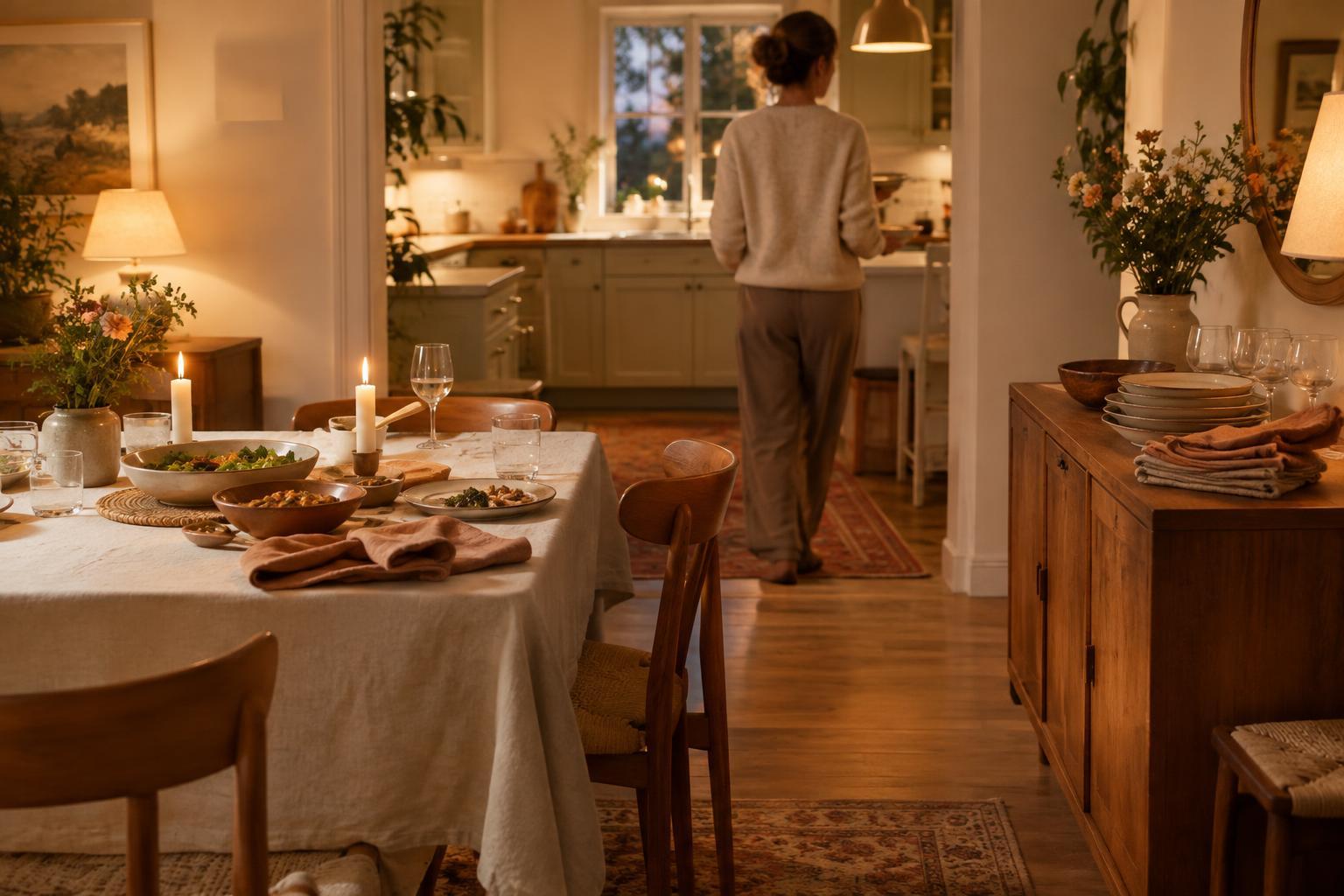
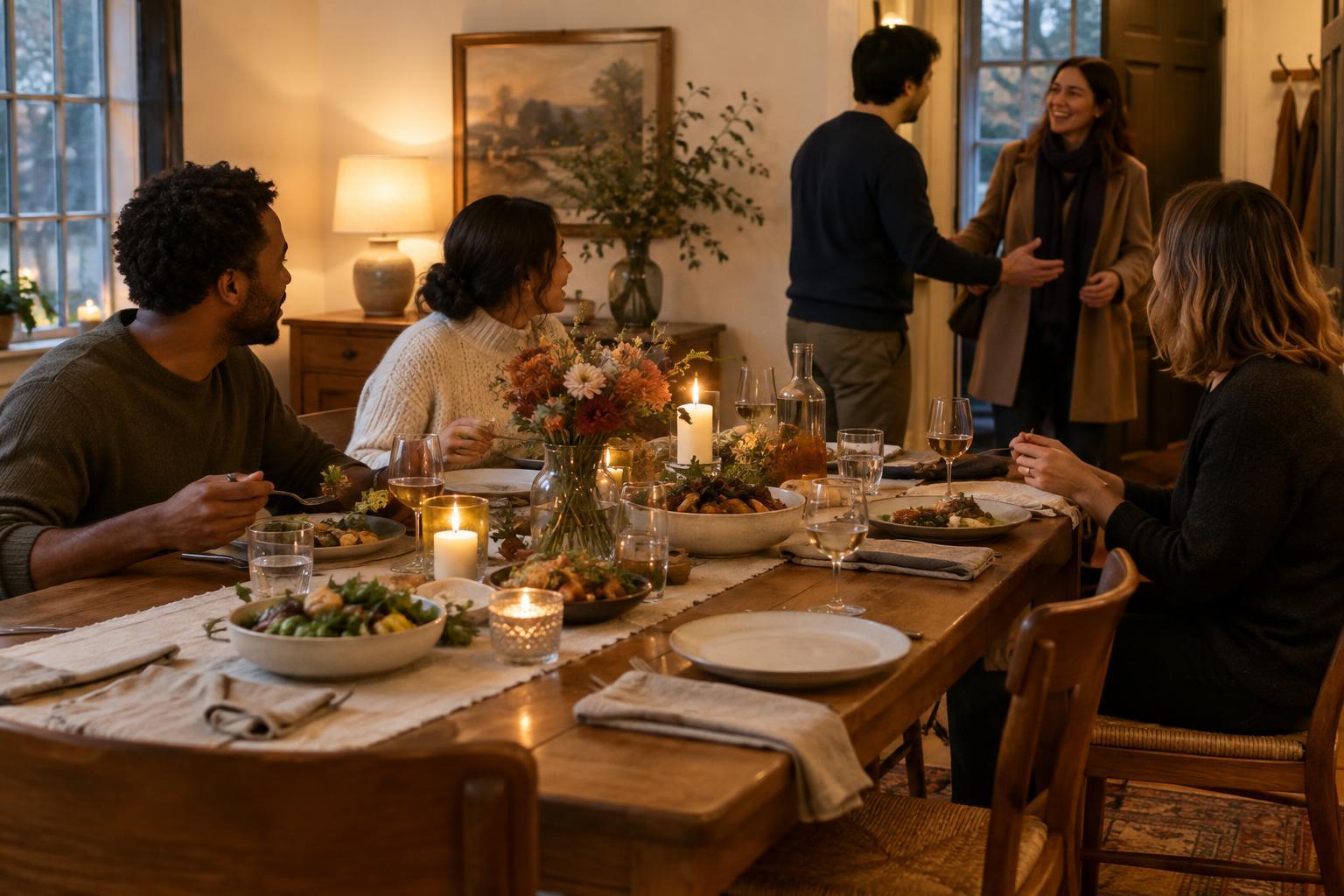
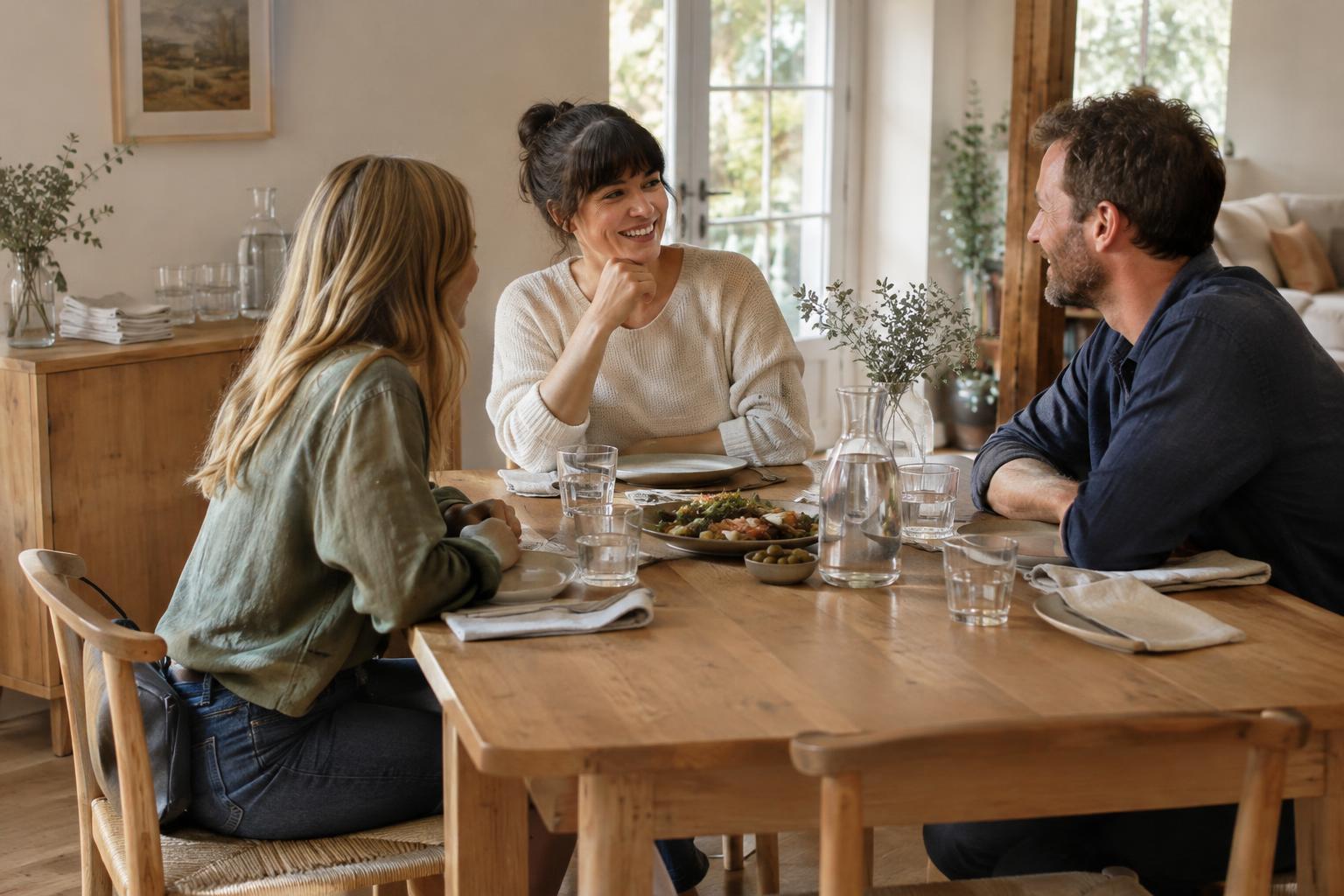
Choose a format that can bend without feeling disrupted. A casual lunch, afternoon snack or early supper may be easier to adapt than a meal with several fixed courses. Tell guests roughly when food will be served, then leave room for someone to step away or arrive a little late. If you hope to have an uninterrupted adult conversation, build that into your expectations rather than expecting children to sit quietly throughout the visit.
Make the main space comfortable for all ages
A quick look around the rooms guests will use can prevent avoidable stress. Move fragile pieces out of easy reach, clear paths between furniture, and put away anything you would worry about being handled. If young children are coming, ask their caregiver what level of supervision or setup would help; a host’s tidy room is not a substitute for a caregiver’s judgment. Keep any rooms that are off-limits clearly closed, while making the bathroom easy to find.
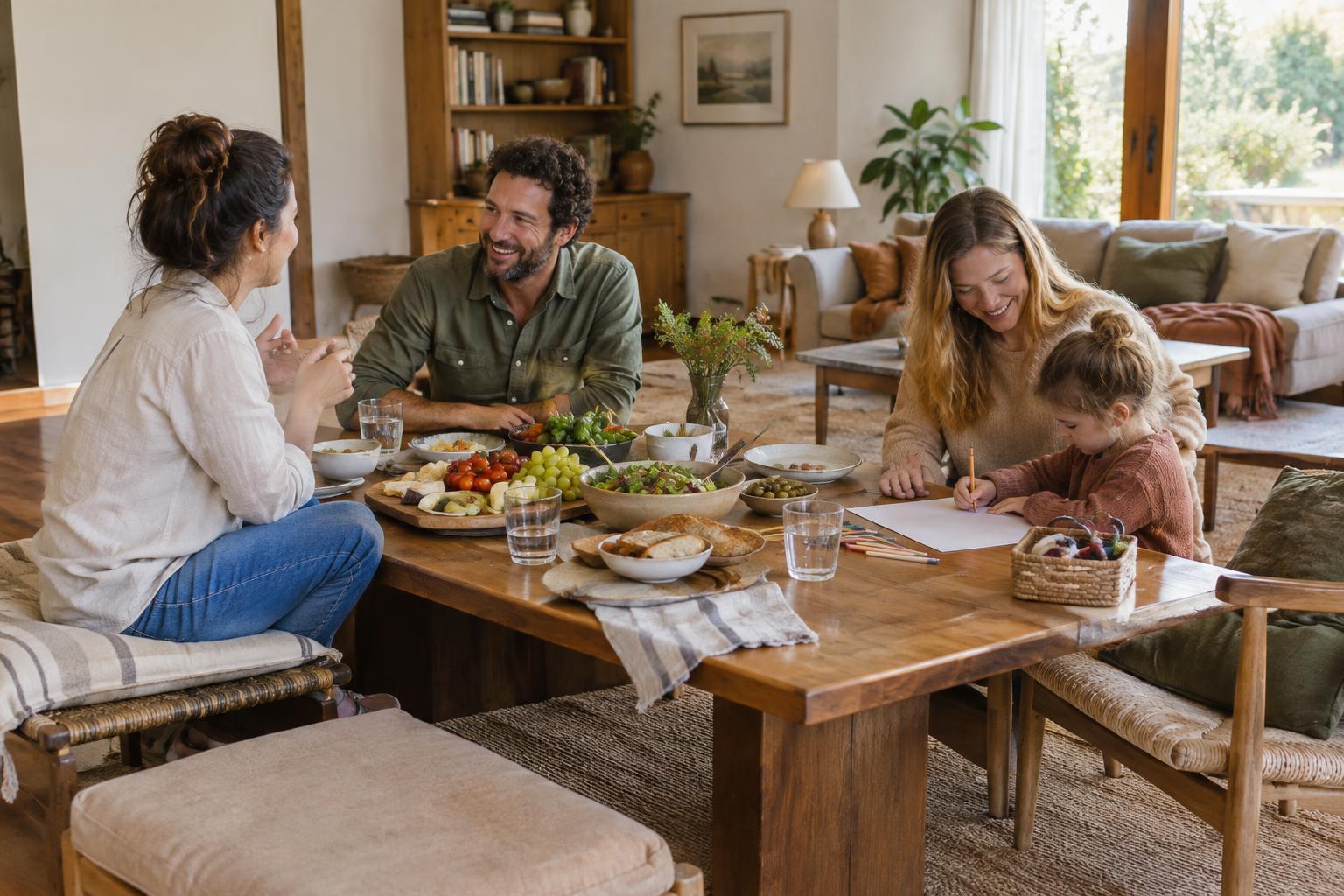
Aim for seating that lets adults stay near children without crowding everyone around one table. A washable throw on the sofa, a small open patch of floor and a basket for shoes or bags can make the space easier to use. Set out durable cups and napkins where people can reach them. These modest adjustments preserve the warmth of your usual home while making normal spills and movement feel less consequential.
Serve food with choices, not a separate production
Food is simplest when guests can put together a plate that suits them. Consider a familiar main dish with a few components served separately, such as bread, vegetables, fruit and a mild topping or sauce. This gives children and adults options without asking the host to cook two complete meals. If a guest mentions an allergy, check ingredients and preparation plans directly with them rather than assuming a dish is suitable.
Keep drinks and snacks straightforward. Water, easy-to-hold cups and a small snack available before the main meal can help if timing shifts. Ask caregivers about age-appropriate foods before offering anything to a young child, and leave feeding decisions to them. At the table, give guests permission to eat in the way that works: at a dining chair, on a caregiver’s lap or in shorter stretches between breaks.
Offer an activity without turning the visit into an event
A few open-ended items can give children something to do while adults settle in. Paper and washable crayons, a small stack of picture books, or a simple puzzle take little space and are easy to put away. Choose items suited to the children’s ages, and avoid putting out small pieces if they would be unsuitable for younger visitors. If you already have a game or outdoor space to share, mention it as an option rather than a scheduled activity.
Children may prefer to stay close to their caregivers, especially in an unfamiliar place. That is fine. Place the activity within sight of the main seating area so no one has to choose between joining the conversation and keeping an eye on a child. For a longer visit, a change of pace might be as simple as moving from the table to the living room or taking a short walk together.
Let ease matter more than a perfect visit
Guests relax when the host treats small interruptions as ordinary. Point out where extra napkins are, show visitors a convenient place to set their things, and make it clear that stepping away is no trouble. If a child becomes tired or overwhelmed, a quiet corner and an unhurried goodbye may be more useful than another activity. The goal is not to prevent every spill, pause or change of plan.
After guests leave, notice what made the gathering easier. Perhaps serving food buffet-style kept the table relaxed, or moving a delicate lamp gave everyone more room to move. Those observations can guide the next invitation. Hosting people with children works best as an extension of everyday hospitality: offer clear information, a comfortable place to gather and enough flexibility for each guest to feel welcome.