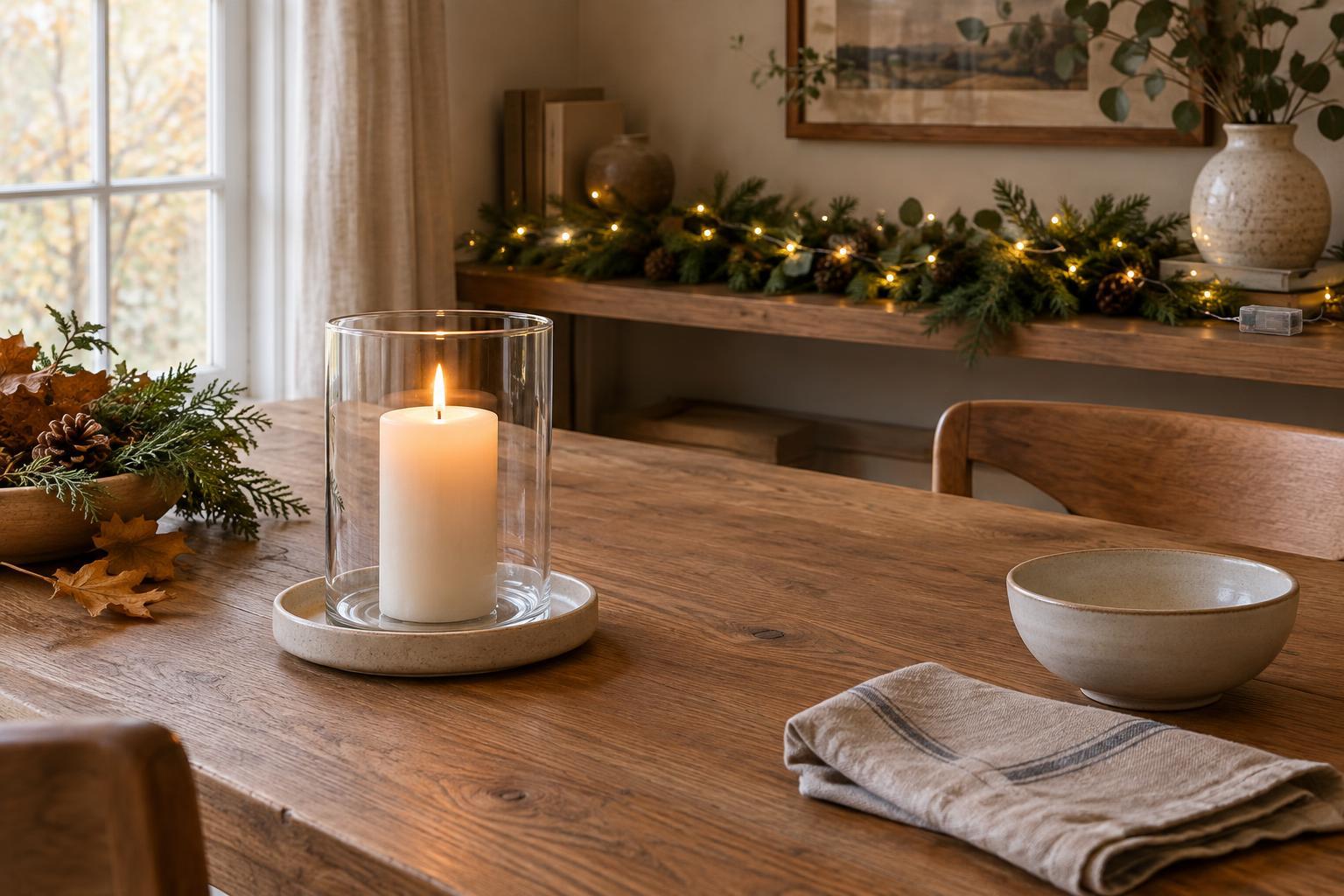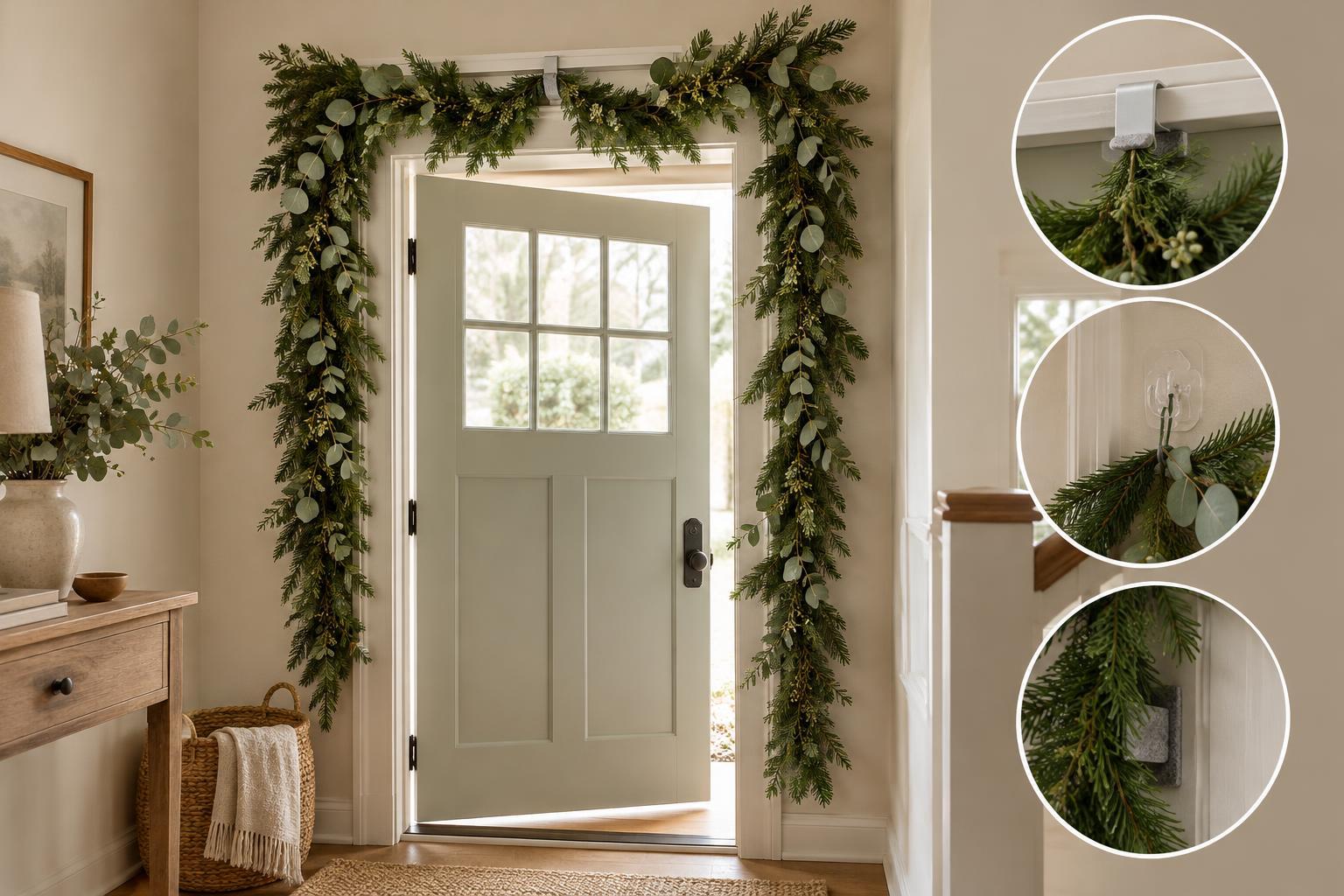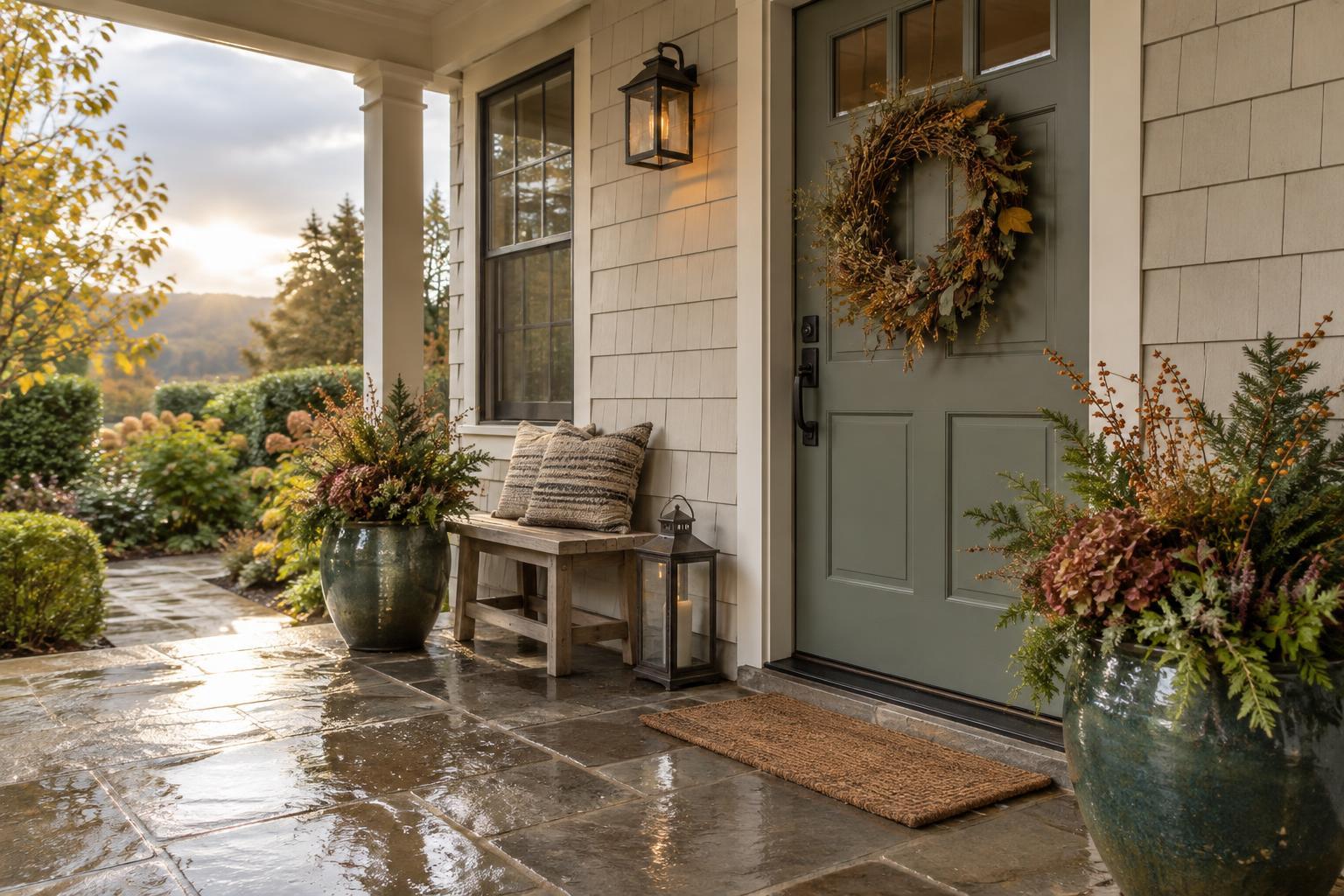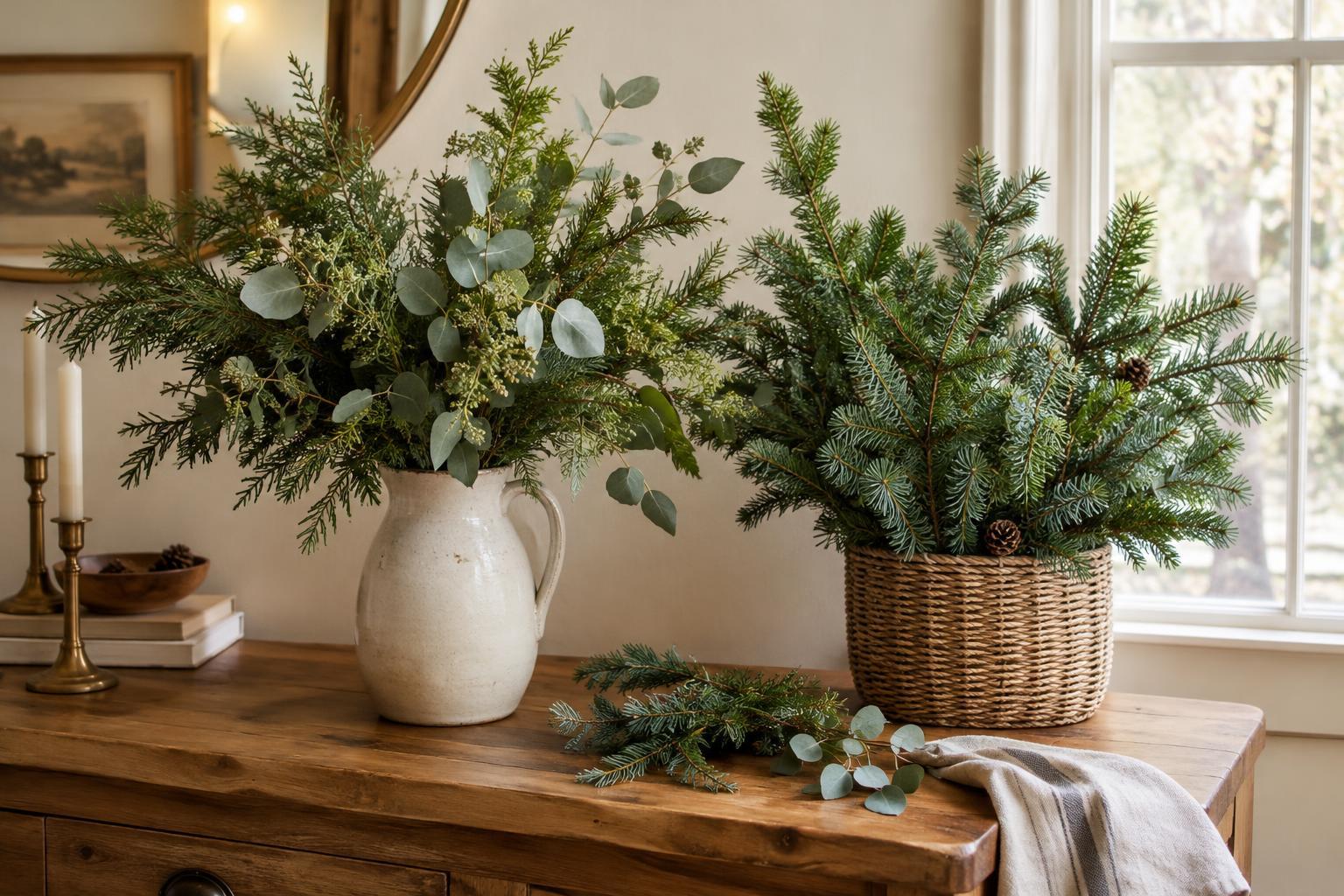
Start with the display, not the material
A wreath on the front door, branches on a dining table and a garland across a mantel ask different things of greenery. Before choosing fresh or faux, consider how long the display needs to last, how close people will be to it and how much attention you want to give it. Fresh stems can make a small arrangement feel lively and immediate. Faux greenery can hold its shape through a long season without watering or replacing tired pieces.
Neither choice is automatically more beautiful or more practical. A few fresh cuttings in a vase may be easier than unpacking and storing a large artificial arrangement. A well-made faux wreath may be more convenient than rebuilding a fresh one every time it dries out. Let the location and your routine guide the decision, rather than trying to use one type of greenery everywhere.
When fresh greenery earns its place
Fresh greenery is especially appealing where its details can be noticed: beside an entryway, at the center of a casual table or in a simple vase on a shelf. Natural differences in color, movement and texture give even a modest bundle character. Some varieties add a pleasant scent, though fragrance varies, and it may not be welcome near food or in a small room.
Its main trade-off is upkeep. Cut stems may need clean water, an occasional trim and removal as they fade. Wreaths and garlands without a water source can shed or dry out, particularly in warm spots. Keep fresh greenery away from candles and other heat sources, and check that any plants brought indoors are suitable for a home with curious children or pets. If you like changing a display as the season progresses, that shorter life can be part of the pleasure rather than a drawback.
Where faux greenery works harder
Faux greenery suits places that are difficult to reach, have little natural light or need to look consistent for weeks. A garland along a high shelf or a wreath used year after year is easier to manage when it does not dry out. It is also useful for hosts who want to set a table in advance without worrying about wilting leaves.
Quality and styling make a noticeable difference. Look for varied leaf sizes, restrained color changes and stems that bend into a natural shape. Rather than using every piece in a matching set, leave breathing room between branches and mix in familiar materials such as ribbon, pinecones or a ceramic vase. Faux pieces still need occasional dusting and a place to live between seasons. Before buying a bulky arrangement, make sure you have a clean, dry storage spot where it will not be crushed.
Use a mix for flexibility
Combining the two can deliver the best qualities of each. A reusable faux garland can form the base of a mantel display, while a few fresh sprigs in small water-filled vessels add seasonal texture nearby. On a dining table, a faux runner can stay in place for several gatherings; fresh branches or herbs can be added shortly before guests arrive and removed when they fade.
The trick is to make the combination feel intentional. Choose a loose color palette—perhaps deep greens with warm wood, or silvery leaves with pale linen—and repeat one or two textures across the display. Keep fresh stems accessible for watering and cleanup instead of tucking them deep into a permanent arrangement. If the faux and fresh greens look noticeably different, separate them into neighboring groups rather than forcing them into one bundle.
Make the choice you will enjoy maintaining
For a brief gathering or a display you enjoy refreshing, start with fresh greenery in small amounts. For a long season, a hard-to-reach spot or a decoration you hope to reuse, consider faux. If storage is limited, fresh cuttings in a favorite vase may be the simpler option. If sourcing and replacing fresh stems feels like a chore, one versatile faux piece may serve you better.
Whatever you choose, edit before adding more. Greenery looks inviting when it has room to show its shape and does not interfere with conversation, serving dishes or everyday use. A small, cared-for display will often bring more warmth to a room than a larger one that demands attention you do not have.