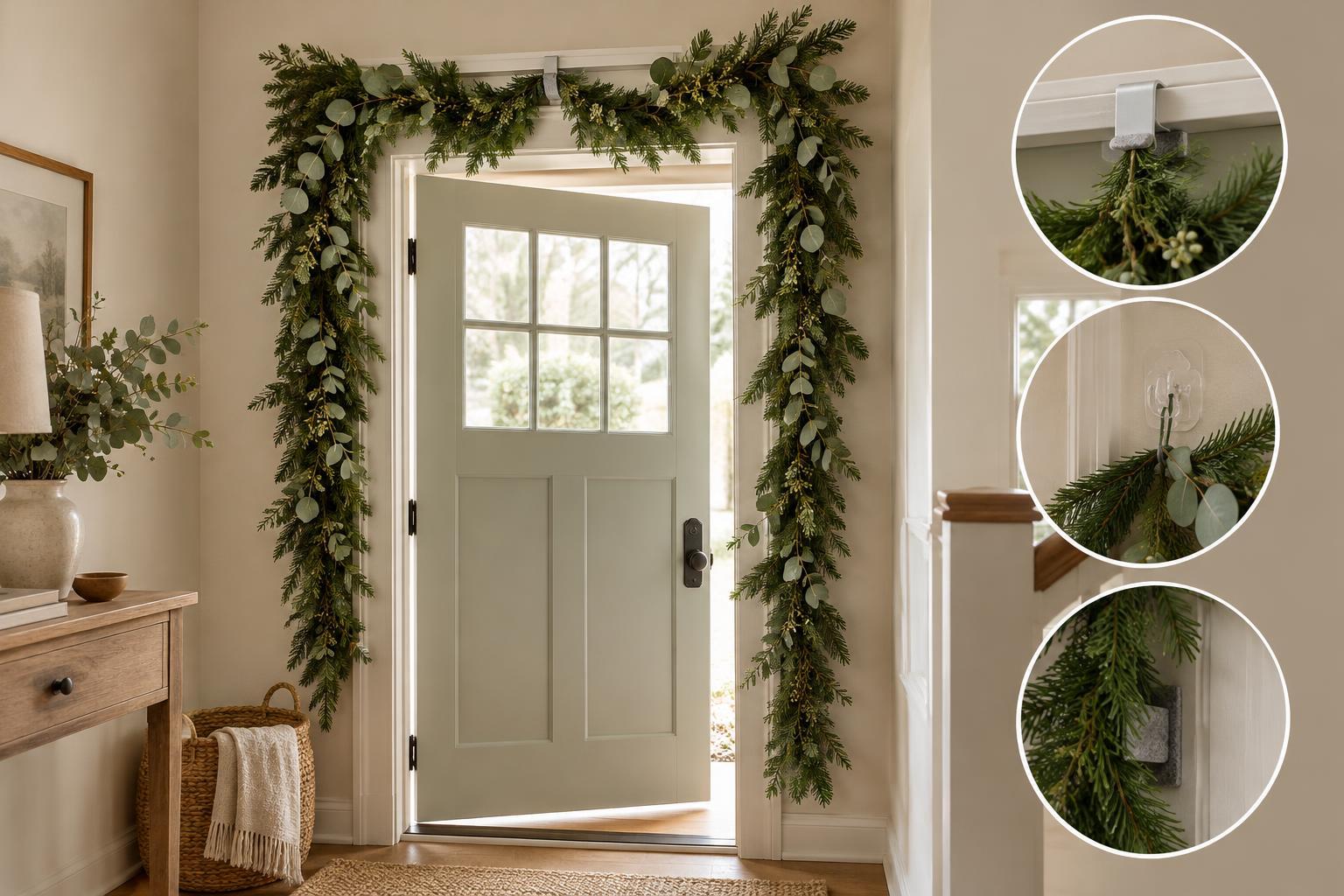
Plan the display around the light source
A seasonal display often starts with greenery, ribbons, textiles or a collection of favorite objects. Before arranging them, decide where the light will go. A candle needs a clear, stable space of its own; a battery light is usually the better choice for illuminating a cluster of decorative materials. Planning this first is easier than trying to tuck a flame into a finished arrangement.
For a mantel, console or dining table, think in layers: place a few larger objects toward the back, keep the working surface usable, and leave room to reach each light without brushing against the display. If the arrangement will be near a doorway, busy walkway or a place where guests set down coats and bags, choose a position where it is unlikely to be bumped. A smaller, well-spaced display can feel just as welcoming as a crowded one.
Give real candles a clear, steady place
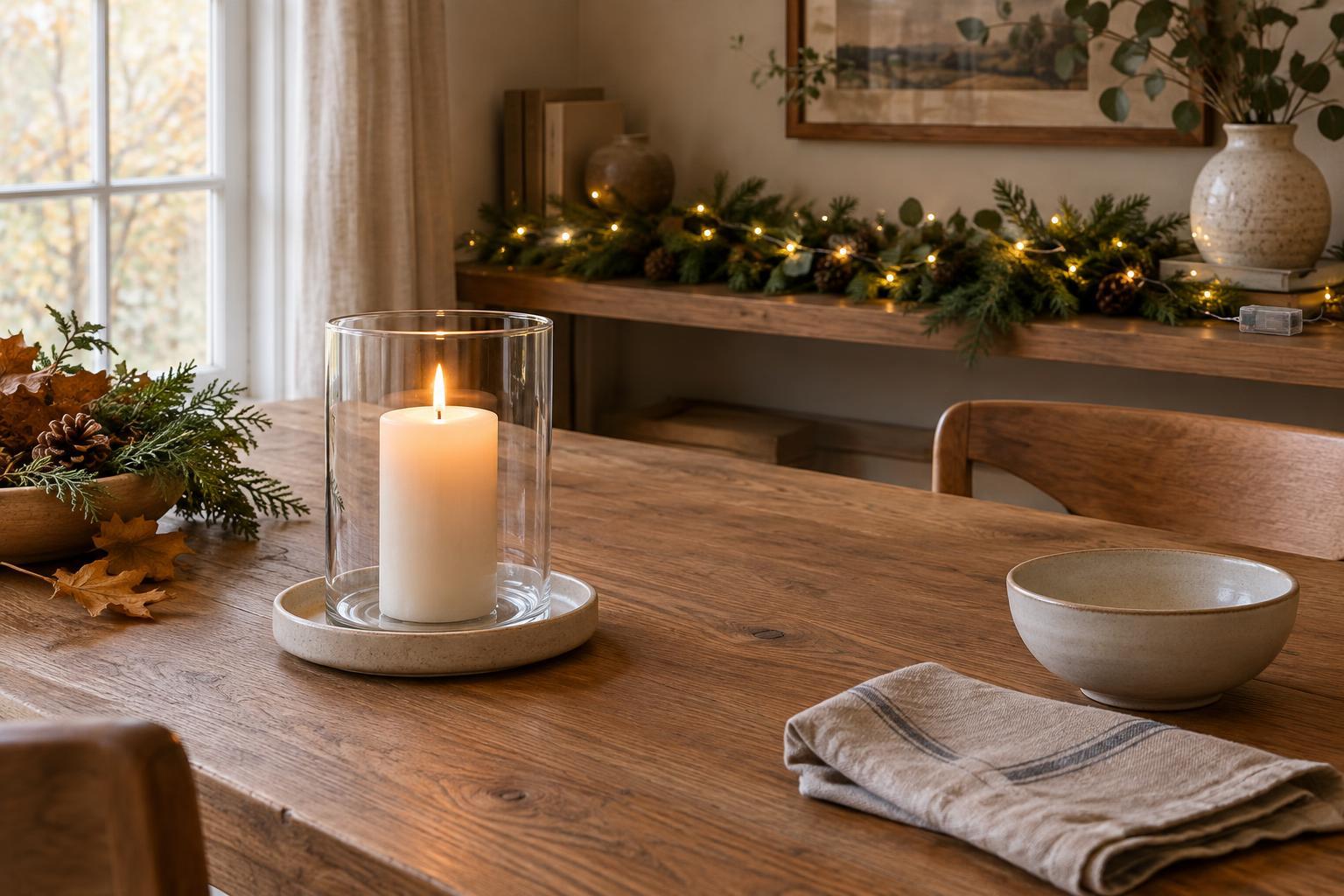
Set candles in holders made for their size and type, on a stable, heat-resistant surface. Follow the candle and holder makers’ directions, including any guidance on spacing and burn time. Keep flames well away from curtains, paper decorations, dried stems, faux greenery and anything else that could catch fire or be damaged by heat. A candle should not sit inside a wreath or among loose branches simply because there appears to be a gap.
Consider what can change while the candle burns. A draft may move a ribbon or branch toward the flame, and a tablecloth can shift when someone pulls out a chair. Keep candles out of reach of children and pets, and away from spots where people might lean across them to serve food. Never leave a burning candle unattended; extinguish it before leaving the room or going to sleep. If you cannot give it space and attention, use a flameless option instead.
Use battery lights with the same care as other electrical items
Battery-powered candles and light strands work well in displays where an open flame would be unsuitable. Choose products intended for the setting: lights marked for outdoor use are the appropriate choice for a porch or other exposed location, while an indoor-only set should stay inside. Read the product instructions before wrapping a strand around greenery or placing it in a container, and do not use lights or battery cases that are cracked, frayed or unusually hot.
Keep battery compartments accessible rather than burying them deep in a display. Secure the cover, especially in a home with young children: coin and button batteries are dangerous if swallowed. Use the battery type specified for the product, replace batteries as directed, and do not mix old and new batteries unless the instructions explicitly allow it. Switch lights off when they are not in use, and remove batteries before storing decorations for an extended period.
Match the glow to the materials
Different seasonal materials call for different lighting choices. Fresh foliage can dry out over time, while dried grasses, paper garlands and fabric bows are already vulnerable to flame. Give these elements battery lights rather than building a candle into the arrangement. On a dinner table, a few candles in clear holders can provide a simple focal point if they have ample separation from napkins, place cards and serving dishes.
For shelves and windowsills, try grouping objects by height instead of threading lights through every item. A short strand placed around the outside of a display may provide enough glow while leaving the battery pack easy to find. Avoid squeezing lights into sealed vessels unless the product is designed for that use, and follow any limits on covering the bulbs or housing. The aim is a soft effect, not a display that hides the equipment you need to check.
Make a quick check part of the routine
Before lighting a candle or switching on a strand, pause to look at the whole display. Is anything touching a candle holder or hanging close to the flame? Has a branch dried, a ribbon slipped or a light strand become pinched? Are the holders steady and the battery covers closed? Small adjustments take little time and help a seasonal arrangement stay practical as it changes.
When entertaining, consider lighting candles only where you can keep them in view, then extinguish them as you clear the table or move to another room. Battery lights can take over in less supervised corners. At the end of the season, let candle holders cool before handling them, inspect light strands, and store batteries and decorations according to their product directions. A display that is easy to check is easier to enjoy, year after year.