Start with the guest’s path
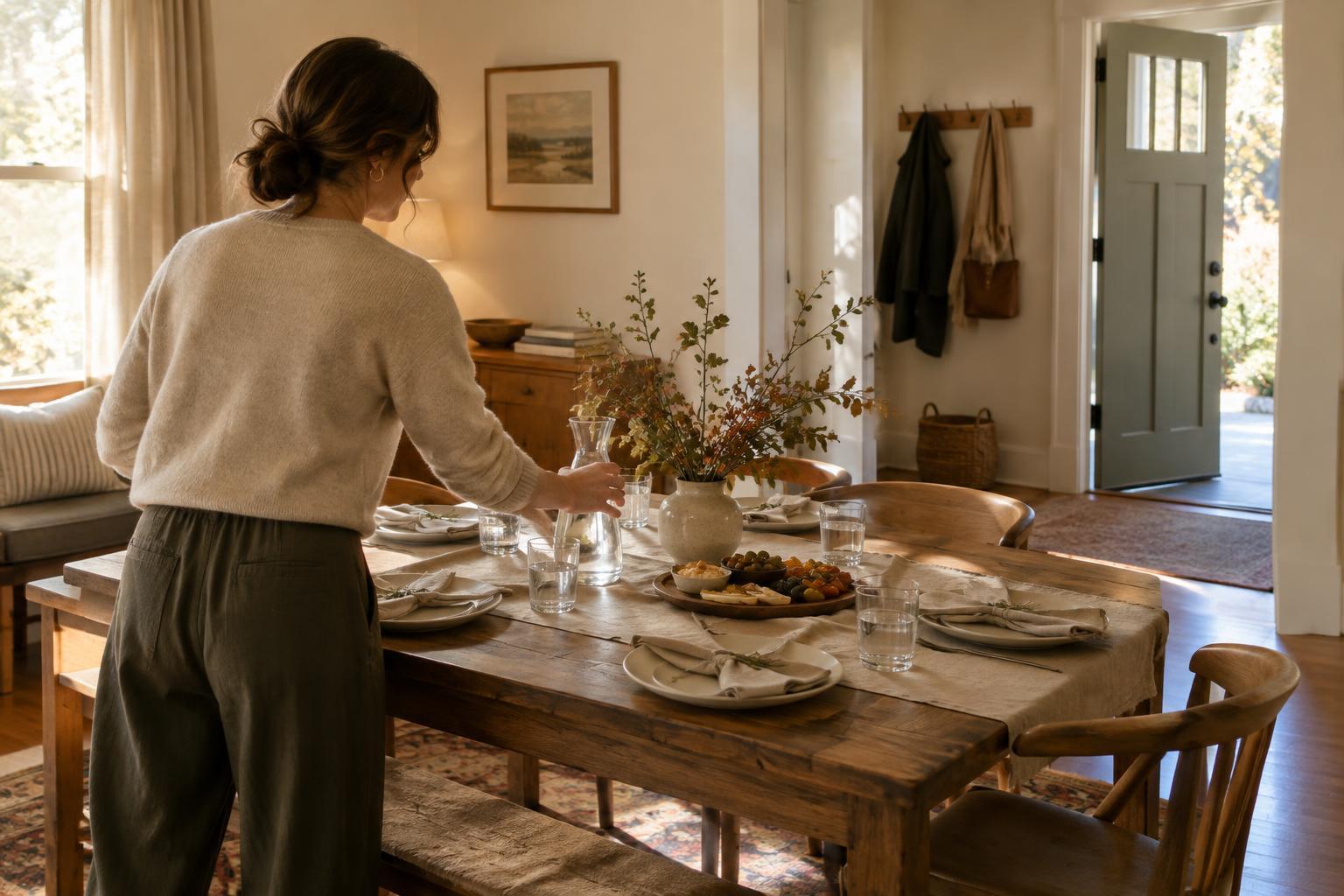
When time is short, picture a guest arriving at the door, putting down a bag, finding a seat and getting a drink. That route tells you more about what to tidy than a room-by-room cleaning list. Clear the entry enough for people to step inside comfortably. Put away loose shoes, make space for coats and move anything that could be tripped over. A quick sweep of visible dirt is useful; reorganizing the entire coat closet is not.
Then walk from the entry to the main gathering area and bathroom. Remove clutter from the surfaces guests are likely to touch, such as a side table or dining table. You do not have to make the space look unoccupied. A book, a basket of throws or a project tucked neatly to one side can still feel like home. Aim for clear routes and usable surfaces, not an empty-room effect.
Give the bathroom a focused reset
The guest bathroom deserves a few minutes because everyone should feel comfortable using it. Check that the toilet and sink are clean, the bin has room, and toilet paper is easy to find. Set out a clean hand towel and make sure there is soap. Wipe the mirror if it is noticeably marked, then look around from a guest’s perspective: is there a convenient place to set down a phone or bag?
This is also a good place to resist expanding the task. Guests do not need to see an organized medicine cabinet or perfectly folded spare towels. Close storage doors, put personal items away if you prefer, and leave deeper cleaning for another day. The practical basics matter more than a bathroom that looks freshly renovated.
Make seating and serving easy
In the room where people will gather, clear enough seats for the expected group. Move laundry, bags and paperwork elsewhere, even if that means using one private room as a temporary holding area. Give guests somewhere to set a glass without balancing it on their lap. Straightening cushions and folding a throw can make the room feel considered, but comfort should guide the arrangement: people need space to sit and move around.
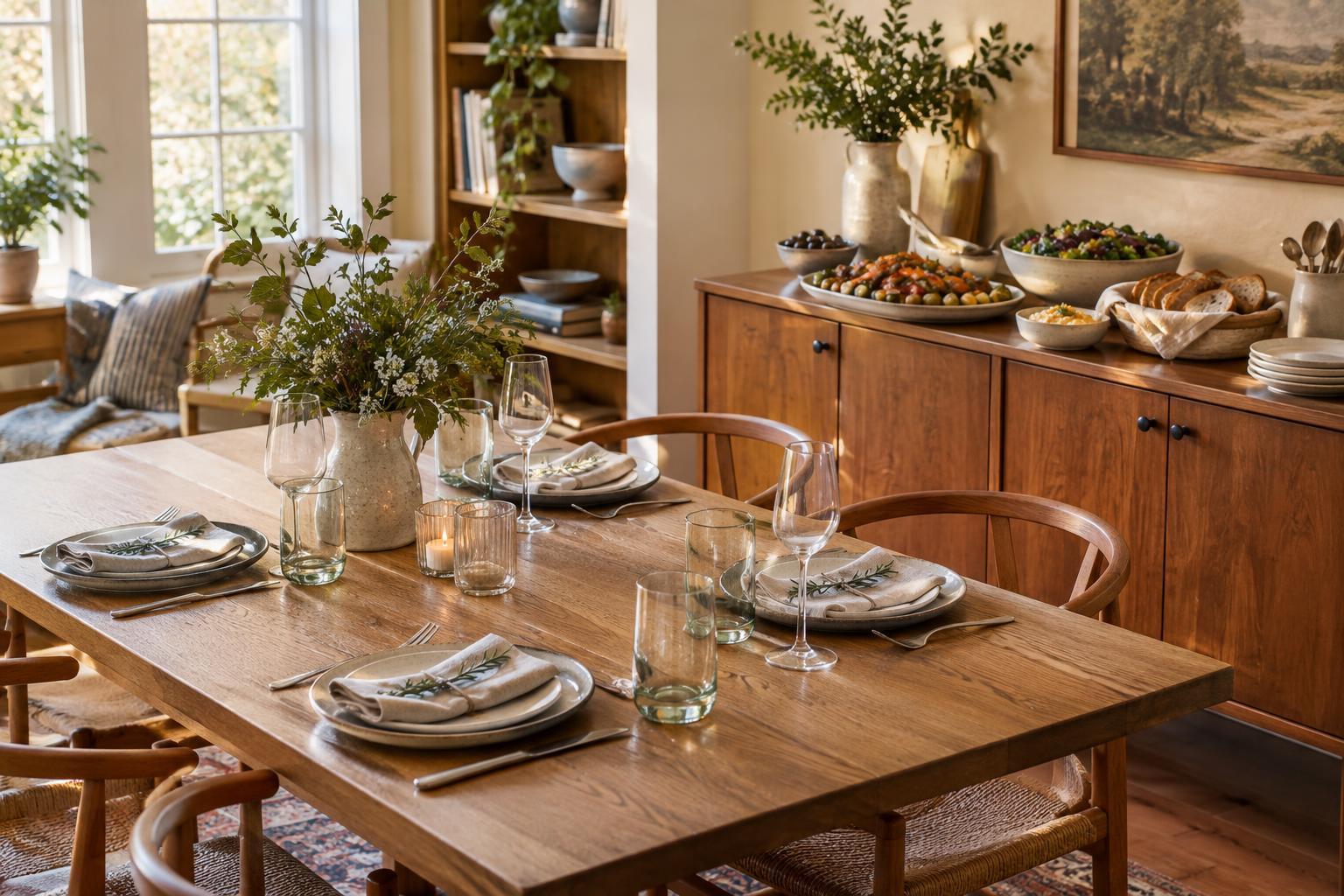
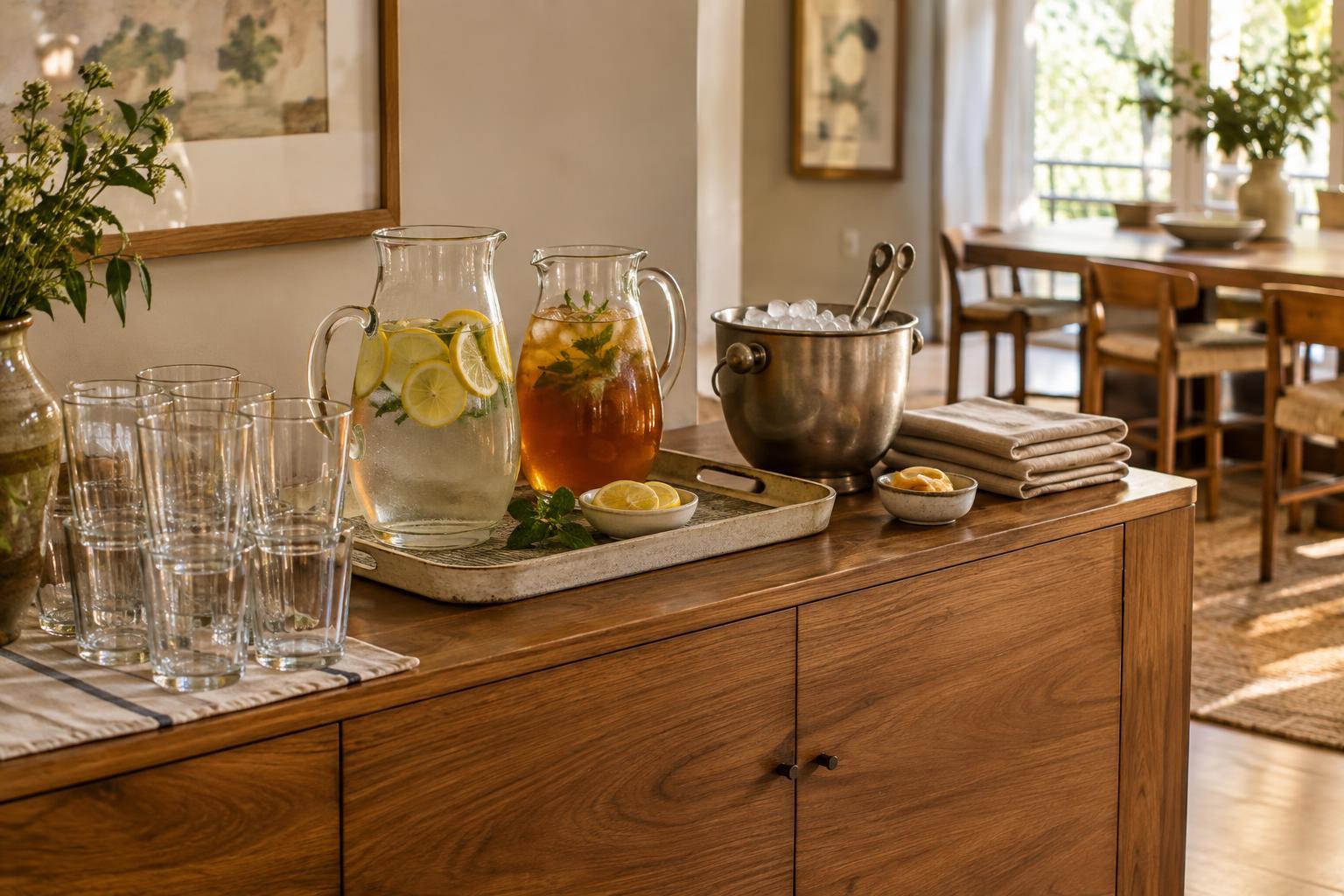
If you are serving food or drinks, prepare the surfaces you will actually use. Clear a section of counter for pouring drinks or plating food, and make space on the table before adding a cloth, placemats or dishes. Put out the glasses, napkins and serving pieces you need. A simple, ready-to-use setup is more helpful than elaborate styling that leaves no room for the meal.
Handle the kitchen according to the plan
How much kitchen tidying matters depends on whether guests will see or use it. If everyone tends to gather there, clear the island or main counter and deal with dishes that block the sink. Empty a full bin, wipe obvious spills and keep your food-preparation area workable. If you are hosting away from the kitchen, a quick reset may be enough: wash or stack the most visible dishes and shut the door if you have one.
Do not start a complicated pantry reorganization just because you are looking for a serving bowl. Gather what you need for the occasion, then stop. It can help to set aside one tray or corner for used glasses as the evening goes on. That small plan keeps the serving area functional without requiring you to clean continuously while guests are there.
Let the less visible jobs wait
Bedrooms guests will not enter, drawers they will not open and shelves above eye level can usually wait. So can washing every window, sorting old mail or changing decor at the last minute. If a pile of belongings bothers you, place it in a basket to sort later rather than scattering it across several rooms. Make sure the basket does not block a doorway, and give yourself permission to leave it alone for the evening.
Before the doorbell rings, spend your final minutes on a short check: lights where guests will walk, a clear place for coats, bathroom supplies, seats and whatever you plan to serve. Then wash your hands, take a breath and be ready to welcome people. The goal is a home that works for the gathering, not proof that every chore has been done.